The Pinnacles Desert, Western Australia: Complete Guide to Nambung’s Limestone Pillars and Stargazing
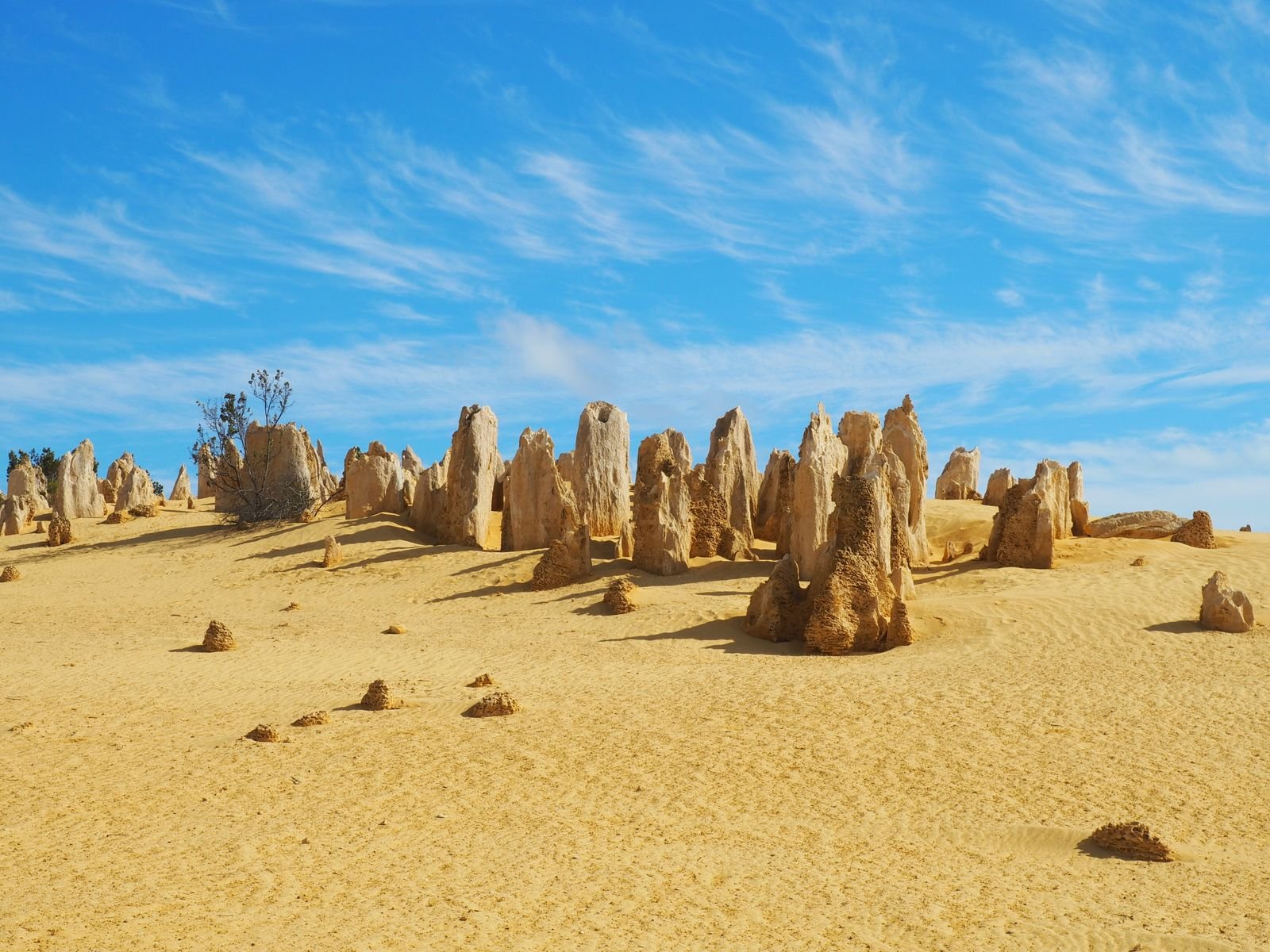
The Pinnacles Desert is one of the most surreal landscapes in Australia, and it is also one of the easiest to visit. Thousands of limestone pillars rise from yellow sand, some as tall as a house, some no higher than your knee, and the whole desert looks like a ruined city, or a forest turned to stone. The Pinnacles Desert, in Nambung National Park in Western Australia, is about 200 kilometres north of Perth, and it is a place that is best seen at dawn or dusk, when the light is low and the shadows are long. This guide covers the Pinnacles, the drive, the stargazing and the practical details for a trip to one of Western Australia’s most distinctive landscapes.
The Pinnacles are limestone pillars, formed over thousands of years by the erosion of a limestone plateau, and they are the remains of an ancient forest. The limestone was formed from seashells, and the pillars were created when the sand was blown away, leaving the harder limestone standing. The Pinnacles are of different shapes and sizes, from tall, thin spires to short, rounded stumps, and they are scattered across a desert of yellow sand, with low scrub and wildflowers in spring. The landscape is stark and beautiful, and it is also a place that is full of wildlife, including kangaroos, emus and a variety of birds, which are best seen in the early morning and late afternoon.
What Are the Pinnacles?
The Pinnacles are limestone formations, and they are one of the most distinctive geological features in Australia. They were formed when the area was covered by a shallow sea, and the shells of marine animals accumulated to form limestone. When the sea retreated, the limestone was covered by sand, and the sand was stabilised by vegetation. Over time, the rain dissolved the limestone, and the sand was blown away, leaving the pillars standing. The process is still going on, and the Pinnacles are constantly changing, as the wind and the rain continue to erode the limestone.
The Pinnacles vary in height from less than a metre to more than three metres, and they are of different shapes, from sharp spires to rounded domes. Some of the Pinnacles are grouped together, like a forest, and others stand alone, like sentinels in the desert. The colour of the Pinnacles changes with the light, from pale cream in the middle of the day to gold at sunset, and the shadows they cast are long and dramatic in the early morning and late afternoon. The Pinnacles are a place that is best experienced slowly, with time to walk among the pillars, to look at their shapes, and to appreciate the scale of the desert.
Exploring the Pinnacles Desert
The best way to explore the Pinnacles Desert is on the Pinnacles Desert Drive, a four-kilometre loop road that winds through the desert, with parking bays where you can stop, get out and walk among the pillars. The drive is one-way, and it is suitable for normal cars, though the road is unsealed in places, and it can be dusty. The drive takes about half an hour, but you should allow at least an hour, because you will want to stop often, to photograph the Pinnacles and to walk among them. The Pinnacles Desert Discovery Centre, at the start of the drive, has information about the geology, the wildlife and the Aboriginal culture of the area, and it is a good place to start your visit.
There are also walking trails in the Pinnacles Desert, including a short trail from the Discovery Centre to a viewpoint, and a longer trail that loops through the desert. The walking trails are well-marked, and they are a good way to see the Pinnacles at close range, because the pillars are best appreciated on foot, when you can see their texture, their colour and their shape. Wear a hat and sunscreen, because the sun in the desert is strong, and carry water, because there is no shade in the desert. The best time to walk is in the early morning or late afternoon, when the light is good and the temperature is cooler.
Sunset, Sunrise and Stargazing at the Pinnacles
The Pinnacles Desert is at its best at sunset and sunrise, when the low light turns the limestone gold and the shadows are long. At sunset, the Pinnacles are lit from the side, and the desert glows, with the pillars casting long shadows across the sand. At sunrise, the light is softer, and the desert is quiet, with kangaroos and emus moving among the pillars. If you can, visit the Pinnacles at both times, because the light is different, and the desert feels like a different place in the morning and in the evening.
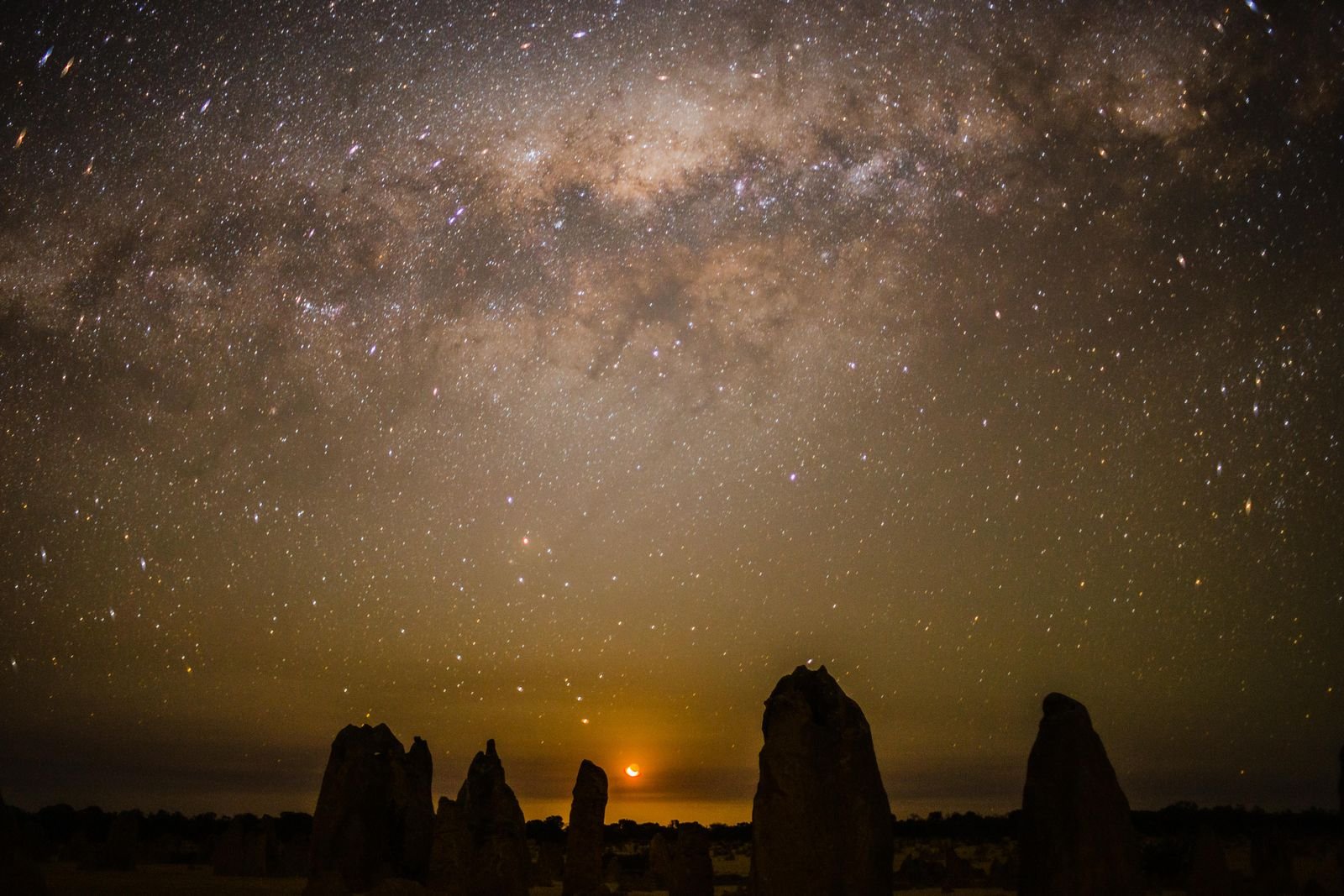
The Pinnacles Desert is also one of the best places in Western Australia for stargazing, because the sky is dark, the air is clear, and there is little light pollution. On a clear night, the Milky Way is visible, stretching across the sky, and the Southern Cross, the Magellanic Clouds and the planets are all visible to the naked eye. The best time for stargazing is on a moonless night, when the sky is at its darkest, and the Pinnacles, silhouetted against the stars, make a remarkable foreground for astrophotography. Bring a tripod if you want to photograph the stars, and allow your eyes time to adapt to the dark. The Pinnacles at night are a place of great beauty, and they are also a reminder of how dark the sky can be, away from the city.
Nambung National Park and the Coast
The Pinnacles Desert is in Nambung National Park, which also protects a stretch of coast, with white sand beaches, limestone cliffs and a variety of wildlife. The park is home to kangaroos, emus, echidnas and a variety of birds, and it is also home to the western grey kangaroo, which is best seen in the early morning and late afternoon. The coast near the Pinnacles, at Hangover Bay and Kangaroo Point, is a good place to swim, to fish and to walk, and it is a pleasant contrast to the desert, with its white sand and its clear water.
The town of Cervantes, near the park, is the base for a visit to the Pinnacles, with hotels, motels, restaurants and a supermarket, and it is also the centre for the local rock lobster industry, which is one of the most important in Western Australia. The town of Jurien Bay, further north, is a larger town, with more choice, and it is a good base for exploring the coast and the national park. The Pinnacles, the coast and the towns together make a good weekend trip from Perth, and they are a good introduction to the wild, beautiful coast of Western Australia.
Getting to the Pinnacles Desert
The Pinnacles Desert is about 200 kilometres north of Perth, and the drive takes about two and a half hours, on the Indian Ocean Drive, which is one of the most scenic drives in Western Australia. The drive passes through the towns of Lancelin and Cervantes, and it offers views of the coast, the sand dunes and the farmland. There is no public transport to the Pinnacles, so you will need a car, or a tour from Perth. Tours from Perth are a good option if you do not want to drive, and they often include the Pinnacles, the sand dunes at Lancelin, and a visit to a wildlife park.
The park is open from 9:30am to 4:30pm, and there is an entrance fee, which is paid at the gate. The Pinnacles Desert Discovery Centre is open during the same hours, and it has information, a shop and a cafe. For a wider sense of how desert landscapes are visited in other parts of the world, our guide to the Namib Desert in Namibia shows one of the oldest deserts on Earth, while Pamukkale in Turkey offers a white, terraced landscape that is one of the most surreal in the world. More background on the park is available on Wikipedia’s Nambung National Park page.
The Best Time to Visit the Pinnacles Desert
The best time to visit the Pinnacles Desert is in spring, from September to November, when the wildflowers are in bloom, the weather is mild, and the desert is at its most colourful. The wildflowers of Western Australia are famous, and the area around the Pinnacles is one of the best places to see them, with a variety of flowers that are found nowhere else. Autumn, from March to May, is also a good time, with cooler weather and fewer visitors, and it is a good time for stargazing, because the nights are clear and the air is dry.
Summer, from December to February, is hot, with temperatures that can reach 40 degrees Celsius, and it is not the best time to visit the desert, because the heat is intense and the light is harsh. Winter, from June to August, is cooler and wetter, and it is a good time to visit if you want to avoid the crowds, though the days are shorter and the weather can be changeable. Whatever the season, the Pinnacles are best visited in the early morning or late afternoon, when the light is good and the temperature is cooler, and the desert is at its most beautiful.
Practical Tips for Visiting the Pinnacles
A few practical tips will make your visit to the Pinnacles Desert smoother. Bring water and food, because there are no shops in the park, and the nearest town is Cervantes, a short drive away. Wear a hat and sunscreen, because the sun in the desert is strong, and wear proper shoes, because the sand is hot and the limestone can be sharp. Bring a camera, because the Pinnacles are one of the most photographed landscapes in Australia, and the light changes constantly. Respect the park rules, stay on the roads and the marked trails, do not climb on the Pinnacles, and do not take sand or rocks from the park.
The Pinnacles are a fragile landscape, and the limestone can be damaged by climbing and by walking off the trails. The park is also a place of cultural significance for the Yued people, the Aboriginal people of the area, and the Pinnacles are part of their culture and their history. Respect the culture, listen to the information in the Discovery Centre, and take time to learn about the Aboriginal connection to the land. The Pinnacles Desert is a place that rewards the careful, respectful traveller, and it is also a place that is easy to visit, with good roads, a good visitor centre and a town nearby.
Frequently Asked Questions
How long does it take to visit the Pinnacles Desert?
Allow at least two hours, and preferably half a day. The drive through the desert takes about half an hour, but you will want time to stop, to walk among the pillars, and to visit the Discovery Centre. If you also want to see the sunset or the stars, allow a full afternoon and evening.
Can you walk among the Pinnacles?
Yes, you can walk among the Pinnacles on the marked trails and from the parking bays on the drive. Stay on the trails and the roads, do not climb on the Pinnacles, and do not leave the marked areas, because the limestone is fragile and the desert is a protected landscape.
When is the best time to visit the Pinnacles Desert?
Spring, from September to November, is the best time, with wildflowers, mild weather and good light. Autumn, from March to May, is also good, with cooler weather and fewer visitors. Summer is hot, and winter is cooler and wetter, but the Pinnacles are beautiful in every season.
Is the Pinnacles Desert good for stargazing?
Yes, the Pinnacles Desert is one of the best places in Western Australia for stargazing, because the sky is dark, the air is clear, and there is little light pollution. The best time is on a moonless night, when the Milky Way is visible, and the Pinnacles make a remarkable foreground for astrophotography.
How do you get to the Pinnacles Desert from Perth?
The Pinnacles are about 200 kilometres north of Perth, and the drive takes about two and a half hours on the Indian Ocean Drive. There is no public transport, so you will need a car, or a tour from Perth, which often includes the Pinnacles and the sand dunes at Lancelin.
Conclusion
The Pinnacles Desert, Western Australia, is a place that earns its reputation as one of the most surreal landscapes in the country. The limestone pillars, the yellow sand, the wildflowers in spring and the stars at night combine to make a desert that is both stark and beautiful. Visit it at sunset, walk among the pillars, and stay for the stars if you can. If you do, the Pinnacles will not just be a stop on a drive north from Perth. They will be one of the places you remember most clearly, and one of the places you most want to return to, in a different season, to see them in a different light.