Mount Kenya, Kenya: The Complete Guide to Peaks, Lakes and Alpine Moorland
Mount Kenya is the highest mountain in Kenya and the second highest in Africa, after Kilimanjaro, and it is one of the most beautiful peaks on the continent. Its jagged summits, Batian at 5,199 metres, Nelion at 5,188 metres and Point Lenana at 4,985 metres, rise from a base of ancient forest, moorland and alpine lakes, and the mountain is a UNESCO World Heritage Site and a national park that protects one of the most important water towers in East Africa.
For a nature traveller, Mount Kenya is a quieter, wilder alternative to Kilimanjaro. The mountain has fewer climbers, more wildlife, and a landscape that changes dramatically as you climb, from rainforest to bamboo, from moorland dotted with giant lobelias to high alpine lakes and glaciers. You can trek to Point Lenana without technical climbing, watch elephants and buffalo in the forest, and sleep in mountain huts under some of the clearest skies in Africa. This guide covers everything you need to plan a trip to Mount Kenya, from the best routes to the best time to climb.
Why Mount Kenya Belongs on Your List
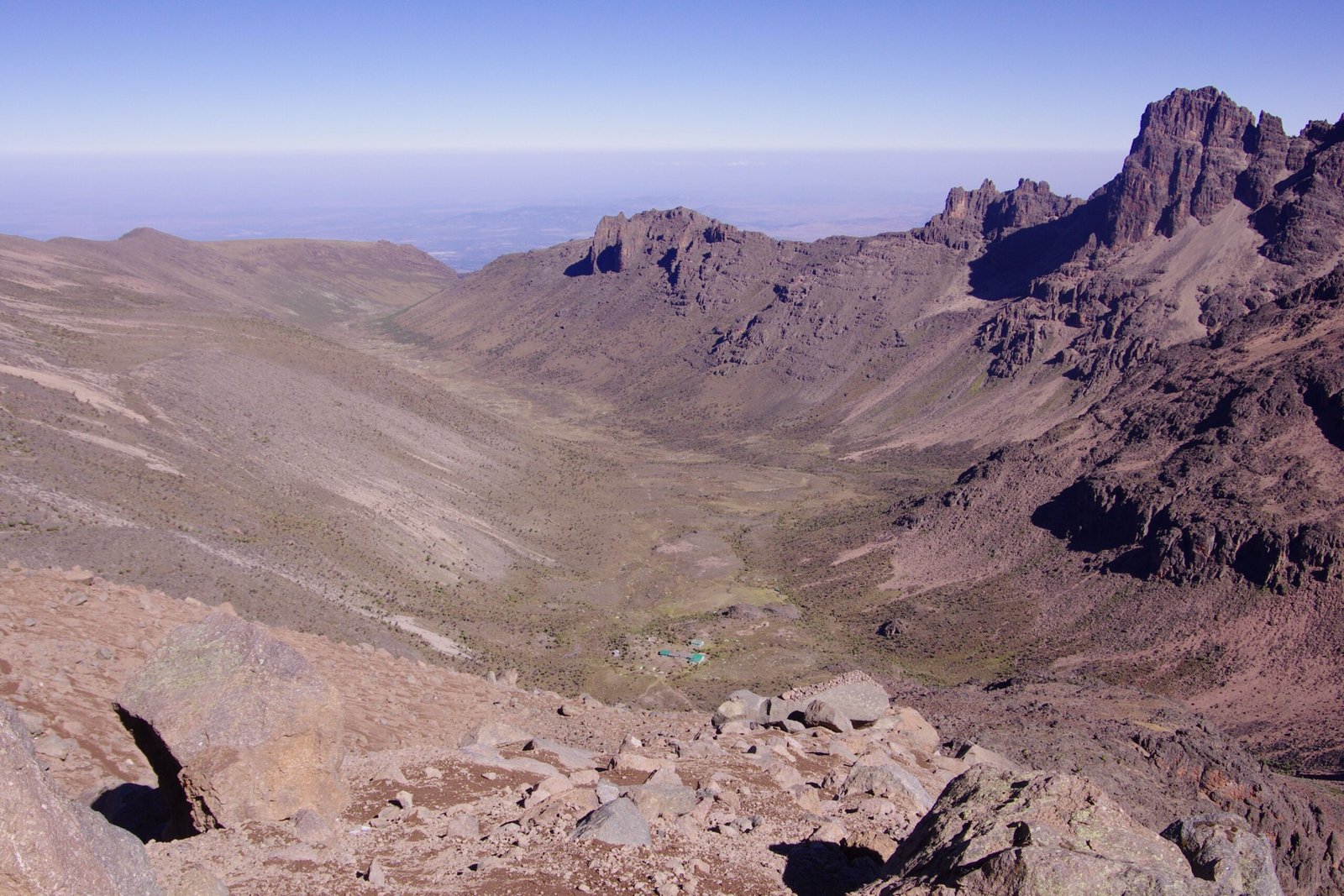
Mount Kenya is a mountain of contrasts. At the equator, yet capped with snow and glaciers, it rises from hot savanna to alpine moorland in a single day of walking, and the change in landscape is one of the most dramatic in Africa. The lower slopes are rainforest, home to elephants, buffalo and colobus monkeys, the middle slopes are bamboo and moorland, and the high slopes are a world of giant lobelias, senecios and clear alpine lakes, with the jagged peaks rising above them like a cathedral.
What makes Mount Kenya special is that it is a mountain for walkers, not just for climbers. The highest peaks, Batian and Nelion, need technical climbing, but Point Lenana, at 4,985 metres, is a trekking peak that any fit walker can reach with a good guide, and the sunrise from Lenana, with the shadow of the mountain stretching across the clouds, is one of the great moments in African travel. There are no crowds here, no queues, and no high altitude circus, only quiet trails, mountain huts and the sound of the wind.
Where Mount Kenya Is and How to Get There
Mount Kenya lies in central Kenya, about 175 kilometres northeast of Nairobi, just south of the equator. The mountain is a massive extinct volcano, and the national park that protects it covers about 715 square kilometres, with the peaks at the centre and the forest reserve around the base. The main towns near the mountain are Nanyuki, on the northwest side, and Chogoria and Meru on the east, and most treks start from one of these towns, with the Sirimon route from Nanyuki being the most popular, and the Chogoria route from the east being the most scenic.
Getting to Mount Kenya is straightforward. From Nairobi, it is about a three to four hour drive to Nanyuki, or a short flight to Nanyuki airstrip, and from there a transfer to the park gate at Sirimon, which takes about an hour. Most trekkers book a package with a local operator, which includes transport, park fees, a guide, a cook and porters, and the operator will arrange the permits and the mountain huts. You can also travel by bus to Nanyuki, although a private transfer is more comfortable and more reliable.
The Best Time to Visit Mount Kenya
The best time to climb Mount Kenya is during the dry seasons, from January to February and from July to September, when the trails are dry, the skies are clear and the views from the peaks are at their best. January and February are the warmest months, and the mountain is at its driest, although the high slopes can still be cold at night. July to September is also dry, although it can be cooler, and the mountain is often busy with trekkers during the European summer holidays.
The rainy seasons, from March to May and from October to December, make the trails muddy and slippery, and the cloud can hide the peaks for days at a time, although the mountain is at its greenest and the waterfalls are at their fullest. If you are trekking in the rainy season, allow extra days, bring good waterproofs and be prepared for the summit attempt to be delayed by weather. For a first trek, the dry season is the safer and more enjoyable choice.
The Peaks and the Trekking Routes
Mount Kenya has three main peaks. Batian, at 5,199 metres, is the highest, Nelion, at 5,188 metres, is the second, and Point Lenana, at 4,985 metres, is the third, and the one that most trekkers aim for. Batian and Nelion are technical climbs, with rock and ice, and they need a climbing guide and equipment, but Lenana is a trekking peak, reached on foot, and the final approach is a scramble over scree and rock, usually done before dawn so that you reach the summit for sunrise.
There are several trekking routes to Lenana. The Sirimon route, from the northwest, is the most popular, taking four to five days, with mountain huts at Old Moses, Shipton and Austrian Hut, and it is a good route for acclimatisation, with a gradual ascent. The Chogoria route, from the east, is the most scenic, passing through forest, moorland and the beautiful Lake Ellis and Lake Michaelson, although it is longer, taking five to six days. The Naro Moru route, from the west, is the shortest and steepest, taking three to four days, and it is the route most often used by climbers heading for Batian.
Lakes, Moorland and the Alpine Zone
Above the forest, Mount Kenya opens into the moorland, a strange and beautiful landscape of tussock grass, giant lobelias and senecios that look like plants from another planet, and clear lakes that sit in the valleys between the peaks. Lake Ellis, on the Chogoria route, is one of the largest, a long lake with the peaks reflected in its water, and Lake Michaelson, higher up, sits in a valley of cliffs and waterfalls. These lakes are the best places to camp, and the light at dawn, when the peaks turn pink, is unforgettable.
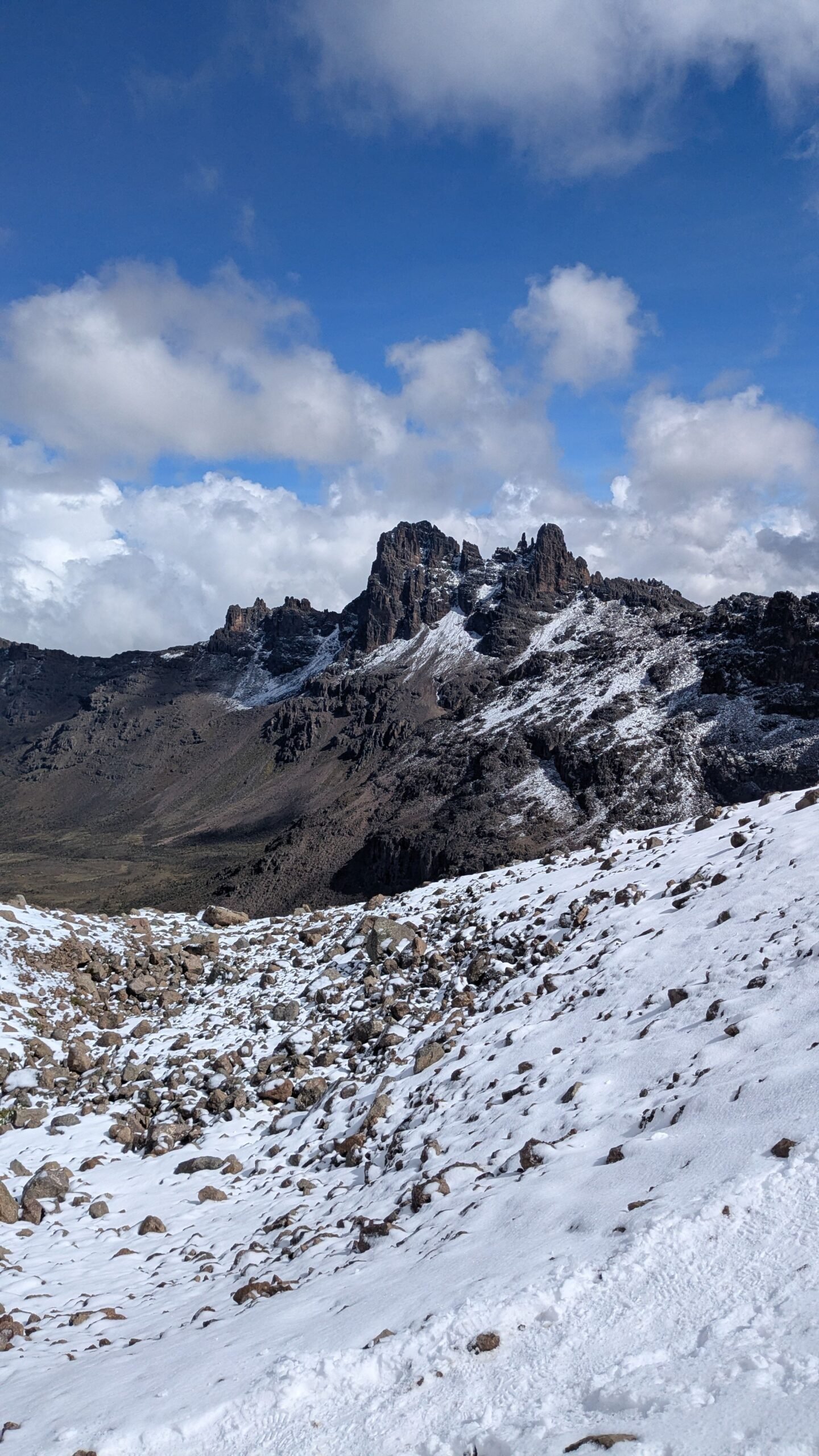
The alpine zone, above about 4,500 metres, is a world of rock and ice, with the Lewis Glacier, the largest on the mountain, although it has shrunk in recent years, and the peaks themselves, which are the eroded remains of an ancient volcano. Walking here, you feel far from the Africa of the savanna below, and the silence, broken only by the wind and the occasional rockfall, is one of the most striking things about the mountain.
Wildlife on Mount Kenya
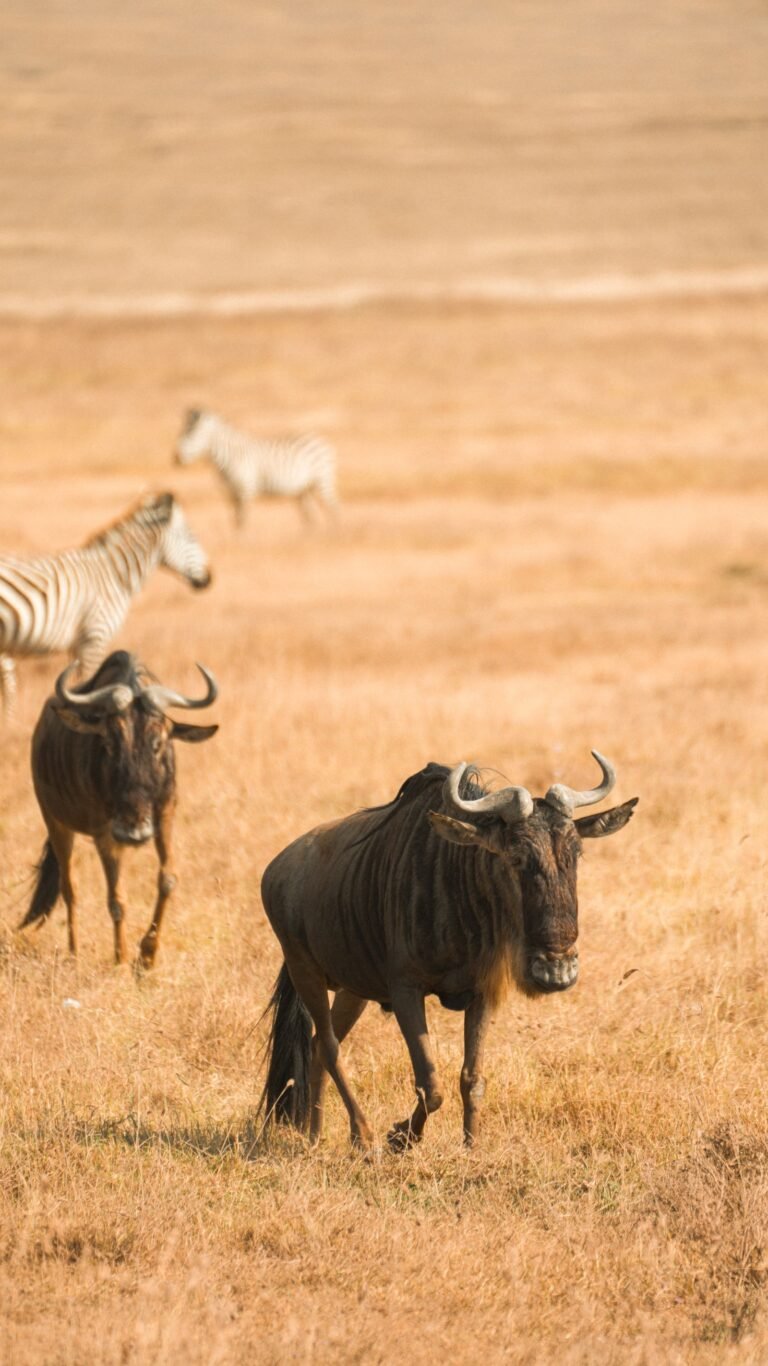
The lower slopes of Mount Kenya are rainforest, and they are home to elephants, buffalo, bushbuck, giant forest hogs and black and white colobus monkeys, which you may see on the drive to the park gate or on the first day of the trek. Higher up, the moorland is home to rock hyrax, which live among the boulders, and to the Mount Kenya mole rat, which is found nowhere else in the world. The mountain is also good for birds, with the scarlet tufted malachite sunbird, which feeds on the lobelias, and the lammergeier, a large vulture that soars over the peaks.
Where to Stay on Mount Kenya
On the mountain itself, you stay in mountain huts, which are simple stone buildings with bunk beds, a kitchen and a dining room, and they are a good place to meet other trekkers. The main huts are Old Moses Camp, on the Sirimon route, Shipton Camp, near the peaks, and Austrian Hut, just below Point Lenana, and your operator will book them for you. Before and after the trek, Nanyuki has a good range of hotels and lodges, from simple guesthouses to comfortable safari lodges, and the Mount Kenya Safari Club, on the slopes of the mountain, is a classic place to stay, with gardens, a pool and views of the peaks.
Practical Tips, Altitude and Safety
Altitude is the main challenge on Mount Kenya. Point Lenana is at 4,985 metres, and altitude sickness is a real risk, so take the trek slowly, allow at least four days, drink plenty of water and listen to your guide. If you feel unwell, descend. Pack warm layers, a good sleeping bag and a waterproof jacket, as the weather can change quickly, and the nights at Shipton and Austrian Hut are cold. A guide is required in the national park, and a cook and porters are worth the cost, as they carry the food and equipment and leave you free to enjoy the walk.
Frequently Asked Questions About Mount Kenya
How long does it take to climb Mount Kenya? Most treks to Point Lenana take four to five days, with the Sirimon route taking four to five days and the Chogoria route taking five to six days. Allow at least four days for acclimatisation, and do not rush the ascent, as altitude sickness is the main reason treks fail.
Do I need a guide to climb Mount Kenya? Yes, a guide is required in the national park, and most trekkers also hire a cook and porters. A good guide will arrange the permits, the huts and the food, and will know the mountain and the weather, which makes the trek safer and more enjoyable.
Is Point Lenana a technical climb? No, Point Lenana is a trekking peak, reached on foot, with a final scramble over scree and rock. You do not need ropes or climbing equipment, although you should be fit and used to walking at altitude. Batian and Nelion, the two higher peaks, are technical climbs and need a climbing guide.
What is the best time to climb Mount Kenya? The dry seasons, from January to February and from July to September, are the best, with dry trails and clear skies. The rainy seasons, from March to May and from October to December, make the trails muddy and the cloud can hide the peaks.
How much does it cost to climb Mount Kenya? A four to five day trek with a local operator, including park fees, a guide, a cook and porters, usually costs between 800 and 1,500 US dollars per person, depending on the route, the operator and the size of the group. Book with a reputable operator and check what is included.
Conclusion: Mount Kenya Awaits
Mount Kenya is a mountain that rewards the walker who is willing to take it slowly, to look at the lobelias and the lakes, and to wake before dawn for the climb to Point Lenana. It is not the highest mountain in Africa, and it is not the most famous, but it may be the most beautiful, and it is certainly one of the quietest. If you are planning a trek in Africa, put Mount Kenya at the top of your list, and give it the time it deserves.
For more African mountain and wildlife inspiration, read our guide to Mount Kilimanjaro, the roof of Africa, and our guide to Amboseli National Park, Kenya’s wildlife paradise. Both are good companions to a Mount Kenya trek, and they will help you plan the rest of your time in Kenya.