Vinicunca Rainbow Mountain, Peru: Complete Guide to the Hike, the Colours and Cusco
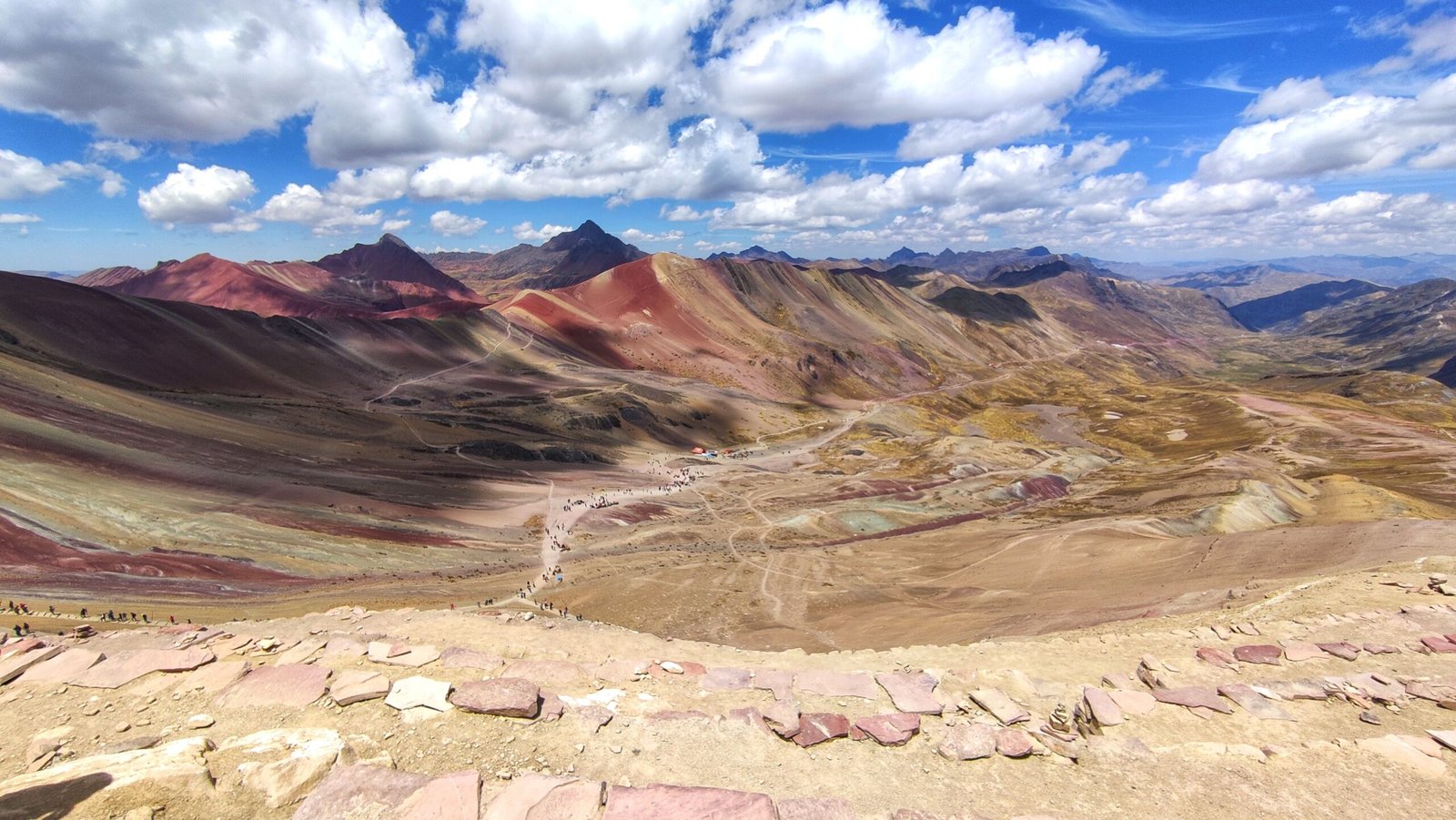
Vinicunca Rainbow Mountain is one of the most extraordinary landscapes in South America, and it is also one of the newest. Until a few years ago, the mountain was hidden under snow and ice, and it was only when the glaciers retreated that the striped slopes beneath were revealed. Today, Vinicunca is famous around the world for its bands of colour: red, gold, green, turquoise and purple, layered across the mountainside like a painting. The mountain sits at more than 5,000 metres in the Andes of Cusco, and the hike to reach it is as memorable as the destination, crossing high valleys, herds of alpacas and villages where Quechua is still the first language. For travellers in Peru, Vinicunca Rainbow Mountain is the essential day trip from Cusco.
What makes Vinicunca Rainbow Mountain so special is that it is a natural wonder that feels almost impossible. The colours are real, created by minerals in the rock: iron oxide for the reds, copper for the greens, sulphur for the yellows, and each layer tells a story of the ancient seas and volcanoes that formed the Andes. The mountain is also a place of deep cultural significance, sacred to the local communities and part of the landscape of the Ausangate trek, one of the great walks of the Andes. Whether you hike for the colours, the altitude, the culture or simply the photograph, Vinicunca is a place that rewards the effort of getting there.
Where Is Vinicunca Rainbow Mountain?
Vinicunca Rainbow Mountain, also known as Montana de Siete Colores and Montana Arcoiris, lies in the Andes of south-eastern Peru, in the Cusco region, about 100 kilometres south-east of the city of Cusco. The mountain is part of the Vilcanota mountain range, and it sits near the snow-capped peak of Ausangate, the highest mountain in the Cusco region and a sacred mountain for the people of the Andes. The trailhead is reached by road from Cusco, through the villages of the South Valley and the high plateau, and the hike itself starts at an altitude of around 4,600 metres.
The mountain is at an altitude of 5,200 metres, which makes it one of the highest day hikes in the world, and the air is thin and cold. The landscape around Vinicunca is high Andean puna, a treeless plateau of grasses, wetlands and rocky slopes, with herds of alpacas and llamas, and the views stretch across the Andes in every direction. The region is home to Quechua-speaking communities, who have lived here for centuries, farming potatoes and herding alpacas, and the mountain is part of their world, not just a tourist destination. The road to Vinicunca passes through villages and valleys that are worth the journey in themselves.
Why Visit Vinicunca Rainbow Mountain?
People come to Vinicunca Rainbow Mountain for the colours, and the colours are the reason to go. The striped mountain is one of the most photogenic places in Peru, and the view from the viewpoint, with the red and gold slopes in the foreground and the snow of Ausangate behind, is one of the iconic images of the Andes. The colours are at their best in the morning light, when the sun is low and the stripes are vivid, and the mountain changes colour through the day as the light moves across it. It is a landscape that looks painted, and it is hard to believe that it is entirely natural.
But Vinicunca is more than a photograph. The hike to the mountain is a journey through the high Andes, with views of Ausangate, the herds of alpacas, the villages and the wetlands, and the altitude makes it a real challenge, even for fit walkers. The mountain is also a cultural place, where local people make offerings to the mountain spirits and where the Ausangate trek passes through some of the most remote and beautiful country in Peru. For many visitors, the hike is as memorable as the mountain itself, and the sense of achievement at the viewpoint, at more than 5,000 metres, is immense.
The Colours of Vinicunca
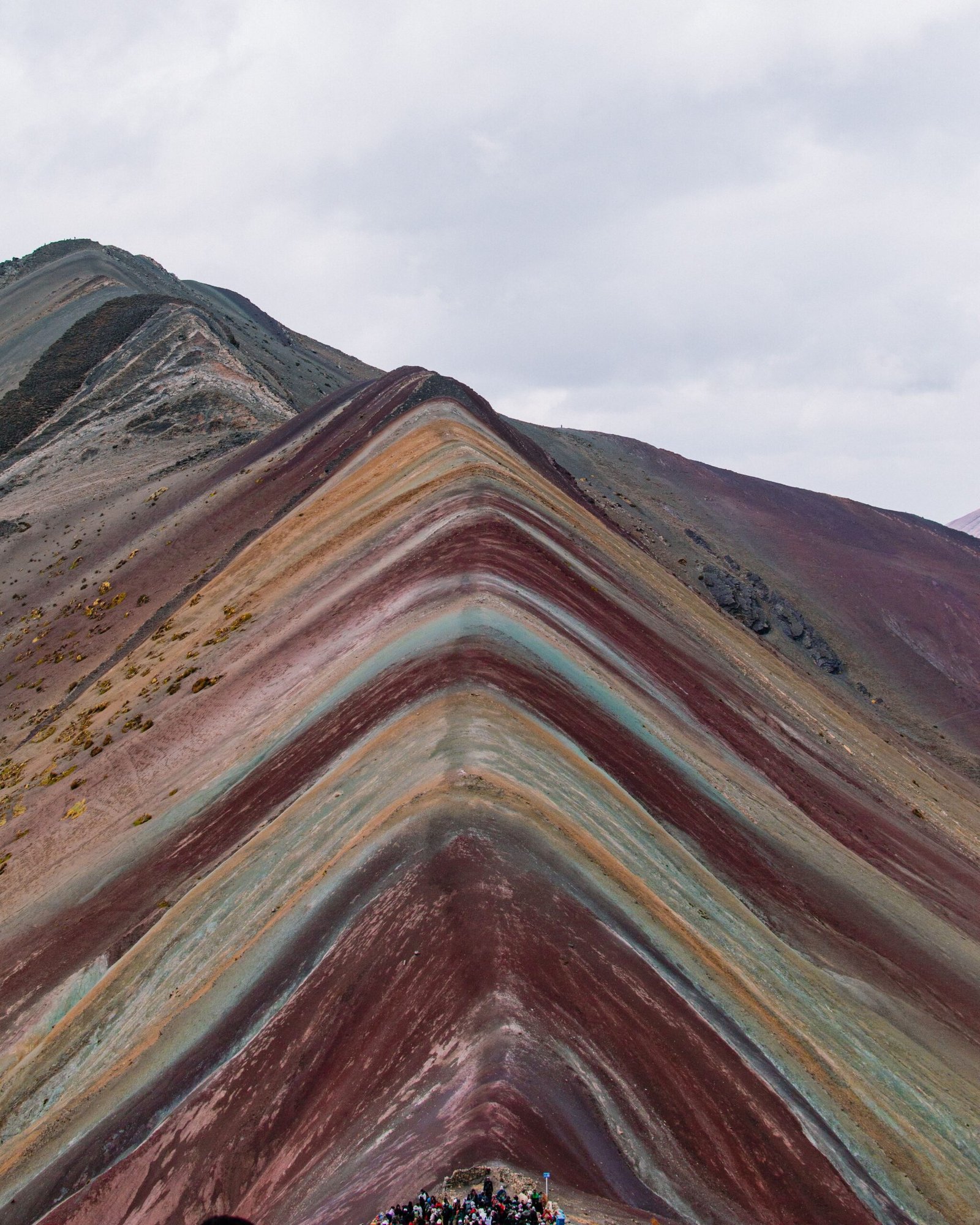
The colours of Vinicunca Rainbow Mountain are created by minerals in the sedimentary rock, laid down in layers over millions of years and then uplifted by the formation of the Andes. The red bands come from iron oxide and clay, the yellow and gold from iron sulphide, the green from chlorite and copper, the purple from a mixture of minerals, and the white from quartz and sandstone. The layers were hidden under snow and ice until recently, and it was only as the glaciers retreated that the mountain was revealed, which is why it is a relatively new destination.
The colours are most vivid on a clear, sunny day, and they are at their best in the morning, when the light is low and the stripes are sharply defined. In cloudy weather, the colours are muted, and the mountain can look grey and unremarkable, so the weather matters more here than at almost any other destination in Peru. The viewpoint is the best place to see the full sweep of the stripes, and the short climb to the viewpoint above the main trail offers a panoramic view of the mountain and the valley. Take your time at the viewpoint, and look at the colours from different angles, as they change with the light and the perspective.
The Hike to Vinicunca Rainbow Mountain
The hike to Vinicunca Rainbow Mountain is a day hike from Cusco, and it is a challenging one. The trail starts at the village of Cusipata or Chillca, depending on the route, and climbs gradually through the high valley, past herds of alpacas and small settlements, to the viewpoint at 5,036 metres, with an optional climb to a higher viewpoint at 5,200 metres. The hike takes about three hours up and two hours down, though the altitude makes it feel longer, and the trail is mostly gentle, with a steep final section to the viewpoint.
The altitude is the main challenge of the hike. At more than 5,000 metres, the air has about half the oxygen of sea level, and even fit walkers will feel breathless and slow. It is essential to acclimatise in Cusco for at least two days before the hike, to walk slowly, to drink plenty of water, and to listen to your body. Horses are available for hire along the trail, and they are a good option if you are struggling with the altitude, though they do not go to the final viewpoint. The hike is not technical, and it does not require special equipment, but it does require respect for the altitude and a sensible pace.
Cusco and the Journey to Vinicunca
Vinicunca Rainbow Mountain is a day trip from Cusco, and the journey is part of the experience. Cusco is the historic capital of the Inca Empire and the gateway to Machu Picchu, and it is a city that deserves several days in its own right, with its colonial churches, its Inca walls, its markets and its restaurants. The city sits at 3,400 metres, and it is the place to acclimatise before the hike, to organise a tour, and to recover afterwards. The tours to Vinicunca leave Cusco early in the morning, usually around four or five, and return in the late afternoon or evening.
The drive from Cusco to the trailhead takes about three hours, through the South Valley and the high plateau, and it passes through villages, farmland and the high passes of the Andes. Most tours include breakfast and lunch, a guide, and transport, and they are the easiest way to visit the mountain. It is also possible to visit independently, by bus and taxi, though the logistics are more complicated and the altitude makes it harder without a guide. Whichever way you go, the journey through the Andes is beautiful, and the early start is worth it for the morning light on the mountain.
Best Time to Visit Vinicunca Rainbow Mountain
The best time to visit Vinicunca Rainbow Mountain is the dry season, from May to September, when the skies are clear, the trails are dry and the colours are at their most vivid. The dry season is also the busiest time, especially in June, July and August, when the mountain is crowded, so it is worth visiting in May or September, when the weather is still good and the crowds are thinner. The wet season, from November to March, brings rain, cloud and snow, and the colours are muted, though the mountain is still beautiful and the crowds are fewer.
The weather on Vinicunca can change quickly, and the mountain is at its best on a clear morning, so the early start matters. The temperature at the viewpoint can be cold, even in the dry season, with wind and a wind chill that makes it feel much colder, so bring warm layers. The sun is strong at altitude, so bring sunscreen, a hat and sunglasses, and drink plenty of water. The mountain is beautiful in every season, but the dry season offers the best chance of clear skies and vivid colours.
How to Get to Vinicunca Rainbow Mountain
Most visitors reach Vinicunca Rainbow Mountain on an organised day tour from Cusco, which includes transport, a guide, breakfast and lunch. The tours leave early in the morning, and they take about three hours to reach the trailhead, with a stop for breakfast on the way. The tours are the easiest and safest way to visit, and they are inexpensive by international standards, though the quality varies, so choose a reputable operator with small groups and a good guide. The tours return to Cusco in the late afternoon, after the hike and lunch.
It is also possible to visit Vinicunca independently, by taking a bus from Cusco to Cusipata and then a taxi or a colectivo to the trailhead, though this requires an early start and a good knowledge of the area. The hike itself is straightforward, and the trail is well marked, but the altitude and the remoteness make a guide a good idea, especially for first-time visitors. If you are trekking the Ausangate circuit, Vinicunca is a side trip from the main route, and it is a highlight of that trek, which takes four to five days and is one of the great walks of the Andes.
Where to Stay in Cusco
Cusco is the base for a trip to Vinicunca Rainbow Mountain, and it has accommodation for every budget, from hostels and guesthouses to boutique hotels and luxury lodges. The historic centre, around the Plaza de Armas, has the most hotels and restaurants, and it is the most convenient place to stay, though it can be noisy at night. The neighbourhood of San Blas, with its narrow streets, its artisan workshops and its views over the city, is a quieter and more atmospheric place to stay, and it is popular with travellers who want a more local experience.
Book in advance, especially in the dry season, when Cusco is busy with visitors to Machu Picchu and the Sacred Valley, and choose a hotel that offers oxygen and coca tea, which help with the altitude. The hotels in Cusco are accustomed to early departures for Vinicunca, and many will provide a packed breakfast or an early breakfast for tour groups. Allow at least two days in Cusco before the hike, to acclimatise and to explore the city, and a day after to recover.
Practical Tips for Visiting Vinicunca
Altitude is the main challenge at Vinicunca Rainbow Mountain, and it should be respected. Spend at least two days acclimatising in Cusco before the hike, drink plenty of water, avoid alcohol the night before, and walk slowly on the trail. Coca tea and coca leaves are traditional remedies for altitude sickness, and they are widely available in Cusco, though they are not a substitute for acclimatisation. If you feel unwell, descend immediately, and listen to your guide, who knows the mountain and the altitude.
Pack for the cold and the sun: warm layers, a windproof jacket, a hat, gloves, sunscreen and sunglasses are all essential, as the weather at 5,000 metres can be cold, windy and sunny at the same time. Bring water and snacks, though most tours provide lunch, and bring cash for the entrance fee and for tips. Respect the local communities: ask before taking photographs of people, do not walk on the cultivated land, and take your rubbish with you. The mountain is sacred to the local people, and a little respect goes a long way.
If you liked Vinicunca Rainbow Mountain, you will also enjoy our guides to the Salar de Uyuni and to Torres del Paine.
Conclusion
Vinicunca Rainbow Mountain is a place that feels like a dream, and it is a reminder of how strange and beautiful the natural world can be. The striped mountain, the high valleys, the alpacas and the snow of Ausangate combine to make a landscape that is unlike anywhere else on earth, and the hike to reach it is a journey through the heart of the Andes. It is a hard hike, and the altitude is real, but the reward is one of the great sights of South America. Acclimatise in Cusco, go in the dry season, walk slowly, and let Vinicunca show you why it has captured the imagination of travellers around the world.
Frequently Asked Questions
How high is Vinicunca Rainbow Mountain?
Vinicunca is about 5,200 metres above sea level, and the main viewpoint is at 5,036 metres. It is one of the highest day hikes in the world, and the altitude is the main challenge of the visit.
Do I need to acclimatise before hiking Vinicunca?
Yes. Spend at least two days in Cusco, at 3,400 metres, before the hike, and walk slowly on the trail. Altitude sickness is common at 5,000 metres, and proper acclimatisation is essential.
What is the best time to visit Vinicunca?
The dry season, from May to September, is the best time, with clear skies and vivid colours. May and September are quieter than the peak months of June, July and August.
Can I hike Vinicunca without a tour?
Yes, it is possible to visit independently, by bus and taxi from Cusco, though most visitors take an organised day tour, which includes transport, a guide and meals. A tour is the easiest and safest option for first-time visitors.
Why is Vinicunca Rainbow Mountain so colourful?
The colours come from minerals in the rock: iron oxide for the reds, copper for the greens, sulphur for the yellows, and other minerals for the purples and whites. The layers were hidden under snow and ice until the glaciers retreated.