The Maldives: Complete Guide to the Islands, Atolls and Turquoise Lagoons

The Maldives is the kind of place that seems almost too perfect to be real. From the air, the country looks like a scattering of green jewels dropped into an impossibly blue sea: 26 coral atolls, nearly 1,200 islands, and lagoons so clear that you can watch reef sharks glide beneath your villa before breakfast. Yet the Maldives is far more than a postcard. It is a living island nation with a thousand years of seafaring history, a distinctive culture shaped by the Indian Ocean, and some of the most extraordinary marine life on Earth.
For many travellers, the Maldives represents the ultimate escape — a place to slow down, swim with manta rays, eat fresh tuna curry with your feet in the sand, and watch the sun sink into the ocean without a single building to interrupt the horizon. This guide covers everything you need to plan a trip: when to go, how to choose between resort islands and local islands, which atolls offer the best diving, what it costs, and how to travel here responsibly so that this fragile paradise survives for the generations that follow.
Where the Maldives Are and What Makes Them Different
The Maldives sits in the Indian Ocean, south-west of Sri Lanka and India, straddling the equator. Its islands are grouped into 26 natural atolls, which are ring-shaped coral reefs enclosing calm lagoons. The country is the lowest and flattest in the world: the average ground level is just 1.5 metres above sea level, and the highest natural point is barely 2.4 metres. That flatness is part of the magic — there are no mountains to block the light, so the sea and sky seem to merge at the horizon in every direction.
What makes the Maldives different from other tropical destinations is the one-island, one-resort model. Most resort islands are entirely occupied by a single hotel, which means you arrive by speedboat or seaplane, step onto a private beach, and share the island with only a few dozen other guests. There are no roads, no traffic, and often no shoes — just sand paths, palm trees, and water villas on stilts above the reef. At the same time, about 200 islands are inhabited by Maldivians, and a growing number of locally run guesthouses on these islands offer a completely different, far more affordable way to experience the country.
Geography also shapes the wildlife. The atolls sit in the path of rich ocean currents, and the channels between them funnel plankton, which in turn attract whale sharks, manta rays, reef sharks, turtles, and vast schools of reef fish. The Maldives is one of the few places on Earth where you can reliably swim with whale sharks year-round, and the Hanifaru Bay marine protected area in Baa Atoll is famous for seasonal gatherings of hundreds of manta rays feeding together.
The Best Time to Visit the Maldives
The Maldives has a tropical climate with warm temperatures of 27 to 31 degrees Celsius all year, so there is no bad month — only trade-offs. The dry season, from November to April, brings the north-east monsoon, known locally as Iruvai. This is the classic postcard season: endless sunshine, low humidity, calm seas, and the best underwater visibility, often exceeding 30 metres. It is also the most expensive season, with resort prices peaking around Christmas, New Year, and Easter.
The wet season, from May to October, brings the south-west monsoon, or Hulhangu. Expect short, sharp rain showers, cloudier skies, and choppier seas — but also the lowest prices of the year, sometimes 30 to 50 percent below peak season, and the best conditions for spotting manta rays and whale sharks in the western atolls, where plankton blooms draw them in. Many experienced divers actually prefer this season, and if you are staying on a local island, the savings can be dramatic.
Within the dry season, December to March offers the most reliable sunshine, while November and April are shoulder months with good weather and slightly lower prices. If your priority is surfing, the best swells arrive between June and August on the outer reefs of North Male Atoll. Whatever month you choose, book seaplane transfers and popular resorts well in advance for the dry season, and pack a light rain jacket for the wet season.
Getting to the Maldives and Getting Around
Almost all international visitors arrive at Velana International Airport on Hulhule Island, next to the capital, Male. Direct flights connect Male with the Middle East, Europe, India, Sri Lanka, and South-East Asia, and many travellers arrive via hubs such as Dubai, Doha, Singapore, or Colombo. Maldivians do not require a visa in advance for most nationalities: a free 30-day visa is issued on arrival, provided you have a valid passport, a confirmed booking, and proof of onward travel.
From the airport, your onward journey is part of the adventure. Resorts in North and South Male Atoll are usually reached by speedboat in 20 to 60 minutes. Resorts further away use seaplanes, which take off from the lagoon beside the airport and land on the water next to your island — a spectacular 30- to 45-minute flight over the atolls. Seaplanes only fly in daylight, so if your international flight lands late, you may need a night in Male or Hulhumale first. Local islands are served by public ferries, which are slow but cost only a few dollars, and by private speedboat transfers arranged by guesthouses.
Within an island, you walk everywhere — most islands are small enough to cross in ten minutes — and bicycles are available on larger ones. There are no cars on resort islands and very few on local islands. Island hopping is easy by ferry or speedboat if you plan around the ferry timetables, which run less frequently on Fridays, the Maldivian weekend.
The Best Atolls and Islands to Visit
North Male Atoll is the most accessible region and a good first choice. It combines luxury resorts with inhabited islands such as Maafushi, the best-known local-island base, where guesthouses, dive shops, and sandbank trips cost a fraction of resort prices. The atoll also has excellent house reefs and is the centre of the Maldives surfing scene.
Baa Atoll, a UNESCO Biosphere Reserve, is the place for marine life. Hanifaru Bay, a small funnel-shaped bay, fills with plankton between June and November and draws in feeding aggregations of manta rays that can number in the hundreds, along with whale sharks. Snorkelling here is regulated to protect the animals, and only a limited number of visitors are allowed each day, so book through a licensed operator.
Ari Atoll, to the west, is the whale shark capital of the Maldives. The southern tip of South Ari Atoll is one of the most reliable places in the world to encounter whale sharks throughout the year, and its resorts and liveaboard boats are built around diving and snorkelling. For a quieter escape, the southern atolls — such as Addu, the only atoll south of the equator, with its causeway-linked islands, old British Second World War sites, and a distinctive local culture — reward travellers who venture beyond the well-trodden north.
Snorkelling and Diving in the Maldives
Snorkelling in the Maldives is extraordinary because you barely have to try. Most resort islands and many local islands have a house reef just metres from the beach, where you can drift over coral gardens filled with clownfish, parrotfish, moray eels, and turtles. Bring your own mask and snorkel if you can, use reef-safe sunscreen, and never stand on coral — it is a living animal, and a single touch can kill years of growth.
For divers, the Maldives is a bucket-list destination. The channels, or kandus, between atolls create thrilling drift dives where grey reef sharks, eagle rays, and schools of tuna cruise past in the current. Thilas, submerged coral pinnacles rising from the deep, attract dense clouds of fish. Most dive centres offer courses from beginner to advanced, and the warm 28-degree water means a thin wetsuit is all you need. Liveaboard boats, which sail between atolls for a week at a time, are the best way to reach remote dive sites and are often cheaper per day than a resort.
Two encounters define Maldives diving: manta rays and whale sharks. Mantas are graceful, curious, and often approach divers at cleaning stations, where small fish pick parasites from their skin. Whale sharks, the largest fish in the ocean, are gentle filter feeders that cruise slowly along the reef edge. When you meet either, keep a respectful distance, never chase or touch them, and let them set the pace. Responsible operators in the Maldives follow a strict code of conduct, and choosing one is the single most important decision you will make.
Things to Do in the Maldives Beyond the Beach
It is easy to spend a week in the Maldives doing nothing more strenuous than swimming and reading, but the islands offer more than that. Sandbank trips take you to a strip of white sand in the middle of nowhere, where you can picnic and snorkel with no land in sight. Sunset dolphin cruises are a wonderful way to see spinner dolphins leaping in the wake of the boat, and night snorkelling reveals a different reef, with lobsters, octopus, and bioluminescent plankton glowing in the dark.
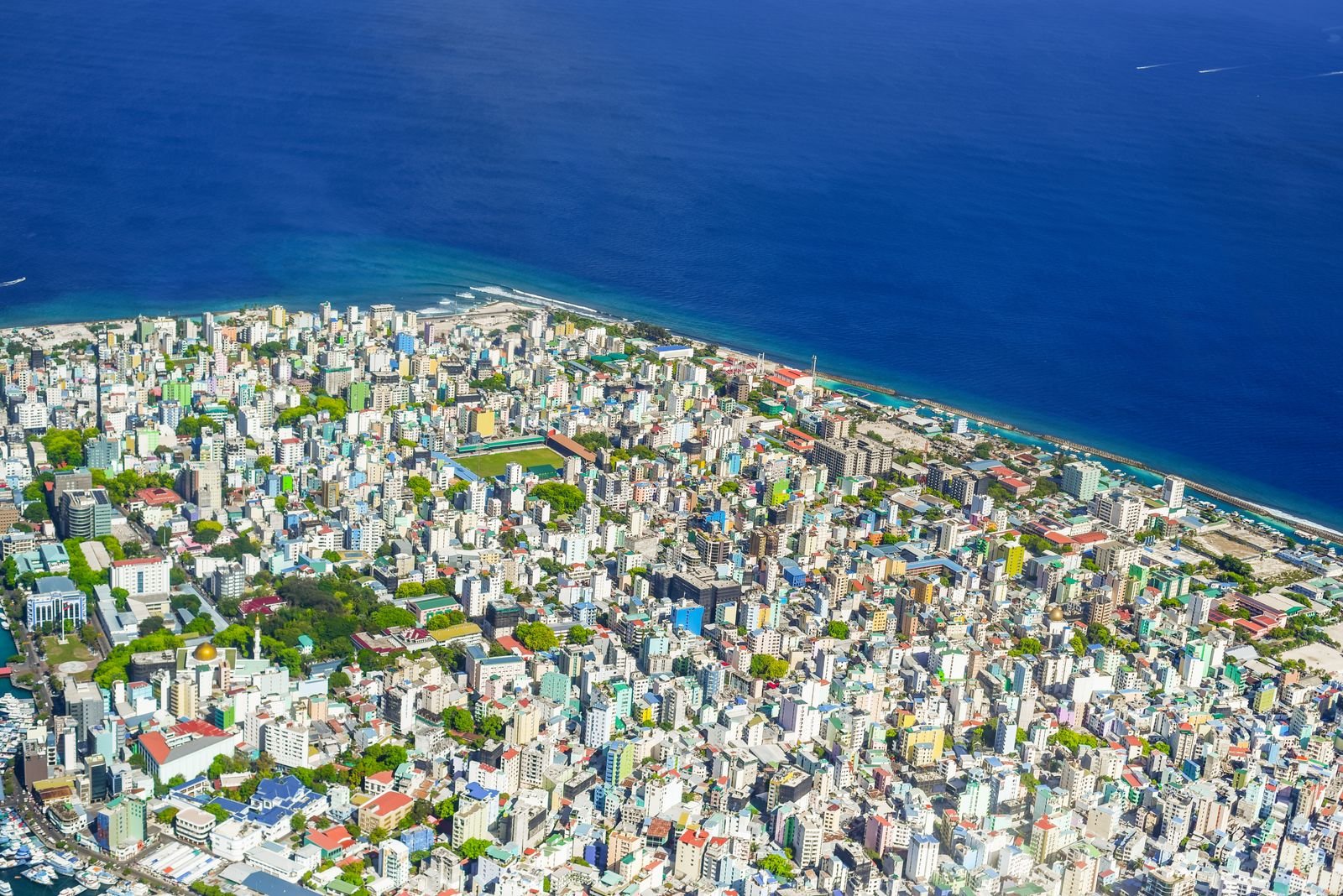
Culture is closer than many visitors realise. A day trip to Male, one of the smallest and most densely populated capitals in the world, offers the Grand Friday Mosque, the fish market where tuna boats unload their catch, and the local market selling coconuts, bananas, and spices. On local islands, you can watch traditional boduberu drumming, try Maldivian cooking — mas huni, a breakfast of tuna, coconut, and chilli eaten with flatbread — and learn how islanders have lived from the sea for centuries.
For a different perspective, try a submarine or semi-submersible trip to see the reef without getting wet, book a spa treatment in an overwater pavilion, or join a marine conservation programme. Several resorts and local organisations run coral planting and reef monitoring projects that welcome visitors, and the Maldives is a global leader in marine protection, with 44 percent of its coral reefs inside protected areas.
Where to Stay in the Maldives
Where you stay shapes your trip more in the Maldives than almost anywhere else, because each island is its own world. Overwater villas are the iconic choice: a private deck, steps down into the lagoon, and a view that never gets old. They are expensive, often 500 to 1,500 US dollars a night or more, but many resorts offer them as part of packages that include meals, transfers, and activities.
Beach villas are a cheaper and often more practical alternative, especially for families: direct beach access, more space, and the same reef a short swim away. All-inclusive packages are worth considering carefully, because food and drink on a private island can be very expensive, and a package removes the stress of a 15-dollar coffee. Always check exactly what is included — seaplane transfers, often 300 to 500 dollars per person, are sometimes extra.
Local-island guesthouses have transformed the Maldives in the past decade. On islands such as Maafushi, Thulusdhoo, and Fulidhoo, comfortable guesthouses cost 40 to 100 dollars a night, meals are affordable, and dive trips and excursions can be booked locally. The beaches on local islands are often smaller, and modest dress is expected outside designated bikini beaches, but the trade-off is a real connection with Maldivian life — and a trip that costs a tenth of a resort holiday. Many travellers combine a few nights on a local island with a few nights at a resort for the best of both worlds.
Practical Tips for Visiting the Maldives
Budget carefully, because the Maldives can be either the most expensive or one of the most affordable tropical trips you will take. A resort holiday with seaplane transfers, meals, and activities can easily exceed 1,000 dollars a day for two people, while a local-island trip with guesthouses, public ferries, and home-cooked meals can cost under 100 dollars a day. The currency is the Maldivian rufiyaa, but US dollars are widely accepted, and most resorts quote in dollars. A green tax of 6 dollars per person per night applies to resorts and 3 dollars to guesthouses.
Pack light: swimwear, reef-safe sunscreen, a rash guard, a light rain jacket, and modest clothing for visiting local islands and Male. The Maldives is a Muslim country, and while resorts are relaxed, you should dress modestly on inhabited islands, avoid alcohol outside resorts, and respect prayer times and Friday closures. Tap water is desalinated and safe in resorts but bottled water is the norm elsewhere. Travel insurance that covers diving and medical evacuation is essential, because the nearest decompression chamber may be hours away by boat.
Finally, travel responsibly. The Maldives faces an existential threat from rising seas and coral bleaching, and its reefs are still recovering from past bleaching events. Choose reef-safe sunscreen, avoid single-use plastic, never touch coral or marine life, support locally owned guesthouses and tour operators, and follow the rules in marine protected areas. The Maldives has shown the world how a small island nation can lead on ocean conservation — your choices as a visitor are part of that story.
Frequently Asked Questions
Is the Maldives expensive to visit?
It can be, but it does not have to be. Luxury resorts with overwater villas and seaplane transfers are among the most expensive holidays in the world. However, local-island guesthouses, public ferries, and locally run tours make it possible to enjoy the same lagoons, reefs, and beaches for under 100 dollars a day.
Do I need a visa for the Maldives?
Most nationalities receive a free 30-day visa on arrival. You need a passport valid for at least six months, a confirmed accommodation booking, and proof of onward travel. Always check the current rules for your nationality before you fly.
What is the best month to visit the Maldives?
December to March offers the driest, sunniest weather and the best visibility for diving. May to October is cheaper, with more rain but the best manta ray and whale shark sightings in the western atolls. November and April are good shoulder months.
Can I swim with whale sharks in the Maldives?
Yes. South Ari Atoll is one of the most reliable places in the world to see whale sharks year-round. Go with a licensed operator, keep a distance of at least three metres, and never touch or chase the animal.
Is the Maldives suitable for families?
Yes, very. Beach villas, calm lagoons, kids clubs at larger resorts, and gentle house-reef snorkelling make the Maldives ideal for families. Local islands are also family-friendly, and children often love the boat trips, dolphin cruises, and sandbanks.
Conclusion
The Maldives earns its reputation. Few places on Earth combine such beauty with such variety: the drama of a seaplane flight over the atolls, the quiet thrill of a turtle gliding past your mask, the taste of tuna curry on a beach at sunset, and the warmth of Maldivian hospitality on a local island. Whether you stay in an overwater villa or a family-run guesthouse, the sea is the same impossible blue, and the reefs are the same living wonder. Go with curiosity, travel gently, and the Maldives will give you a journey you will measure every other beach holiday against. For more island inspiration, read our guides to the Seychelles and Bora Bora, and learn more about the country from the Maldives on Wikipedia.