Socotra Island, Yemen: A Complete Guide to the World’s Most Extraordinary Natural Paradise
Introduction

Socotra Island is one of the most unusual and fascinating natural destinations on Earth. Located in the Arabian Sea near the Horn of Africa, this remote island is famous for its strange-looking trees, dramatic mountains, white-sand beaches, limestone caves, turquoise waters, and extraordinary collection of endemic plants and animals. Its distinctive appearance has earned it comparisons to an alien world, but its landscapes are entirely natural and have developed through millions of years of isolation and evolution.
Socotra is the largest island in the Socotra archipelago, which belongs to Yemen. Because the archipelago remained geographically isolated for long periods, many species evolved here that are found nowhere else in the world. The most recognizable example is the dragon blood tree, a remarkable plant with an umbrella-shaped crown and a reddish resin that has been valued for centuries.
The island offers far more than unusual vegetation. Visitors can discover the limestone formations of the Diksam Plateau, explore sheltered beaches, see traditional fishing villages, hike through mountainous terrain, and observe wildlife in habitats ranging from dry plains to coastal wetlands. Its landscapes combine African, Arabian, and Indian Ocean influences, creating an ecological environment unlike that of most other islands.
Socotra is also a place where nature and human life remain closely connected. Local communities have long relied on fishing, livestock, seasonal grazing, and the island’s natural resources. Protecting the island therefore involves not only conserving rare species but also respecting the people whose lives are tied to this distinctive environment.
This comprehensive guide explores Socotra’s geography, history, biodiversity, famous dragon blood trees, beaches, caves, mountains, wildlife, climate, travel planning, conservation challenges, and practical tips for responsible exploration.
1. Where Is Socotra Island Located?
Socotra Island lies in the Arabian Sea, southeast of mainland Yemen and east of the Horn of Africa. It is the largest island in the Socotra archipelago, which also includes several smaller islands and rocky outcrops.
Although the archipelago belongs politically to Yemen, its geographic position places it near the meeting area of important marine and atmospheric systems connecting the Arabian Peninsula, East Africa, and the Indian Ocean.
The island is relatively isolated from major population centers. This separation has helped create the conditions for its remarkable biodiversity, but it also makes travel arrangements more complicated than for many popular island destinations.
Socotra’s geography is remarkably varied. The coastline includes sandy beaches, rocky shores, lagoons, and sheltered bays. Inland, broad plains lead toward limestone plateaus and rugged mountains. Some areas are dry and open, while others support unusual trees, shrubs, and seasonal vegetation.
The Haghier Mountains form the island’s principal highland region. Their elevation creates cooler conditions and different habitats from those found near sea level.
This variety of terrain allows a relatively small island to support numerous ecological communities. It also makes Socotra an exceptional destination for travelers interested in natural history, hiking, landscape photography, and remote environments.
2. Why Is Socotra Island So Famous?
Socotra is best known for its distinctive landscapes and exceptionally high level of biological endemism. An endemic species is one that naturally occurs in a particular geographic area and nowhere else.
Many of Socotra’s plants evolved in isolation, producing unusual forms that can appear almost unfamiliar to visitors. Its dragon blood trees, bottle trees, desert roses, and other distinctive plants have become symbols of the island.
Several features make Socotra especially remarkable:
- Dragon blood trees: Unusual trees with umbrella-shaped crowns and red resin.
- Exceptional biodiversity: Many native species are found nowhere else on Earth.
- Dramatic landscapes: Mountains, plateaus, beaches, dunes, and limestone formations.
- Marine environments: Coral reefs, seagrass habitats, coastal lagoons, and rich marine life.
- Remote character: A relatively isolated island with limited infrastructure in many areas.
- Cultural heritage: Traditional knowledge and livelihoods closely connected to the natural environment.
Socotra’s fame comes from the combination of these features rather than any single attraction. Its ecological significance is especially important because the survival of many species depends on maintaining suitable habitats within a limited geographic area.
3. The History and UNESCO World Heritage Status of Socotra
The Socotra archipelago has a long history of human interaction, trade, navigation, and cultural exchange.
Its position near important maritime routes made it known to sailors and traders traveling between parts of Africa, Arabia, and the Indian Ocean. The island’s natural products, including aromatic resins and other plant materials, contributed to its historical importance.
Over many centuries, local communities developed ways of living in a landscape where water availability, seasonal weather, and access to resources vary considerably.
In 2008, the Socotra Archipelago was inscribed on the UNESCO World Heritage List for its outstanding biodiversity and natural significance.
This recognition reflects the exceptional variety of endemic plants and animals, as well as the importance of the island’s terrestrial and marine ecosystems.
World Heritage status also highlights the need to protect fragile habitats from pressures such as poorly managed development, invasive species, unsustainable resource use, and climate-related changes.
Conservation on Socotra is not simply about preserving attractive scenery. It is about maintaining ecological relationships that have developed over long periods and supporting the communities that depend on the island’s natural resources.
4. The Famous Dragon Blood Trees

The dragon blood tree, scientifically known as Dracaena cinnabari, is the most recognizable plant associated with Socotra.
Its unusual shape resembles an enormous umbrella, with branches spreading outward and a dense crown of narrow leaves forming a distinctive silhouette against the sky.
These trees are adapted to the island’s seasonal environment. Their crowns help shade their roots and the ground beneath them, while their overall structure is well suited to the conditions in which they evolved.
The tree’s most famous feature is its dark red resin, known as dragon’s blood. This resin has been collected and used for various traditional purposes, including dyes, varnishes, and historical medicinal preparations.
Why Do Dragon Blood Trees Have Umbrella-Shaped Crowns?
The characteristic crown is one of the tree’s most striking adaptations. The branches spread out from a thick trunk, creating a broad canopy that can provide shade.
The form is especially noticeable when trees grow across exposed plateaus. Their repeated silhouettes create landscapes that look almost designed, even though they developed naturally.
The crown shape also makes mature trees easy to recognize from a distance.
How Do Dragon Blood Trees Survive Dry Conditions?
Socotra experiences seasonal rainfall, and many parts of the island are relatively dry. Plants must cope with periods when water is limited.
Dragon blood trees have evolved within these conditions, but their survival still depends on suitable habitats and successful regeneration.
Young trees can be particularly vulnerable to grazing, habitat disturbance, and changes in environmental conditions. Protecting mature trees alone is not enough; conservation must also support the growth of new generations.
Why Are Dragon Blood Trees Important?
Dragon blood trees are important for several reasons:
- They are a defining feature of Socotra’s landscape.
- They contribute to the island’s unique biodiversity.
- Their crowns and surrounding habitats provide ecological structure.
- Their resin has historical and cultural significance.
- They attract scientific interest because of their distinctive biology.
The trees grow slowly, so damage to mature specimens may take a very long time to replace. Visitors should avoid climbing on branches, carving trunks, or damaging surrounding vegetation.
5. The Diksam Plateau: A Landscape of Ancient Trees

The Diksam Plateau is one of Socotra’s most famous inland landscapes. It combines broad elevated terrain, rugged limestone formations, deep valleys, and areas where dragon blood trees grow across the hills.
The plateau is particularly attractive to photographers because its open scenery allows the trees to stand out against the sky and distant mountains.
The landscape can appear very different depending on the weather. Clear conditions reveal long views across the plateau, while clouds and mist can create a more mysterious atmosphere around the trees.
What Makes Diksam Special?
Diksam brings together several of Socotra’s defining natural features. Its geological formations reveal the island’s ancient history, while its vegetation demonstrates how plants adapt to local environmental conditions.
The area also illustrates the relationship between terrain and biodiversity. Differences in elevation, exposure, and soil influence which plants can grow in particular locations.
Exploring the Plateau Responsibly
Visitors should follow the advice of local guides when walking across the plateau. Some areas may be uneven, rocky, or exposed to strong winds.
Avoid disturbing the trees and shrubs, and do not remove branches, seeds, or other natural materials.
The plateau is not simply a scenic viewpoint; it is a living ecosystem that requires careful protection.
6. The Bottle Trees of Socotra

Socotra is also known for its distinctive bottle trees, including the island’s unusual forms of Adenium.
These plants often have thick, swollen trunks that store water and support survival under dry conditions. Their shapes can be sculptural, with branching stems and clusters of leaves or flowers appearing at different times of year.
Some specimens resemble miniature trees with enormous bases, while others grow as shrubs among rocky slopes and dry vegetation.
Why Do Bottle Trees Have Thick Trunks?
The enlarged trunk helps certain plants store water and survive periods of limited rainfall.
This adaptation is useful in environments where moisture is not continuously available. It also creates the bottle-like form that makes these plants recognizable.
Flowers and Seasonal Appearance
When conditions are favorable, bottle trees can produce attractive flowers, often in shades of pink or white depending on the species and variety.
Flowering is influenced by rainfall, temperature, and plant condition, so visitors should not assume that every tree will be flowering during a particular trip.
Protecting Bottle Trees
Unusual plants can be vulnerable to collection because of their rarity and appearance. Removing plants from their natural habitats can harm local populations and may violate conservation or trade regulations.
Visitors should photograph these plants rather than attempting to collect them.
7. Socotra’s Remarkable Endemic Plants
Socotra contains an extraordinary concentration of plant species that evolved in isolation. Its flora includes trees, shrubs, succulents, herbs, and other vegetation adapted to different parts of the island.
The island’s habitats range from coastal areas exposed to salt spray to elevated mountain slopes influenced by clouds and seasonal moisture.
Why Is Endemism So High?
Geographic isolation reduces the movement of plants and animals between regions. Over long periods, populations can evolve separately and develop distinctive characteristics.
Socotra’s geological history and its position between larger landmasses contributed to the evolution of its unusual flora.
Its varied terrain also created different environments in which species could adapt.
The Importance of Plant Diversity
Plants provide food and shelter for animals, help stabilize soil, influence local water cycles, and contribute to the structure of habitats.
Some species have cultural or economic importance for local communities as well.
Because many Socotra plants have restricted distributions, a threat affecting one habitat may have consequences for a significant portion of a species’ global population.
Conservation Priorities
Protecting endemic plants requires attention to habitat quality, grazing pressure, invasive species, climate change, and human activity.
Conservation also benefits from scientific research, community participation, and careful management of tourism.
8. The Haghier Mountains

The Haghier Mountains form the principal mountainous region of Socotra and include the island’s highest terrain.
Their rugged peaks and steep slopes create a striking contrast with the island’s beaches and coastal plains. Higher elevations also support different environmental conditions from those found near sea level.
The mountains are important for biodiversity because elevation influences temperature, exposure, cloud formation, and moisture availability.
A Different Side of Socotra
While the island is famous for dragon blood trees and beaches, the Haghier Mountains reveal a more rugged environment.
Rocky slopes, high ridges, and narrow valleys provide opportunities for hiking and landscape photography. The scenery can change rapidly as clouds move across the mountains.
Hiking in the Mountains
Hiking in the Haghier range requires preparation. Trails may be uneven, and some routes involve steep or remote terrain.
Travelers should use experienced local guides, carry adequate water, and avoid attempting difficult routes without suitable fitness and equipment.
Weather can change, so visitors should follow local advice and remain flexible.
Ecological Importance
Mountain environments can contain specialized plant communities that differ from those in lower areas.
Protecting these habitats helps preserve the full range of Socotra’s biodiversity, rather than focusing only on the most famous coastal and plateau landscapes.
9. The White-Sand Beaches of Socotra

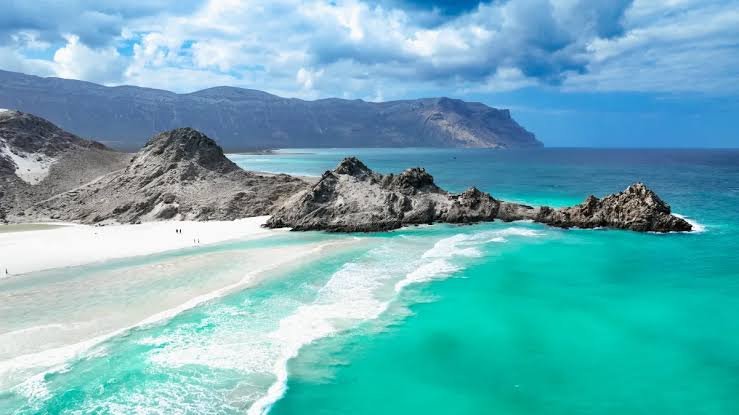
Socotra’s beaches are among its most beautiful natural features. Many have pale sand, clear water, and relatively undeveloped surroundings.
Some beaches are backed by dunes, while others lie beneath rocky hills or beside sheltered coastal areas.
Their remote character gives many locations a peaceful atmosphere, although access and conditions vary by season and location.
What Makes the Beaches Special?
Socotra’s coastline combines white sand, turquoise water, rocky headlands, and open views across the Arabian Sea.
The contrast between the beaches and the island’s dry interior creates a distinctive landscape. In some places, visitors can see mountains rising behind the shoreline.
Swimming and Coastal Safety
Not every beach is suitable for swimming. Currents, waves, rocky areas, and changing weather can make some sections dangerous.
Visitors should ask local guides about conditions before entering the water. Never assume that clear water or a quiet-looking beach is automatically safe.
Protecting Coastal Habitats
Beaches and dunes can be important nesting or feeding areas for wildlife.
Avoid disturbing animals, driving across fragile dunes, leaving rubbish, or collecting shells and other natural materials in protected areas.
Responsible behavior helps maintain the coastline’s natural condition.
10. The Sand Dunes of Socotra

Socotra’s dunes create another remarkable landscape. In some areas, pale sand accumulates along the coast, forming sweeping slopes and ridges that contrast with dark rocks and blue water.
Wind moves the sand gradually, reshaping the dune surfaces and creating patterns that change over time.
How Are Coastal Dunes Formed?
Dunes develop when wind transports loose sand and deposits it where conditions allow the material to accumulate.
Vegetation can help stabilize some dunes, while exposed areas may continue shifting as winds change.
The shape and size of dunes depend on wind direction, the supply of sand, coastal geography, and local vegetation.
Why Are Dunes Important?
Dunes can act as natural barriers that reduce the impact of waves and wind on areas farther inland.
They also provide habitat for specialized plants and animals. Damage to dune vegetation can make the sand more vulnerable to erosion.
Visitors should avoid disturbing vegetation or creating unnecessary tracks across sensitive areas.
11. The Caves of Socotra
Socotra contains extensive limestone landscapes, including caves formed through geological processes over long periods.
One of the best-known cave systems is Hoq Cave, located in the northeastern part of the island. The cave is notable for its size, geological features, and archaeological significance.
How Limestone Caves Form
Limestone can dissolve slowly when exposed to water containing dissolved carbon dioxide. Over long periods, this process can enlarge cracks and create underground passages.
Water movement may produce chambers, deposits, and other cave features.
The cave environment is often very different from the exposed landscape outside. Temperature, humidity, and airflow can vary with depth and local geology.
Hoq Cave
Hoq Cave is a significant destination for visitors interested in geology and the island’s history.
The cave contains evidence of past human activity, including archaeological material associated with historic maritime connections. Its significance extends beyond its physical size.
Access may require a hike and should be arranged with suitable local guidance. Visitors need to check current conditions and rules before planning a trip.
Responsible Cave Exploration
Caves can contain fragile formations and habitats that are easily damaged.
Visitors should avoid touching delicate deposits, writing on rock surfaces, leaving rubbish, or disturbing wildlife.
Never enter an unfamiliar cave without appropriate guidance and preparation.
12. Socotra’s Marine Biodiversity
The waters around Socotra support diverse marine environments, including coral reefs, rocky habitats, sandy bottoms, and coastal lagoons.
The island’s location near major oceanic currents helps shape its marine ecology. Different habitats support a variety of fish, invertebrates, and other marine organisms.
Coral Reefs
Coral reefs provide shelter, feeding grounds, and breeding areas for numerous species. They also contribute to the complexity and productivity of tropical marine ecosystems.
The condition of individual reefs varies, and some may be affected by temperature changes, physical damage, pollution, or other environmental pressures.
Reef Fish and Invertebrates
The surrounding waters support many types of reef fish and invertebrates. These organisms form complex food webs and contribute to the ecological functioning of coastal habitats.
Snorkeling or diving may reveal some of this diversity, but wildlife sightings depend on location, visibility, weather, and other conditions.
Protecting Marine Habitats
Visitors should avoid touching coral, chasing animals, or collecting marine life.
Plastic pollution and poorly managed fishing can harm marine ecosystems, making responsible behavior and conservation efforts particularly important.
13. Birds and Wildlife of Socotra
Socotra’s wildlife includes endemic birds, reptiles, invertebrates, and other species adapted to its varied habitats.
The island’s isolation has allowed some animal populations to evolve independently, making it important for scientific study and conservation.
Endemic Birds
Socotra supports several bird species and subspecies that are closely associated with the archipelago.
Birds occupy a variety of environments, including rocky highlands, open scrub, coastal areas, and wooded habitats.
Birdwatching can be especially rewarding for visitors who move quietly and take time to observe rather than trying to approach wildlife.
Reptiles and Invertebrates
The island’s reptile diversity includes species adapted to rocky and dry environments. Invertebrates also play essential ecological roles, from pollination and decomposition to serving as food for other animals.
Many small species are easy to overlook, but they contribute to the island’s overall biodiversity.
Marine Wildlife
The surrounding sea supports fish, sea turtles, and other marine animals. Sightings vary, and visitors should avoid expecting guaranteed encounters with particular species.
The best wildlife experiences usually involve patience, observation, and respect for the animals’ natural behavior.
14. The Climate of Socotra Island
Socotra has a warm climate influenced by its position in the Arabian Sea. Conditions vary according to elevation, season, and exposure to prevailing winds.
The island experiences periods of relatively dry weather as well as seasons when winds and rainfall can make travel more difficult.
Dry Periods
During drier periods, some inland areas appear brown and exposed, while coastal areas may remain visually striking because of their beaches and sea views.
Dry conditions can make some excursions easier, but heat and limited shade require careful preparation.
Windy Periods
Seasonal winds can strongly affect Socotra. Strong winds and rough seas may interfere with flights, boat travel, camping, and other outdoor activities.
The timing and severity of these conditions vary, so visitors should consult current local information rather than relying only on general seasonal descriptions.
Rainfall and Mountain Conditions
Rainfall and moisture can vary considerably between the coast and higher terrain.
Mountain areas may experience different conditions from lowland locations, influencing vegetation and hiking conditions.
Visitors should plan clothing and activities according to the areas they intend to explore.
15. Best Time to Visit Socotra Island
The best time to visit Socotra depends heavily on seasonal winds, sea conditions, available transport, and the activities planned.
Travel arrangements can be less predictable than those for more developed destinations, so visitors should confirm current operating conditions before making nonrefundable bookings.
More Favorable Travel Periods
Periods with more settled weather are generally preferred for sightseeing, hiking, camping, and coastal exploration.
During suitable conditions, travelers may be able to visit the main natural attractions more comfortably and move between inland and coastal areas.
However, even during a generally favorable season, local conditions can change.
Windy Seasons
Strong seasonal winds can make boat travel and some outdoor activities difficult. Rough seas may affect access to beaches and coastal locations.
Visitors should not assume that every advertised excursion will operate on a fixed schedule.
Planning Around Nature
Socotra’s plants and landscapes change with seasonal conditions. Some areas may look greener after rainfall, while others may appear drier.
The best trip is often one that allows enough flexibility to adjust to the weather and local guidance.
16. Getting to Socotra Island
Traveling to Socotra requires careful planning because the island has limited transport connections and is affected by the broader situation in Yemen.
Flight availability, departure points, entry requirements, and operating schedules can change. Travelers should verify all arrangements with reliable, current sources before making plans.
By Air
Air travel is the usual method for reaching Socotra when suitable services are operating.
Flights may be limited, and travelers may need to arrange their itinerary around specific departure dates. Booking a connection that leaves no flexibility can create difficulties if schedules change.
Entry and Travel Requirements
Visitors should confirm the current visa or entry requirements, permitted routes, insurance arrangements, and any relevant travel advisories before departure.
Because conditions can change, information from older travel blogs may no longer be accurate.
Working with a Local Operator
An experienced local operator can help coordinate transport, accommodation, guides, and excursions.
Before paying, travelers should verify the operator’s current ability to provide the advertised services, understand cancellation conditions, and confirm what happens if travel is disrupted.
17. Getting Around Socotra
Socotra has limited conventional transport infrastructure outside its main settlements. Many attractions are spread across the island and may be reached by road, off-road vehicle, or hiking route.
Travel times can be affected by terrain, weather, road conditions, and the distance between destinations.
Four-Wheel-Drive Vehicles
A suitable four-wheel-drive vehicle is often used for reaching remote areas. Some routes cross rough or uneven terrain that is not suitable for ordinary passenger cars.
Experienced local drivers are valuable because they understand road conditions and local access arrangements.
Walking and Hiking
Hiking provides a closer way to appreciate the island’s plants, geology, and wildlife.
However, many routes are remote and may have limited shade or water access. Visitors should use suitable guides and avoid attempting demanding routes without preparation.
Boat Excursions
Boat trips may provide access to coastal areas and nearby marine environments when conditions permit.
Weather and sea conditions must always take priority over the planned itinerary.
18. Camping and Overnight Stays in Nature
Camping is a memorable way to experience Socotra’s remote landscapes. Sleeping near the coast or in suitable inland areas can provide opportunities to enjoy the night sky, quiet surroundings, and early morning scenery.
However, camping arrangements should be planned with local guidance and according to current rules.
Choosing a Campsite
A suitable campsite should avoid sensitive vegetation, unstable ground, and areas that could be affected by tides or sudden weather changes.
Visitors should also consider access to drinking water, toilets, waste disposal, and emergency support.
Leaving No Trace
Responsible camping means taking all rubbish away, avoiding damage to plants, and minimizing disturbance to wildlife.
Fires should only be used where explicitly permitted and safe. In dry environments, uncontrolled fires can cause serious damage.
Respecting Local Communities
Some areas may be used by local people for grazing, fishing, or other activities.
Visitors should follow local advice about where camping is appropriate and avoid blocking routes or disturbing livestock.
19. Local Communities and Traditional Livelihoods
Socotra is not an uninhabited wilderness. Its landscapes are home to communities with deep connections to the sea, mountains, and surrounding natural resources.
Fishing, livestock keeping, and other local activities have long contributed to livelihoods on the island. Traditional knowledge helps people understand seasonal weather, water availability, plant uses, and suitable grazing areas.
Cultural Connections to Nature
Local knowledge can provide valuable insight into how people adapt to a dry and isolated environment.
The relationship between communities and nature is also important for conservation. Protecting the island’s biodiversity is more effective when local people have meaningful opportunities to participate in decisions and benefit from sustainable activities.
Responsible Cultural Tourism
Visitors should ask permission before photographing people and respect local customs.
Hiring local guides, purchasing locally produced goods, and choosing services that treat workers fairly can help support the community.
Cultural respect is especially important in remote areas where tourism may bring significant changes to everyday life.
20. Socotra’s Traditional Uses of Plants
Plants have long played an important role in local knowledge and everyday life on Socotra.
Certain species have been used historically for resin, fibers, food, animal husbandry, and traditional remedies. These uses reflect generations of experience with the island’s environment.
Dragon’s Blood Resin
The red resin from dragon blood trees has a long history of use in dyes, varnishes, and traditional preparations.
Its historical significance has contributed to the tree’s fame, but harvesting must be managed carefully to avoid damaging trees or threatening regeneration.
Other Useful Plants
Some native plants provide food, shade, or materials for local purposes. Their uses vary by species and community knowledge.
Not every traditional use has been scientifically established as safe or effective, so traditional practices should not be confused with verified medical treatment.
Preserving Traditional Knowledge
Local ecological knowledge can help guide conservation and sustainable resource management.
Respecting this knowledge means recognizing the role of local communities and avoiding the unauthorized collection or commercialization of biological resources.
21. Socotra’s Geological Features
Socotra’s geology is as varied as its vegetation. The island contains limestone formations, rocky plateaus, mountainous terrain, caves, cliffs, and coastal features shaped by long geological processes.
Limestone Landscapes
Limestone can develop distinctive shapes through weathering and dissolution. Over long periods, water can enlarge cracks and produce caves, hollows, and irregular rock surfaces.
These formations are important both as geological features and as habitats for plants and animals.
Mountain Formation
The island’s mountainous areas reflect a complex geological history. Rock type, uplift, weathering, and erosion have combined to produce steep slopes and rugged ridges.
The resulting terrain creates different environmental conditions across relatively short distances.
Coastal Erosion
Waves and currents continuously influence the coastline. They transport sediment, reshape beaches, and gradually alter exposed rock formations.
These processes help explain why beaches and coastal features can change over time.
Protecting geological heritage means avoiding unnecessary damage and ensuring that tourism does not destroy the features people visit to admire.
22. Photography on Socotra Island

Socotra is a remarkable destination for landscape, wildlife, and travel photography. Its unusual trees, dramatic mountains, clear coastlines, and remote atmosphere provide a wide range of subjects.
Photographing Dragon Blood Trees
The umbrella-shaped crowns are especially striking against an open sky.
A wide-angle lens can show the relationship between individual trees and the surrounding plateau. A longer lens can isolate the shape of a single crown or emphasize layers of trees in the distance.
Early and late daylight may create more dramatic shadows, although cloud cover can also produce attractive results.
Coastal Photography
Socotra’s beaches offer opportunities to capture turquoise water, white sand, rocky headlands, and sweeping coastal views.
Be mindful of tides and water conditions when working near the shoreline.
Mountain Photography
The Haghier Mountains can appear very different depending on cloud cover, light, and visibility.
Allow enough time to observe changing conditions rather than relying on a single viewpoint.
Responsible Photography
Never damage plants or move natural objects to create a better composition.
Avoid flying drones without the required authorization, and do not disturb wildlife to obtain a close-up image.
The most valuable photographs are those that document the island without harming it.
23. Environmental Threats Facing Socotra
Socotra’s biodiversity is extraordinary, but many species are vulnerable because they occur in relatively small areas.
Environmental threats can have disproportionate effects on an island ecosystem where some plants and animals have limited distributions.
Climate Change
Changes in temperature, rainfall, and seasonal weather can affect plant growth, water availability, and habitat suitability.
Species adapted to particular environmental conditions may struggle if those conditions change faster than populations can adapt.
Overgrazing
Livestock grazing is part of local livelihoods, but excessive grazing in sensitive areas can affect young plants and slow the regeneration of trees.
Conservation strategies need to balance ecological needs with the realities of local livelihoods.
Invasive Species
Introduced species can compete with native plants and animals, alter habitats, or spread disease.
Preventing harmful introductions and monitoring their effects are important parts of island conservation.
Development and Waste
Road construction, poorly planned development, and unmanaged waste can damage habitats and alter landscapes.
Tourism infrastructure should be designed with ecological sensitivity and community needs in mind.
Unsustainable Plant Collection
Rare plants may be threatened by collection, trade, or habitat disturbance.
Visitors should never remove plants or support illegal wildlife and plant trafficking.
24. How Tourism Can Help Protect Socotra
Tourism can create both opportunities and challenges for Socotra.
When carefully managed, it can support local guides, drivers, accommodation providers, food businesses, and other community services. It can also raise awareness about the importance of protecting the island.
Poorly managed tourism, however, can increase waste, damage fragile habitats, and place pressure on limited resources.
Choose Responsible Operators
Look for operators that explain environmental rules, employ local guides, and plan excursions around conservation needs.
Ask how rubbish is handled, how campsites are selected, and what measures are taken to minimize damage.
Support Local Businesses
Purchasing local services and goods can help tourism income reach island communities.
Fair treatment of local workers and respect for community decisions are important elements of responsible travel.
Reduce Waste
Carry reusable items where practical and avoid leaving plastic or food waste behind.
On remote islands, waste collection and disposal can be difficult, so preventing rubbish is particularly valuable.
Respect Restricted Areas
Some locations may be restricted because of conservation, safety, or community considerations.
Follow local guidance rather than attempting to access sensitive areas for photographs.
25. Is Socotra Island Safe for Visitors?
Safety on Socotra depends on several factors, including the broader situation in Yemen, the availability of reliable transport, local conditions, and the quality of travel arrangements.
Because Socotra is part of Yemen, visitors must consider current government travel advisories and the security situation before deciding whether to travel.
Information can change, so travelers should not rely exclusively on old travel articles or informal social media posts.
Verify Current Travel Advice
Check the latest official guidance from your government and relevant authorities before booking.
Confirm entry requirements, transport arrangements, insurance coverage, and whether your insurance remains valid for the destination.
Prepare for Remote Conditions
Medical facilities and emergency services may be limited compared with those in major cities.
Travelers should discuss medical needs with a qualified healthcare professional before departure and ensure that they have suitable insurance and contingency arrangements.
Follow Local Guidance
Use reliable local operators, remain aware of weather conditions, and avoid independent travel into remote terrain without appropriate support.
A flexible itinerary is important because transport and weather disruptions may be difficult to resolve quickly.
26. What to Pack for Socotra Island
A well-planned packing list can make a significant difference when traveling in a remote environment.
Recommended essentials include:
- Lightweight clothing suitable for warm weather.
- Long sleeves and trousers for sun and insect protection.
- Comfortable hiking shoes.
- Sandals suitable for beach areas.
- Hat and sunglasses.
- High-protection sunscreen.
- Reusable water bottle.
- Personal water treatment supplies if recommended by your operator.
- Insect repellent.
- Personal medication and a suitable first-aid kit.
- Waterproof bags for electronics.
- Camera, spare batteries, and charging equipment.
- Headlamp or flashlight.
- Power bank.
- Small backpack for day trips.
- Any required personal documents and copies.
- Suitable clothing for cooler mountain conditions.
If camping is included, confirm which equipment the operator supplies. Avoid assuming that water, food, charging facilities, or medical supplies will be readily available everywhere.
27. Food and Dining on Socotra
Food on Socotra reflects its island environment and wider Yemeni cultural connections.
Depending on location and availability, visitors may encounter rice dishes, fish, flatbreads, stews, and other meals prepared from local ingredients.
Seafood
Fishing is an important activity in the region, and fish may feature prominently in meals.
Visitors should choose food that has been stored and prepared safely. Responsible sourcing is also important for protecting marine ecosystems.
Rice and Bread
Rice and bread are common elements in many meals across Yemen and the wider region.
The exact dishes available depend on local ingredients, household traditions, and the arrangements made by a tour operator.
Meals During Remote Excursions
Food options can be limited outside settlements. Multi-day trips may depend on supplies arranged before departure.
Travelers should discuss dietary restrictions, allergies, drinking water, and meal arrangements with their operator in advance.
Reducing Food Waste
In remote environments, managing waste can be difficult. Take care not to leave packaging or food scraps at campsites and natural attractions.
28. A Suggested Five-Day Socotra Itinerary
A five-day visit can introduce travelers to a selection of Socotra’s major landscapes. The exact route should be adapted to current travel conditions, local advice, and available transport.
Day One: Arrival and Coastal Exploration
Arrive according to your confirmed transport arrangements and meet your local operator.
Use the first day to settle in, understand the itinerary, and explore a suitable nearby coastal area if time and conditions permit.
Avoid planning a demanding hike immediately after a long journey.
Day Two: Diksam Plateau
Travel inland toward the Diksam Plateau to observe the distinctive dragon blood trees and limestone landscapes.
Spend time at suitable viewpoints and learn about the trees’ ecology and conservation needs from a local guide.
Day Three: Mountain Landscapes
Explore an appropriate part of the Haghier Mountains, depending on weather, fitness, and access.
A guided hike can reveal different plant communities and offer views across the island’s rugged interior.
Day Four: Beaches and Coastal Scenery
Visit suitable beaches, dunes, or coastal viewpoints.
Enjoy the landscape while following guidance about swimming, tides, and marine conditions.
Day Five: Cultural Experience and Departure Preparation
Spend time learning about local life, purchasing appropriate local products, or revisiting a nearby landscape.
Allow adequate time for departure arrangements and possible transport changes.
This is a general planning example, not a guaranteed route. Actual visits depend on current operating conditions and the advice of reliable local guides.
29. Is Socotra Suitable for Families?
Socotra can be an educational destination for families who enjoy nature, but the remoteness of the island requires careful consideration.
Some journeys involve long drives, rough terrain, limited facilities, and outdoor conditions that may be difficult for younger children.
Families should consider medical needs, comfort during transport, access to food and water, and the suitability of hikes before booking.
Educational Opportunities
Children can learn about endemic species, plant adaptations, desert environments, marine ecosystems, and conservation.
Observing a dragon blood tree can introduce ideas about evolution, biodiversity, and how organisms adapt to their surroundings.
Planning for Comfort
Choose an itinerary with manageable travel times and enough opportunities to rest.
Do not assume that every location has shade, toilets, reliable communications, or easy access to medical support.
The best family itinerary is one that prioritizes safety, flexibility, and meaningful experiences over the number of attractions visited.
30. Why Socotra Matters to Science
Socotra is an important natural laboratory for studying evolution, ecology, biogeography, and adaptation.
Its long period of geographic isolation has allowed many species to develop unique characteristics. The island’s varied terrain also provides opportunities to study how different habitats support specialized plant and animal communities.
Evolution in Isolation
When populations remain geographically separated, they can follow different evolutionary paths.
Over many generations, changes in genetics, behavior, and physical characteristics may result in distinct species.
Socotra provides examples of this process and helps researchers understand how isolation contributes to biodiversity.
Climate Adaptation
Many Socotra plants survive in environments where water availability varies seasonally.
Studying these adaptations can improve understanding of plant ecology and the responses of organisms to environmental stress.
Conservation Research
Research helps identify threatened species, map important habitats, and evaluate environmental pressures.
Scientific findings can support better conservation policies, particularly when combined with local knowledge and community participation.
31. Socotra Compared with Other Natural Islands
Socotra shares some features with other biodiversity-rich islands, but its combination of endemic plants, dry landscapes, and marine environments makes it distinctive.
Compared with Tropical Rainforest Islands
Many tropical islands are known for dense forests, high rainfall, and lush vegetation.
Socotra includes different habitats, with extensive dry landscapes and unusual plants adapted to seasonal moisture.
Compared with Desert Islands
Some islands in arid regions have sparse vegetation and limited biodiversity.
Socotra’s isolation and varied terrain have produced a much more distinctive collection of endemic plants and animals than its dry appearance might suggest.
Compared with Volcanic Islands
Volcanic islands often display dramatic cliffs, lava formations, and fertile slopes.
Socotra’s landscapes reflect a different geological history, including limestone formations and mountain terrain, as well as its unusual plant communities.
The island’s uniqueness comes from the interaction between geology, climate, isolation, and evolution.
32. Frequently Asked Questions About Socotra Island
1. Where is Socotra Island located?
Socotra is in the Arabian Sea, southeast of mainland Yemen and near the Horn of Africa.
2. Why is Socotra Island famous?
It is famous for its unusual dragon blood trees, endemic plants and animals, mountains, caves, white-sand beaches, and turquoise coastal waters.
3. Why do dragon blood trees look like umbrellas?
Their branching structure produces a broad, umbrella-shaped crown. This distinctive form is one of their most recognizable features.
4. Is Socotra a UNESCO World Heritage Site?
Yes. The Socotra Archipelago was inscribed on the UNESCO World Heritage List in 2008 for its outstanding natural significance.
5. What is the best time to visit Socotra?
The best time depends on seasonal winds, sea conditions, transport availability, and planned activities. Visitors should confirm current conditions with reliable local operators.
6. How do visitors reach Socotra?
Visitors generally depend on available air services and carefully coordinated local travel arrangements. Routes and schedules can change, so current verification is essential.
7. Is Socotra safe to visit?
Safety depends on current conditions, including the wider situation in Yemen, local security, transport, and medical access. Check official travel advisories before making plans.
8. Can visitors hike on Socotra?
Yes, suitable guided hikes are possible in some areas, including mountain and plateau environments. Route difficulty and weather should be considered carefully.
9. Are there beaches on Socotra?
Yes. The island has white-sand beaches, dunes, rocky shorelines, and clear coastal waters. Swimming safety varies by location and conditions.
10. What wildlife can visitors see?
Depending on location and season, visitors may observe endemic birds, reptiles, marine life, and other wildlife. Sightings are not guaranteed.
11. Can tourists collect dragon blood tree resin or plants?
Visitors should not collect plants or natural materials without explicit authorization. Removing rare species can damage the ecosystem and may violate applicable rules.
12. How can travelers help protect Socotra?
Travelers can follow local guidance, avoid disturbing wildlife, reduce waste, respect communities, use responsible operators, and leave plants and geological features undamaged.
Conclusion
Socotra Island is one of the most extraordinary natural destinations in the world. Its dragon blood trees, bottle trees, rugged mountains, limestone caves, white-sand beaches, and rich marine environments create a landscape that is both visually striking and scientifically important.
The island’s isolation has allowed many species to evolve in unique ways, making its biodiversity especially valuable. Yet this same concentration of rare species means that environmental damage can have serious consequences.
A responsible visit requires more than an interest in beautiful scenery. Travelers must plan carefully, verify current transport and safety conditions, respect local communities, and follow conservation guidance.
For nature enthusiasts, photographers, hikers, and biodiversity researchers, Socotra offers an opportunity to experience an environment unlike almost any other. Its most important attraction is not simply its unusual appearance, but the remarkable natural history that produced it.
Protecting Socotra means preserving its rare species, landscapes, cultural connections, and ecological processes. With thoughtful management and responsible travel, this extraordinary island can remain a place of discovery and scientific value for generations to come.