
Death Valley, California: Complete Guide to Badwater Basin, Zabriskie Point and the Hottest Place on Earth
Death Valley is the hottest, driest and lowest place in North America, and one of the most dramatic deserts in the world. A vast valley in the Mojave Desert of California, it holds the record for the highest air temperature ever recorded on Earth, 56.7 degrees Celsius, at Furnace Creek in 1913, and its lowest point, Badwater Basin, is 86 metres below sea level, the lowest point in North America. Death Valley is a land of extremes: salt flats, sand dunes, colourful badlands, canyons, craters and mountains, and it is also a place of surprising beauty, especially at sunrise and sunset, when the light turns the rocks gold, pink and purple. Death Valley is a desert that rewards respect, preparation and slow travel.
This guide covers everything you need to plan a trip to Death Valley: when to go, how to get there, the best places to visit, Badwater Basin, Zabriskie Point, Mesquite Flat Sand Dunes, Artist’s Drive, Dante’s View, the best hikes and viewpoints, where to stay, and practical tips for heat, water and safety. Whether you drive through in a day or spend a few days exploring the valley, Death Valley offers a desert experience unlike any other in the United States.
Where Is Death Valley?
Death Valley is in eastern California, near the border with Nevada, about 120 miles north-west of Las Vegas. Death Valley National Park is the largest national park in the contiguous United States, covering more than 3.4 million acres of desert, mountains and valleys. The park is reached by Highway 190 from the west and from the east, and by Highway 127 from the south, and the main visitor centre is at Furnace Creek, in the centre of the valley, with a museum, a shop, a restaurant, a lodge and a campground. The valley is long and narrow, running north to south, and it is surrounded by mountains: the Panamint Range to the west and the Amargosa Range to the east, which create a rain shadow that makes Death Valley one of the driest places on Earth.
Badwater Basin: The Lowest Point in North America
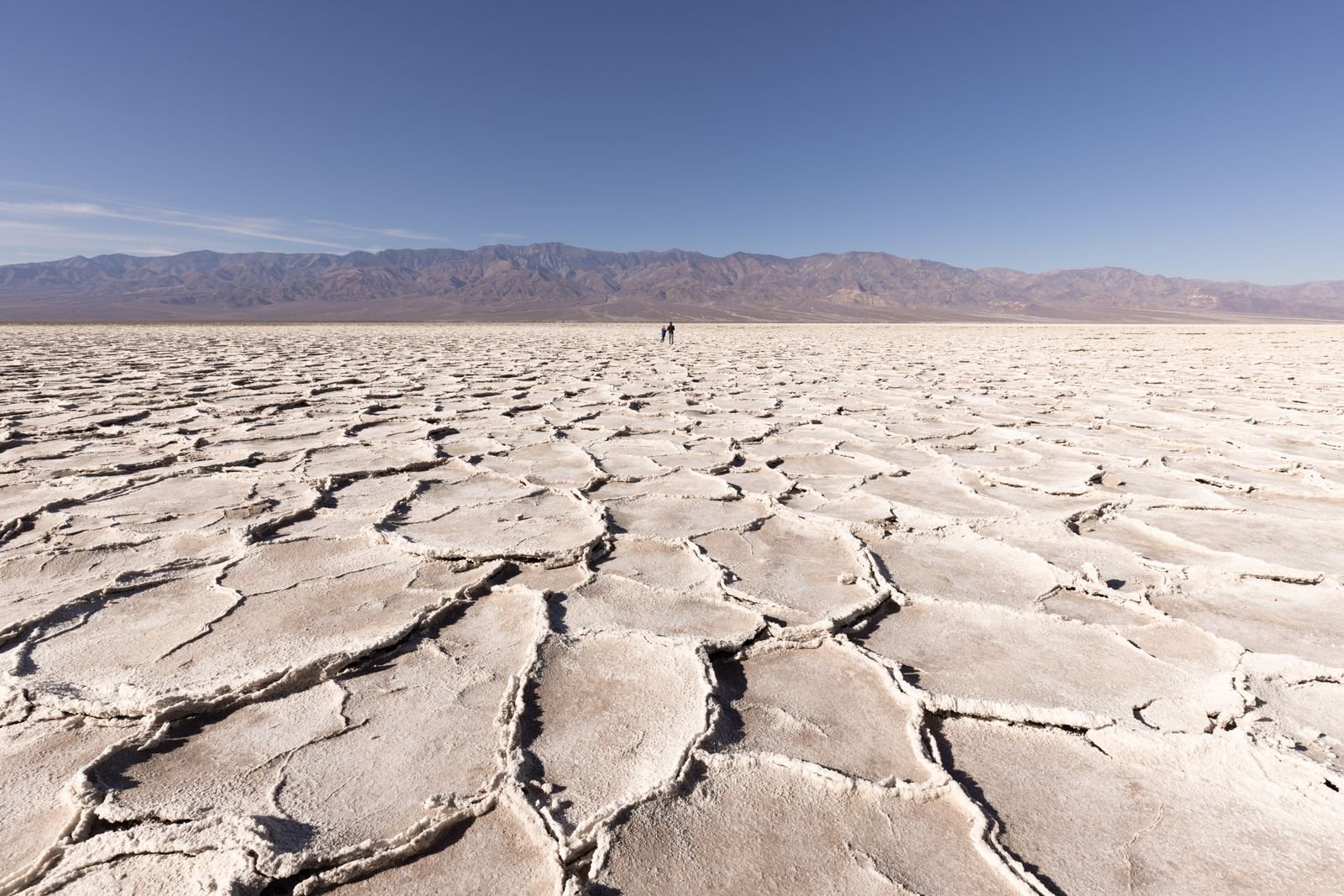
Badwater Basin is the lowest point in North America, at 86 metres below sea level, and it is one of the most visited places in Death Valley. A vast, white salt flat stretches to the horizon, with hexagonal salt polygons that crack in the heat, and a small, salty pool, Badwater Pool, where the water is undrinkable. A boardwalk leads out onto the salt flat, and you can walk out onto the salt, although the surface is fragile and the heat is intense. The best time to visit Badwater Basin is at sunrise or sunset, when the light is soft and the salt glows, and the mountains around the valley turn pink and purple. Badwater Basin is a place that makes you feel the scale and the extremity of Death Valley, and it is not to be missed.
Zabriskie Point and the Badlands of Death Valley
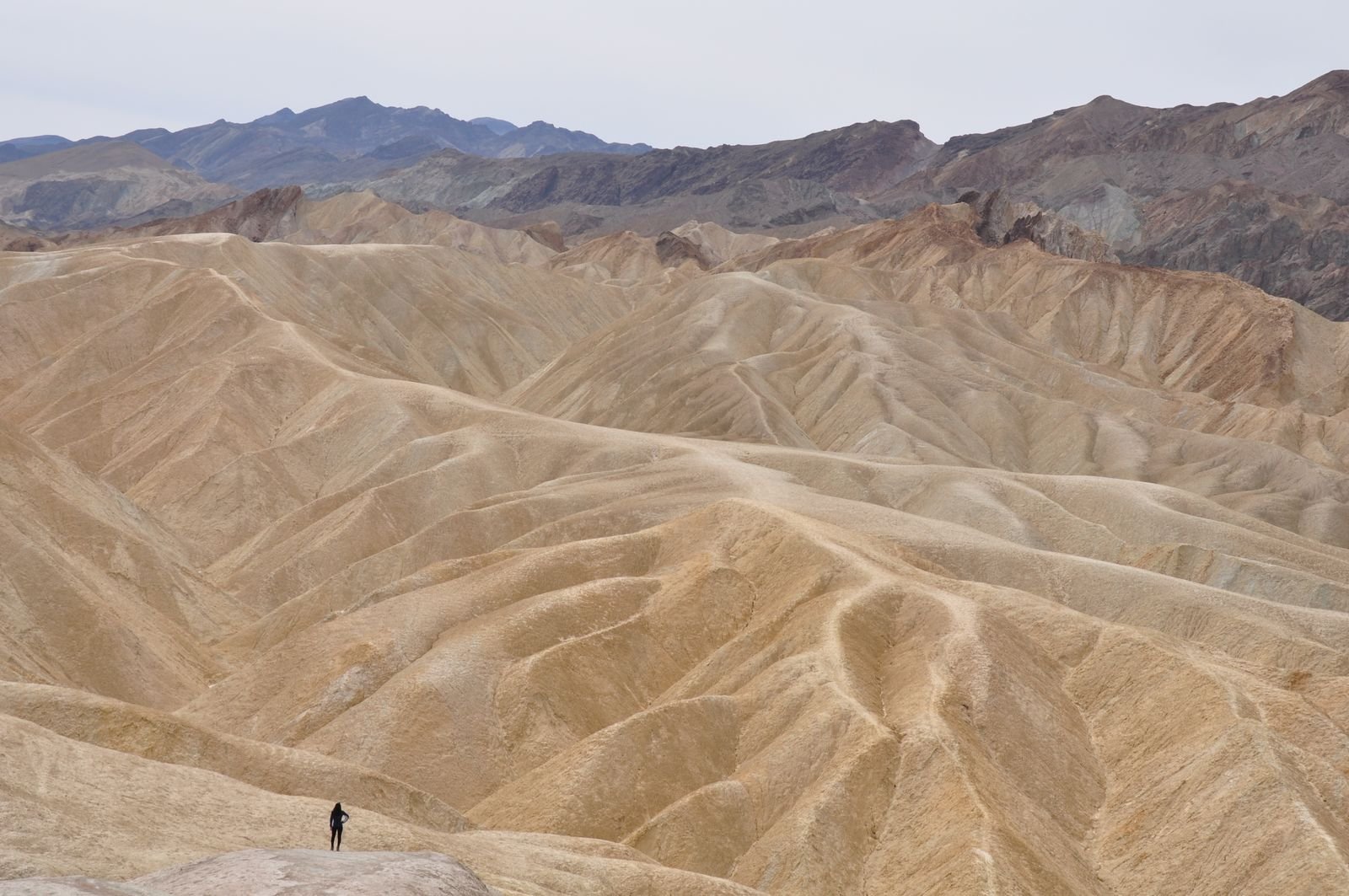
Zabriskie Point is the most famous viewpoint in Death Valley, and it is one of the most photographed places in the park. From a hilltop viewpoint, you look out over a maze of golden badlands, eroded hills of mudstone and volcanic ash, with the Panamint Mountains in the distance. Zabriskie Point is at its best at sunrise, when the first light turns the badlands gold and the shadows are long, and it is a short, easy walk from the car park to the viewpoint. The badlands are part of the Furnace Creek Formation, and they are a reminder of how Death Valley was once a lake, millions of years ago, and how the land has been shaped by water, wind and heat. Zabriskie Point is also the starting point for the Golden Canyon trail, a walk through a narrow canyon of golden rock.
Mesquite Flat Sand Dunes and Artist’s Drive
Mesquite Flat Sand Dunes, near Stovepipe Wells, are the most accessible sand dunes in Death Valley, and they are a wonderful place to walk, photograph and watch the sunset. The dunes are not the tallest in the park, but they are beautiful, with smooth, curving ridges, mesquite trees and animal tracks, and they are a good place to see the desert at its most classic. Artist’s Drive is a scenic, one-way road through a colourful canyon, where the rocks are stained pink, green, yellow and purple by minerals, and the highlight is Artist’s Palette, a viewpoint where the colours are at their brightest, especially in the late afternoon. The drive is a short, easy detour from Badwater Road, and it is a reminder that Death Valley is not just brown and white, but a desert of many colours.
Dante’s View, Ubehebe Crater and the Best Viewpoints in Death Valley
Dante’s View is the best viewpoint in Death Valley, with a view from 5,476 feet over the whole valley, from Badwater Basin below to Telescope Peak, the highest mountain in the park, across the valley. The view is extraordinary, especially at sunrise and sunset, and it is a reminder of how deep and how vast Death Valley is. Ubehebe Crater, in the north of the park, is a large volcanic crater, 600 feet deep and half a mile wide, formed by a steam explosion about 2,000 years ago, and you can walk around its rim and down to its floor. Other viewpoints in Death Valley include the Aguereberry Point, with a view over the valley, and the Father Crowley Vista Point, on Highway 190, with a view over Rainbow Canyon. Like White Sands in New Mexico, Death Valley is a desert of white sand and dunes, but Death Valley is hotter, lower and more varied, with salt flats, badlands and mountains as well as dunes, and it is the most extreme desert in North America.
Best Time to Visit Death Valley
The best time to visit Death Valley is in winter, from November to March, when the weather is mild, with daytime temperatures of 18 to 25 degrees Celsius, and the park is at its most comfortable. Winter is also the busiest season, with the most visitors, and accommodation should be booked in advance. Spring, from March to April, and autumn, from October to November, are also good times, with warm days and fewer visitors, and the wildflowers can be spectacular in a good year. Summer, from May to September, is extremely hot, with temperatures often above 50 degrees Celsius, and it is dangerous to hike or to be outside for long, although the park is still open, and the roads and viewpoints are still accessible by car. Death Valley is a year-round destination, but winter offers the best weather for most visitors, and summer should only be visited by those who are prepared for the heat.
Hiking in Death Valley
Hiking in Death Valley is best done in winter, when the temperatures are mild, and the trails are safe. Popular hikes include the Golden Canyon trail, a walk through a golden canyon from Zabriskie Point, the Natural Bridge trail, a short walk to a natural rock bridge, the Mosaic Canyon trail, a walk through a canyon of polished marble, and the Mesquite Flat Sand Dunes walk, a walk out onto the dunes. Longer hikes include the Telescope Peak trail, a long, strenuous climb to the highest mountain in the park, with views over the valley and the Sierra Nevada, and the Ubehebe Crater rim trail. Always bring plenty of water, at least one litre per hour in winter and more in summer, wear a hat and sunscreen, and do not hike in the heat of the day in summer, because heatstroke is a real risk in Death Valley.
Where to Stay in Death Valley
Accommodation in Death Valley is limited, so book well in advance, especially in winter. Inside the park, options include the Inn at Death Valley, at Furnace Creek, a historic, comfortable hotel with a pool, a restaurant and a golf course, the Ranch at Death Valley, also at Furnace Creek, with cabins, a campground and a pool, and the campgrounds at Furnace Creek, Mesquite Spring, Texas Spring and Stovepipe Wells. Outside the park, the towns of Beatty and Pahrump in Nevada, and Lone Pine in California, offer hotels, motels and restaurants, and they make good bases for a day trip to the valley. Camping is also possible in the park, with campgrounds that are first-come, first-served in winter and reservable in summer.
Practical Tips: Heat, Water and Safety in Death Valley
Death Valley is a dangerous place if you are not prepared, and it is important to respect the heat and the desert. Bring plenty of water, at least four litres per person per day, and drink regularly, even if you do not feel thirsty. Wear a hat, sunscreen and light, loose clothing, and do not hike in the middle of the day in summer. Fill up with petrol before you enter the park, because there is only one petrol station in the park, at Furnace Creek, and it is expensive. Check your car, because the heat can cause tyres and engines to fail, and carry a spare tyre and extra water. Let someone know your plans if you are hiking, and do not rely on mobile signal, which is patchy in the park. The Atacama Desert in Chile is the driest desert in the world, with even less rain than Death Valley, but Death Valley is hotter and lower, and it holds the record for the highest temperature ever recorded, and both are among the most extreme deserts on Earth.
Conclusion
Death Valley is a place of extremes, and it is a place that stays with you. It is the lowest point in North America, the hottest place on Earth, and one of the most beautiful deserts in the world, with salt flats, dunes, badlands, canyons and mountains, all in one valley. It is a desert that demands respect, preparation and slow travel, and it rewards those who take the time to look, to walk, and to watch the light change on the rocks. Visit in winter, bring water, and Death Valley will give you one of the great desert experiences of your life.
Frequently Asked Questions About Death Valley
What is the hottest temperature ever recorded in Death Valley?
The highest air temperature ever recorded on Earth was 56.7 degrees Celsius, at Furnace Creek in Death Valley, on 10 July 1913.
When is the best time to visit Death Valley?
The best time to visit Death Valley is in winter, from November to March, when the weather is mild, with daytime temperatures of 18 to 25 degrees Celsius, and the park is at its most comfortable.
Can you drive through Death Valley in a day?
Yes, you can drive through Death Valley in a day, visiting Badwater Basin, Zabriskie Point, Artist’s Drive and Dante’s View, but you should allow at least a full day, and two days is better, to see the valley at sunrise and sunset.
Is it safe to hike in Death Valley?
Hiking in Death Valley is safe in winter, if you bring plenty of water, wear a hat and sunscreen, and do not hike in the heat of the day. In summer, hiking is dangerous, and it is best to stay in your car and visit the viewpoints.
Where should you stay in Death Valley?
The best place to stay is Furnace Creek, in the centre of the valley, with the Inn at Death Valley, the Ranch at Death Valley and the campgrounds, although you should book well in advance, especially in winter.


One Comment