
Lençóis Maranhenses, Brazil — A Complete Guide to the World’s Extraordinary White Sand Dunes and Blue Lagoons


8
Introduction
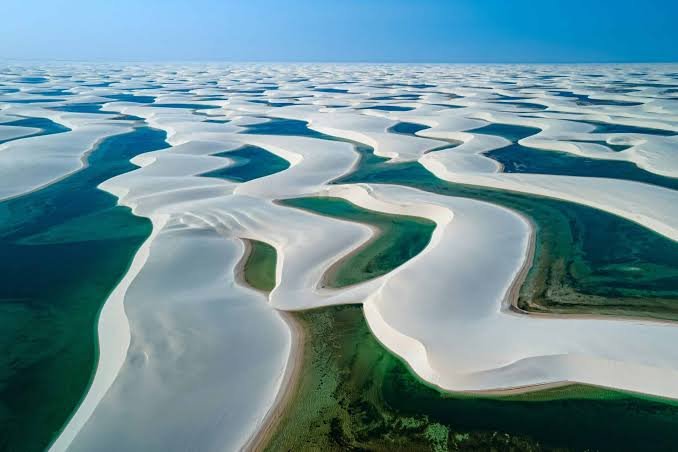
Lençóis Maranhenses National Park in northeastern Brazil is one of the most extraordinary natural destinations on Earth. Famous for its vast white sand dunes, crystal-clear freshwater lagoons, dramatic landscapes, and seasonal changes, this remarkable destination looks almost unreal. From above, the landscape resembles a giant white sheet spread across the countryside, with bright blue and emerald-green lagoons appearing between rolling dunes.
Unlike many traditional desert environments, Lençóis Maranhenses receives substantial seasonal rainfall. During the rainy season, water collects between the dunes, creating thousands of temporary lagoons that transform the region into a spectacular natural wonder. The contrast between white sand and colorful water makes this destination particularly attractive to photographers, nature enthusiasts, adventure travelers, and anyone searching for an unforgettable outdoor experience.
Located in the state of Maranhão, the national park covers an extensive area of coastal landscapes, shifting sand formations, freshwater pools, rivers, and environmentally important habitats. Although the dunes resemble those of a desert, the park’s climate and ecological characteristics are different from those of a typical dry desert.
Travelers visit Lençóis Maranhenses to swim in selected lagoons, explore sandy trails, enjoy panoramic views, photograph dramatic sunsets, and discover the culture of nearby communities. The surrounding region also offers opportunities to experience traditional Brazilian food, river journeys, and small towns that provide access to the park.
This comprehensive guide explains everything visitors should know about Lençóis Maranhenses, including its geography, natural history, best time to visit, most beautiful lagoons, activities, transportation, accommodation, safety, photography, and responsible tourism. Whether you are planning a future trip or simply want to learn about one of Brazil’s most beautiful natural landscapes, this guide will help you understand what makes Lençóis Maranhenses so special.
1. Where Is Lençóis Maranhenses Located?
Lençóis Maranhenses National Park is situated in the northeastern Brazilian state of Maranhão, along the Atlantic coast. The region lies approximately east of São Luís, the state capital, and includes extensive coastal dunes and seasonal freshwater lagoons.
The park is associated with several communities that serve as important starting points for visitors. The best-known gateways include Barreirinhas, Santo Amaro do Maranhão, and Atins. Each offers a different way to explore the surrounding landscape.
Barreirinhas is a popular base for first-time visitors because it has a relatively developed tourism infrastructure, including hotels, restaurants, tour operators, and transportation services. Santo Amaro offers access to particularly impressive dune and lagoon landscapes, while Atins attracts travelers interested in a quieter atmosphere, outdoor activities, and the meeting point of dunes, rivers, and the ocean.
The journey to the park usually begins in São Luís, which has an airport and road connections to other Brazilian destinations. From there, travelers continue by road toward one of the gateway communities.
The park’s coastal location contributes to its distinctive environment. Wind moves sand across the landscape, rainfall fills depressions between dunes, and the nearby Atlantic Ocean influences local weather conditions.
Because the park is large, choosing a suitable gateway can make a significant difference to a visitor’s experience. Travelers with limited time may prefer Barreirinhas, while those seeking quieter surroundings or particular lagoon circuits may wish to investigate Santo Amaro or Atins.
2. Why Is Lençóis Maranhenses So Famous?
Lençóis Maranhenses is internationally recognized for a landscape that combines features rarely seen together on such a large scale.
Vast white sand dunes
The park’s most recognizable feature is its enormous field of pale sand dunes. Some dunes rise dramatically above the surrounding terrain, while others form smooth, sweeping ridges that extend toward the horizon.
The wind constantly reshapes these formations. As a result, the arrangement of the dunes changes over time, giving the landscape a sense of movement.
Seasonal freshwater lagoons
Rainwater collects in low areas between the dunes, creating freshwater lagoons of different shapes, sizes, and colors. Some are small, secluded pools, while others form larger expanses of water suitable for swimming when conditions permit.
These lagoons are one of the main reasons the park attracts visitors from around the world.
Extraordinary natural contrasts
The combination of bright sand, blue sky, green vegetation, and turquoise water creates striking scenery. During the rainy season, the landscape may resemble an enormous natural swimming complex surrounded by rolling dunes.
At other times of the year, some lagoons shrink or disappear, revealing the park’s changing seasonal character.
A protected natural environment
Lençóis Maranhenses is not simply a scenic tourist destination. It is also an important natural landscape that supports wildlife, coastal ecosystems, and ecological processes.
Protecting the park helps preserve its dunes, lagoons, vegetation, and surrounding environmental systems for future generations.
Exceptional photography opportunities
The dunes create strong patterns of light and shadow, especially during the early morning and late afternoon. The lagoons introduce vivid colors, while the open landscape offers wide views without the visual clutter of dense urban environments.
For photographers, these features make the park one of Brazil’s most distinctive destinations.
3. The Geography and Formation of the Sand Dunes

Understanding how Lençóis Maranhenses formed makes a visit even more interesting. Its landscape is the result of several natural processes working together over long periods.
Sand supplied by coastal processes
The region’s sand is associated with coastal sediment systems. Rivers transport sediment toward the Atlantic, and waves and currents redistribute material along the coast. Winds then carry loose sand inland, where it accumulates into dunes.
The amount of sand available, its grain size, the strength of the wind, and the shape of the terrain all influence dune development.
Wind-shaped formations
Wind is the main force responsible for reshaping the visible dune landscape. When wind transports sand across relatively open ground, small deposits can gradually develop into larger ridges.
As wind direction and intensity change, the shapes and positions of dunes may also change. Some dunes grow higher, others migrate, and still others become reshaped into smooth curves.
This process explains why the landscape can look different from one visit to another.
The role of rainfall
Rainfall is essential to the park’s seasonal appearance. Water accumulates in depressions between dunes, where the underlying conditions allow lagoons to develop.
The dunes and the spaces between them create a distinctive pattern of elevated sand ridges and low-lying basins. When rainfall is sufficient, the basins fill with water, producing the lagoons that make the park famous.
Why the lagoons can remain clear
Many of the lagoons have light-colored sandy bottoms and relatively low levels of suspended material, giving the water a transparent appearance under suitable conditions.
The color may range from pale blue to deep turquoise or green, depending on water depth, sunlight, the angle of observation, and local conditions.
Not every lagoon has the same appearance. Some are clearer than others, and their colors can change throughout the day.
A landscape that never remains exactly the same
Lençóis Maranhenses is a dynamic environment. Dunes move, rainfall varies, and lagoon sizes change with the seasons.
This natural variability is part of its appeal. A photograph taken during one year may show a different arrangement of water and sand from a photograph taken several years later.
Visitors should therefore avoid expecting every lagoon to look exactly like the images they have seen online.
4. The Seasonal Lagoons of Lençóis Maranhenses
The freshwater lagoons are the park’s signature attraction. Their appearance depends strongly on the timing and amount of rainfall.
How the lagoons develop
During the rainy season, water accumulates in depressions between the dunes. Where the terrain and underground conditions allow water to collect, temporary or seasonal lagoons develop.
These pools can become surprisingly large, creating blue or green expanses surrounded by white sand.
The amount of water varies across the park. Some lagoons fill earlier than others, and some retain water longer into the drier months.
Why lagoon levels change
Evaporation, rainfall, infiltration, and local topography all influence lagoon levels. Hot weather can cause water to evaporate, while new rainfall can replenish the pools.
Consequently, two lagoons located relatively close to each other may look quite different at the same time of year.
The best lagoon experiences
Visitors generally enjoy the lagoons for their natural beauty, refreshing water, and unusual surroundings. Walking across the dunes to reach a secluded lagoon can be an experience in itself.
Popular excursions often combine several lagoons into one route. The best option depends on the season, weather, the condition of the trails, and the local operator’s knowledge of the area.
Swimming responsibly
Swimming may be possible in designated or locally permitted lagoons when conditions are suitable. However, visitors should follow local guidance, pay attention to water depth, and avoid entering isolated pools without understanding the conditions.
The absence of visible waves does not automatically mean that every lagoon is safe. Water depth, footing, weather, and access routes can vary.
Visitors should also avoid using soaps, detergents, or other products in the lagoons and should never leave rubbish behind.
5. The Best Places to Explore in Lençóis Maranhenses
The park and its surrounding region offer several distinct landscapes. Each gateway provides access to different routes and experiences.
5.1 Barreirinhas

Barreirinhas is one of the principal gateways to Lençóis Maranhenses. Situated along the Preguiças River, it provides a convenient base for travelers who want to combine dune excursions with river trips and local sightseeing.
The town has a range of accommodation options, restaurants, transport services, and guided tours. Visitors can arrange excursions to nearby dune fields and seasonal lagoons through local operators.
Barreirinhas is particularly useful for first-time travelers who prefer having services close at hand. It also offers opportunities to experience the surrounding region without spending every day inside the national park.
A typical visit may include an organized journey to the dunes, time for swimming where permitted, and an evening meal in town.
5.2 Santo Amaro do Maranhão

valparaisoadventurepark.com.br
Santo Amaro is another important gateway, often chosen by travelers seeking access to striking dune and lagoon landscapes.
Depending on the route and seasonal conditions, visitors may find extensive dune fields and lagoons that feel more remote than those on some of the busier excursions.
The surrounding area has a quieter character than larger tourism centers, although visitor facilities and tour availability vary.
Travelers should organize transportation and excursions in advance when possible. Some access roads and routes require suitable vehicles, and conditions can change with weather.
5.3 Atins

Atins is a coastal village near the meeting of the Preguiças River and the Atlantic Ocean. It is known for its relaxed atmosphere, sandy streets, coastal scenery, and access to outdoor activities.
The village appeals to travelers who want to combine the park’s landscapes with time beside the sea. Depending on local conditions, activities may include walking, boat excursions, kitesurfing, and visits to nearby dunes.
Atins can also be a good choice for visitors who prefer smaller guesthouses and a slower pace of travel.
Because the village has a different transport and accommodation environment from Barreirinhas, visitors should check transfer arrangements and the availability of services before arrival.
5.4 Lagoa Azul
Lagoa Azul, commonly translated as Blue Lagoon, is among the well-known lagoon destinations associated with Lençóis Maranhenses excursions.
Its appeal comes from the contrast between the pale sand and the water’s blue appearance when seasonal conditions are favorable.
The exact appearance and water level vary during the year. Travelers should ask local guides about current conditions rather than relying solely on photographs from other seasons.
5.5 Lagoa Bonita
Lagoa Bonita, or Beautiful Lagoon, is another popular destination for visitors exploring the dune landscape.
Routes to this area often involve traveling over sandy terrain and climbing dunes to reach viewpoints. From elevated positions, visitors can enjoy broad views of the surrounding dunes and seasonal lagoons.
Late afternoon is especially attractive for photography because the lower sun creates long shadows across the sand.
Visitors should be prepared for heat, loose sand, and physical exertion. Comfortable footwear, water, and sun protection make the excursion more enjoyable.
5.6 The Preguiças River
The Preguiças River adds a different dimension to a trip. Instead of focusing entirely on dunes and lagoons, travelers can explore a waterway bordered by vegetation and small settlements.
Boat excursions may provide views of river landscapes, coastal ecosystems, and local communities.
The river is also important for transportation and daily life in the region. Responsible visitors should respect private property, local customs, and wildlife along the banks.
5.7 The surrounding Atlantic coast
The coast near Lençóis Maranhenses offers another natural contrast. The white dunes, freshwater lagoons, river channels, and Atlantic shoreline form a varied coastal environment.
Sea conditions can be very different from those in the sheltered lagoons. Visitors should follow local advice before swimming or participating in water sports.
Exploring the coast with a knowledgeable local guide can help travelers understand how the dunes, rivers, and ocean connect as part of a larger natural system.
6. Best Time to Visit Lençóis Maranhenses
Choosing the right time is one of the most important decisions when planning a trip to Lençóis Maranhenses. The landscape changes considerably throughout the year because the lagoons depend on seasonal rainfall.
The park is open to visitors throughout the year, but the best period for seeing numerous lagoons filled with water is generally from May to September. Conditions vary between years and between different parts of the park, so travelers should check local updates before booking. Brazil’s tourism authorities also emphasize that rainfall determines how many lagoons form and how long they remain filled.
Serviços e Informações do Brasil
+1
January to March: The beginning of the rainy season
During the first months of the year, rainfall begins replenishing the landscape. Lagoons may start to form or gradually increase in size, although many may not yet be at their seasonal peak.
Advantages of visiting during this period include potentially fewer visitors and the opportunity to observe the landscape as it changes.
However, frequent rain can affect road conditions, excursion schedules, visibility, and access to certain locations. Visitors who prioritize swimming in large, clear lagoons may find this period less predictable.
April to May: Lagoons begin filling more extensively
As the rainy season progresses, water accumulates in more depressions between the dunes. The landscape can become increasingly colorful, with larger stretches of water appearing across the sandy terrain.
April and May can be interesting months for travelers who want to experience the transition toward the lagoon-filled season.
Nevertheless, rainfall may still be substantial, and cloudy weather can influence photography. It is important to confirm which excursions are operating and what conditions are expected at the intended destination.
June to August: A popular period for lagoon exploration

June, July, and August are often excellent months for visitors who want to see the lagoons after the rainy season.
Many lagoons may contain substantial amounts of water, and improving weather can provide attractive conditions for walking, swimming where permitted, and photography.
July and August can also be busy periods because of school holidays and seasonal tourism. Accommodation and guided excursions may need to be booked in advance.
For travelers whose main priority is the classic image of blue lagoons surrounded by white dunes, this period is a strong starting point when choosing travel dates.
September: A transition toward drier conditions
September can offer a combination of sunshine and attractive lagoon scenery. However, water levels may already be declining in some areas.
The experience depends on the rainfall received earlier in the year and the location of the lagoons being visited. Some pools may remain impressive while others become smaller.
Visitors should request recent information about lagoon conditions rather than assuming that every pool will still be full.
October to December: A drier landscape
During the later part of the year, many seasonal lagoons shrink or disappear as evaporation continues and rainfall decreases.
This does not mean that the park becomes uninteresting. The exposed dunes, open horizons, changing sand formations, and coastal landscapes remain impressive.
However, travelers who specifically want to swim in numerous freshwater lagoons should be particularly careful when selecting dates during these months.
Month-by-month planning guide
| Period | Typical conditions | Best suited for |
|---|---|---|
| January–March | Rainy, lagoons developing | Flexible travelers and seasonal landscape observation |
| April–May | Lagoons increasingly filling | Seeing the transition toward wetter conditions |
| June–August | Many lagoons may be full | Lagoon excursions and classic photography |
| September | Often sunnier, with variable water levels | Photography and mixed outdoor activities |
| October–December | Generally drier, with shrinking lagoons | Dune scenery and quieter-season exploration |
These are general seasonal patterns, not guarantees. Actual conditions can differ considerably from year to year.
Ministério do Turismo
+2
7. How to Reach Lençóis Maranhenses National Park
Planning transportation carefully makes the journey easier, especially for international travelers who are unfamiliar with northeastern Brazil.
Step 1: Fly to São Luís
São Luís, the capital of Maranhão, is one of the principal entry points for visitors. The city has an airport with domestic connections, and it provides access to the road network leading toward the national park.
International travelers may need to connect through another Brazilian city, depending on their departure point and airline.
Before purchasing flights, check arrival times, baggage allowances, and the availability of onward transportation. Arriving late in the day may make it difficult to connect comfortably with a road transfer.
Step 2: Travel to Barreirinhas
Barreirinhas is a major gateway to the park and lies roughly 250–260 kilometers from São Luís, depending on the route and the precise starting and ending points.
Road journeys commonly take around four hours, although traffic, stops, weather, and transfer arrangements can affect the duration.
Visitors can investigate shared vans, organized transfers, buses where available, or private transportation. A prearranged transfer may be convenient for travelers carrying luggage or arriving on a tight schedule.
Step 3: Choose the right gateway
After reaching the region, decide whether Barreirinhas, Santo Amaro, or Atins best fits your itinerary.
- Barreirinhas: A practical base with a range of visitor services and organized excursions.
- Santo Amaro: A useful base for exploring particular dune and lagoon circuits.
- Atins: A coastal village suitable for travelers seeking a relaxed atmosphere and additional outdoor activities.
The best choice depends on the excursions you want, your budget, and how much time you have available.
Step 4: Arrange authorized excursions
Visitors should not assume they can drive directly across the dunes in a rental car or private vehicle.
The national park has specific rules governing access, transport, and guiding. The park authority states that visitor transportation and guiding services must use appropriately authorized operators, and private vehicles are not permitted to conduct ordinary tourist excursions across the dune field.
Serviços e Informações do Brasil
+1
Before paying, ask whether the excursion includes transport, a guide, stops at lagoons, and any required fees. Confirm the departure point and return time.
8. Things to Do in Lençóis Maranhenses
Lençóis Maranhenses offers much more than sightseeing. Visitors can enjoy outdoor activities, nature observation, local culture, and photography.
8.1 Explore the dunes on foot
Walking across the dunes is one of the most memorable experiences in the park.
The sand changes underfoot, and every rise may reveal another lagoon, ridge, or distant horizon. Unlike many landscapes with established roads and buildings, the dunes provide a feeling of openness and isolation.
Even a relatively short walk can require effort because loose sand makes progress more demanding than walking on a paved path.
Visitors should choose a route appropriate to their fitness level and follow their guide’s instructions. Carrying sufficient drinking water is essential in the heat.
8.2 Swim in seasonal lagoons
Swimming in a clear freshwater lagoon surrounded by white dunes is a defining Lençóis Maranhenses experience.
The water can feel refreshing after walking through the warm sand. Some excursions include several swimming stops, giving visitors opportunities to enjoy different lagoons and landscapes.
Always follow local instructions about which lagoons are suitable for swimming. Avoid diving into unfamiliar water, disturbing aquatic habitats, or entering restricted areas.
8.3 Photograph the landscape

The park is a remarkable destination for landscape photography because its visual character changes with sunlight, weather, and seasonal water levels.
Photographers can capture wide panoramas, sweeping dune lines, lagoon reflections, and detailed patterns in the sand.
A wide-angle lens can help record the scale of the landscape, while a telephoto lens can emphasize the repeating forms of distant dunes.
Protect cameras and lenses from sand. Avoid changing lenses in strong winds when possible, and carry suitable protective equipment.
8.4 Watch the sunset
Sunset is one of the most beautiful times to experience the dunes.
As the sun approaches the horizon, the sand may shift from pale white to gold, orange, or soft pink. Shadows grow longer, emphasizing the shapes of the dunes.
Some organized excursions are designed to reach scenic viewpoints before sunset. Check the return arrangements, since walking across unfamiliar dunes after dark can be difficult.
8.5 Take a river excursion
The Preguiças River provides an opportunity to experience the region from a different perspective.
Boat trips may pass mangroves, riverside settlements, and stretches of vegetation that contrast with the open dunes.
Depending on the itinerary, visitors may stop at places such as Vassouras or Mandacaru and continue toward the coastal area near Caburé.
Ask about the duration of the excursion, the type of boat, safety equipment, and whether food or other services are included.
8.6 Discover local communities
The villages around the park have their own cultural traditions, livelihoods, and relationships with the surrounding environment.
A respectful visit can offer insight into regional food, fishing, transportation, crafts, and everyday life.
Choose locally operated services where possible, ask permission before photographing people, and follow local guidance around private property.
8.7 Experience the night sky
On clear evenings, areas away from strong artificial lighting can offer rewarding opportunities to observe the night sky.
The open dunes provide broad views of the heavens, and stargazing can be a memorable addition to a trip.
Night excursions should be arranged responsibly. Do not enter remote areas alone, and make sure any nighttime activity complies with park rules and authorized access arrangements.
8.8 Try local food
Food is an important part of the travel experience in Maranhão. Regional cuisine reflects coastal resources, local ingredients, and the broader culinary traditions of northeastern Brazil.
Visitors may encounter fresh fish, shrimp, rice-based dishes, regional sauces, and tropical fruit juices.
Restaurants and menus differ between Barreirinhas, Santo Amaro, and Atins. Ask local residents or accommodation staff about reliable places to eat and any seasonal specialties.
9. Wildlife and Biodiversity in Lençóis Maranhenses
Although the dunes dominate the scenery, the park supports a variety of habitats and living organisms.
The national park lies within a coastal transition region influenced by the Cerrado, Caatinga, and Amazon biomes. Its wider landscape includes coastal vegetation, mangroves, restinga, freshwater environments, and sandy dune systems.
Serviços e Informações do Brasil
+1
Vegetation in the coastal environment
Plants occur in areas where soil, moisture, and exposure allow them to survive. Vegetation may be found along lagoon margins, around stable dune areas, and in nearby coastal habitats.
These plants contribute to ecological stability and provide shelter or food for other organisms.
Visitors should avoid trampling vegetation or removing plants, flowers, seeds, or other natural materials.
Birds
Birds are among the wildlife visitors may notice in the region. Coastal wetlands, river environments, and vegetation provide different habitats for feeding, resting, and nesting.
The species visible on any particular trip depend on season, location, weather, and the amount of time spent observing.
Binoculars can improve wildlife viewing, especially when birds are distant. Maintain a respectful distance and avoid disturbing nesting or feeding animals.
Fish and aquatic life
Freshwater lagoons, rivers, and other aquatic environments support different forms of life. The species present depend on local conditions, connectivity, and seasonal changes.
Although a lagoon may appear simple, it is part of a wider environmental system. Avoid introducing food, chemicals, or foreign organisms into the water.
Reptiles and other animals
Reptiles, amphibians, insects, and other small animals contribute to the region’s biodiversity. Some are difficult to observe because they blend into the sand or remain hidden in vegetation.
Visitors should not attempt to handle wildlife. Even animals that appear harmless may become stressed or defend themselves if approached.
Protecting fragile habitats
The park’s ecosystems can be vulnerable to trampling, litter, inappropriate vehicle use, and disturbance.
Travelers can help by staying with authorized guides, respecting access restrictions, carrying rubbish out, and avoiding activities that damage vegetation or wildlife habitats.
10. Why Lençóis Maranhenses Is Important for Conservation
Lençóis Maranhenses is valuable not only because of its beauty but also because of its distinctive geological and ecological characteristics.
The park was established in 1981 and was inscribed on UNESCO’s World Heritage List in 2024. UNESCO recognizes the significance of its extensive coastal dunes, seasonal and permanent lagoons, and geological processes.
Serviços e Informações do Brasil
+1
Protecting a rare landscape
Large dune fields develop through interactions among wind, sand supply, coastal processes, and terrain. The scale and arrangement of dunes at Lençóis Maranhenses make the landscape particularly significant.
Conservation helps preserve these processes and the natural features they create.
Maintaining freshwater environments
Seasonal lagoons depend on rainfall and the physical characteristics of the dune landscape.
Maintaining the natural hydrology of these areas is important for preserving the patterns of water accumulation, evaporation, and ecological activity.
Pollution or inappropriate human activity can damage these environments even when the impact is not immediately visible.
Supporting biodiversity
The park protects habitats that occur within a broader coastal transition zone. Conservation efforts help preserve the conditions required by native plants and animals.
Visitors can support these efforts by avoiding disturbance and choosing operators who respect the park’s regulations.
Supporting sustainable tourism
Tourism provides income for guides, drivers, accommodation providers, restaurants, and other local businesses.
When managed responsibly, tourism can create incentives for conservation and help local communities benefit from the natural landscape.
However, poorly managed tourism can increase litter, disturb habitats, and place pressure on sensitive environments.
The long-term success of tourism depends on balancing visitor access with environmental protection.
11. Photography Tips for Lençóis Maranhenses
The park offers outstanding photography opportunities, but good results depend on preparation and an understanding of the environment.
Visit during favorable light
Early morning and late afternoon often provide softer light than the middle of the day.
Low-angle sunlight emphasizes dune contours and creates shadows that make the landscape appear more three-dimensional.
Midday can still be useful for capturing the bright contrast between white sand and blue water, but glare may be stronger.
Use a polarizing filter carefully
A polarizing filter can reduce some reflections and deepen the appearance of blue skies under suitable conditions.
However, its effect depends on the direction of the sun and the scene. Use it selectively rather than assuming it will improve every photograph.
Capture different perspectives
Wide landscape photographs show the scale of the dunes, while closer compositions reveal the curves of sand ridges and the colors of the lagoons.
Try photographing from an elevated viewpoint, from the edge of a lagoon where permitted, and from a distance that emphasizes the repeating patterns.
Protect your equipment
Fine sand can damage camera mechanisms and enter bags, connectors, or lens mounts.
Keep equipment in a closed bag when it is not in use. Avoid placing cameras directly on the sand, and use a protective cover when winds become strong.
A microfiber cloth and a sealed storage bag can be useful additions to your equipment.
Respect other visitors
Avoid obstructing narrow trails or positioning yourself in ways that create hazards for other people.
If you are photographing a guide, local resident, or another visitor, ask permission when appropriate.
Drone photography
Aerial images of the dunes are visually striking, but drone flights may be subject to aviation rules, protected-area restrictions, and specific authorization requirements.
Do not assume that a small drone can be flown freely within the park. Check current requirements with the relevant authorities before bringing or operating one.
12. Where to Stay Near Lençóis Maranhenses
Accommodation choices range from simple guesthouses to more comfortable hotels and small lodges.
The best place to stay depends on your budget, preferred atmosphere, and planned excursions.
Hotels and guesthouses in Barreirinhas
Barreirinhas generally offers a broad range of accommodation options and is a convenient choice for travelers who want access to restaurants, tour agencies, and transport services.
It can be particularly practical for families and first-time visitors.
When comparing properties, consider the distance to the town center, included breakfast, air conditioning, transfer arrangements, and cancellation terms.
Guesthouses in Santo Amaro
Santo Amaro can appeal to travelers who want to stay closer to particular lagoon excursions.
The available facilities and transport arrangements differ from those in Barreirinhas, so check whether the accommodation can help organize authorized guides and transfers.
A property that offers reliable local assistance may be more useful than one chosen solely for its appearance.
Small lodges in Atins
Atins offers a different atmosphere, with small guesthouses and lodges that suit visitors seeking a relaxed coastal setting.
Accommodation standards and amenities vary. Some properties emphasize rustic simplicity, while others provide more extensive services.
Check access arrangements, meal availability, luggage transfers, and electricity or connectivity expectations before booking.
How to choose the right accommodation
Before making a reservation, consider the following:
- How many days you will spend exploring the park.
- Whether your preferred excursions depart from the same town.
- Whether you need airport or intercity transfers.
- Whether the accommodation provides meals or has restaurants nearby.
- Whether air conditioning, reliable internet, or private bathrooms are important.
- Whether the property can help arrange authorized local guides.
Choosing accommodation near your main excursion departure point can save time and reduce unnecessary transportation costs.
13. Food and Dining Around Lençóis Maranhenses
Exploring the regional cuisine is an enjoyable way to understand the culture of Maranhão. The state’s food traditions reflect coastal fishing, tropical agriculture, Indigenous influences, and the wider culinary heritage of northeastern Brazil.
Fresh seafood
Fish and shrimp are important ingredients in many coastal dishes. Depending on the restaurant and the day’s availability, visitors may find grilled fish, seafood stews, shrimp dishes, and meals served with rice.
Atins and other coastal communities can be particularly interesting places to explore seafood cooking.
When ordering, ask about the ingredients, preparation method, and portion size. Travelers with food allergies should communicate their requirements clearly.
Arroz de cuxá
Arroz de cuxá is a traditional dish associated with Maranhão. It combines rice with cuxá, a preparation traditionally made using vinagreira leaves, along with ingredients such as sesame seeds, dried shrimp, and seasonings.
Recipes differ between households and restaurants, making it a worthwhile dish to try for visitors interested in local cuisine.
Tropical fruits and juices
Brazil’s tropical fruit selection offers plenty of refreshing options in warm weather. Depending on availability, visitors may find mango, cashew fruit, passion fruit, acerola, and other regional varieties.
Fresh juices can be an appealing alternative to sugary soft drinks during hot days.
Tips for eating locally
- Choose restaurants that maintain good food-handling standards.
- Drink safe water and check whether ice is made from potable water.
- Ask about ingredients if you have allergies or dietary restrictions.
- Carry snacks for longer excursions, since food services may not be available inside remote areas of the park.
- Bring any rubbish back with you instead of leaving packaging at lagoons or viewpoints.
14. Suggested Three-Day Itinerary for Lençóis Maranhenses
A three-day trip can provide a useful introduction to the dunes, lagoons, and nearby river landscapes. Travelers who want to explore multiple gateways or undertake longer treks should consider staying longer.

Day 1: Arrive in Barreirinhas and explore the lagoons
Morning
Arrive in Barreirinhas after traveling from São Luís. Check in to your accommodation, organize any outstanding tour arrangements, and allow time to rest after the journey.
If you arrive early enough, you may be able to arrange a half-day excursion.
Afternoon
Join an authorized guided excursion to a dune and lagoon circuit. Depending on the route and current conditions, this might include Lagoa Azul or another accessible lagoon area.
Enjoy the landscape, take photographs, and swim only where permitted and considered safe.
Evening
Return to Barreirinhas and enjoy a regional meal. Use the evening to confirm the next day’s departure time and prepare water, sun protection, and other essentials.
Day 2: Visit a scenic dune circuit and watch the sunset
Morning
Start with breakfast and prepare for an outdoor excursion. Ask your guide about current water levels and the physical demands of the planned route.
Explore the dunes and spend time appreciating the differences between the lagoon colors, sand patterns, and surrounding landscape.
Afternoon
Continue to another scenic area if the tour allows, or return to your accommodation for a rest during the hottest part of the day.
A trip to Lagoa Bonita may be an option if the route is operating and conditions are suitable.
Late afternoon
Enjoy a sunset excursion if available. The lower sunlight often creates dramatic shadows and attractive photographic conditions.
Evening
Return to town, have dinner, and prepare for the next day’s river excursion.
Day 3: Explore the Preguiças River and nearby communities
Morning
Take an organized boat excursion along the Preguiças River. The route may include mangroves, riverside villages, and stops such as Vassouras or Mandacaru.
Enjoy the contrast between the river environment and the open dunes.
Afternoon
Depending on the excursion, continue toward the coastal area near Caburé or arrange a visit to Atins if the timing and transport connections allow.
Enjoy lunch, learn about the local environment, and leave enough time for the return journey.
Evening
Return to your accommodation or continue with a prearranged transfer. Avoid scheduling a tight connection without allowing for possible delays.
How to adapt the itinerary
Three days is a useful starting point, not a requirement. If you prefer slow travel, swimming, photography, or longer walks, four or five days may be more comfortable.
You should also avoid trying to visit every gateway in a short trip. Distances, road conditions, boat schedules, and excursion departure times can make an overloaded itinerary tiring.
15. A Five-Day Itinerary for a More Complete Experience
Travelers with additional time can explore the region at a slower pace.
| Day | Suggested plan | Main experience |
|---|---|---|
| Day 1 | Arrive in São Luís and transfer toward Barreirinhas | Travel and preparation |
| Day 2 | Guided lagoon excursion | Dunes and freshwater lagoons |
| Day 3 | Explore another lagoon circuit and enjoy sunset | Scenic viewpoints and photography |
| Day 4 | Preguiças River excursion and nearby communities | Rivers, mangroves, and local culture |
| Day 5 | Optional visit to Atins or a relaxed morning before departure | Coastal landscapes and flexible exploration |
This itinerary should be adjusted according to actual arrival times, tour availability, weather, and lagoon conditions.
For a trip focused primarily on the dunes, consider spending more time in Santo Amaro or arranging additional excursions from your preferred base. For a trip that includes coastal relaxation and wind sports, investigate an overnight stay in Atins.
16. Travel Costs and Budget Planning
The cost of visiting Lençóis Maranhenses varies according to travel dates, accommodation standards, transportation choices, group size, and the number of guided excursions.
Rather than relying on a single budget estimate, plan your expenses by category and obtain current quotations before booking.
Flights and transfers
Your largest initial expense may be the flight to São Luís or another suitable arrival point.
Additional transportation costs can include road transfers to the park’s gateway towns, transfers between towns, and local transport to excursion departure points.
Compare the total cost of each option rather than considering the ticket price alone.
Accommodation
Budget guesthouses may provide basic facilities, while more expensive lodges may offer air conditioning, swimming pools, organized transfers, and additional services.
During popular travel periods, prices can rise and availability may decrease. Reserving accommodation early can provide more choice.
Guided excursions
Excursion costs depend on the destination, route length, group size, transport arrangements, and whether additional services are included.
Ask tour operators for a clear description of what the price covers. Confirm whether meals, entry-related charges, hotel pickup, and return transportation are included.
Meals and refreshments
Your food budget depends on whether you eat mainly at inexpensive local restaurants or choose more elaborate dining options.
Remember to budget for water and snacks during excursions, especially on longer outdoor routes.
Travel insurance
Consider travel insurance that covers the activities you plan to undertake. Check the policy’s conditions for outdoor activities, medical assistance, cancellation, and transportation delays.
A practical budget checklist
Before finalizing your trip, estimate the following:
- International and domestic flights.
- Airport and intercity transfers.
- Accommodation for each night.
- Guided excursions and transport within the region.
- Meals and drinking water.
- Travel insurance.
- Equipment or clothing purchases.
- Emergency funds and a contingency for delays.
Prices should be checked directly with providers because they change with the season and local demand.
17. What to Pack for Lençóis Maranhenses
Packing appropriately helps you remain comfortable while walking across exposed sand and spending time in warm weather.
Lightweight clothing
Choose breathable clothing suitable for a hot, humid environment. A lightweight shirt with sleeves can help protect your skin from direct sunlight.
Swimwear is useful if you intend to enter permitted lagoons.
Sun protection
Bring sunscreen, a wide-brimmed hat, and sunglasses. Apply sunscreen according to its instructions and reapply as necessary.
The bright sand can reflect sunlight, so protection remains important even when the air feels breezy.
Comfortable footwear
Some visitors prefer sandals for particular excursions, while others find lightweight walking shoes more comfortable.
Ask your guide about the route and expected terrain before deciding. The best option depends on the amount of walking, the presence of wet sand, and your personal comfort.
Drinking water
Carry enough drinking water for the planned excursion. Longer treks require more careful preparation than short guided visits.
The park authority recommends carrying at least three liters of water per person per day for visitors undertaking the Lençóis crossing trek. Actual requirements can vary with heat, exertion, and individual needs.
Serviços e Informações do Brasil
A suitable day bag
A small backpack can hold water, snacks, sunscreen, a phone, a towel, and a change of clothing.
Choose a bag that closes securely to help keep sand out.
Camera protection
If you are bringing a camera, consider a protective case or sealed bag. Keep electronic equipment away from loose sand and avoid exposing it unnecessarily to wind.
Personal essentials
Pack any necessary medication, identification, payment cards, and emergency contact information.
If you are traveling from overseas, check passport validity, entry requirements, and any relevant travel advisories before departure.
18. Safety Tips for Visitors
Lençóis Maranhenses is a beautiful destination, but its large open spaces, intense sunlight, loose sand, and remote locations require sensible preparation.
Use authorized guides and drivers
Follow the national park’s visitor rules and arrange excursions through appropriately authorized operators.
The park authority specifically advises visitors to use authorized service providers and follow guide instructions and posted signs. It also prohibits unauthorized motor vehicles on the dune fields.
Serviços e Informações do Brasil
+1
Protect yourself from heat
Avoid unnecessary exertion during the hottest part of the day. Drink water regularly, wear suitable clothing, and take breaks when needed.
If you feel dizzy, unusually weak, nauseated, or confused in the heat, stop exercising and seek assistance.
Do not underestimate distances
The dunes can make familiar landmarks appear closer than they are. Routes may be difficult to follow without local knowledge, especially when sand formations change.
Do not attempt long walks alone or leave your guide without an agreed plan.
Follow swimming guidance
Check water conditions before entering a lagoon. Do not dive into unfamiliar water, and do not assume that a pool is safe simply because other people are swimming.
Children should be closely supervised around water.
Prepare for changing weather
Rain, wind, and poor visibility can affect excursions. Follow instructions if a guide changes a route or cancels a trip.
Do not continue an activity simply because you have already paid for it if conditions become unsafe.
Protect valuables
Carry only the valuables you need for an excursion. Use secure storage for passports and other important documents, and keep a copy of essential information separately.
Understand the park’s restrictions
Rules can cover vehicles, fires, domestic animals, alcohol, waste disposal, photography, and access to sensitive areas. Confirm current regulations before visiting rather than relying on outdated travel advice.
19. Responsible Tourism: How to Protect the Dunes and Lagoons
Responsible tourism helps preserve the environment while allowing visitors to appreciate its beauty.
Leave no rubbish
Carry out all packaging, bottles, and other waste. Even small items can remain in the landscape for long periods or be carried by wind into water and vegetation.
Avoid leaving disposable products near lagoons or along walking routes.
Avoid damaging vegetation
Plants growing in sandy environments may be adapted to difficult conditions and can take time to recover from disturbance.
Stay on appropriate routes and avoid trampling vegetation or digging into dunes unnecessarily.
Never create unauthorized fires
Open fires can damage fragile environments and create serious safety hazards.
Follow the park’s restrictions on fires, grills, and portable cooking equipment. The official visitor guidance prohibits these activities inside the park.
Serviços e Informações do Brasil
Choose local services responsibly
Using local accommodation, guides, restaurants, and transport services can help direct tourism income toward nearby communities.
Look for operators who explain the environmental rules and do not encourage prohibited activities.
Respect wildlife
Do not feed wild animals, chase birds, remove animals from their habitat, or attempt to handle unfamiliar species.
Observe wildlife quietly and give animals room to move naturally.
Avoid unauthorized vehicle activity
Driving across open dunes can damage the terrain and disturb the environment. Use approved transport and follow designated access arrangements.
Respect local culture
Ask permission before photographing residents, avoid trespassing, and follow local guidance around community spaces.
Responsible travel means treating the region as a living landscape rather than simply a scenic background for photographs.
20. Is Lençóis Maranhenses Suitable for Families?
Lençóis Maranhenses can be a memorable destination for families, but the best itinerary depends on the ages, fitness levels, and needs of the travelers.
Visiting with young children
Shorter excursions with reliable transportation and accessible stops may be more appropriate than long dune walks.
Children need frequent access to drinking water, shade where available, and close supervision around lagoons.
Ask tour operators about the duration of the journey, walking distances, vehicle arrangements, and minimum age recommendations.
Traveling with teenagers
Teenagers may enjoy photography, swimming in permitted lagoons, outdoor exploration, and learning about the park’s natural history.
A guided excursion can provide opportunities to discuss geology, rainfall, biodiversity, and conservation.
Visiting with older adults
The loose sand can make walking tiring, and many routes involve climbing dunes.
Travelers with mobility limitations should discuss their requirements with accommodation providers and authorized tour operators before booking. Do not assume that a scenic destination is automatically accessible.
Planning comfortable family days
Build rest time into the schedule. Avoid packing multiple strenuous excursions into a single day, and choose activities based on current weather conditions.
A flexible plan generally produces a more enjoyable experience than attempting to complete every available tour.
21. Is Lençóis Maranhenses Worth Visiting?
For travelers interested in natural landscapes, the answer is generally yes. Lençóis Maranhenses offers an unusual combination of dunes, freshwater lagoons, coastal scenery, and changing seasonal conditions.
Its appeal extends beyond its appearance in photographs. Walking through the dunes reveals how the landscape changes with every shift in elevation, while the seasonal lagoons demonstrate the connection between rainfall and landforms.
The destination also offers several styles of travel. Some visitors prefer organized half-day excursions and comfortable accommodation, while others enjoy longer journeys, quiet villages, and outdoor activities.
It may be less suitable for travelers who dislike heat, loose sand, or remote environments. Reaching the best-known lagoons often requires planning and organized transport, and conditions may not match expectations if the visit takes place outside the main lagoon season.
However, travelers who plan around the weather, choose suitable excursions, and respect the environment can experience one of Brazil’s most distinctive natural attractions.
22. Lençóis Maranhenses Compared With Other Natural Destinations
The park is sometimes described as a desert, but it differs significantly from dry desert destinations.
Compared with the Sahara Desert
The Sahara is a vast desert region characterized by arid conditions, diverse landforms, and extensive sandy and rocky environments.
Lençóis Maranhenses, by contrast, has a seasonal rainfall cycle that creates freshwater lagoons among its dunes.
Both destinations offer dramatic sand landscapes, but their climates, water systems, ecosystems, and travel experiences differ considerably.
Compared with the Atacama Desert
The Atacama Desert in Chile is known for its exceptionally dry conditions in many areas, salt flats, volcanic landscapes, and high-altitude scenery.
Lençóis Maranhenses is more closely associated with coastal dunes and seasonal rainwater lagoons.
The two destinations appeal to landscape enthusiasts for different reasons and should not be treated as interchangeable.
Compared with tropical beaches
A conventional beach holiday usually focuses on the ocean, sand, and coastal leisure.
Lençóis Maranhenses offers an additional experience: walking inland across dunes to reach freshwater lagoons. Visitors can also explore rivers and nearby communities, creating a broader itinerary than a typical beach stay.
Compared with other dune fields
Dune fields occur in many parts of the world, but the seasonal lagoons of Lençóis Maranhenses give it a particularly distinctive appearance.
The interaction between coastal sediment, wind, rainfall, and the terrain creates a landscape that changes substantially over the course of the year.
23. Useful Photography and Travel Planning Resources
Before traveling, check current information from official and reliable sources.
- UNESCO World Heritage Centre: Lençóis Maranhenses National Park — information about the park’s geological importance, landscape, and World Heritage status.
- Brazil’s ICMBio Park Authority — official park information, visitor guidance, and conservation rules.
- Relevant landscape image collection: Lençóis Maranhenses on Wikimedia Commons — photographs that can help readers explore the appearance of the dunes and lagoons. Check the license and attribution requirements of an individual image before reusing it on a website.
For the most accurate planning, verify current lagoon levels, tour departures, access restrictions, and accommodation availability shortly before your trip.
24. Frequently Asked Questions About Lençóis Maranhenses
1. Where is Lençóis Maranhenses located?
Lençóis Maranhenses National Park is in the state of Maranhão in northeastern Brazil, along the Atlantic coast. Barreirinhas and Santo Amaro do Maranhão are among its principal access gateways.
2. Why is Lençóis Maranhenses famous?
It is famous for its extensive white sand dunes and seasonal freshwater lagoons. The contrast between bright sand and blue or green water creates an unusual landscape that attracts nature lovers and photographers.
3. Is Lençóis Maranhenses a real desert?
It resembles a desert because of its extensive sand dunes, but its seasonal rainfall and freshwater lagoons make it different from a typical arid desert. UNESCO describes the park as a coastal dune environment in a semi-humid climate.
UNESCO World Heritage Centre
4. What is the best month to visit Lençóis Maranhenses?
May through September is generally a useful period to consider for lagoon-filled scenery. June, July, and August often offer particularly good opportunities to see lagoons with substantial water, although conditions vary from year to year.
5. Can you swim in the lagoons?
Swimming is possible in suitable lagoons when permitted and when local conditions are safe. Visitors should follow their guide’s instructions, avoid unfamiliar deep water, and never assume that every lagoon is suitable for swimming.
6. How many days do you need in Lençóis Maranhenses?
Three to four days can provide a good introduction to lagoon excursions, dune landscapes, and the Preguiças River. Five days or longer may be preferable for travelers who want to explore multiple areas at a relaxed pace.
7. How do you get to Lençóis Maranhenses?
Many visitors fly to São Luís and continue by road to Barreirinhas. From there, they arrange authorized excursions into the park. Santo Amaro and Atins are alternative bases depending on the itinerary.
8. Do you need a guide to visit the dunes?
Visitors should use authorized guides and transport operators for excursions inside the national park. Private vehicles are not permitted to conduct ordinary tourist trips across the dune fields.
9. Is Lençóis Maranhenses expensive?
Costs depend on flights, accommodation, transportation, excursion choices, and travel dates. Booking transfers and accommodation in advance and comparing tour inclusions can help you manage your budget.
10. Is Lençóis Maranhenses safe for tourists?
It can be visited safely with appropriate preparation and responsible tour arrangements. Heat, loose sand, remote terrain, and unfamiliar water require caution. Use authorized operators, carry sufficient water, and follow park rules.
11. Can you visit Lençóis Maranhenses without swimming?
Yes. Walking across the dunes, enjoying viewpoints, photographing the landscape, taking river excursions, and learning about local communities are worthwhile activities even if you do not swim.
12. What should you wear?
Lightweight clothing, suitable walking footwear, swimwear if needed, sunglasses, and a sun-protective hat are useful. Clothing should be comfortable in hot conditions and appropriate for the activities planned.
13. Is Lençóis Maranhenses suitable for children?
Yes, with careful planning. Families should choose excursions that suit children’s ages and abilities, carry sufficient water, and supervise children closely near lagoons.
14. Is the park a UNESCO World Heritage Site?
Yes. Lençóis Maranhenses National Park was inscribed on UNESCO’s World Heritage List in 2024 because of its outstanding natural landscape and geological significance.
UNESCO World Heritage Centre
15. What wildlife can you see in the park?
The wider environment supports birds, aquatic organisms, reptiles, insects, and diverse coastal vegetation. Wildlife sightings depend on the season, habitat, and location.
16. Are the lagoons full all year?
No. Many lagoons are seasonal and depend on rainfall. Water levels typically rise during and after the rainy season, then decline during drier months.
17. Can you drive across the dunes?
Ordinary visitors should not drive their own vehicles across the dune field. Tourist transport must comply with park regulations and use authorized operators.
18. What makes Lençóis Maranhenses different from other natural places?
Its most distinctive feature is the combination of extensive white coastal dunes and freshwater lagoons that appear between them after seasonal rainfall. This creates a landscape that changes significantly throughout the year.
Conclusion
Lençóis Maranhenses National Park is one of Brazil’s most remarkable natural destinations, offering a rare combination of white sand dunes, seasonal freshwater lagoons, river landscapes, and coastal ecosystems. Its beauty comes not only from its striking appearance but also from the natural processes that continually reshape the terrain.
For the best experience, plan your trip around the lagoon season, choose a suitable gateway, organize authorized excursions, and prepare for heat and loose sand. Spending three to five days in the region can provide enough time to explore major dune circuits, enjoy river scenery, experience regional cuisine, and appreciate the surrounding communities.
Equally important, visitors should treat the park as a fragile natural environment. Following access rules, avoiding litter, respecting wildlife, and supporting responsible local tourism help preserve this extraordinary landscape.
Whether you are a photographer, an adventure traveler, a nature enthusiast, or someone planning a memorable Brazilian holiday, Lençóis Maranhenses offers an experience unlike almost anywhere else in the world. Its changing lagoons and endless dunes make it a destination worth exploring thoughtfully and responsibly.



4 Comments