Havasu Falls, Arizona: Complete Guide to the Turquoise Waterfalls of the Grand Canyon
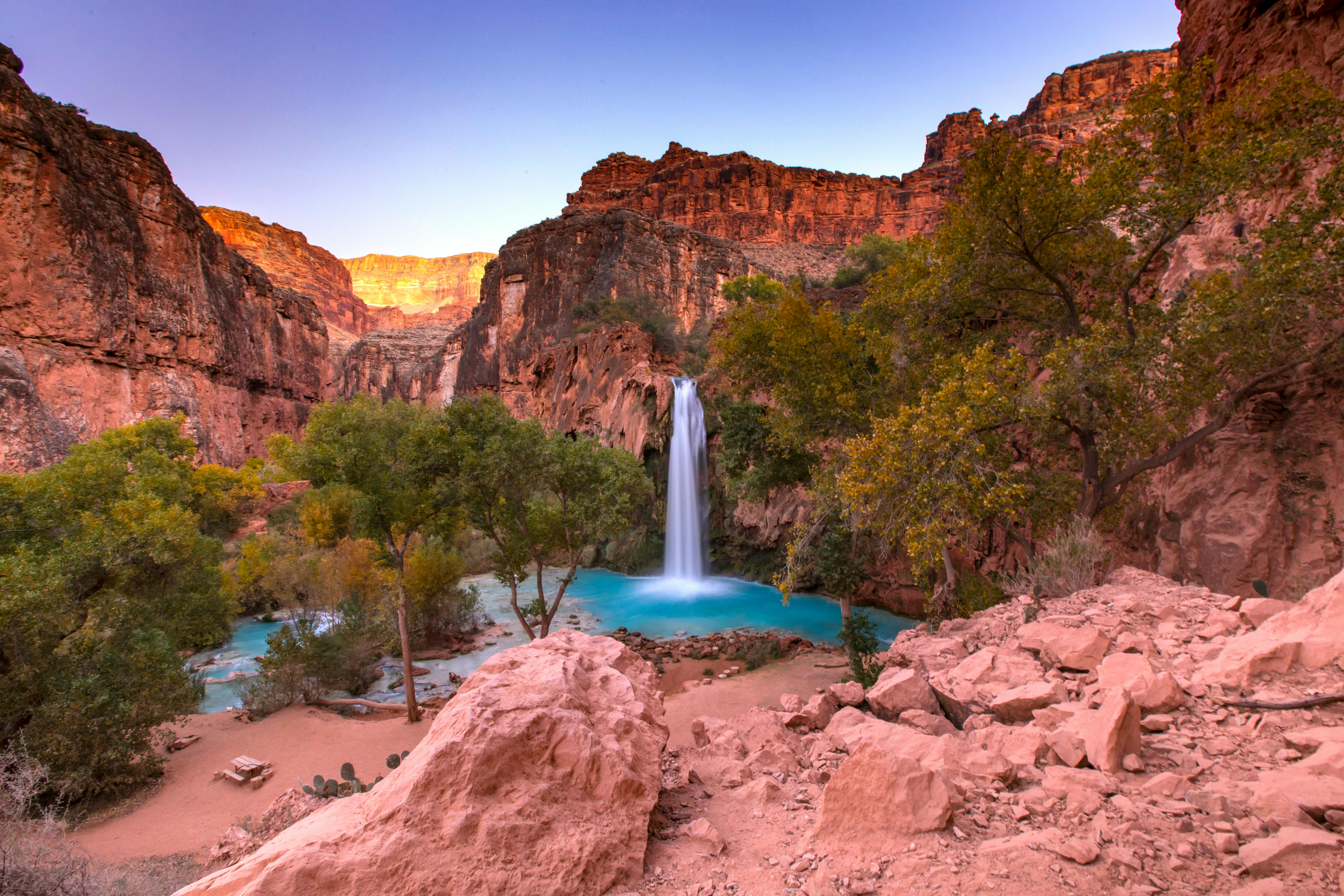
Havasu Falls, in the Grand Canyon, is one of the most beautiful waterfalls in the world. Havasu Falls is a turquoise waterfall that drops 30 metres into a blue-green pool, surrounded by red rock cliffs and desert canyon, in the heart of the Havasupai Reservation in Arizona. This complete guide to Havasu Falls explains how to get a permit, how to hike to the falls, what to see and how to plan a trip to one of the most sought-after destinations in America. Havasu Falls is not an easy place to visit. It requires a permit, a long hike and careful planning, but for those who make the journey, it is one of the most rewarding experiences in the American Southwest.
Havasu Falls is part of Havasu Creek, a tributary of the Colorado River, which flows through the Grand Canyon and is famous for its turquoise water, coloured by calcium carbonate in the limestone rock. The falls are on the land of the Havasupai Tribe, the People of the Blue-Green Water, who have lived in the canyon for more than 800 years and who manage access to the falls. The village of Supai, at the bottom of the canyon, is one of the most remote villages in the United States, with no road access, and it is reached only by hiking, by horse or by helicopter. For travellers who love waterfalls, Havasu Falls is one of the great destinations in America, and it is a place that rewards those who plan ahead and respect the land and the people who live there.

Why Havasu Falls Is One of America’s Most Beautiful Waterfalls
Havasu Falls is famous for its colour. The water of Havasu Creek is a bright, almost unreal turquoise, because it is rich in calcium carbonate, which reflects the blue of the sky and the green of the algae on the rocks. The falls drop in a single, wide curtain into a pool that is deep enough to swim in, and the contrast between the turquoise water, the red rock cliffs and the green cottonwood trees is one of the most striking sights in the Grand Canyon. The falls change with the seasons and with the floods, which can alter the shape of the falls and the pools, so no two visits to Havasu Falls are exactly the same.
What makes Havasu Falls special is not just the main falls, but the whole canyon that surrounds them. Havasu Creek flows for several kilometres through the canyon, past a series of waterfalls, pools and travertine terraces, including Upper Navajo Falls, Lower Navajo Falls, Havasu Falls, Mooney Falls and Beaver Falls, each with its own character and beauty. Mooney Falls, the tallest waterfall in the canyon at 60 metres, is reached by a steep, exposed climb down a cliff, with chains and ladders, and Beaver Falls, further downstream, is a series of stepped pools that are perfect for swimming. For travellers who love waterfalls, Havasu Falls belongs on the same list as other great waterfalls, such as Multnomah Falls in Oregon and Skogafoss in Iceland, but it is more remote, more turquoise and more rewarding than either.
Getting a Permit for Havasu Falls
Getting a permit for Havasu Falls is the hardest part of the trip, and it is essential to plan well in advance. Permits are released once a year, usually on 1 February, through the Havasupai Tribe’s online reservation system, and they sell out within minutes, so you need to be online at the exact time they are released, with your account set up and your payment ready. A permit is for three nights and four days, and it includes the camping fee, the entrance fee and the environmental fee, and it costs several hundred dollars per person, which is expensive, but it is the only way to visit Havasu Falls legally.
If you miss the permit release, you can check the tribe’s transfer system, where other visitors sell their permits, or you can join a guided tour, which includes a permit, a guide, meals and equipment, although guided tours are also expensive and book up quickly. Do not try to visit Havasu Falls without a permit, because the Havasupai Tribe patrols the canyon, and visitors without a permit are turned away and fined. The permit system is in place to protect the canyon, the water and the village of Supai, and to limit the number of visitors, so respect it, plan ahead and be patient.
Hiking to Havasu Falls: The Trail from Hualapai Hilltop
The hike to Havasu Falls starts at Hualapai Hilltop, a car park at the end of a long, winding road on the Hualapai Reservation, about two hours’ drive from Peach Springs, Arizona. From Hualapai Hilltop, the trail descends 600 metres into the canyon, first down a series of switchbacks, then along the floor of Hualapai Canyon, to the village of Supai, a distance of about 13 kilometres, which takes four to five hours. The trail is well marked and well maintained, but it is long, hot and exposed, with little shade, so start early in the morning, carry plenty of water and wear a hat and sunscreen.
From Supai, the trail continues for another 3 kilometres to the Havasu Falls campground, passing Upper and Lower Navajo Falls and then Havasu Falls itself, which is just above the campground. The total hike from Hualapai Hilltop to the campground is about 16 kilometres, with a descent of 700 metres, and it is best done as a multi-day trip, with three nights in the campground, so that you have time to see all the waterfalls. You can also hire a mule or a horse to carry your pack, or take a helicopter from Hualapai Hilltop to Supai, although the helicopter is expensive and does not run every day. Whatever way you travel, be prepared for a long, hot hike, and allow plenty of time to rest and enjoy the canyon.
The Waterfalls of Havasu Creek: Mooney Falls and Beaver Falls
Below Havasu Falls, the creek continues downstream to Mooney Falls, the tallest and most dramatic waterfall in the canyon. Mooney Falls drops 60 metres into a pool, and it is reached by a steep, exposed climb down a cliff, with chains, ladders and tunnels carved into the rock. The climb is not for everyone, especially if you are afraid of heights, but it is one of the great adventures in the Grand Canyon, and the view from the bottom of Mooney Falls, looking up at the waterfall, is unforgettable. Take your time, use the chains, wear good shoes and do not attempt the climb in wet or windy weather.
Further downstream, Beaver Falls is a series of stepped waterfalls and pools, about 5 kilometres from the campground, reached by a trail that crosses the creek several times and climbs over rocks and through the canyon. Beaver Falls is the best place in Havasu Creek for swimming, with a series of pools that are deep enough to swim in, and it is a good day hike from the campground, taking about four hours return. The trail to Beaver Falls is not always well marked, so ask a ranger or a guide for directions, and be prepared to get wet, because you will need to wade through the creek several times. The water is cold, even in summer, at about 20 degrees Celsius, so swim for short periods and warm up in the sun afterwards.

Supai Village and the Havasupai Tribe
Supai Village, at the bottom of the canyon, is the home of the Havasupai Tribe, and it is one of the most remote villages in the United States. The village has a population of about 200 people, with a school, a church, a cafe, a general store and a lodge, and it is reached only by hiking, by horse or by helicopter. The village is a quiet, peaceful place, with cottonwood trees, gardens and a creek running through it, and it is a good place to rest, eat and buy supplies before you continue to the falls. The Havasupai people are welcoming, but they ask visitors to respect their home, their culture and their land, and to follow the rules of the reservation.
When you visit Supai, remember that you are a guest on tribal land. Do not take photographs of people without their permission, do not enter private homes or gardens, and do not leave litter in the canyon. Buy supplies in the village store, eat in the cafe, and support the local businesses, because tourism is an important source of income for the Havasupai people. The tribe has worked hard to protect Havasu Creek and its waterfalls, and they ask visitors to help them by staying on the trails, not picking plants, and not disturbing wildlife. If you follow these simple rules, you will have a wonderful trip and you will help to protect Havasu Falls for the future.
When to Visit Havasu Falls and What to Pack
The best time to visit Havasu Falls is in spring, from March to May, and in autumn, from September to November, when the weather is mild, the water is warm enough to swim in, and the canyon is less crowded than in summer. Summer, from June to August, is the hottest season, with temperatures above 40 degrees Celsius in the canyon, and it is also the busiest season, with the most visitors and the highest prices. Winter, from December to February, is cool and quiet, with fewer visitors, but the water is cold, the days are short, and the trail can be icy, so it is not the best time to visit if you want to swim.
What you pack for Havasu Falls depends on how you travel, but you will need a tent, a sleeping bag, a sleeping mat, a stove, food for three nights, water bottles, a water filter, a first aid kit, a headlamp, sunscreen, a hat and good walking shoes. If you hire a mule, you can bring a heavier pack, but if you carry your own pack, you will need to pack light, because the hike is long and steep. Pack out all your rubbish, because there are no bins in the canyon, and bring a dry bag for your camera and your phone, because you will be crossing the creek and swimming in the pools. Check the weather, the trail conditions and the permit rules before you go, and be prepared to change your plans if the weather is bad, because the canyon can flood in heavy rain.
Practical Tips for Visiting Havasu Falls
A few practical tips will make a trip to Havasu Falls smoother and safer. Book your permit well in advance, because permits sell out quickly, and be ready at the exact time they are released. Train for the hike, because it is long, steep and hot, and you will be carrying a heavy pack, so walk with a pack, climb stairs and build up your fitness before you go. Start the hike early in the morning, before the heat of the day, and carry at least three litres of water per person, because there is no water on the trail until you reach Supai.
Respect the canyon by staying on marked trails, not picking plants, and not feeding wildlife. Do not jump from the waterfalls, because the pools are shallow and the rocks are slippery, and several people have been injured or killed by jumping. Swim only where it is safe, and never swim alone. Check the weather and the flood warnings before you go, and do not enter the canyon if there is a risk of flooding, because flash floods can be deadly. Finally, remember that Havasu Falls is a sacred place for the Havasupai people, so treat it with respect, and enjoy it slowly, with time to swim, walk and watch the light change on the water.
Frequently Asked Questions About Havasu Falls
How do I get a permit for Havasu Falls?
Permits for Havasu Falls are released once a year, usually on 1 February, through the Havasupai Tribe’s online reservation system. They sell out within minutes, so you need to be online at the exact time they are released, with your account set up and your payment ready. A permit is for three nights and four days, and it includes the camping fee, the entrance fee and the environmental fee.
How long is the hike to Havasu Falls?
The hike from Hualapai Hilltop to the Havasu Falls campground is about 16 kilometres, with a descent of 700 metres, and it takes four to five hours to Supai and another hour to the campground. The hike is long, hot and exposed, so start early, carry plenty of water and wear a hat and sunscreen.
Can you swim at Havasu Falls?
Yes, you can swim at Havasu Falls, in the pool below the falls and in the pools at Mooney Falls and Beaver Falls. The water is cold, at about 20 degrees Celsius, even in summer, so swim for short periods and warm up in the sun afterwards. Never jump from the waterfalls, because the pools are shallow and the rocks are slippery.
What is the best month to visit Havasu Falls?
April, May, September and October are the best months to visit Havasu Falls. The weather is mild, the water is warm enough to swim in, and the canyon is less crowded than in the peak summer months of June, July and August.
Is Havasu Falls in the Grand Canyon?
Yes, Havasu Falls is in the Grand Canyon, on the Havasupai Reservation, which is inside the Grand Canyon. Havasu Creek is a tributary of the Colorado River, which flows through the Grand Canyon, and the falls are about 16 kilometres from the South Rim, although they are reached by a separate trail from Hualapai Hilltop, not from the South Rim.
Conclusion: Havasu Falls, the Turquoise Heart of the Grand Canyon
Havasu Falls is a place that stays with you long after you leave. It is the turquoise water falling into the pool, the red rock cliffs above the creek, the sound of the waterfalls at night, and the feeling of being in one of the most beautiful and remote places in America. It is a place that requires planning, patience and respect, but it rewards those who make the journey with views and experiences that are unlike anywhere else in the world. For travellers who love waterfalls, Havasu Falls is one of the great destinations in the United States, and it deserves a place on any journey through Arizona and the Grand Canyon. Plan your trip carefully, book your permit early, train for the hike, and let Havasu Falls show you why it is called the turquoise heart of the Grand Canyon.