Olympic National Park, Washington: Complete Guide to Rainforests, Coast and Mountains
Olympic National Park, in Washington State, is one of the most diverse national parks in America. Olympic National Park protects three very different landscapes in one park: the temperate rainforests of the Hoh and Quinault valleys, the wild, rugged coast of the Pacific Ocean, and the high, glaciated peaks of the Olympic Mountains. This complete guide to Olympic National Park explains how to plan a visit, which areas to see, when to go and how to enjoy the park’s rainforests, beaches and mountains, whether you have one day or a full week. Olympic National Park is a place for walkers, photographers and anyone who loves wild, green landscapes, and it is easy to reach from Seattle, which makes it both popular and, at times, crowded.
Olympic National Park was established in 1938, to protect the Olympic Mountains, the rainforests and the coast, and it is a UNESCO World Heritage Site and an International Biosphere Reserve. The park covers 3,700 square kilometres, with more than 900 kilometres of trails, and it is home to black bears, Roosevelt elk, mountain goats, marmots, bald eagles and more than 250 species of birds. The Olympic Peninsula, on which the park sits, is a large, remote area, with small towns, logging roads and a wild coast, and it feels a world away from Seattle, even though it is only a few hours’ drive. For travellers who love national parks, Olympic National Park is one of the great destinations in America, and it is a place that rewards slow travel, with time to walk in the rainforest, watch the waves on the coast and climb in the mountains.

Why Olympic National Park Is Three Parks in One
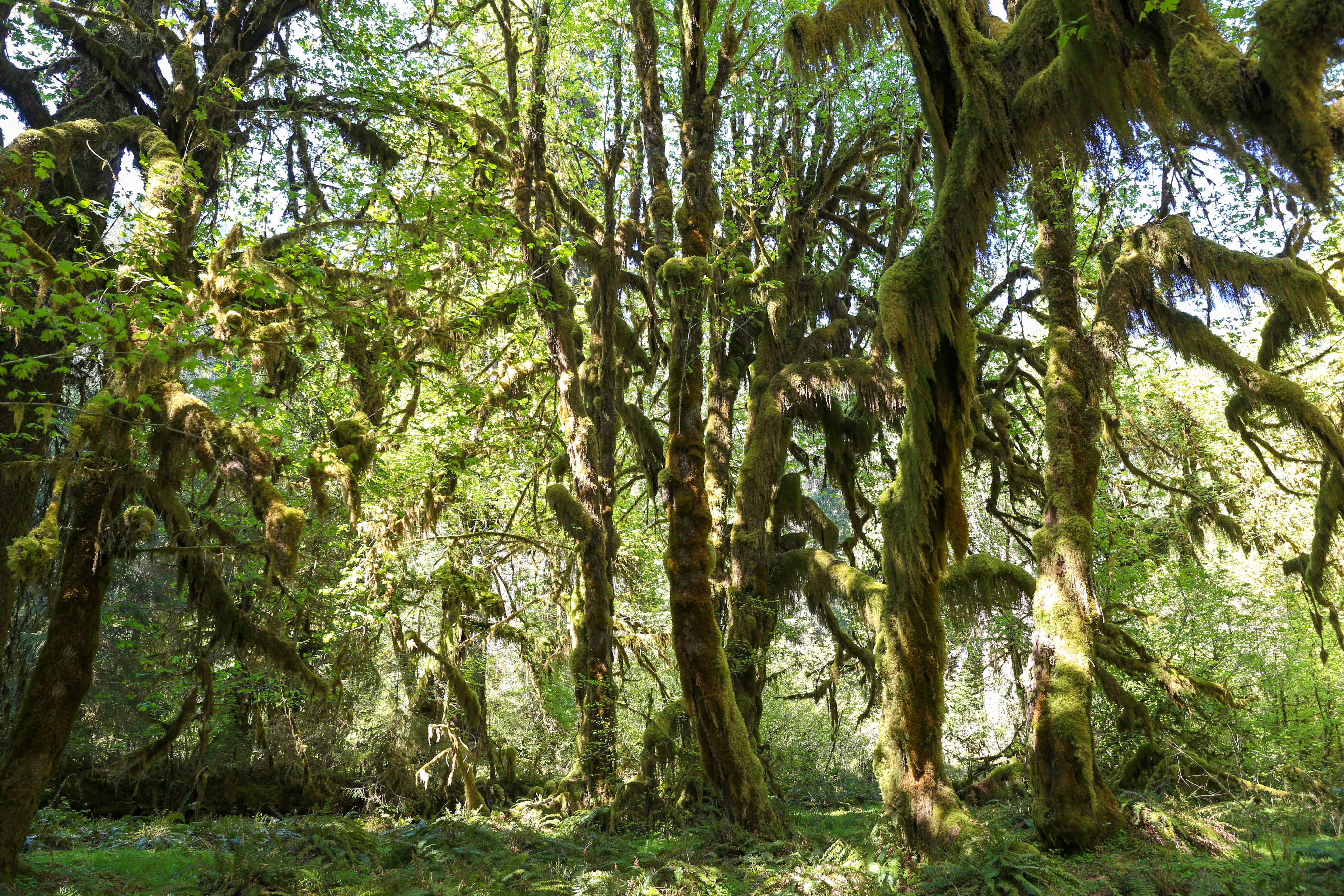
Olympic National Park is unusual because it contains three very different ecosystems, each with its own climate, plants and animals. The temperate rainforests, in the Hoh, Quinault and Queets valleys, are among the wettest places in the United States, with more than 3,500 millimetres of rain a year, and they are home to ancient Sitka spruce, western hemlock and Douglas fir trees, some more than 1,000 years old, covered in moss, ferns and lichens. The coast, on the western edge of the park, is wild and rugged, with sea stacks, tide pools, driftwood and beaches that are accessible only at low tide, and it is home to sea otters, seals, whales and bald eagles.
The Olympic Mountains, in the centre of the park, are a range of steep, glaciated peaks, with Mount Olympus, the highest peak at 2,432 metres, and a wilderness that is home to mountain goats, marmots and black bears. The mountains create their own weather, with rain and snow that can appear in minutes, and they are the reason the rainforests are so wet, because they trap the moist air from the Pacific Ocean. For travellers who love forests and wildlife, Olympic National Park belongs on the same list as other great forest destinations, such as the Monteverde Cloud Forest in Costa Rica and the Black Forest in Germany, but it is wilder, wetter and more diverse than either, with a uniquely Pacific Northwest character.
The Hoh Rainforest: Walking Among Ancient Trees
The Hoh Rainforest is the most famous part of Olympic National Park, and it is one of the finest temperate rainforests in the world. The Hoh Rainforest is reached by a road from Highway 101, through the Hoh Valley, to the Hoh Visitor Center, where there are exhibits, maps and ranger programmes. The best trails in the Hoh Rainforest are the Hall of Mosses Trail, a short, flat loop through ancient trees covered in moss, and the Spruce Nature Trail, a slightly longer loop along the Hoh River, with views of the river, the forest and the mountains. Both trails are easy and suitable for families, and they are best walked in the early morning, when the light is soft and the forest is quiet.
For a longer walk, the Hoh River Trail follows the river for 28 kilometres to Glacier Meadows, at the foot of Mount Olympus, with views of the river, the forest and the glaciers, and it is best done as a multi-day backpacking trip, with a backcountry permit. The Hoh Rainforest is at its most beautiful in spring and autumn, when the forest is green and the light is soft, and in winter, when the rain is heaviest and the forest is at its wettest. Bring a waterproof jacket, good walking shoes and a camera, because the forest is dark and the light is low, and take time to look closely at the moss, ferns and mushrooms that cover the trees and the ground.
Rialto Beach, Ruby Beach and the Wild Olympic Coast
The coast of Olympic National Park is one of the wildest coastlines in the United States, with sea stacks, tide pools, driftwood and beaches that are accessible only at low tide. Rialto Beach, near Forks, is the most popular beach on the Olympic coast, with a long stretch of sand and pebbles, driftwood, sea stacks and views of the Pacific Ocean, and it is a good place for a walk, especially at sunset, when the light is gold and the sea stacks are silhouetted against the sky. The trail from Rialto Beach to Hole-in-the-Wall, a natural arch in a sea stack, is a short walk at low tide, and it is one of the best walks on the Olympic coast.
Ruby Beach, further south, is the most beautiful beach on the Olympic coast, with red sand, sea stacks, tide pools and driftwood, and it is a good place for photography, especially at sunrise, when the light is on the sea stacks. Second Beach and Third Beach, near La Push, are quieter beaches, reached by short trails through the forest, with views of the sea stacks and the coast, and they are good places for a picnic and a walk. Always check the tide tables before you walk on the Olympic coast, because the tide can come in quickly and cut you off, and never turn your back on the ocean, because the waves can be dangerous. The coast is best visited at low tide, when the tide pools are exposed and you can see starfish, anemones, crabs and other marine life.

Hurricane Ridge and the Olympic Mountains
Hurricane Ridge, in the northern part of Olympic National Park, is the most accessible high point in the park, at 1,600 metres, with views of the Olympic Mountains, the Strait of Juan de Fuca and, on a clear day, Vancouver Island in Canada. Hurricane Ridge is reached by a road from Port Angeles, through the park entrance, to the visitor centre, where there are exhibits, maps and ranger programmes. The best trails at Hurricane Ridge are the Hurricane Hill Trail, a short, paved trail to a viewpoint with panoramic views, and the Klahhane Ridge Trail, a longer, steeper trail with views of the mountains and the valley below.
Hurricane Ridge is at its best in summer, when the wildflowers are in bloom and the trails are free of snow, and in winter, when the road is open on weekends for skiing, snowboarding and snowshoeing, and the mountains are covered in snow. The road to Hurricane Ridge is steep and winding, and it is open only from late May to early October, depending on snow, so check the park’s road status before you go. For a longer mountain walk, try the trail to Mount Angeles, a steep climb to a summit with views of the park, or the trail to Lake Angeles, a small alpine lake in a cirque below Mount Angeles, with views of the mountains and the forest.
Wildlife, Lakes and Hot Springs in Olympic National Park
Olympic National Park is home to a wide range of wildlife, including Roosevelt elk, black bears, mountain goats, marmots, river otters, bald eagles and more than 250 species of birds. Roosevelt elk are the largest elk in North America, and they are most often seen in the Hoh and Quinault valleys, especially in the early morning and evening, when they graze in the meadows. Black bears are present in the park, but they are shy and rarely seen, and you should store your food properly, make noise on the trail and carry bear spray if you are hiking in the backcountry. Mountain goats are often seen on the high ridges at Hurricane Ridge, where they graze on the alpine meadows, and marmots are easy to see at Hurricane Ridge, where they whistle from the rocks.
The park also has lakes and hot springs, including Lake Crescent, a deep, clear lake on the northern edge of the park, with a lodge, a beach and trails, and Lake Quinault, a large lake on the southern edge of the park, with a historic lodge and rainforest trails. Sol Duc Hot Springs, in the Sol Duc Valley, has natural hot springs, a resort and trails to Sol Duc Falls, a waterfall in a narrow gorge, and it is a good place to relax after a long walk. The park’s lakes and hot springs are at their best in summer, when the weather is warm and the water is clear, and in autumn, when the forests are golden and the crowds are smaller.
When to Visit Olympic National Park and How to Get There
The best time to visit Olympic National Park is from June to September, when the weather is most likely to be clear, the trails are free of snow, the roads are open and the wildflowers are in bloom. July and August are the busiest months, with the most visitors and the highest prices, and the park’s campgrounds and lodges book up months in advance. June is a good time to visit if you want to see the rainforest at its greenest, with fewer crowds, and September is quieter, with good light, fewer crowds and the first autumn colours. Winter, from November to March, is wet and quiet, with rain in the lowlands and snow in the mountains, and many roads and trails are closed, but it is a good time to visit if you want to see the rainforest at its wettest and the coast at its wildest.
Olympic National Park is about two to three hours’ drive from Seattle, via the Bainbridge Island ferry to the Olympic Peninsula, or via the Tacoma Narrows Bridge to the south, and about three hours’ drive from Portland, Oregon, via Interstate 5 and Highway 101. There is no public transport to the park, so you will need a car, and you should book your accommodation in advance, especially in summer. The park has several entrances, and the most popular are the Hoh Rainforest entrance, the Hurricane Ridge entrance and the Lake Crescent entrance, all of which are reached from Highway 101, which circles the Olympic Peninsula.
Practical Tips for Visiting Olympic National Park
A few practical tips will make a trip to Olympic National Park smoother and safer. Book your accommodation, your campground and your ferry tickets well in advance, because the park is very popular in summer and places fill up quickly. Bring layers, because the weather in Olympic National Park can change quickly, with sun, rain, wind and fog in the same day, and the temperature in the rainforest can be ten degrees colder than in Seattle. Wear waterproof clothing and good walking shoes with grip, because the trails can be muddy, slippery and steep, especially after rain.
Carry plenty of water and food, because there are few places to buy food in the park, and the visitor centres have limited hours. Respect the park by staying on marked trails, not picking plants, and not feeding wildlife. Check the tide tables before you walk on the coast, and check the park’s website for road closures, trail conditions and fire warnings before you go. Be prepared to change your plans if the weather is bad, because the mountains and the coast can be dangerous in storms, and the rainforest is at its best in the rain, so do not let a little rain stop you from walking. Finally, remember that Olympic National Park is a wild place, with bears, steep cliffs and fast rivers, so take care, especially with children, and enjoy the park with respect.
Frequently Asked Questions About Olympic National Park
How many days do you need in Olympic National Park?
Three to four days is ideal for a first visit to Olympic National Park. That gives you time for the Hoh Rainforest, Hurricane Ridge, Rialto Beach or Ruby Beach, and Lake Crescent, without rushing. Two days is enough to see the main sights, but you will miss much of the park.
What is the best month to visit Olympic National Park?
July and August are the best months to visit Olympic National Park, because the weather is most likely to be clear, the trails are free of snow, the roads are open and the wildflowers are in bloom. June and September are also excellent, with fewer crowds than in July and August.
Do you need a car in Olympic National Park?
Yes, you need a car in Olympic National Park, because the park is large, public transport is almost non-existent, and the best places are spread out around the Olympic Peninsula. Hire a car in Seattle, or bring your own car on the ferry, and book in advance in summer.
Can you see elk in Olympic National Park?
Yes, you can see Roosevelt elk in Olympic National Park, especially in the Hoh and Quinault valleys, in the early morning and evening, when they graze in the meadows. The best places to see elk are the Hoh River Trail, the Quinault Rain Forest and the meadows near the Hoh Visitor Center.
Is Olympic National Park good for children?
Yes, Olympic National Park is good for children, especially if they love nature. Children will love walking in the Hoh Rainforest, exploring the tide pools at Rialto Beach and Ruby Beach, and seeing elk, marmots and bald eagles. The park has many short, easy trails that are suitable for families.
Conclusion: Olympic National Park, Three Parks in One
Olympic National Park is a place that stays with you long after you leave. It is the moss-covered trees of the Hoh Rainforest, the sea stacks at Rialto Beach, the wildflowers at Hurricane Ridge, the elk grazing in the meadows, and the sight of Mount Olympus at dawn. It is a place where nature is on a grand scale, where the weather is wild, and where every day brings a new forest, a new beach or a new mountain view. For travellers who love national parks, Olympic National Park is one of the great destinations in America, and it deserves a place on any journey through Washington State and the Pacific Northwest. Plan your trip carefully, stay for at least three days, and let Olympic National Park show you why it is three parks in one.