Erawan Falls, Thailand: Complete Guide to the Seven Tiers, Emerald Pools and Kanchanaburi
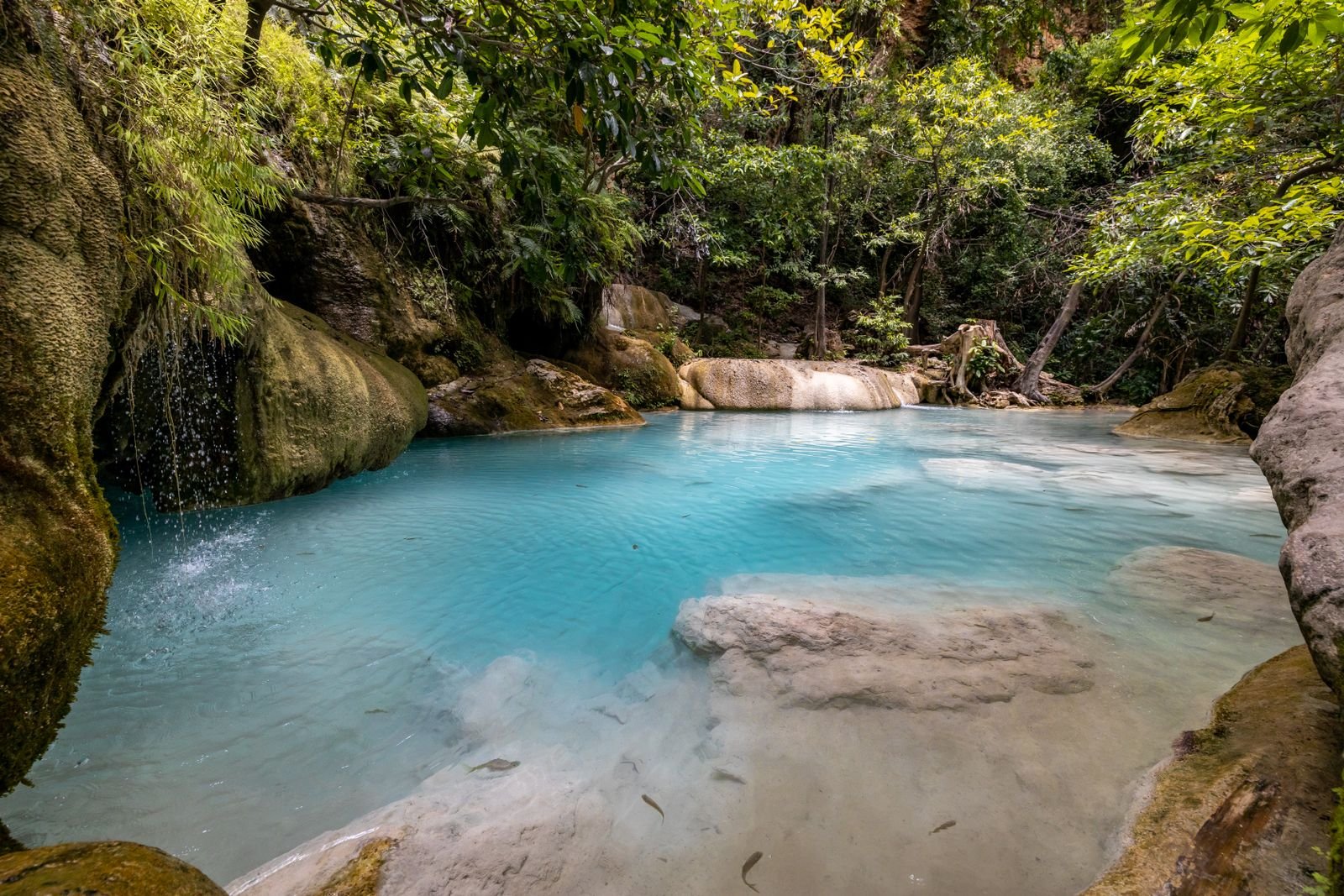
Erawan Falls, Thailand, are a series of seven waterfalls in the jungle of Kanchanaburi province, and they are among the most beautiful waterfalls in Southeast Asia. This complete guide to Erawan Falls explains how to explore the seven tiers, swim in the emerald pools, hike the jungle trails, and plan a day trip from Kanchanaburi or Bangkok.
Erawan Falls are in Erawan National Park, about 65 kilometres from Kanchanaburi town, and they are named after Erawan, the three-headed white elephant of Hindu mythology, because the top tier of the falls is said to resemble an elephant’s head. The falls drop for about 1,500 metres through the jungle, with seven main tiers, each with its own pool, and with limestone terraces that create the falls’ famous turquoise colour.
Why Erawan Falls Are So Special
Erawan Falls are special because of their colour. The water is a milky turquoise, caused by limestone in the rock, and it is clear enough to see fish swimming in the pools. The pools are surrounded by jungle, with trees, ferns, and flowers, and with the sound of water and birds. The falls are not a single dramatic drop, but a series of cascades and pools that invite you to swim, walk, and explore.
The falls are also special because they are in a national park that protects a large area of jungle, with wildlife, caves, and other waterfalls. Erawan National Park covers 550 square kilometres, with mountains, forests, and rivers, and it is home to elephants, gibbons, hornbills, and many other species. The park is a wonderful place for nature lovers, with trails, viewpoints, and the chance to see wildlife in the wild.
Erawan Falls are also accessible. The trail to the falls is well maintained, with steps and bridges, and it is possible to visit all seven tiers in a day, with swimming at several of the pools. The falls are popular with Thai families and international visitors, and they are one of the most visited waterfalls in Thailand, but they are still wild and beautiful, especially early in the morning.
The Seven Tiers of Erawan Falls
The seven tiers of Erawan Falls each have a name in Thai, and each has its own character. Tier 1, Lai Kheun Rung, is the first and lowest tier, with a wide pool and a small cascade, and it is a good place to start. Tier 2, Wang Matcha, is named after a fish, and it has a large pool with fish that nibble at your feet, a natural fish spa. Tier 3, Pha Nam Tok, is a wide waterfall with a pool that is good for swimming.
Tier 4, Oke Nang Pheesuea, is a butterfly tier, with many butterflies in the area, and with a pool surrounded by trees. Tier 5, Bue Mai Long, is a tier with a wide pool and a waterfall that drops over limestone terraces. Tier 6, Dong Pruksa, is a tier with a deep pool and a waterfall that is good for swimming, and it is less crowded than the lower tiers.
Tier 7, Phu Pha Erawan, is the top tier, and it is the most beautiful, with a waterfall that drops over three levels into a turquoise pool, and with a view over the jungle. The hike to Tier 7 takes about two hours from the entrance, with steep steps and a jungle trail, but the reward is a pool that feels like a hidden paradise. Allow time to swim, rest, and enjoy the top tier, because it is the highlight of the falls.
Swimming, Hiking and the Jungle Trail
Swimming is the best part of Erawan Falls, and it is allowed at several of the tiers, especially Tiers 2, 3, and 7. The water is cool and clear, and the pools are surrounded by jungle, with fish that nibble at your feet. The fish are a natural spa, and they are harmless, though they can tickle. Wear water shoes, because the rocks can be slippery, and bring a towel and a change of clothes, because you will get wet.
The trail to the top tier is about 1.5 kilometres, with steps, bridges, and a jungle path, and it takes about two hours return, with stops for swimming. The trail is well maintained, but it can be slippery after rain, and it is steep in places. Wear sturdy shoes, bring water, and take your time, because the trail is part of the experience, with jungle, butterflies, and birds along the way.
Beyond the falls, Erawan National Park offers other trails, including a trail to the Tham Phra That cave, with stalactites and stalagmites, and a trail to other waterfalls in the park. The park is also home to wildlife, including elephants, gibbons, and hornbills, though they are shy and hard to see. Early morning is the best time for wildlife, with the jungle alive with birds and insects.

Kanchanaburi: The Town and the River Kwai
Kanchanaburi is the town that serves as the gateway to Erawan Falls, and it is a place with a fascinating history. The town is on the River Kwai, and it is famous for the Bridge over the River Kwai, the Death Railway, and the war cemeteries from the Second World War. The town has museums, markets, and restaurants, and it is a good base for exploring the region, with Erawan Falls, the Hellfire Pass, and the Sai Yok waterfalls nearby.
From Kanchanaburi, buses run to Erawan Falls, with a journey of about 90 minutes, and with a bus every hour in the morning. The bus drops you at the park entrance, and from there it is a short walk to the falls. You can also hire a car or a taxi, which gives you more flexibility, and which allows you to visit other places in the region on the same day.
Kanchanaburi is also a good place to stay, with guesthouses, hotels, and restaurants along the river, and with a relaxed atmosphere. The town’s night market is a good place to try Thai food, with grilled fish, curries, and fruit, and with a lively atmosphere in the evening. Stay a night or two in Kanchanaburi, and use it as a base for Erawan Falls and the other attractions in the region.
Wildlife and Nature in Erawan National Park
Erawan National Park is home to a wide range of wildlife, including Asian elephants, gibbons, macaques, and many species of birds. The park’s forests are a mix of deciduous and evergreen, with teak, bamboo, and other trees, and with a rich understorey of ferns and flowers. The park is also home to many species of butterflies, with the falls’ Tier 4 named after the butterflies that gather there.
The best time for wildlife is early morning, when the animals are most active, and when the light is soft. Bring binoculars, wear quiet clothes, and walk slowly on the trails, because the animals are shy and easily disturbed. Respect the park’s rules, never feed wildlife, and take all your rubbish with you, because the park’s beauty depends on visitors treating it with care.
When to Visit Erawan Falls and How to Get There
The best time to visit Erawan Falls is the cool season, from November to February, when the weather is dry, the water is clear, and the jungle is green. The hot season, from March to May, is also good, with warm water and fewer crowds, but with higher temperatures. The rainy season, from June to October, brings more water to the falls, with stronger flows and greener jungle, but also with slippery trails and a higher chance of rain.
Most visitors come to Erawan Falls as a day trip from Kanchanaburi, with buses running from Kanchanaburi town to the park entrance, and with a journey of about 90 minutes. You can also come from Bangkok, with a bus or train to Kanchanaburi, and then a bus to the falls, with a total journey of about four hours. Stay in Kanchanaburi for a night or two, and use it as a base for the falls and the other attractions in the region.
Food, Markets and Thai Culture
Thai food is a highlight of any trip to Kanchanaburi, with grilled fish, curries, noodles, and fruit. Try the local dishes in Kanchanaburi’s night market, with pad Thai, som tam, and mango sticky rice, and with fresh fruit juices. The markets are also a good place to buy souvenirs, with textiles, handicrafts, and food.
Thai culture is warm and welcoming, with a respect for nature and for the forest. Visitors should respect local customs, dress modestly when visiting temples, and remove shoes before entering homes and temples. The Thai people are proud of their natural heritage, and Erawan Falls is a place that is loved by Thai families as much as by international visitors.
Waterfalls are a theme that runs through many of the world’s great destinations, and Erawan’s emerald pools will remind you of other famous falls. For a waterfall on a very different scale, see our guide to Niagara Falls, one of the most powerful waterfalls in the world, with a very different character to the jungle pools of Erawan.
Practical Tips for Visiting Erawan Falls
Arrive early in the morning, before the crowds, and bring water shoes, a towel, a change of clothes, and a waterproof bag for your camera and phone. The park entrance fee is 300 baht for foreigners, and the park is open from 8am to 4:30pm. Swimming is allowed at several tiers, but not at all tiers, so check the signs. Bring water and snacks, because there are limited shops in the park, and wear sunscreen and insect repellent.
For another famous waterfall, see our guide to Victoria Falls in Africa, a waterfall that is known as the Smoke that Thunders, with a very different landscape and history to Erawan Falls in Thailand.
Frequently Asked Questions About Erawan Falls, Thailand
What is the best time to visit Erawan Falls? The cool season, from November to February, is best, with dry weather and clear water. The hot season, from March to May, is also good, while the rainy season, from June to October, brings more water and greener jungle.
Can you swim at Erawan Falls? Yes, swimming is allowed at several of the tiers, especially Tiers 2, 3, and 7. The water is cool and clear, with fish that nibble at your feet. Wear water shoes, because the rocks can be slippery.
How many tiers are there at Erawan Falls? There are seven tiers, each with its own name and pool, and the hike to the top tier takes about two hours return from the entrance, with stops for swimming.
How do I get to Erawan Falls from Kanchanaburi? Buses run from Kanchanaburi town to the park entrance, with a journey of about 90 minutes, and with a bus every hour in the morning. You can also hire a car or a taxi for more flexibility.
Conclusion
Erawan Falls, Thailand, are a place where the jungle, the water, and the light come together in a way that is hard to find anywhere else. From the emerald pools of Tier 2 to the top tier at Phu Pha Erawan, from the butterflies to the fish, the falls offer a different kind of beauty every step of the way. Plan carefully, arrive early, bring water shoes, and give yourself time to swim, walk, and enjoy the jungle. Erawan Falls are not a place to rush, and the travellers who take them slowly are the ones who remember them forever.