
Chitwan National Park, Nepal: Complete Guide to Rhinos, Tigers and Jungle Safaris
Chitwan National Park is one of the great wildlife destinations in Asia, and it is also one of the most accessible. In the lowlands of southern Nepal, where the Himalayas meet the plains of India, the park protects a landscape of tall grassland, riverine forest and oxbow lakes, and it is home to the greater one-horned rhinoceros, the Bengal tiger, the Asian elephant and more than 500 species of birds. Chitwan National Park, Nepal, was established in 1973 as the country’s first national park, and it is a UNESCO World Heritage Site, recognised for its wildlife and for the success of its conservation work. This guide covers the safaris, the wildlife, the best seasons and the practical details for a trip to Chitwan National Park.
Chitwan lies in the Terai, the low, flat region that runs along the southern border of Nepal, at an altitude of only about 100 to 800 metres. The park covers about 952 square kilometres, and it is bordered by the Narayani and Rapti rivers, which are themselves a habitat for gharial crocodiles, mugger crocodiles and Gangetic dolphins. The park is a mosaic of habitats, from the tall elephant grass that can grow to five metres high, to the sal forest, the riverine forest and the wetlands. It is a landscape that is best explored slowly, on foot, by jeep and by canoe, and it is a place that rewards the patient traveller with some of the best wildlife viewing in Asia.
The Rhinos of Chitwan National Park
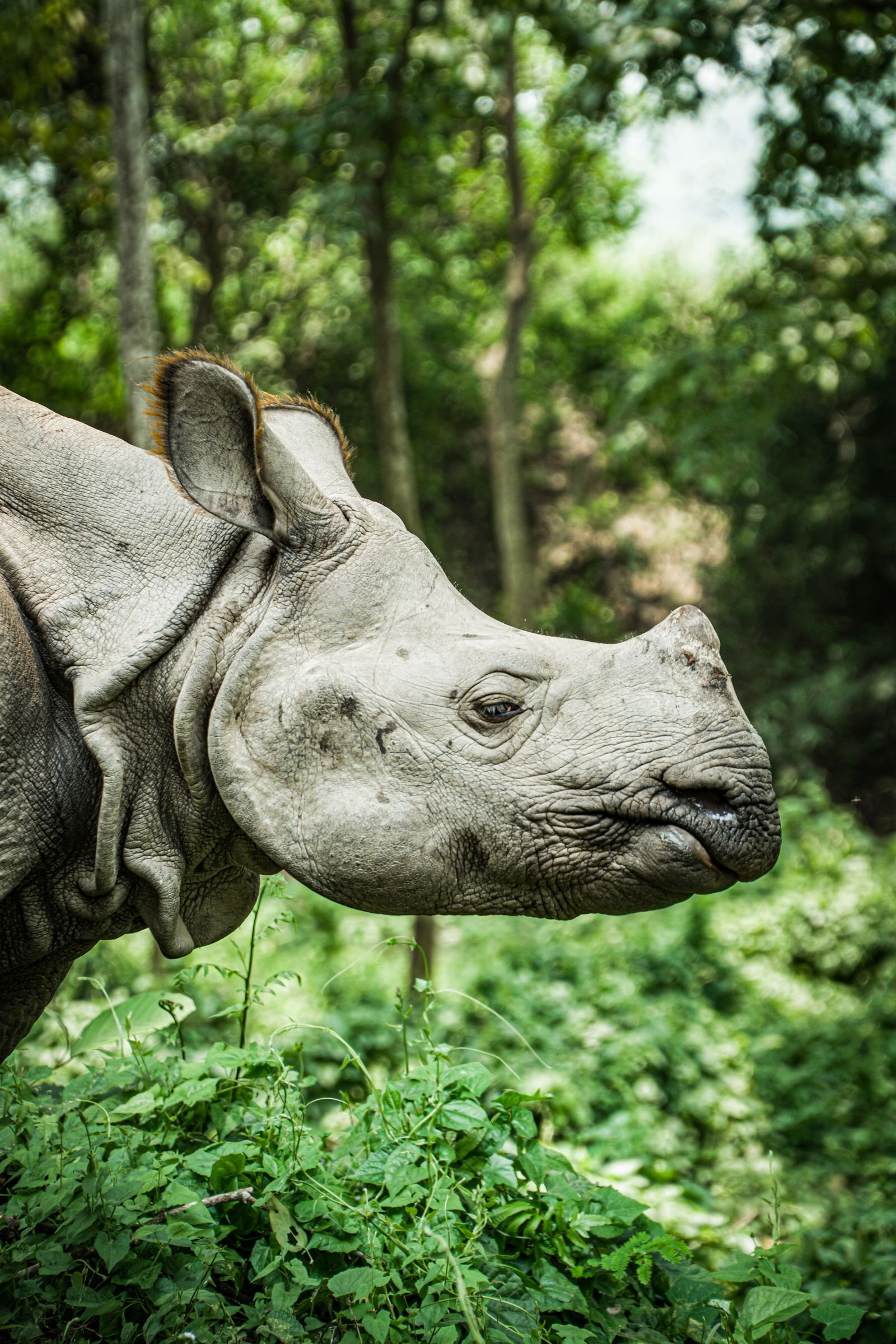
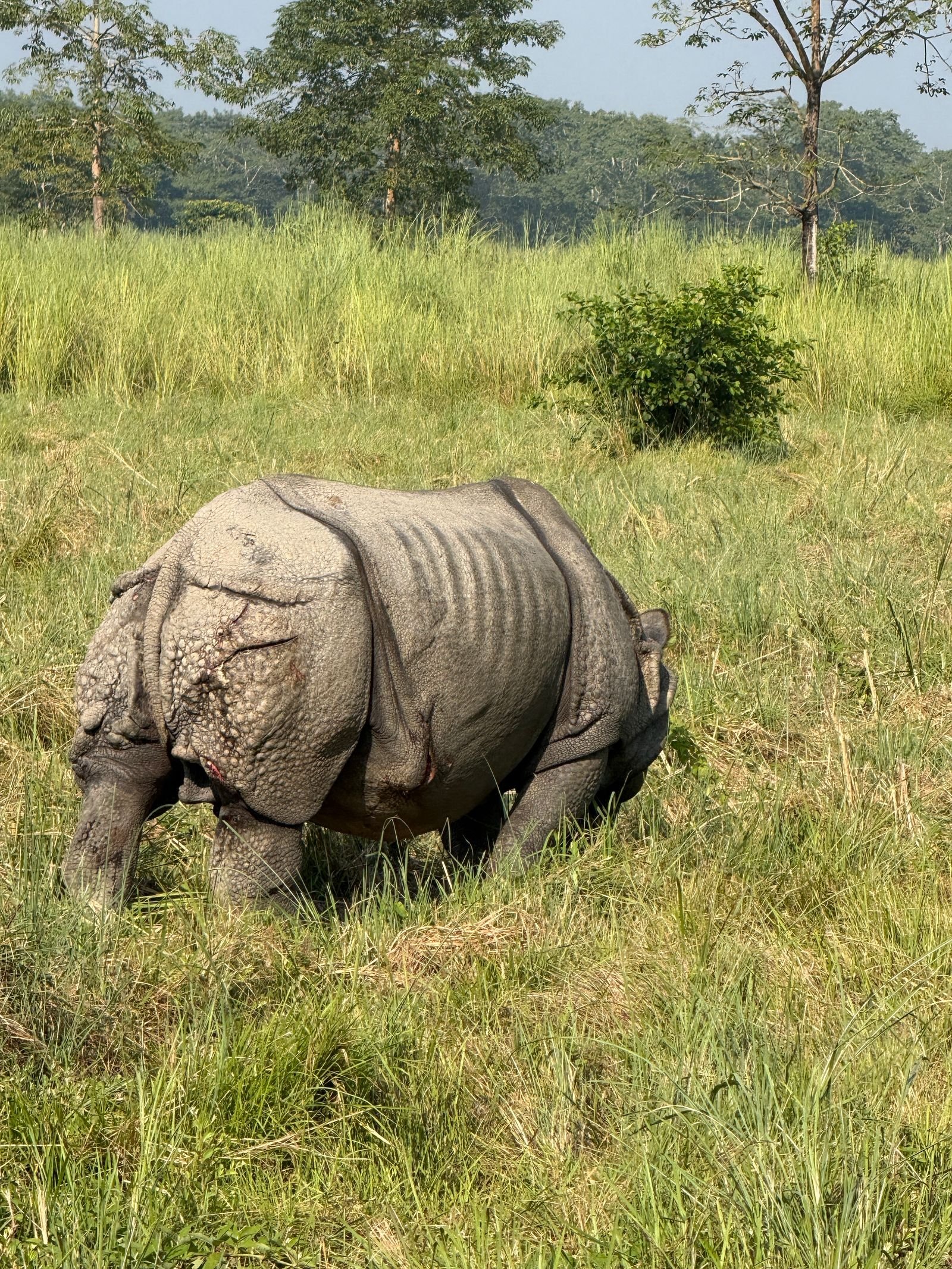
The greater one-horned rhinoceros is the symbol of Chitwan National Park, and it is also one of the great conservation success stories in the world. In the 1960s, there were fewer than 100 rhinos left in Nepal, because of poaching and habitat loss. Today, there are more than 600 in Chitwan, thanks to decades of protection, anti-poaching patrols and community conservation. The rhino is a large, grey, armour-plated animal, with a single horn, and it is most often seen grazing in the grassland or wallowing in the wetlands, especially in the early morning and late afternoon.
Seeing a rhino in Chitwan is a memorable experience, and it is also a relatively reliable one, because the rhinos are numerous and the park is compact. The best way to see them is on a jeep safari, which covers more ground, or on a walking safari with a guide, which offers a closer, quieter encounter. The rhinos are generally peaceful, but they are wild animals, and they can be dangerous if they feel threatened, especially a mother with a calf. Keep your distance, listen to your guide, and do not approach a rhino on foot. The success of the rhino conservation in Chitwan is a reminder that wildlife protection works, when it is done with the support of the local community.
Tigers, Elephants and the Other Wildlife of Chitwan
Chitwan National Park is also home to the Bengal tiger, though seeing one is a matter of luck and patience. The park has one of the highest densities of tigers in the world, with more than 90 tigers, but the tigers are shy, the grass is tall, and the forest is dense, so a sighting is never guaranteed. The best chance of seeing a tiger is on a jeep safari in the dry season, when the grass is shorter and the animals come to the water to drink. The tiger is the top predator in Chitwan, and even if you do not see one, the signs of its presence, the pugmarks, the alarm calls of the deer and the monkeys, are part of the experience.
The Asian elephant is another highlight of Chitwan, and the park is home to a population of wild elephants, as well as to the domestic elephants that were traditionally used for safaris. The wild elephants are most often seen in the grassland and near the rivers, especially in the evening, when they come to drink. Other wildlife in Chitwan includes the sloth bear, the leopard, the gaur, the sambar deer, the spotted deer, the wild boar and the langur monkey. The birdlife is exceptional, with more than 500 species, including the great hornbill, the Bengal florican and the lesser adjutant stork. For a birdwatcher, Chitwan is one of the best destinations in Asia.
Jeep Safaris, Walking Safaris and Canoe Trips
There are several ways to explore Chitwan National Park, and the best trips combine them. The jeep safari is the classic way to see the park, and it covers the most ground. A full-day jeep safari, from dawn to dusk, is the best option, because it gives you time to reach the remote parts of the park, where the wildlife is most abundant. A half-day safari is a good introduction, but it is more rushed. The jeeps are open, the guides are knowledgeable, and the drives are slow, with frequent stops to look at birds, tracks and animals.
The walking safari is a unique experience, and it is one of the things that makes Chitwan special. Accompanied by an experienced naturalist guide and a tracker, you walk through the grassland and the forest, learning about the plants, the tracks and the birds, and, with luck, encountering a rhino on foot. The walking safari is not a hike. It is a slow, careful walk, with frequent stops, and it is a chance to experience the jungle at ground level. The canoe trip on the Rapti River is another highlight, with a chance to see gharial crocodiles, mugger crocodiles and a variety of water birds, and it is a peaceful way to see the park from the water. The elephant breeding centre, near Sauraha, is also worth a visit, to learn about the conservation work for the Asian elephant.
Sauraha and the Villages Around Chitwan
Sauraha is the main gateway to Chitwan National Park, and it is a small, relaxed town on the banks of the Rapti River, just outside the park. It has hotels, lodges, restaurants and tour offices, and it is the base for most visitors to the park. The town has a laid-back, traveller-friendly feel, with a long main street, a riverside walk and a view of the park across the river. In the evening, the Tharu people, the indigenous people of the Terai, perform traditional dances, and the cultural shows are a good way to learn about the local culture.
The Tharu villages around Chitwan are also worth visiting, to see the traditional houses, the farming and the way of life that has existed in the Terai for centuries. The Tharu people have a deep knowledge of the jungle, and many of the guides in Chitwan are Tharu. Staying in a community lodge, or visiting a Tharu village, is a good way to support the local community and to learn about the culture of the Terai. For a wider sense of how rainforests and wildlife are visited in other parts of the world, our guide to the Amazon Rainforest shows the world’s largest tropical rainforest, while the Okavango Delta in Botswana offers a wetland safari that is one of the great wildlife experiences in Africa. More background on Chitwan is available on Wikipedia’s Chitwan National Park page.
The Best Time to Visit Chitwan National Park
The best time to visit Chitwan National Park is in the dry season, from October to March, when the weather is cool and dry, the grass is short, and the wildlife is easiest to see. October to December is the best time for birdwatching, because the migrant birds are present, and the weather is pleasant. January to March is the best time for rhino and tiger viewing, because the grass is at its shortest and the animals come to the water to drink. The hot season, from April to June, is hotter and more humid, but it is also a good time for wildlife viewing, because the animals are concentrated near the water.
The monsoon, from July to September, brings heavy rain, high rivers and tall grass, and it is not the best time for a safari, because the roads can be flooded and the wildlife is harder to see. However, the monsoon is also a beautiful time in Chitwan, with the forest green and lush, and the birdlife abundant. If you visit in the monsoon, be prepared for rain, for leeches and for a slower pace. Whatever the season, Chitwan is a place that rewards the patient traveller, and it is best visited with flexible expectations, because the wildlife is wild, and a sighting is never guaranteed.
Where to Stay in Chitwan
There are many options for staying in Chitwan, from budget guesthouses in Sauraha to luxury lodges inside the park. The lodges inside the park, including the Tiger Tops lodges, offer the best access to the wildlife, with rooms in the jungle, with meals included, and with safaris led by experienced naturalists. They are expensive, but they are worth it if you want the best wildlife experience. The hotels and lodges in Sauraha are cheaper and more convenient, with a range of options from budget to mid-range, and they offer the same safaris, with the same guides, but with a shorter drive to the park each morning.
Book ahead in the high season, from October to March, when the lodges fill up, and check whether your lodge includes safaris, meals and park fees, because the prices can vary widely. If you are on a tight budget, the guesthouses in Sauraha are a good option, and they offer a friendly, family-run atmosphere. Whatever your budget, choose a lodge that employs local guides, that supports the local community, and that follows responsible tourism practices, because the future of Chitwan depends on it.
Practical Tips for Visiting Chitwan National Park
A few practical tips will make your visit to Chitwan National Park safer and more enjoyable. Wear neutral colours, because bright colours can disturb the animals, and bring long sleeves and long trousers, because the mosquitoes are present, especially in the evening. Bring binoculars, because the birds are best seen with them, and a camera with a good zoom lens, because the wildlife can be distant. Bring sun protection, because the sun in the Terai is strong, and bring a hat and water, because the days can be hot.
Listen to your guide at all times, especially on a walking safari, because the guide knows the jungle and the animals, and the safety rules are there for a reason. Do not approach a rhino, a tiger or an elephant on foot, and do not make loud noises in the jungle. Respect the park rules, do not litter, and do not feed the animals. Chitwan National Park is a place that rewards the careful, respectful traveller, and it is also a place that is easy to visit, with good lodges, good guides and a town nearby. If you go prepared, and if you take your time, Chitwan will give you one of the best wildlife experiences in Asia.
Frequently Asked Questions
Can you see rhinos in Chitwan National Park?
Yes, Chitwan is one of the best places in the world to see the greater one-horned rhinoceros. The park has more than 600 rhinos, and with a good guide and a morning safari, you have a very good chance of seeing one, often at close range.
Can you see tigers in Chitwan?
Yes, but a tiger sighting is never guaranteed. Chitwan has more than 90 tigers, but they are shy and the grass is tall. The best chance is on a full-day jeep safari in the dry season, when the grass is short and the animals come to the water.
How many days do you need in Chitwan?
Three days is a good minimum. It gives you time for a jeep safari, a walking safari and a canoe trip, and for a visit to a Tharu village. With two days you can see the highlights, but you will be rushed. With four or five days you can explore the park more deeply.
Is Chitwan safe?
Yes, Chitwan is safe for a prepared traveller, especially with a guide. The main risks are the wildlife, the heat and the mosquitoes, so listen to your guide, wear long sleeves, use repellent and stay in your vehicle except on a guided walking safari.
When is the best time to visit Chitwan National Park?
October to March is the best time, with cool, dry weather and the best wildlife viewing. January to March is best for rhinos and tigers, and October to December is best for birds. The monsoon, from July to September, is not the best time for a safari.
Conclusion
Chitwan National Park, Nepal, is a place that earns its reputation as one of the great wildlife destinations in Asia. The rhinos, the tigers, the elephants and the birds, the tall grassland and the riverine forest, the Tharu villages and the hospitality of the people, all combine to make a trip to Chitwan a memorable experience. Go with time to spare, take a jeep safari, a walking safari and a canoe trip, and let the jungle set the pace. If you do, Chitwan will not just be a safari you took. It will be a place you remember, and a place you will want to return to, in a different season, to see it in a different light.





One Comment