Lake Nakuru, Kenya: Complete Guide to Flamingos, Rhinos and the Rift Valley
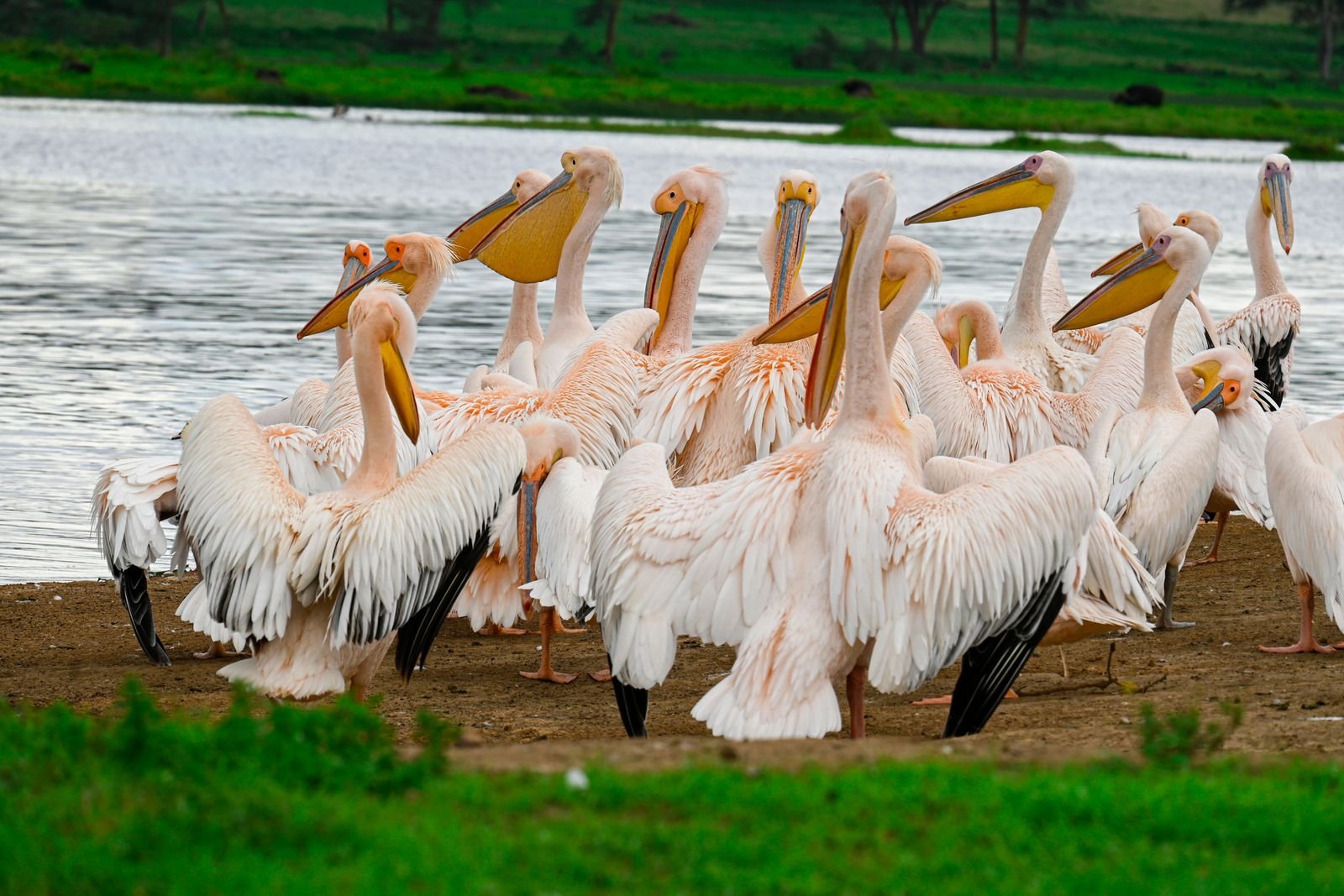
Lake Nakuru is one of the most famous lakes in Africa, and it is famous for a good reason. When the flamingos are there in large numbers, the shore turns pink, the water shimmers, and the whole lake seems to glow. Lake Nakuru, in the Great Rift Valley of Kenya, is a shallow, alkaline lake that is home to flamingos, pelicans, rhinos and a remarkable variety of other wildlife. It is also one of the easiest safari destinations in Kenya to visit, with a compact national park, good roads and a town nearby. This guide covers the flamingos, the rhinos, the best viewpoints, the seasons and the practical details for a trip to Lake Nakuru.
Lake Nakuru National Park was established in 1961, and it was originally created to protect the flamingos and the lake. The park covers about 188 square kilometres, including the lake itself, the surrounding woodland, the grassland and the cliffs that rise above the eastern shore. In 1987, the park became a rhino sanctuary, and it is now one of the best places in Kenya to see both black and white rhinos. The park is also home to lions, leopards, giraffes, zebras, buffalos and more than 400 species of birds. For a park that is so close to Nairobi, only about 160 kilometres away, Lake Nakuru offers a remarkable concentration of wildlife.
The Flamingos of Lake Nakuru
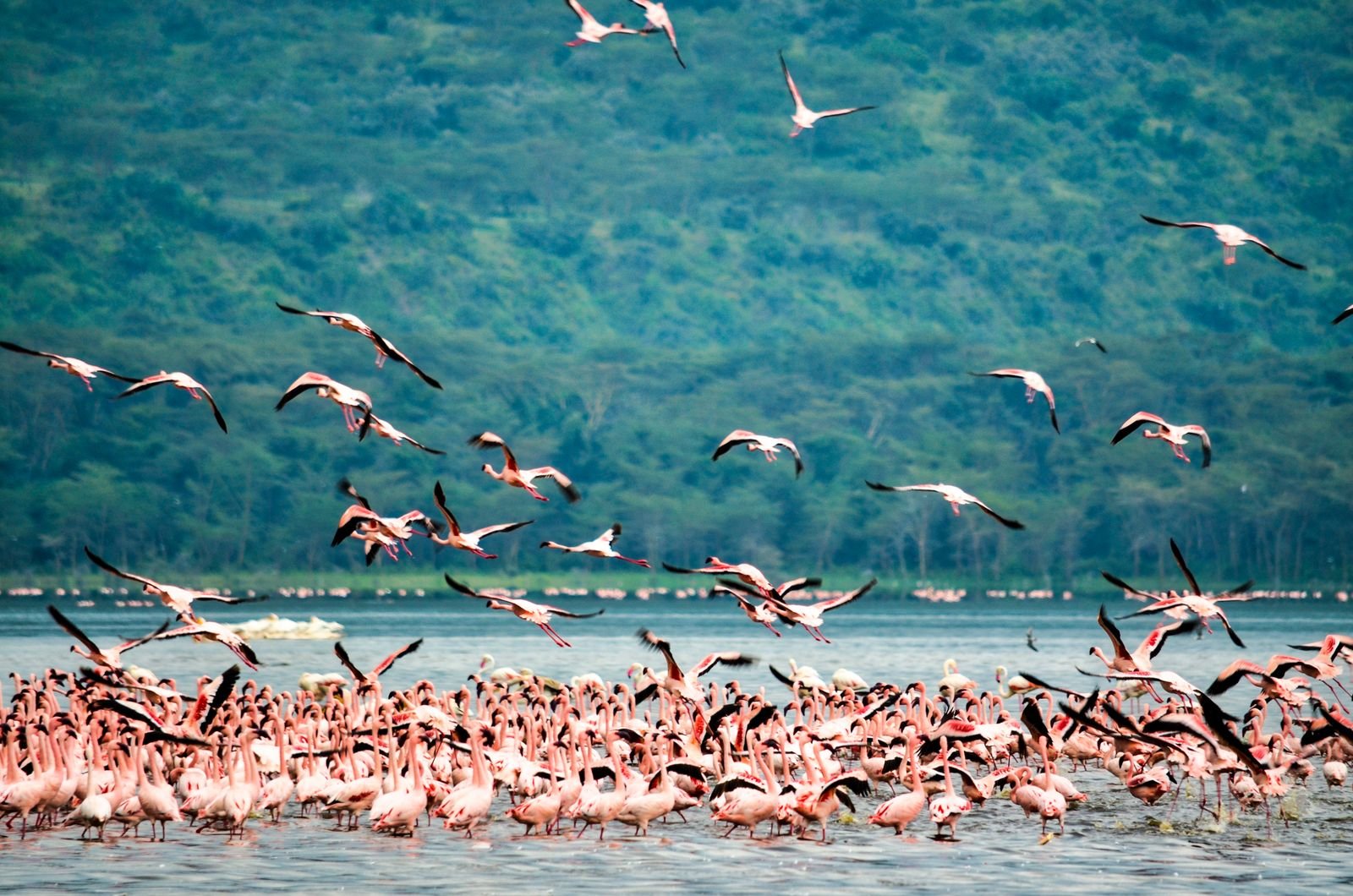
The flamingos are the reason most people come to Lake Nakuru, and they are also the reason the lake is so unpredictable. The lake is home to two species of flamingo, the greater flamingo and the lesser flamingo, and the lesser flamingo, which is the smaller and more numerous of the two, feeds on the algae that grows in the alkaline water. When the algae is abundant, the flamingos gather in their thousands, and sometimes in their hundreds of thousands, and the shore turns pink. When the algae is scarce, the flamingos move to other lakes in the Rift Valley, such as Lake Bogoria or Lake Elementaita, and the numbers at Nakuru fall.
The flamingo numbers at Lake Nakuru have changed in recent years, because the lake itself has changed. The lake has risen, flooding the shoreline and changing the chemistry of the water, and the flamingos have become less predictable. That does not mean that Lake Nakuru is no longer worth visiting for the flamingos. It means that you should not plan your whole trip around a single image of a pink lake. The flamingos are still there, in numbers that vary from season to season, and the pelicans, the cormorants and the other water birds are a spectacle in their own right. The best time to see the flamingos is in the dry season, when the water is lower and the algae is more concentrated, and the best place to see them is from the viewpoints on the eastern shore, where you can look out over the lake and the birds.
Rhinos and the Big Game of Lake Nakuru
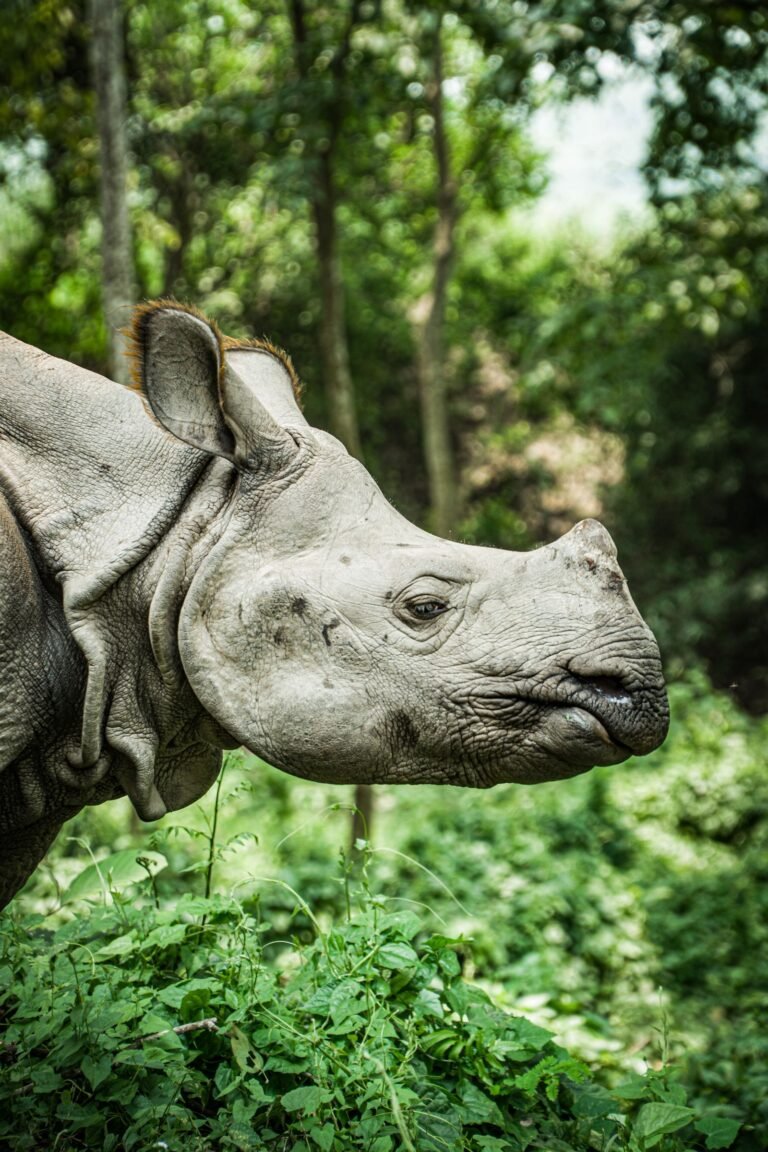
Lake Nakuru National Park is one of the best places in Kenya to see rhinos. The park is a sanctuary for both the black rhino, which is critically endangered, and the white rhino, which is near threatened, and the rhinos are well protected by the Kenya Wildlife Service. The black rhino is shy and difficult to see, and it is often found in the thick bush on the eastern side of the park, while the white rhino is more open, grazing on the grassland near the lake. With patience and a good guide, you have a good chance of seeing both species in a single day, which is rare in Kenya.
The park is also home to the Rothschild’s giraffe, a subspecies that is found only in a few places in Kenya and Uganda, and to lions, leopards, hyenas, jackals, zebras, buffalos and antelopes. The lions of Lake Nakuru are famous for climbing trees, a behaviour that is more often associated with the lions of Uganda, and the leopards are often seen in the yellow fever trees that line the lake shore. The park is compact, which means that the wildlife is concentrated, and a morning game drive can be very productive. The best time for a game drive is early in the morning, when the animals are active and the light is soft, or in the late afternoon, when the animals come to the water to drink.
The Viewpoints and the Landscape of Lake Nakuru
Lake Nakuru is not just about the wildlife. The landscape is beautiful in its own right, with the lake, the cliffs, the woodland and the grassland, and the viewpoints are some of the best in Kenya. Baboon Cliff, on the western side of the park, offers a panoramic view over the lake, with the flamingos, the pelicans and the town of Nakuru in the distance. It is also a good place to see baboons, which are common in the park, and to watch the sun set over the lake. Lion Hill, on the eastern side, offers a view over the lake and the park, and it is a good place to see lions and leopards.
The Makalia Falls, a small waterfall on the southern side of the park, is a pleasant stop, especially after rain, when the falls are flowing strongly. The acacia woodland, the yellow fever trees and the euphorbia forest are all distinctive, and they provide a habitat for the birds and the animals. The lake itself changes colour with the light, from blue in the morning to pink in the afternoon, when the flamingos are reflected in the water. Take time to stop at the viewpoints, to walk a little, and to look, because Lake Nakuru is a place that rewards the patient observer.
Game Drives in Lake Nakuru National Park
A game drive is the main activity in Lake Nakuru National Park, and it is best done in the early morning or late afternoon. The park has a good network of roads, and the drives are not long, because the park is compact. A typical game drive lasts three to four hours, and it covers the lake shore, the grassland and the woodland. The best time to see the rhinos is in the morning, when they are grazing, and the best time to see the lions and leopards is in the late afternoon, when they are active. The flamingos are best seen in the middle of the day, when the light is bright and the birds are feeding.
You can drive yourself in Lake Nakuru, if you have a suitable vehicle, or you can hire a guide and a driver, which is recommended, because the guides know the park, they know where the animals are, and they can spot wildlife that you would miss. The park is open from 6am to 6pm, and the gates close at 6pm, so plan your drive accordingly. The roads can be rough after rain, and a four-wheel-drive vehicle is recommended, especially in the wet season. For a wider sense of how lakes are visited in other parts of the world, our guide to Lake Tahoe in California and Nevada shows a very different kind of lake, clear, cold and mountain-ringed, while the Okavango Delta in Botswana offers a wetland that is one of the great wildlife destinations in Africa. More background on the lake is available on Wikipedia’s Lake Nakuru page.
Where to Stay Near Lake Nakuru
There are several options for staying near Lake Nakuru, from lodges inside the park to hotels and guesthouses in the town of Nakuru. The lodges inside the park, including the Lake Nakuru Lodge and the Sarova Lion Hill Lodge, offer the best access to the wildlife, with rooms that look out over the lake and the park, and with game drives included. They are expensive, but they are worth it if you want to be in the park at dawn and dusk, when the wildlife is most active. The town of Nakuru has a range of hotels and guesthouses, which are cheaper and more convenient for a short visit, but they are further from the park, and you will need to drive to the gate each morning.
For a longer trip, many visitors combine Lake Nakuru with the Masai Mara, with Lake Naivasha, or with the other Rift Valley lakes. Lake Nakuru is a good first stop on a Kenyan safari, because it is close to Nairobi, it is compact, and it offers a good introduction to the wildlife of the Rift Valley. Book ahead in the high season, from July to October, when the lodges fill up, and check whether your lodge includes game drives, meals and park fees, because the prices can vary widely.
The Best Time to Visit Lake Nakuru
The best time to visit Lake Nakuru is in the dry season, from July to October and from January to February, when the roads are good, the wildlife is concentrated near the water, and the flamingos are most likely to be present in large numbers. The dry season is also the best time for game drives, because the grass is short and the animals are easier to see. The wet season, from March to May and from November to December, brings rain, green grass and fewer visitors, and it is a good time for birdwatching, because the migrant birds are present, but the roads can be muddy and the flamingos may be elsewhere.
The flamingo numbers are the hardest thing to predict, because they depend on the algae in the lake, which depends on the water level and the chemistry of the lake. The lake has risen in recent years, and the flamingos have become less predictable, but they are still present in large numbers at times, and the other wildlife is always there. Whatever the season, Lake Nakuru is worth visiting, and it is best visited with flexible expectations, because the lake and its wildlife change with the seasons.
Practical Tips for Visiting Lake Nakuru
A few practical tips will make your visit to Lake Nakuru smoother. Bring binoculars, because the birds are best seen with them, and a camera with a good zoom lens, because the wildlife can be distant. Wear neutral colours, because bright colours can disturb the animals, and bring sun protection, because the sun in the Rift Valley is strong. Bring cash for the park fees, because the fees are paid at the gate, and check the current fees before you go, because they change from time to time. Respect the park rules, stay in your vehicle except at the designated viewpoints, do not feed the animals, and do not litter.
Travel with a guide if you can, because the guides know the park and they can help you to see the wildlife. The park is safe, but it is a wild place, and the animals are wild, so keep your distance, especially from the rhinos, the buffalos and the lions. Lake Nakuru is a place that rewards the careful, patient traveller, and it is also a place that is easy to visit, with good roads, good lodges and a town nearby. If you go prepared, and if you take your time, Lake Nakuru will give you one of the best wildlife experiences in Kenya.
Frequently Asked Questions
Are there flamingos at Lake Nakuru now?
Yes, flamingos are still present at Lake Nakuru, but their numbers vary from season to season, because they depend on the algae in the lake. The numbers have been lower in recent years, because the lake has risen, but the flamingos are still there, and the pelicans and other water birds are a spectacle in their own right.
Can you see rhinos at Lake Nakuru?
Yes, Lake Nakuru National Park is one of the best places in Kenya to see both black and white rhinos. The park is a rhino sanctuary, and with a good guide and a morning game drive, you have a good chance of seeing both species.
How far is Lake Nakuru from Nairobi?
Lake Nakuru is about 160 kilometres north-west of Nairobi, and the drive takes about three hours, depending on traffic. It is a good first stop on a Kenyan safari, because it is close to the capital and it offers a compact, rewarding wildlife experience.
Do you need a guide for Lake Nakuru?
You can drive yourself in Lake Nakuru, but a guide is recommended, because the guides know the park, they know where the animals are, and they can spot wildlife that you would miss. A guide also helps with the park fees and the logistics.
When is the best time to visit Lake Nakuru?
The dry season, from July to October and from January to February, is the best time to visit, with good roads, concentrated wildlife and the best chance of seeing the flamingos in large numbers. The wet season is good for birdwatching, but the roads can be muddy.
Conclusion
Lake Nakuru is a place that earns its fame, not just for the flamingos, but for the whole experience, the rhinos, the lions, the viewpoints and the landscape of the Rift Valley. The lake has changed, and the flamingos are less predictable than they once were, but the park is still one of the best wildlife destinations in Kenya, and it is one of the easiest to visit. Go with flexible expectations, take a morning game drive, spend time at the viewpoints, and let the lake set the pace. If you do, Lake Nakuru will not just be a photograph of a pink lake. It will be a place you remember, and a place you will want to return to, in a different season, to see it in a different light.