Ban Gioc Falls, Vietnam: The Complete Guide to the Falls, Rafts and Cao Bang
Ban Gioc Falls, Vietnam: The Complete Guide to the Falls, Rafts and Cao Bang
Ban Gioc Falls is one of the most beautiful waterfalls in Southeast Asia, a wide curtain of water that tumbles over limestone terraces on the border between Vietnam and China, in the remote province of Cao Bang. The Quay Son River, which feeds the falls, winds through rice fields and karst mountains before it reaches the edge, and the falls themselves are about 300 metres wide, with several tiers that drop around 30 metres into a wide pool below. On a sunny day, the water is a milky turquoise, and the spray catches the light, and the sound of the falls carries across the valley.
Ban Gioc is not a waterfall you visit for an hour and leave. The falls sit in a wide valley of rice fields and limestone peaks, and the area around them, the province of Cao Bang, is one of the least visited parts of Vietnam, with villages of the Tay and Nung people, caves, lakes and mountain passes. This guide covers everything you need to plan a trip to Ban Gioc Falls, from how to get there from Hanoi to the best time to visit, the bamboo rafts, the viewpoints and where to stay.

Why Ban Gioc Falls Belongs on Your List
Ban Gioc is the fourth largest waterfall on an international border in the world, and it is also one of the most beautiful, yet it is far less visited than the famous falls of Southeast Asia. There are no crowds here, no queues for a photo, and no entrance fee that buys you a view from behind a fence. You walk along the river, you take a bamboo raft out onto the pool below the falls, and you feel the spray on your face, and that is the whole experience, simple and unforgettable.
What makes Ban Gioc special is the setting. The falls are not in a gorge or a jungle, but in a wide open valley of rice fields, with limestone peaks rising on both sides and the river winding between them. The water is a milky green, coloured by the limestone, and the falls drop in several tiers, with the main fall about 30 metres high and the whole complex about 300 metres wide. In the rainy season the water is powerful and the spray fills the valley, and in the dry season the water is clearer and the tiers are more distinct, and both seasons have their own beauty.
Where Ban Gioc Falls Is and How to Get There
Ban Gioc Falls lies in the province of Cao Bang, in the far northeast of Vietnam, about 360 kilometres from Hanoi and close to the border with China. The falls are on the Quay Son River, which forms the border here, and the left side of the falls is in Vietnam while the right side is in China. The nearest town is Trung Khanh, about 30 kilometres from the falls, and the provincial capital, Cao Bang City, is about 90 kilometres away, and most visitors base themselves in one of these towns.
Getting to Ban Gioc takes time, but the journey is part of the experience. From Hanoi, it is about a seven to eight hour drive to Cao Bang City, either by bus or by private car, and the road winds through the mountains and past rice fields and villages. From Cao Bang City, it is another two to three hours by car or motorbike to the falls, and the road is good, although it is winding. Many visitors hire a car and driver in Hanoi for two or three days, which gives them the freedom to stop at the viewpoints and villages along the way.
The Best Time to Visit Ban Gioc Falls
The best time to visit Ban Gioc Falls is from September to November, when the rainy season has ended, the water is still strong and the rice fields in the valley are golden, ready for harvest. The weather is warm and dry, the skies are clear and the falls are at their most photogenic, with the golden fields in the foreground and the green peaks behind. This is also the most popular time to visit, although the falls are never crowded in the way that the famous sites of Vietnam can be.
The rainy season, from May to August, is when the falls are at their most powerful, with the water thundering over the terraces and the spray filling the valley, although the rain can make the roads slippery and the river can be too high for the bamboo rafts. The dry season, from December to April, is when the water is at its lowest and clearest, and the tiers of the falls are most distinct, although the flow can be thin in March and April. For a first visit, September and October are the best months.
The Falls and the Bamboo Rafts
The best way to see Ban Gioc Falls is from the water. Bamboo rafts wait at the landing below the falls, and for a small fee the boatmen will row you out onto the pool, right up to the base of the falls, where the spray drifts over the raft and the sound of the water drowns out everything else. The ride takes about 20 minutes, and it is the closest you will get to the falls, and the best place to take a photograph, with the tiers of water above you and the limestone peaks behind.
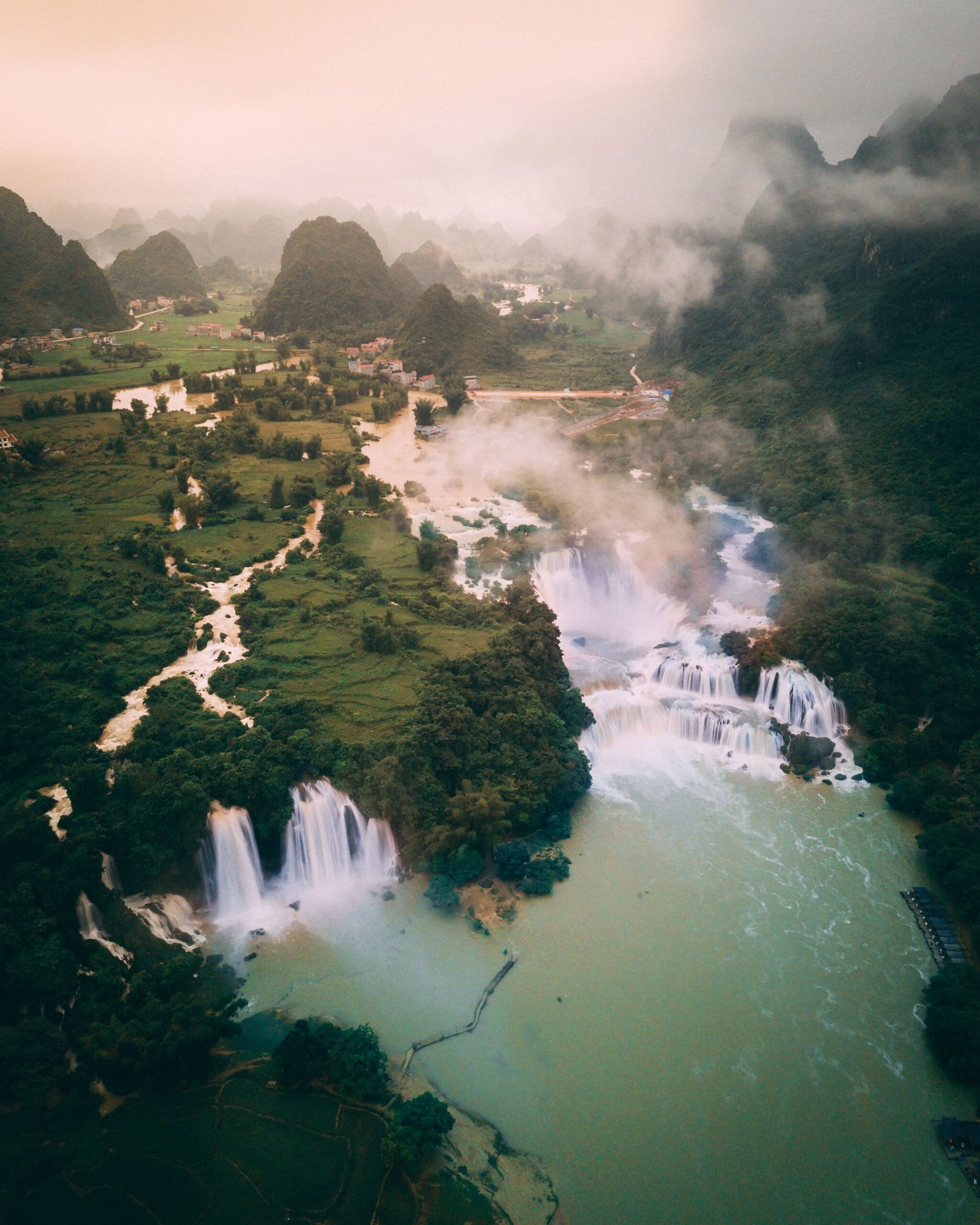
From the bank, there are several viewpoints, and the best is from the small hill on the Vietnamese side, which looks across the whole width of the falls. In the morning, the sun is behind the falls, and the light is best in the afternoon, when the sun is on the water. Allow at least two hours at the falls, and more if you want to walk along the river, where there are rice fields, water buffalo and small villages.
The Cao Bang Countryside Around the Falls
Ban Gioc is worth more than a day trip, because the province of Cao Bang is one of the most beautiful and least visited parts of Vietnam. The landscape is a maze of limestone peaks, rice valleys and rivers, and the roads are quiet, with more water buffalo than cars. Near the falls, the Nguom Ngao Cave is a large limestone cave with stalactites and an underground stream, and it is an easy half day trip from the falls. The town of Trung Khanh, on the way back to Cao Bang City, is a good place to stop for lunch and to see a local market.
Where to Stay Near Ban Gioc Falls
There are a few small hotels and homestays near the falls, and they are simple but comfortable, with clean rooms and local food. The best option is to stay in a homestay in one of the Tay villages near the falls, where you sleep in a stilt house, eat with the family and wake to the sound of the river. If you prefer a hotel, Cao Bang City has a better range, from budget hotels to comfortable three star hotels, and it is a good base for two or three days in the province.
Practical Tips for Visiting Ban Gioc Falls
Ban Gioc is in a remote area, so come prepared. Bring cash, as there are few ATMs outside Cao Bang City and the small shops and homestays near the falls do not take cards. Pack a rain jacket and a dry bag for the bamboo raft, as the spray can soak your camera and phone. The paths around the falls can be slippery, so wear shoes with a good grip. Finally, remember that the falls are on an international border, so stay on the Vietnamese side, follow the signs and do not try to cross the river.
Frequently Asked Questions About Ban Gioc Falls
How do I get to Ban Gioc Falls from Hanoi? From Hanoi, it is about a seven to eight hour drive to Cao Bang City, by bus or by private car, and then another two to three hours to the falls. Many visitors hire a car and driver in Hanoi for two or three days, which is the most comfortable way to see the province.
What is the best time to visit Ban Gioc Falls? September to November is the best time, when the water is still strong after the rainy season and the rice fields are golden. May to August is when the falls are at their most powerful, and December to April is when the water is at its lowest and clearest.
Can I take a bamboo raft at Ban Gioc Falls? Yes, bamboo rafts run from the landing below the falls, and they take you out onto the pool, right up to the base of the falls. The ride takes about 20 minutes and costs a small fee, and it is the best way to see the falls up close.
How much time do I need at Ban Gioc Falls? Allow at least two hours at the falls, and a full day for the area, including the Nguom Ngao Cave and the villages along the river. Most visitors spend two or three days in Cao Bang province, with one day at the falls and the rest exploring the countryside.
Is Ban Gioc Falls on the border with China? Yes, the falls are on the Quay Son River, which forms the border between Vietnam and China, and the left side of the falls is in Vietnam while the right side is in China. Stay on the Vietnamese side and follow the signs.
Conclusion: Ban Gioc Falls Awaits
Ban Gioc Falls is a place that rewards the traveller who is willing to go further, to leave the well worn road and to drive into the mountains of Cao Bang. The falls themselves are beautiful, but it is the whole journey that makes the trip, the rice fields, the limestone peaks, the villages and the quiet roads. If you are planning a trip to Vietnam, give Ban Gioc two or three days, and you will come home with some of the best photographs and memories of your whole trip.
For more waterfall inspiration in Southeast Asia, read our guide to Kuang Si Falls, the turquoise paradise of Laos, and our guide to Erawan Falls, the seven tiered paradise of Thailand. Both are good companions to a Ban Gioc trip, and they will help you plan the rest of your time in the region.