Mount Rinjani, Indonesia: Complete Guide to the Crater Lake, Summit and the Lombok Volcano
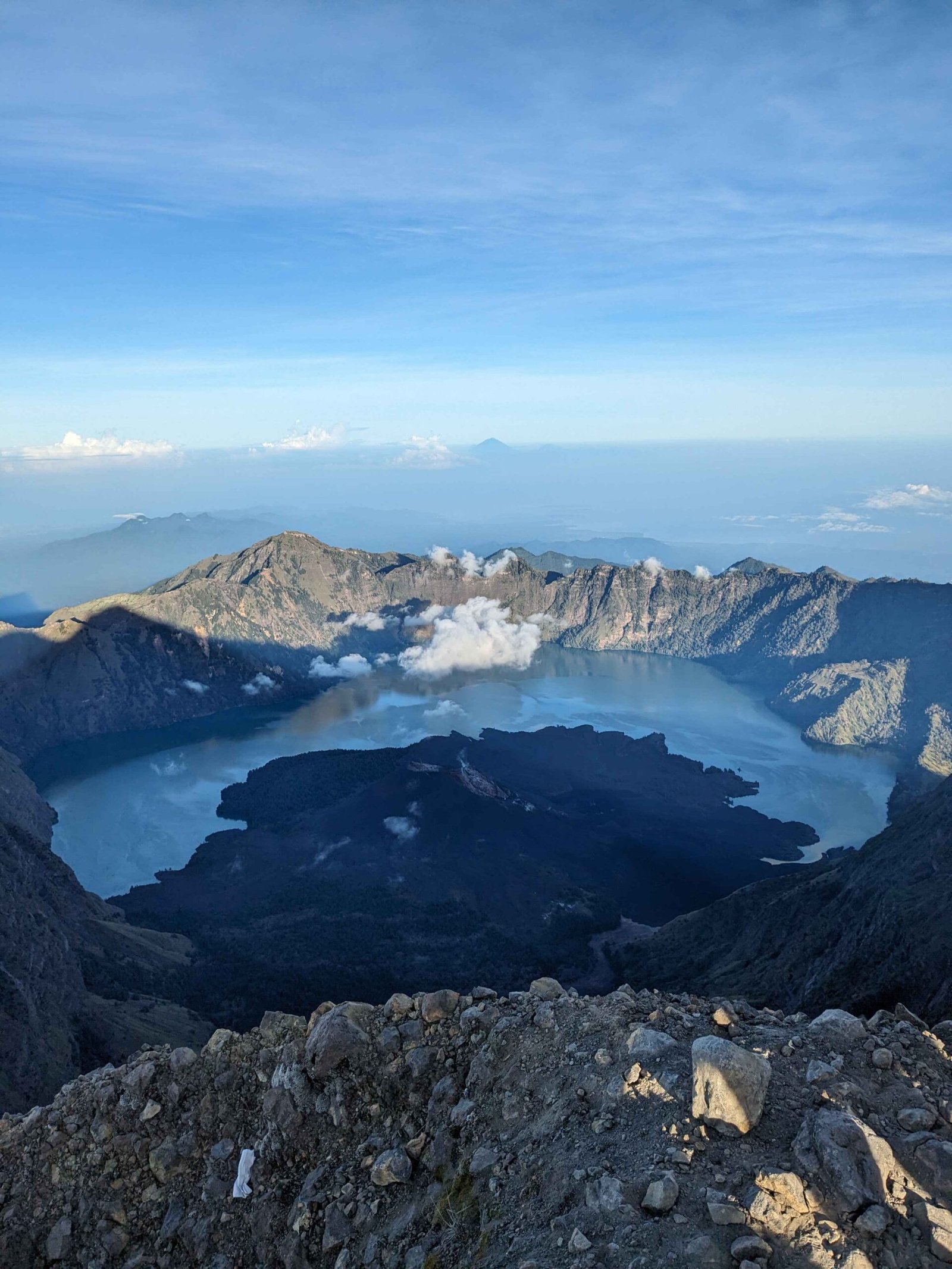
Mount Rinjani is the great volcano of Lombok, and it is one of the most spectacular mountains in Indonesia. At 3,726 metres, it is the second-highest volcano in the country, and it dominates the island, rising from the sea to a summit that is often wreathed in cloud by midday. At its heart lies Segara Anak, a crescent-shaped crater lake of astonishing blue-green water, with a small active cone, Gunung Barujari, rising from its shore. To climb Rinjani is to walk through jungle, savanna and volcanic desert, to camp on a crater rim above the clouds, and to watch the sun rise over the islands of the Indonesian archipelago. It is a hard climb, and it is one of the finest in South-East Asia.
What makes Mount Rinjani so memorable is the variety of the journey. The lower slopes are covered in tropical forest, where monkeys chatter in the trees and waterfalls tumble into clear pools. Higher up, the forest gives way to open savanna, and then to the bare volcanic landscape of the crater rim, where the ground is black and red and the air is thin. The crater lake itself is a place of pilgrimage for the Sasak people of Lombok and for Hindus from Bali, and the hot springs on its shore are said to have healing powers. Few mountains combine a crater lake, a summit, hot springs and a view across to Bali as beautifully as Rinjani does.
Where Is Mount Rinjani?
Mount Rinjani stands on the island of Lombok, in the province of West Nusa Tenggara, Indonesia, east of Bali. Lombok is a large island, about eighty kilometres across, and Rinjani occupies much of its northern half. The mountain is protected within Gunung Rinjani National Park, which covers more than forty thousand hectares of forest, savanna and volcanic landscape. The main trekking gateways are the villages of Sembalun, on the eastern side of the mountain, and Senaru, on the northern side, and both are reached by road from the port town of Bangsal, the airport at Praya, or the resort area of Senggigi.
Rinjani is a stratovolcano, built up over thousands of years by eruptions, and it is still active. The last major eruption, in 2015 and 2016, came from Barujari, the small cone in the crater lake, and the mountain is monitored closely by Indonesian volcanologists. The crater itself is enormous, some six kilometres across, and it was formed by a cataclysmic eruption in the thirteenth century that was one of the largest in recorded history. Today the volcano is quiet, the lake is calm, and the mountain is one of the most popular trekking destinations in Indonesia, though it is always wise to check the latest volcanic activity reports before you go.
Why Climb Mount Rinjani?
People climb Rinjani for the crater lake above all else. Segara Anak is one of the most beautiful sights in Indonesia: a lake of deep blue-green water, set in a vast crater, with the cone of Barujari rising from its edge and the walls of the crater towering above. The lake is best seen from the crater rim at sunrise, when the mist lifts and the water catches the light, and the walk down to its shore, through the hot springs and the fishing spots, is a highlight of the trek. The summit is the other great prize: at dawn, the view from the top stretches across Lombok to Bali and the volcano Agung, and on a clear day you can see as far as Sumbawa.
The climb is also a cultural experience. The porters who carry the food and equipment are mostly Sasak men from the villages around the mountain, and they are famously strong, cheerful and skilled, cooking full meals on the crater rim with a few pots and a fire. The villages of Sembalun and Senaru are worth exploring in themselves, with rice terraces, waterfalls and traditional houses, and the trek is a chance to meet the people of Lombok away from the beach resorts. Rinjani is a hard climb, but it is also a warm and welcoming one, and the sense of achievement at the summit is immense.
The Crater Lake and Segara Anak
Segara Anak, which means Child of the Sea in the local language, is the heart of Mount Rinjani. The lake is about eleven kilometres around, and its water is warm and slightly milky, coloured by the minerals from the volcano. The lake is sacred to the Sasak and Balinese Hindus, who make pilgrimages to its shore to bathe in the hot springs and to make offerings, and the small cone of Barujari, which rises from the lake, is a reminder that the volcano is still alive. The lake is also home to fish, which were introduced long ago and are now caught by local fishermen, and the shoreline has campsites where trekkers spend the night.
The walk from the crater rim down to the lake is steep and loose, and it takes about two hours, but it is worth it for the hot springs alone. The springs bubble up on the shore of the lake, and the warm water is a wonderful relief for tired legs after the climb. The lake is also the place to see Rinjani at its most peaceful: in the early morning, before the wind picks up, the water is still and the cone is reflected in it, and the only sounds are the birds and the water. Many trekkers say that the lake, rather than the summit, is the real reward of the climb.
The Summit Climb
The summit of Mount Rinjani is reached by a steep climb from the crater rim camp at Sembalun, and it is the hardest part of the trek. The climb starts in the dark, usually around two in the morning, so that trekkers reach the summit for sunrise, and it takes three to four hours to cover the thousand metres of ascent. The trail is loose volcanic scree, and every step forward seems to slide half a step back, which is why the climb feels so demanding. The final section is the steepest, and the wind at the top can be strong and cold, so warm layers and a head torch are essential.
The reward is one of the great sunrises in Asia. From the summit, the sun rises over the sea to the east, and the shadow of Rinjani stretches across Lombok to the west. The crater lake lies far below, the cone of Barujari steams gently, and the islands of Bali, Sumbawa and the Gili Islands are visible on the horizon. The descent is long and dusty, and most trekkers are glad to be back at camp for breakfast, but the memory of the sunrise stays with them. If the weather is bad, the guides may decide not to attempt the summit, and it is important to respect their judgement, as the mountain is dangerous in high winds and rain.
Trekking Routes: Sembalun and Senaru
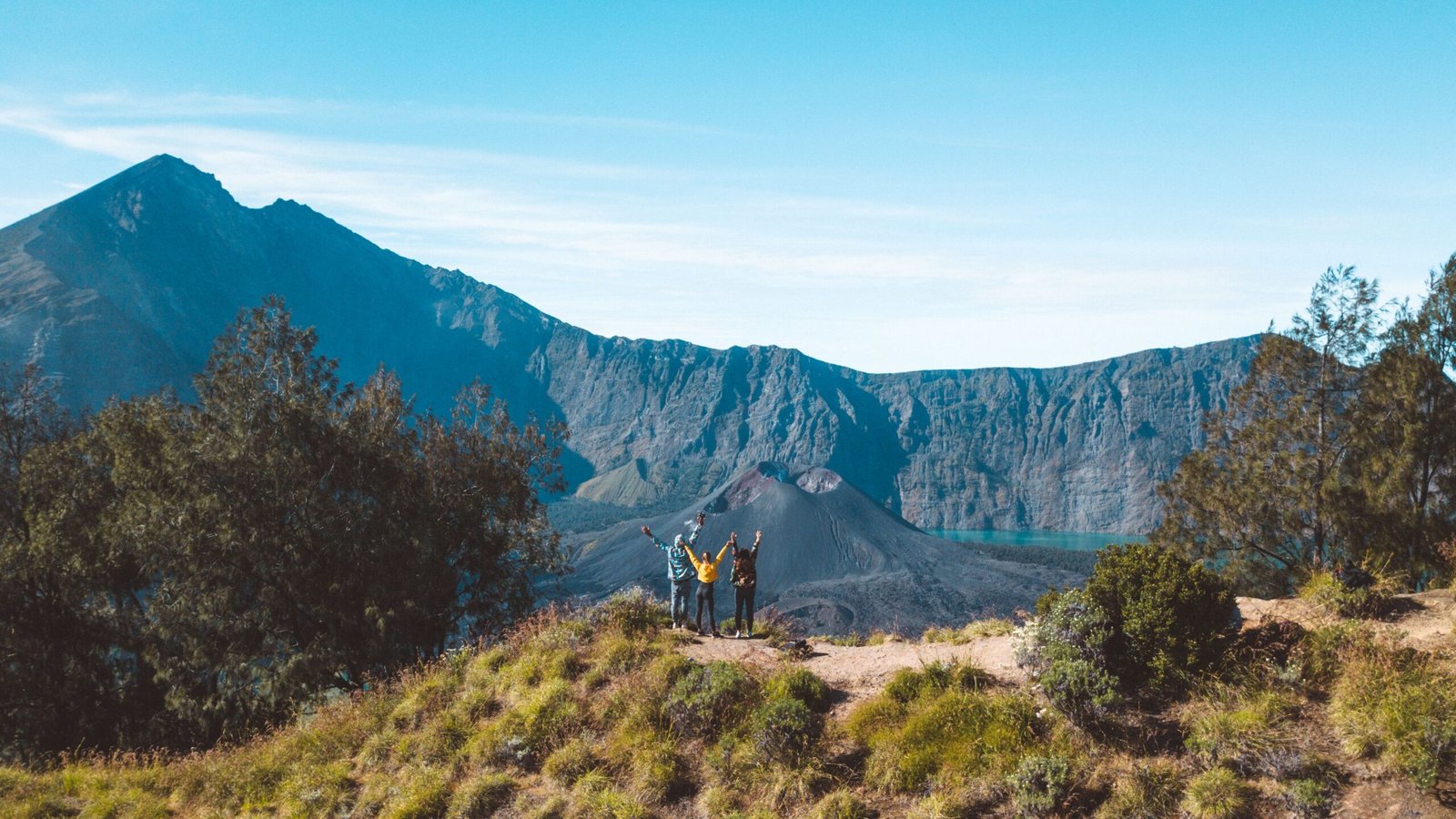
There are two main routes up Mount Rinjani, and most treks combine them into a loop. The Sembalun route, from the east, is the most popular for the summit, as it reaches the crater rim in two days and the summit on the third morning. The trail climbs through savanna and open hillside, with views of the mountain growing closer, and the campsite on the crater rim, at 2,639 metres, has the best sunrise views on the mountain. The Sembalun route is the one to choose if the summit is your priority, and it is the route used by most two-day, one-night summit treks.
The Senaru route, from the north, is the more traditional route, and it is the one to choose if you want to see the crater lake and the waterfalls. The trail climbs through dense rainforest, with monkeys and birds in the trees, to the Senaru crater rim camp, from where the lake is visible below. The descent to the lake and the climb back out are long and steep, and the Senaru route is generally used for longer treks of three or four days that include the lake and the summit. Many trekkers start at Sembalun and finish at Senaru, or the other way around, so that they see both sides of the mountain.
Best Time to Climb Mount Rinjani
The best time to climb Mount Rinjani is the dry season, from April to November, when the trails are dry, the skies are clear and the views are at their best. The mountain is officially open for trekking from April to December, and it is closed during the wet season, from January to March, when the trails are muddy, the rain is heavy and the risk of landslides is high. The busiest months are July and August, when the weather is at its best and the mountain is crowded, so it is worth visiting in April, May, September or October, when the weather is still good and the trails are quieter.
Even in the dry season, the weather on Rinjani can be unpredictable. Mornings are usually clear, with clouds building up by midday, and the summit can be cold and windy at any time of year. The temperature at the crater rim can fall close to freezing at night, so a warm sleeping bag is essential. Rain is possible even in the dry season, and the mountain has a history of sudden storms, so a waterproof jacket and a flexible attitude are important. Check the park opening dates before you book, as the mountain is sometimes closed for recovery after eruptions or earthquakes.
Permits, Guides and Porters
Trekking on Mount Rinjani requires a national park entry ticket, which is included in the price of most organised treks, and all trekkers must be accompanied by a licensed guide. The rules were tightened after the 2018 earthquake, which damaged trails and villages, and the park now limits the number of trekkers per day. It is not possible to climb Rinjani independently: you must book through a licensed trekking company, which provides the guide, the porters, the food, the tents and the equipment. Book with a reputable company, and check that the porters are treated fairly and that the company carries proper safety equipment.
The porters are the unsung heroes of Rinjani. They carry the food, the water, the tents and the cooking equipment, and they cook meals on the crater rim that are far better than you would expect at 2,600 metres. A typical trek includes three meals a day, with rice, vegetables, chicken or fish, fruit and hot drinks, and the food is a highlight of the trip. The cost of a trek varies with the length and the company, and it is worth paying for a good operator rather than choosing the cheapest option. The mountain is demanding, and a good guide and a well-organised team make all the difference.
What to Pack for Mount Rinjani
Packing for Rinjani is a balance between travelling light and being prepared for cold, wind and rain. You will need good walking boots with ankle support, as the trails are steep and loose, and warm layers for the summit and the nights on the crater rim. A down jacket or a thick fleece, a warm hat, gloves and a waterproof jacket are all essential, as is a head torch for the summit climb. Your trekking company will provide the tent, the sleeping mat and the food, but you should bring your own sleeping bag, rated for cold nights, and a small day pack for water, snacks and layers.
Other essentials include sunscreen, lip balm, a hat, sunglasses, water purification tablets, a first aid kit, and plenty of water. There is no water on the upper mountain except at the crater lake, so you should carry at least three litres for the summit day. A walking pole is very helpful on the loose scree, and many trekkers rent one from their company. Pack your belongings in a dry bag or a plastic bag inside your pack, as rain is always possible, and bring cash for tips for your guide and porters, who work extremely hard.
Practical Tips for Climbing Mount Rinjani
Fitness is the key to enjoying Rinjani. The climb is steep, the altitude is real, and the days are long, so train with hill walks and stair climbs before you go, and arrive on Lombok a few days early to acclimatise and to recover from the journey. Take the climb slowly, drink plenty of water, and listen to your guide, who knows the mountain and the weather. The altitude at the summit is 3,726 metres, which is high enough to cause altitude sickness, so ascend gradually and descend if you feel unwell.
Respect the mountain and the local culture. Rinjani is sacred to the people of Lombok, and the crater lake is a place of pilgrimage, so behave respectfully at the lake and the hot springs. Take all your rubbish down with you, use the toilets provided at the campsites, and do not wash with soap in the lake or the streams. The mountain was badly affected by the 2018 earthquake, and the villages around it are still recovering, so choose a local company and spend time in Sembalun or Senaru before or after your trek. The people of Lombok are warm and welcoming, and the mountain will reward your respect with one of the great climbs of Asia.
If you liked Mount Rinjani, you will also enjoy our guides to Mount Fuji and to Bali.
Conclusion
Mount Rinjani is a climb that stays with you. It is the blue-green water of Segara Anak, the warmth of the hot springs, the long, dusty climb to the summit and the sunrise over the islands of Indonesia. It is a hard mountain, and it demands fitness, patience and respect, but it gives back more than it takes, in views, in the kindness of the porters, and in the sense of standing on the rim of one of the great volcanoes of the world. Trek in the dry season, choose a good company, pack for the cold, and let Rinjani show you why it is one of the finest climbs in South-East Asia.
Frequently Asked Questions
How long does it take to climb Mount Rinjani?
Most treks take two to four days. A two-day, one-night trek reaches the crater rim and the summit from Sembalun, while a three or four-day trek also includes the crater lake and the Senaru route. Four days is the most rewarding option if you have the time.
Is Mount Rinjani difficult?
Yes, Rinjani is a demanding climb. The summit day involves a steep ascent on loose scree, the altitude is over 3,700 metres, and the days are long. Good fitness and a steady pace are essential, and the trek is not suitable for beginners.
Can I climb Rinjani without a guide?
No. All trekkers must be accompanied by a licensed guide, and you must book through a licensed trekking company. The park limits the number of trekkers per day, so book in advance, especially in the dry season.
What is the best time to climb Mount Rinjani?
The dry season, from April to November, is the best time, with the clearest skies and the driest trails. The mountain is closed in the wet season, from January to March. April, May, September and October are quieter than the peak months of July and August.
Is Mount Rinjani still active?
Yes, Rinjani is an active volcano, and the small cone of Barujari in the crater lake last erupted in 2015 and 2016. The mountain is monitored closely, and treks are only allowed when the volcano is quiet. Always check the latest activity reports before you go.