

Ordesa Valley, Pyrenees: Complete Guide to Spain’s Wild Mountain Valley
Ordesa Valley, in the Spanish Pyrenees, is one of the wildest and most beautiful mountain valleys in Europe. Ordesa Valley is a deep, U-shaped valley carved by glaciers, with limestone cliffs more than 1,000 metres high, waterfalls that fall in steps down the valley floor, and forests of beech, pine and fir that turn gold in autumn. This complete guide to Ordesa Valley explains how to get there, which trails to walk, when to visit and how to enjoy the valley and the Ordesa y Monte Perdido National Park, which protects it, without rushing. Ordesa Valley is a place for walkers, photographers and anyone who loves wild mountain landscapes, and it is quieter and less crowded than the Alps, which makes it all the more special.
Ordesa Valley lies in the province of Huesca, in Aragon, in northern Spain, close to the border with France. The valley is part of the Ordesa y Monte Perdido National Park, which was created in 1918 and is one of the oldest national parks in Spain, and it is also a UNESCO World Heritage Site, as part of the Pyrenees-Monte Perdido site. The park protects Monte Perdido, the third highest peak in the Pyrenees at 3,355 metres, and a landscape of canyons, caves, glaciers and forests that is home to bearded vultures, golden eagles, Pyrenean chamois and brown bears. For travellers who love mountains, Ordesa Valley is one of the great destinations in Spain, and it is easy to reach from Zaragoza, Barcelona and the French side of the Pyrenees.

Why Ordesa Valley Is One of Europe’s Great Mountain Valleys
Ordesa Valley is famous for its scale and its beauty. The valley is about 11 kilometres long, with cliffs that rise more than 1,000 metres above the Arazas River, which flows along the valley floor in a series of waterfalls, pools and rapids. The most famous waterfalls are the Gradas de Soaso, a series of stepped waterfalls that lead to the Cola de Caballo, the Horse’s Tail, a tall waterfall that falls from a cliff at the head of the valley. The walk to the Cola de Caballo is the most popular trail in Ordesa Valley, and it is one of the great walks in Europe, with views of the cliffs, the river and the forests that change with every step.
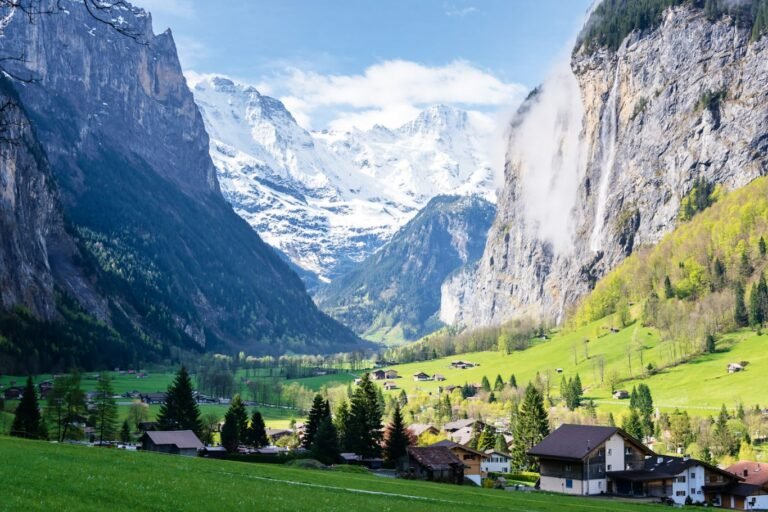
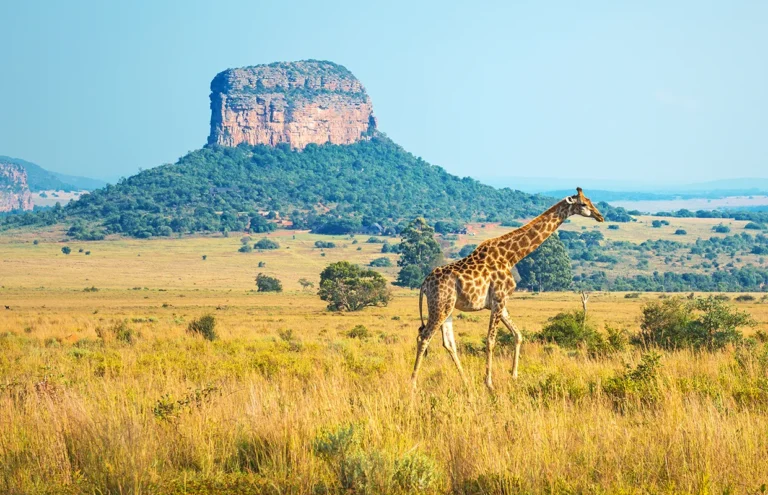
What makes Ordesa Valley special is not just the valley itself, but the whole national park that surrounds it. The park includes three other valleys: the Añisclo Canyon, a deep, narrow gorge with a river and a road that is one of the most dramatic drives in Spain; the Pineta Valley, a wide, green valley with views of Monte Perdido and a waterfall at its head; and the Escuaín Gorge, a wild, remote valley that is home to bearded vultures. Together, these valleys form a landscape of extraordinary variety, from high peaks and glaciers to deep canyons and ancient forests, all within a few kilometres of each other. For travellers who love mountain valleys, Ordesa Valley belongs on the same list as other great alpine landscapes, such as the Swiss Alps and the Drakensberg Mountains in South Africa, but it is wilder, quieter and more Spanish in character.
The Cola de Caballo Trail: The Classic Walk in Ordesa Valley
The walk to the Cola de Caballo is the classic trail in Ordesa Valley, and it is the one that most visitors should do first. The trail starts at the Pradera de Ordesa, the meadow at the entrance to the valley, where there is a visitor centre, a car park and a bus stop, and it follows the Arazas River along the valley floor, through beech forest and past the Gradas de Soaso, to the Cola de Caballo waterfall at the head of the valley. The trail is about 17 kilometres return, with 400 metres of climbing, and it takes about five to six hours, so start early in the morning and bring water, food and layers.
The trail is well marked and well maintained, and it is suitable for walkers of moderate fitness, although it is long and the return journey can feel tiring. The best time to walk it is in spring, when the waterfalls are full and the flowers are in bloom, and in autumn, when the beech forest turns gold and red and the valley is at its most beautiful. In summer, the trail can be crowded, especially on weekends, and the park runs a bus from Torla to the Pradera de Ordesa to reduce traffic, so check the bus timetable before you go. In winter, the trail can be covered in snow and ice, and you should only walk it if you have the right equipment and experience.
Monte Perdido, the Faja de Pelay and the High Trails of Ordesa Valley
For walkers who want more than the valley floor, Ordesa Valley has high trails that climb to viewpoints above the cliffs, with views of the whole valley, the Pyrenees and Monte Perdido. The most famous high trail is the Faja de Pelay, a narrow path that runs along a ledge on the south side of the valley, about 300 metres above the river, with views of the cliffs, the waterfalls and the forests below. The Faja de Pelay is best walked as a loop with the Cola de Caballo trail, climbing to the faja at the head of the valley and returning along the ledge, a walk of about 20 kilometres that takes seven to eight hours and is one of the great walks in the Pyrenees.
Monte Perdido, at 3,355 metres, is the highest peak in the Ordesa y Monte Perdido National Park and the third highest in the Pyrenees, and it can be climbed from the Pineta Valley or from the Góriz mountain refuge, above Ordesa Valley. The climb is long and steep, with snow and ice on the upper slopes, and it should only be attempted by experienced walkers with the right equipment, preferably with a guide. For a shorter high walk, try the trail to the Mirador de Calcilarruego, a viewpoint above the valley with views of the cliffs and the river, or the trail to the Circo de Soaso, a natural amphitheatre at the head of the valley, with views of Monte Perdido and the surrounding peaks.
Torla, Broto and the Villages of Ordesa Valley
Torla is the main village for Ordesa Valley, a small, stone village at the entrance to the national park, with hotels, restaurants, shops and a visitor centre. Torla is a good base for a first visit to Ordesa Valley, because it has the best choice of accommodation and because the bus to the Pradera de Ordesa leaves from here in summer. The village itself is worth exploring, with narrow streets, stone houses, a church and views of the mountains, and it is a good place to eat after a long walk, with restaurants serving local food such as lamb, trout, mushrooms and cheese.
Broto, a few kilometres south of Torla, is another good base, with hotels, campsites and a waterfall in the village, and it is quieter than Torla. Other villages in the area include Biescas, on the road to the French border, with a good choice of accommodation and a base for the Tena Valley, and Aínsa, a medieval village with a castle, a plaza and a good base for the Añisclo Canyon and the Pineta Valley. Stay in a village rather than in a hotel outside the park, because the villages have more character, better food and a stronger sense of place, and because you will be closer to the trails.

Wildlife, Flowers and Forests in Ordesa Valley
Ordesa Valley is home to a wide range of wildlife, including bearded vultures, golden eagles, griffon vultures, Pyrenean chamois, wild boar, deer and brown bears, although bears are very shy and rarely seen. The bearded vulture, or lammergeier, is the symbol of the Pyrenees, with a wingspan of almost three metres, and it can often be seen soaring above the cliffs of Ordesa Valley, especially in the morning. The park runs a feeding station for bearded vultures, and a guided tour can help you to see them. Pyrenean chamois are easier to see, especially on the high trails, where they graze on the alpine meadows, and they are most active in the morning and evening.
The forests of Ordesa Valley are among the finest in the Pyrenees, with beech, pine, fir and oak, and they are at their most beautiful in autumn, when the beech leaves turn gold, orange and red, and the valley is filled with colour. The valley floor is home to wildflowers in spring, including orchids, lilies and gentians, and the high meadows are home to alpine flowers in summer, including edelweiss, although it is rare and protected. Stay on the paths, do not pick flowers, and do not feed wildlife, because the park is fragile and the animals and plants that live here depend on visitors who respect it.
When to Visit Ordesa Valley and How to Get There
The best time to visit Ordesa Valley is in spring, from May to June, and in autumn, from September to October, when the weather is mild, the waterfalls are full, the flowers are in bloom in spring and the forests are golden in autumn, and the valley is less crowded than in summer. Summer, from July to August, is the warmest and busiest season, with long days, warm weather and the best access to the high trails, but also the most visitors, and the park runs a bus from Torla to the Pradera de Ordesa to reduce traffic. Winter, from December to March, is cold, with snow and ice, and many trails are closed, but the valley is quiet and beautiful, with snow on the cliffs and frozen waterfalls, and it is a good time to visit if you want to see Ordesa Valley without crowds.
Ordesa Valley is reached by car from Zaragoza, about two hours’ drive, via Huesca and Sabiñánigo, or from Barcelona, about four hours’ drive, via Lleida and Huesca. There is no train to Torla, and public transport is limited, so you will need a car, and you should book your accommodation in advance, especially in summer and in autumn, when the valley is at its most popular. The road from Torla to the Pradera de Ordesa is closed to private cars in summer, and you must take the bus, which runs regularly from Torla to the park entrance. Check the park’s website for the bus timetable, the road closures and the trail conditions before you go.
Practical Tips for Visiting Ordesa Valley
A few practical tips will make a trip to Ordesa Valley smoother and safer. Book your accommodation and your bus tickets well in advance, because Torla and the surrounding villages fill up quickly in summer and in autumn. Bring layers, because the weather in the Pyrenees can change quickly, with sun, rain, wind and snow in the same day, and the temperature in the valley can be ten degrees colder than in Torla. Wear sturdy walking shoes with good grip, because the trails can be steep, rocky and slippery, especially after rain, and bring a hat, sunscreen and sunglasses, because the sun at altitude is strong.
Carry plenty of water and food, because there are no shops in the valley, and the visitor centre has limited hours. Respect the park by staying on marked trails, not picking flowers, and not feeding wildlife. Check the weather and the trail conditions before you set out, and be prepared to change your plans if the weather is bad, because the mountains can be dangerous in fog, rain or snow. Finally, remember that Ordesa Valley is a wild place, with cliffs, fast rivers and wildlife, so take care, especially with children, and enjoy the valley with respect.
Frequently Asked Questions About Ordesa Valley
How many days do you need in Ordesa Valley?
Three days is ideal for a first visit to Ordesa Valley. That gives you time for the Cola de Caballo trail, a high trail such as the Faja de Pelay, and a day trip to the Añisclo Canyon or the Pineta Valley, without rushing. Two days is enough to see the valley floor, but you will miss the high trails.
What is the best month to visit Ordesa Valley?
October is the best month to visit Ordesa Valley, because the beech forest turns gold and red, the weather is mild, the waterfalls are still full and the valley is less crowded than in summer. May and June are also excellent, with wildflowers, full waterfalls and mild weather.
Do you need a car to visit Ordesa Valley?
Yes, you need a car to visit Ordesa Valley, because public transport is limited and the best places are spread out across the national park. In summer, you must take the bus from Torla to the Pradera de Ordesa, because the road is closed to private cars.
Is the Cola de Caballo trail difficult?
The Cola de Caballo trail is moderately difficult. It is 17 kilometres return, with 400 metres of climbing, and it takes five to six hours. It is suitable for walkers of moderate fitness, but it is long, so start early, bring water and food, and wear good walking shoes.
Can you see bearded vultures in Ordesa Valley?
Yes, you can see bearded vultures in Ordesa Valley, especially in the morning, when they soar above the cliffs. The park runs a feeding station, and a guided tour will greatly increase your chances of seeing one. Bring binoculars and be patient.
Conclusion: Ordesa Valley, the Wild Heart of the Pyrenees
Ordesa Valley is a place that stays with you long after you leave. It is the cliffs above the Arazas River, the waterfalls at the Gradas de Soaso, the gold of the beech forest in autumn, the bearded vulture soaring above the valley, and the sight of Monte Perdido at dawn. It is a place where nature is on a grand scale, where the walks are long and rewarding, and where every day brings a new view, a new waterfall or a new village worth stopping for. For travellers who love mountains, Ordesa Valley is one of the great destinations in Spain, and it deserves a place on any journey through the Pyrenees. Plan your trip carefully, walk as much as you can, and let Ordesa Valley show you why it is called the wild heart of the Pyrenees.

One Comment