Sapa Valley, Vietnam: The Complete Guide to Rice Terraces, Fansipan and Hill Tribe Villages
Sapa Valley, in the far north of Vietnam, is one of the most beautiful mountain landscapes in Southeast Asia. Terraced rice fields curve down the hillsides in shades of green and gold, mist drifts through the valleys in the morning, and the Hoang Lien Son mountains rise to Fansipan, the highest peak in Indochina at 3,147 metres. It is a place where the scenery is only half the story, because the valleys are home to Hmong, Dao and Tay communities who have farmed these slopes for centuries.
For a nature traveller, Sapa Valley is a place to walk slowly. The best way to see it is on foot, along trails that link villages, cross bamboo bridges and climb through terraces that have been built by hand over hundreds of years. The town of Sa Pa, at 1,600 metres, is the base for most trips, and from there you can trek to Cat Cat, Lao Chai, Ta Van and Ta Phin, stay in a family homestay, and climb Fansipan, either on foot or by cable car. This guide covers everything you need to plan a trip to Sapa Valley, from the best time to visit to the trails, villages and practical tips.
Why Sapa Valley Belongs on Your List
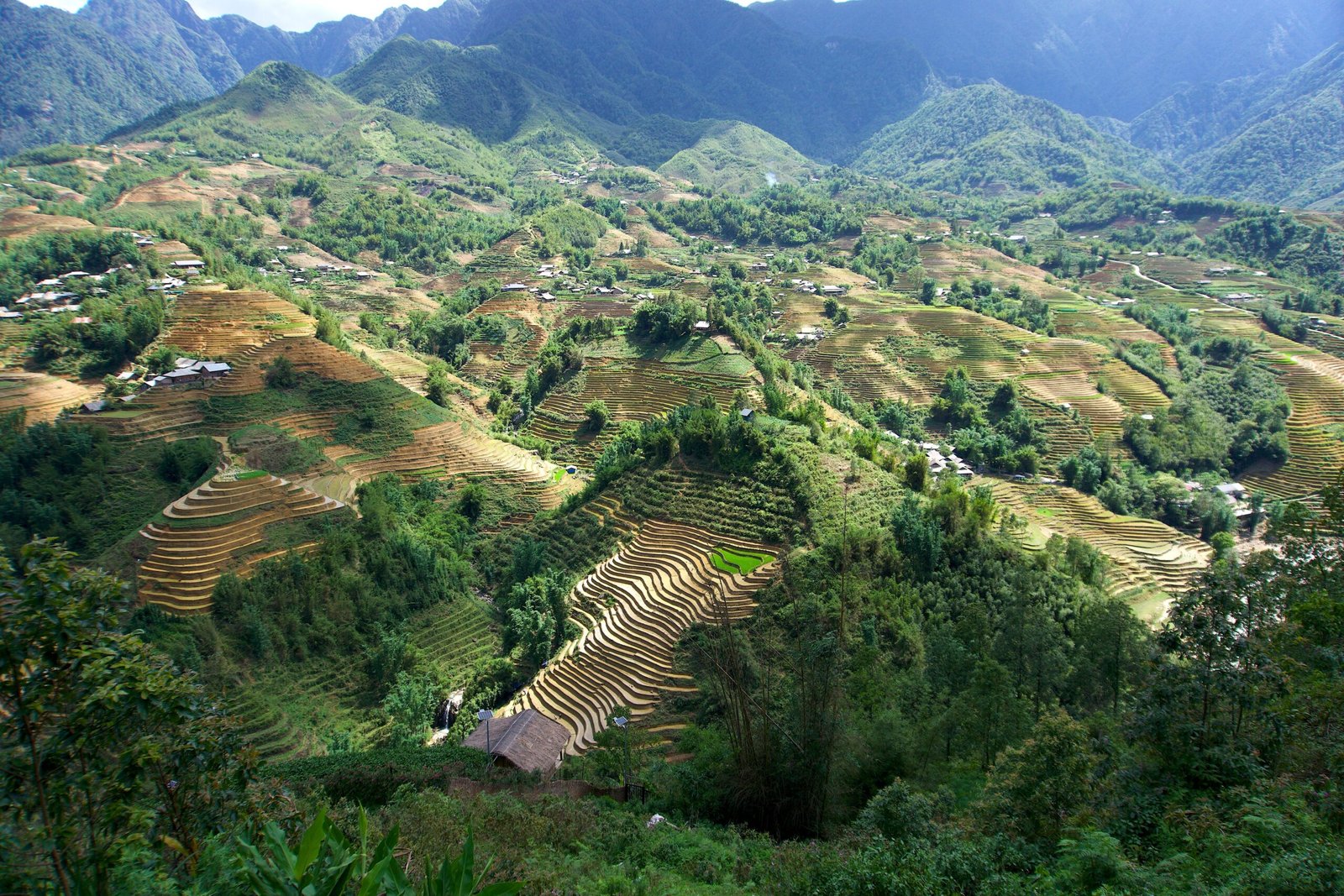
Sapa Valley is one of those places that lives up to every photograph. The terraces are extraordinary, not just for their beauty but for their scale, with thousands of curved steps carved into the mountainsides by hand, some of them hundreds of years old. In May and June the fields are flooded and mirror the sky, in July and August they are a brilliant green, and in September and October they turn to gold as the rice ripens. Each season gives you a different valley, and each one is worth the journey.
What makes Sapa Valley special is that it is a living landscape. The terraces are not a museum, they are farms, and the people who work them are the Hmong, Dao and Tay families who have lived here for generations. You will meet women in indigo dress selling textiles in the town, children walking to school along the trails, and farmers planting rice in the mud with water buffalo. It is a place that asks you to slow down, to walk rather than drive, and to learn a little about a way of life that is very different from your own.
Where Sapa Valley Is and How to Get There
Sapa Valley lies in Lao Cai Province in the far north of Vietnam, near the border with China, about 350 kilometres northwest of Hanoi. The town of Sa Pa sits at 1,600 metres in the Hoang Lien Son range, and the valleys around it are home to the Hmong, Dao, Tay, Giay and Xa Pho peoples. The landscape is a patchwork of terraces, forests and villages, with Fansipan, at 3,147 metres, rising to the southwest of the town, and the Muong Hoa Valley stretching to the southeast.
Most visitors travel from Hanoi to Sapa Valley by overnight train to Lao Cai, a journey of about eight hours, followed by a one hour bus or taxi up the mountain road to Sa Pa. Sleeper buses from Hanoi take about six hours, and are cheaper and faster, although the mountain road can be winding and the bus can be crowded. Once you arrive, the town is small enough to walk around, and most treks start on foot from your hotel, with a local guide who knows the trails and the villages.
The Best Time to Visit Sapa Valley
The best time to visit Sapa Valley is from September to November, when the rice terraces turn gold, the air is clear, and the weather is cool and dry, and from March to May, when the valleys are green, the flowers are out, and the mist is at its most beautiful. September and October are the most popular months, because the harvest is at its best and the views are at their clearest, so book your hotel and your guide well ahead if you travel then.
Summer, from June to August, is warm and wet, with heavy rain that can make the trails muddy and slippery, although the terraces are at their greenest and the waterfalls are at their fullest. Winter, from December to February, is cold and misty, with temperatures that can fall below freezing and occasional snow on Fansipan, and many homestays close, although the valley is quiet and atmospheric. Whatever the season, pack layers, a waterproof jacket and good walking shoes with grip, because the trails are steep and can be slippery after rain.
Rice Terraces: The Heart of Sapa Valley
The rice terraces are the heart of Sapa Valley, and they are best seen on foot. The Muong Hoa Valley, between Sa Pa and Ta Van, has some of the most beautiful terraces in Vietnam, with curved steps that follow the contours of the hills and reflect the sky when they are flooded in May. The terraces were built by hand over hundreds of years, with stone walls and earth banks that hold the water, and they are still farmed in the traditional way, with water buffalo, hand tools and hard work.
Walking among the terraces is a gentle, unhurried experience. The trails are mostly flat or downhill, passing through villages, across bamboo bridges and beside streams, and there are plenty of places to stop for tea, for photographs and for a rest. Go with a local guide, who can explain how the rice is grown, introduce you to the families who farm here, and help you avoid the muddy paths after rain. The best light is in the early morning, when the mist lifts from the valley, and in the late afternoon, when the sun turns the fields to gold.
Fansipan: The Roof of Indochina
Fansipan, at 3,147 metres, is the highest mountain in Vietnam, Laos and Cambodia, and it dominates Sapa Valley. For many years the only way to reach the summit was a hard two or three day trek through bamboo forest and cloud, and that trek is still one of the great mountain walks in Southeast Asia. Today there is also a cable car from near Sa Pa to a station just below the summit, with a short climb of about six hundred steps to the top, where a large Buddha statue and a temple complex stand in the clouds.
Whichever way you climb Fansipan, go early in the morning, when the sky is clearest, and dress warmly, because the summit is cold and windy even in summer. The views from the top stretch across the Hoang Lien Son range and, on a clear day, across the valleys of northern Vietnam. If you trek, go with a licensed guide, carry plenty of water, and take your time, because the altitude and the steps make the climb harder than the distance suggests.

Hill Tribe Villages and Culture
The villages of Sapa Valley are the heart of any visit. Cat Cat, a short walk from Sa Pa town, is the most visited, with a waterfall, a mill and shops selling textiles, although it can be crowded. Lao Chai and Ta Van, in the Muong Hoa Valley, are quieter and more traditional, with Hmong and Giay families who welcome visitors into their homes. Ta Phin, to the northeast, is home to the Red Dao people, famous for their red headscarves and herbal baths, and it is one of the most rewarding villages to visit.
The best way to experience the villages of Sapa Valley is to stay in a homestay, where you sleep in a family home, eat with the family, and learn how rice, corn and indigo are grown and made. A homestay is not a hotel, and the facilities are simple, with shared bathrooms and thin walls, but the welcome is warm and the experience is genuine. Always ask before taking photographs, buy textiles directly from the women who make them, and remember that you are a guest in a working village, not a visitor to a theme park.
Where to Stay and How to Get Around
Most visitors to Sapa Valley stay in Sa Pa town, where you will find hotels, hostels and guesthouses for every budget, as well as restaurants, cafes and shops. Homestays in Ta Van, Lao Chai and Ta Phin are the best choice if you want to stay in the valley itself, and they are best booked through a local guide or a reputable agency. Getting around is mostly on foot, with treks starting from your hotel, although motorbike taxis and cars are available for longer journeys, and the cable car to Fansipan leaves from near the town centre.
Practical Tips for Visiting Sapa Valley
A local guide is the best investment you can make in Sapa Valley, because the trails are not always marked, the weather can change quickly, and a good guide will introduce you to the families and the culture of the valley. Wear good walking shoes with grip, carry water and a waterproof jacket, and bring cash, because many homestays and small shops do not take cards. Be respectful in the villages, ask before taking photographs, and do not give money or sweets to children, because it encourages begging and keeps them out of school.
Frequently Asked Questions About Sapa Valley
When is the best time to visit Sapa Valley? The best time to visit Sapa Valley is from September to November, when the rice terraces turn gold and the weather is clear and dry, and from March to May, when the valleys are green and the flowers are out. September and October are the most popular months, so book ahead.
How do you get from Hanoi to Sapa Valley? You can take the overnight train from Hanoi to Lao Cai, a journey of about eight hours, followed by a one hour bus to Sa Pa, or take a sleeper bus from Hanoi, which takes about six hours. The train is the classic journey, and the sleeper bus is the fastest and cheapest way to arrive.
Do you need a guide to trek in Sapa Valley? A guide is not legally required for most treks in Sapa Valley, but it is strongly recommended, because a local guide knows the trails, the weather and the villages, and will help you meet the families who live here. A guide also supports the local economy, and the best guides are Hmong and Dao women from the villages themselves.
Is Sapa Valley suitable for families? Yes, Sapa Valley is suitable for families, with easy walks in the Muong Hoa Valley, a cable car to Fansipan, and homestays that welcome children. Choose a short, flat trek, hire a porter if you need help, and bring warm clothes, because the mountain weather can be cold and wet even in summer.
Can you climb Fansipan without trekking? Yes, you can take the cable car from near Sa Pa to a station just below the summit of Fansipan, followed by a climb of about six hundred steps to the top. The cable car takes about fifteen minutes, and the views on a clear day are spectacular, although the summit is often in cloud.
Conclusion: Sapa Valley Is Vietnam at Its Most Beautiful
Sapa Valley is a place that stays with you long after you leave. The terraces, the mist, the mountains and the people who farm these slopes make it one of the most beautiful and most human landscapes in Southeast Asia. Come with time, come with good shoes, and come ready to walk slowly and to listen, and Sapa Valley will reward you with a journey you will never forget. If Sapa Valley has sparked your love of mountain walking, keep exploring with our guide to Mount Rinjani and Huangshan, two more mountain journeys full of trails, views and wonder.