
Cappadocia: Complete Guide to Turkey’s Fairy Chimneys, Hot Air Balloons, and Cave Hotels
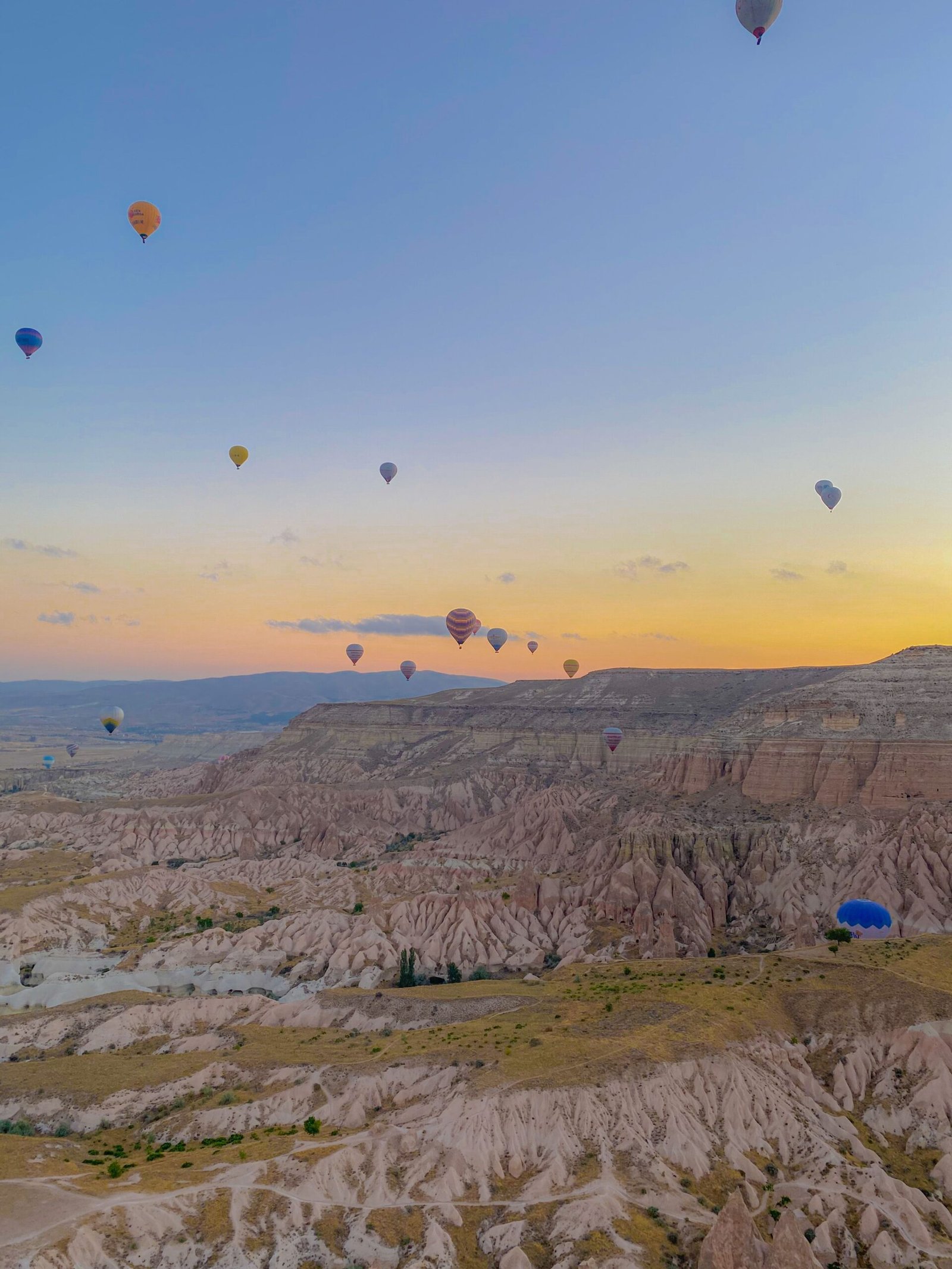
Cappadocia, Turkey, is a landscape that looks like it was designed by a dreamer. Across the high plateau of Central Anatolia, soft volcanic rock has been carved by wind and rain into valleys full of cone-shaped fairy chimneys, cave dwellings and rock-cut churches, and every morning at sunrise the sky fills with hot air balloons. It is one of the most photographed places on Earth, and it is also one of the most rewarding to explore slowly, on foot, through its valleys and underground cities.
This complete guide to Cappadocia explains how the fairy chimneys formed, when to go, where the best viewpoints are, how the famous balloon flights work, and how to plan a trip that goes beyond the photographs. Whether you have a weekend or a full week, you will find everything you need to enjoy one of Turkey’s greatest natural wonders.
Where Is Cappadocia and How Did the Fairy Chimneys Form?
Cappadocia is a historical region in Central Anatolia, in the modern Turkish provinces of Nevsehir, Kayseri, Aksaray and Nigde. Its heart is the small town of Goreme, which sits in the middle of the Goreme National Park. In 1985, UNESCO added the Goreme National Park and the Rock Sites of Cappadocia to the World Heritage List, recognising both the natural landscape and the churches, monasteries and underground cities that people have carved into it for more than a thousand years.
The fairy chimneys began millions of years ago, when the volcanoes Erciyes, Hasan Dagi and Melendiz erupted and covered the region in a thick layer of soft volcanic ash called tuff. Over time the tuff hardened into rock, and then water and wind slowly wore it away. Harder caps of basalt protected the rock beneath them, so the landscape was left with tall, cone-shaped pillars, some of them topped with a dark stone cap like a mushroom. In places the pillars stand 40 metres tall, and whole valleys of them stretch to the horizon.
Because the tuff is soft enough to carve, people have lived inside these rocks for centuries. Early Christians cut churches and monasteries into the cliffs, decorating them with frescoes, and whole towns were built underground to hide from invaders. The name Cappadocia itself comes from the Persian word Katpatuka, often translated as the land of beautiful horses, and horses are still part of the landscape today, with riding tours one of the most popular ways to explore the valleys.
Hot Air Balloons Over Cappadocia
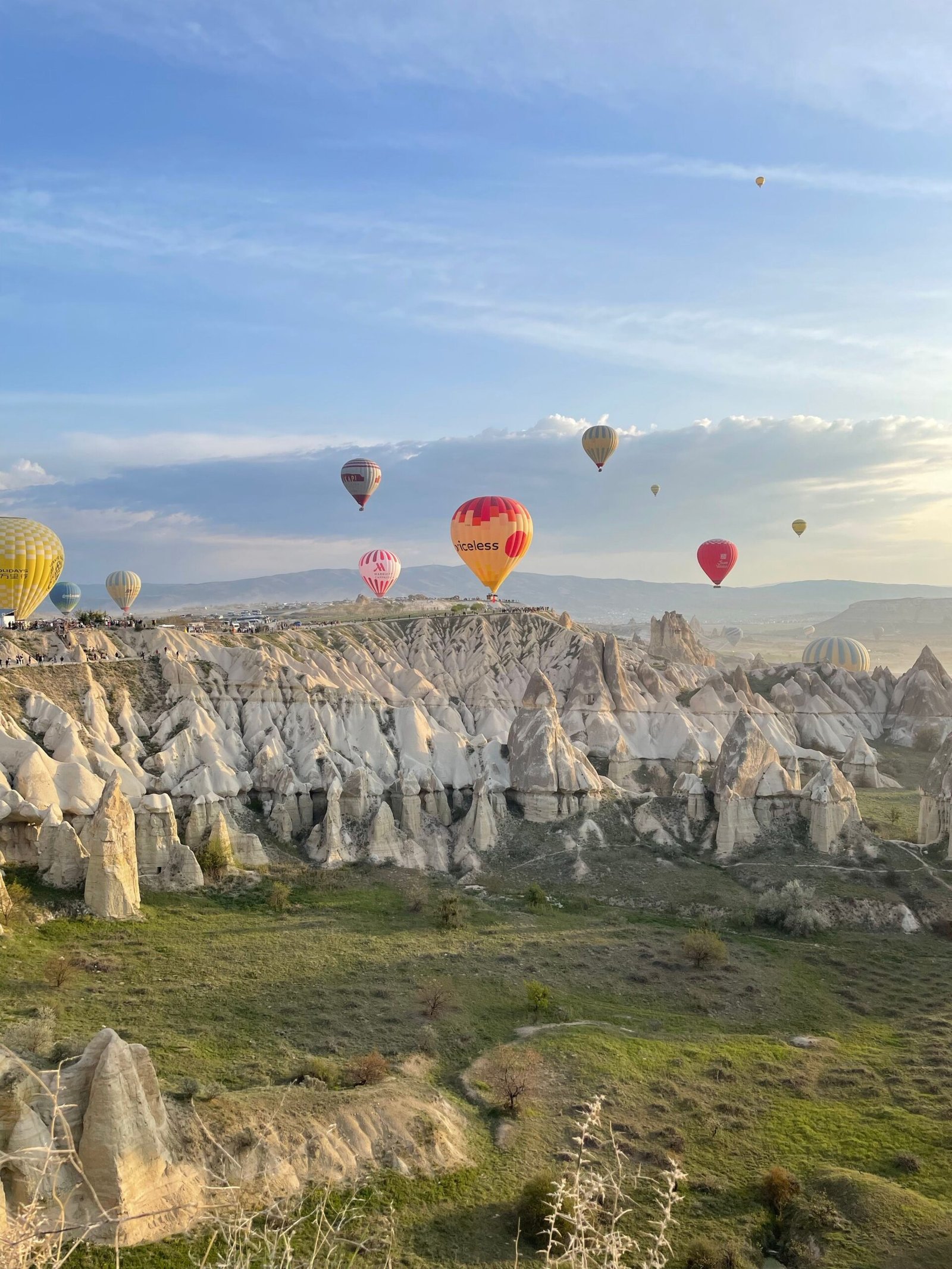
The hot air balloon flight is the single most famous experience in Cappadocia, and it is easy to understand why. Shortly before sunrise, more than a hundred balloons rise together from the valleys around Goreme, and for about an hour you drift over the fairy chimneys, the vineyards and the cave villages as the first light turns the rock pink and gold. The flights operate year-round, weather permitting, and they are so popular that they often sell out days ahead in spring and autumn.
Prices vary with the season and the operator, but a standard shared flight typically costs a few hundred US dollars per person, including hotel pickup, a light breakfast and a champagne toast on landing. Balloons fly most reliably in the calm air of the early morning, and flights are cancelled when the wind is too strong, so it is worth booking your flight for your first morning in Cappadocia. That way, if it is cancelled, you can try again the next day. Private flights and longer flights are also available, and they are a good choice for a special occasion.
The Best Things to See and Do in Cappadocia
The valleys around Goreme are the heart of Cappadocia, and most visitors explore them on foot, by scooter, by horseback or on an ATV tour. The following places are the ones to build your trip around.
Goreme Open-Air Museum
The Goreme Open-Air Museum is a cluster of rock-cut churches and monasteries from the Byzantine period, and it is the most important historic site in the region. The frescoes inside the churches, especially in the Dark Church (Karanlik Kilise), still show bright colours after a thousand years. The museum sits at the edge of Goreme town and is best visited early in the morning, before the tour groups arrive.
Uchisar Castle
Uchisar Castle is the highest point in Cappadocia, a huge rock fortress that was once a place of refuge for the whole region. A path and steps lead to the top, where there is a panoramic view over Goreme, the valleys and, on a clear day, Mount Erciyes in the distance. The sunset here is one of the best in Turkey, and the town of Uchisar below has some of the finest cave hotels in the region.
Pasabag (Monks Valley) and Devrent Valley
Pasabag, also called Monks Valley, is the best place to see classic fairy chimneys up close, including the famous mushroom-shaped formations with double and triple caps. Nearby Devrent Valley, also known as Imagination Valley, is full of rocks that look like animals, and a little imagination turns the whole valley into a stone zoo. Both valleys are easy to reach by car or on a guided tour from Goreme.
Love Valley and Rose Valley
Love Valley is named for its tall, narrow fairy chimneys, and it is a popular walk at sunset. Rose Valley, beside it, is named for the pink colour of the rock, which glows most strongly in the late afternoon. The two valleys can be walked together in three to four hours, and the trails pass cave churches, pigeon houses and vineyards. Bring water and sun protection, because there is little shade.
Derinkuyu Underground City
Derinkuyu is the largest excavated underground city in Turkey, descending about 85 metres through 18 levels. It once sheltered as many as 20,000 people, along with their livestock and food stores, and it has tunnels, wells, churches, schools and stables. The narrow passages are not for everyone, especially those who dislike confined spaces, but there is nothing else quite like walking through a city carved eight storeys deep into the earth.
Ihlara Valley
The Ihlara Valley is a 14-kilometre gorge cut by the Melendiz River, and it is quieter and greener than the valleys around Goreme. A riverside walk of a few hours takes you past rock-cut churches and small villages, and the canyon walls are lined with poplar trees. It is a good choice for a peaceful day away from the crowds, and it can be combined with a visit to the Selime Monastery at the end of the valley.
Best Time to Visit Cappadocia
The best time to visit Cappadocia is from April to June and from September to October. In these months the weather is warm and settled, the valleys are green in spring and golden in autumn, and the balloons fly on most mornings. Summer, from July to August, is hot and busy, with midday temperatures often above 30 degrees Celsius, so plan walks for the early morning or late afternoon. Winter, from December to February, is cold and can bring snow, which turns the fairy chimneys into a beautiful white landscape, and it is the quietest and cheapest season, though balloon flights are cancelled more often.
If you want the classic balloon photograph with dozens of balloons in the sky, aim for a weekday in May or September, when the weather is at its most reliable and the crowds are smaller than at the height of summer. Avoid the Turkish public holidays and the Eid holidays if you can, because hotels and flights fill up fast.
How to Get to Cappadocia
The easiest way to reach Cappadocia is to fly. Two airports serve the region: Nevsehir Kapadokya Airport, about 30 kilometres from Goreme, and Kayseri Erkilet Airport, about 80 kilometres away. Both have daily flights from Istanbul, and they also have services from Ankara, Izmir and Antalya. From either airport, a shuttle bus or a private transfer will take you to Goreme in 40 minutes to an hour and a half. Many hotels can arrange the transfer for you.
Overnight buses run from Istanbul, Ankara and other Turkish cities to Nevsehir and Goreme, and the bus from Istanbul takes around 10 to 12 hours. Driving is also possible, and a car gives you the freedom to visit the Ihlara Valley and the underground cities on your own schedule. Once you are in Goreme, most of the main valleys can be reached on foot, and guided tours, taxis and rental scooters cover everything else.
Practical Tips for Visiting Cappadocia
- Book your balloon flight for the first morning of your trip, so you have a second chance if it is cancelled for wind.
- Book cave hotels well ahead for spring and autumn. The best rooms in Goreme and Uchisar sell out months in advance.
- Wear sturdy walking shoes. The valley trails are rocky and uneven, and the fairy chimney viewpoints often involve a short climb.
- Carry water and sun protection. There is little shade on the valley walks, and the high altitude makes the sun stronger than it feels.
- Start early. The light is best before 9 a.m., the Goreme Open-Air Museum is much quieter at opening time, and the heat is manageable.
- Respect the churches and frescoes. Do not touch the paintings, and follow the no-photography rules inside the Dark Church.
- Carry some cash in Turkish lira. Small restaurants, market stalls and village shops may not accept cards.
- Allow at least three days. One day for Goreme and the valleys, one day for the balloon flight and the underground city, and one day for Ihlara Valley or a horseback ride gives you a much richer trip.
Where to Stay in Cappadocia
Goreme is the best base for most visitors, with the widest choice of hotels and restaurants and easy access to the valleys. The town is famous for its cave hotels, where rooms are carved into the rock and often have terraces with views of the balloon-filled sky. Uchisar is a quieter choice with some of the most luxurious cave suites and the best sunset views, while Urgup, a larger town to the east, is a good option if you prefer a more local feel and lower prices. Budget travellers will find hostels and pensions in Goreme, and many of them have rooftop terraces that are perfect for watching the balloons at sunrise.
Frequently Asked Questions About Cappadocia
Is Cappadocia worth visiting?
Yes. Cappadocia is one of the most unusual landscapes in the world, and the combination of fairy chimneys, cave churches, underground cities and sunrise balloon flights is unlike anywhere else. It works as a short break from Istanbul and as a longer trip in its own right.
Is a hot air balloon ride in Cappadocia safe?
Balloon flights in Cappadocia are run by licensed operators and are closely regulated. Flights only take off when the Turkish civil aviation authority judges the weather safe, and that is why cancellations are common on windy mornings. Choose a reputable operator, listen to the safety briefing, and you are in good hands.
How many days do you need in Cappadocia?
Three days is the sweet spot for a first visit. Give yourself one day for Goreme and the nearby valleys, one day for the balloon flight and Derinkuyu, and one day for Ihlara Valley, Uchisar or a horseback ride. With two days you can see the highlights, and with five days you can explore at a relaxed pace and add the less-visited valleys.
Can you visit Cappadocia in winter?
Yes. Winter is cold, with temperatures often below freezing at night, but the snow-covered fairy chimneys are stunning, the crowds disappear, and hotel prices drop. Balloon flights are less reliable in winter, so allow extra mornings if a flight is essential to your trip.
What should I wear for a balloon flight?
Dress warmly in layers, including a windproof jacket, because the mornings before sunrise are cold even in summer. Wear closed, flat shoes, as you will be climbing in and out of the basket, and bring sunglasses and a hat for the glare once the sun rises.
Conclusion
Cappadocia rewards travellers who take their time. The balloons are unforgettable, but the real magic is on the ground, in the quiet valleys, the frescoed churches and the cities carved deep under the earth. Walk at least one valley, watch the sunrise from Uchisar, and give the landscape a few days to work on you, and you will understand why people have been coming here for centuries. For another landscape shaped in a completely different way, read our guide to Pamukkale, Turkey’s white travertine terraces, which lies in the same country, and for one of the most otherworldly deserts on the planet, see our guide to the Salar de Uyuni salt flats of Bolivia.



One Comment