Tasmania, Australia: Complete Guide to the Island’s Wild Coasts, Mountains and Wildlife
Tasmania is Australia’s island state, a compact world of wild coasts, mountain lakes, ancient forests and animals found nowhere else on Earth. Separated from the mainland by Bass Strait, Tasmania feels like a different country: the air is cooler and cleaner, the towns are smaller and slower, and the wilderness begins almost as soon as you leave the city limits. This complete guide to Tasmania covers the places that make the island unforgettable, from the white sand of Wineglass Bay to the dolerite peaks of Cradle Mountain, and it will help you plan a trip that fits the island’s scale, seasons and weather. Whether you have a long weekend or three weeks, Tasmania rewards travellers who slow down, drive the winding coastal roads and spend time on foot in the national parks.
Why Tasmania Deserves a Place on Your Travel List
Almost half of Tasmania is protected as national park or World Heritage wilderness, and that protection shows in the landscape. The island packs an extraordinary range of scenery into an area smaller than Ireland: pink granite mountains rising from turquoise bays, button-grass plains under snow-capped peaks, orange lichen-covered rocks on white beaches, and temperate rainforest where myrtle, sassafras and tree ferns have grown for thousands of years. Few places on Earth let you walk from an alpine lake to a wild beach in a single day. Tasmania also has a food and drink culture out of proportion to its size, with farm-gate stalls, cool-climate wineries, whisky distilleries and oyster farms dotted along the coast. Hobart, the capital, is one of the most pleasant small cities in Australia, with a working waterfront, the Salamanca Market and the Museum of Old and New Art, known as MONA, a short ferry ride away. Launceston in the north offers gorge walks, vineyards and a gentler pace. Add the island’s wildlife, from wombats and pademelons to the Tasmanian devil, and Tasmania becomes a destination that feels both wild and welcoming, a place where nature is the main attraction rather than a side trip.
Wineglass Bay and Freycinet National Park
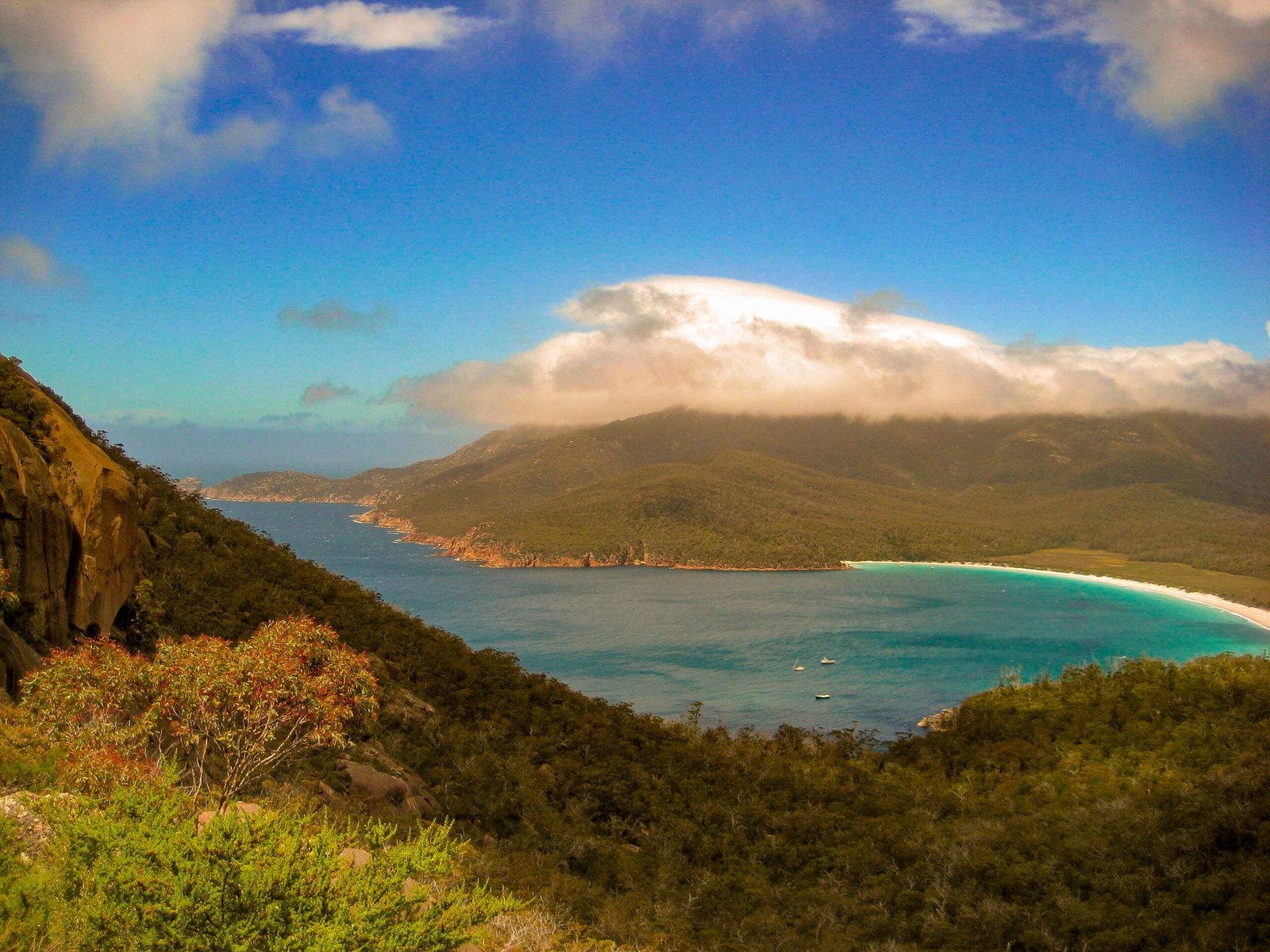
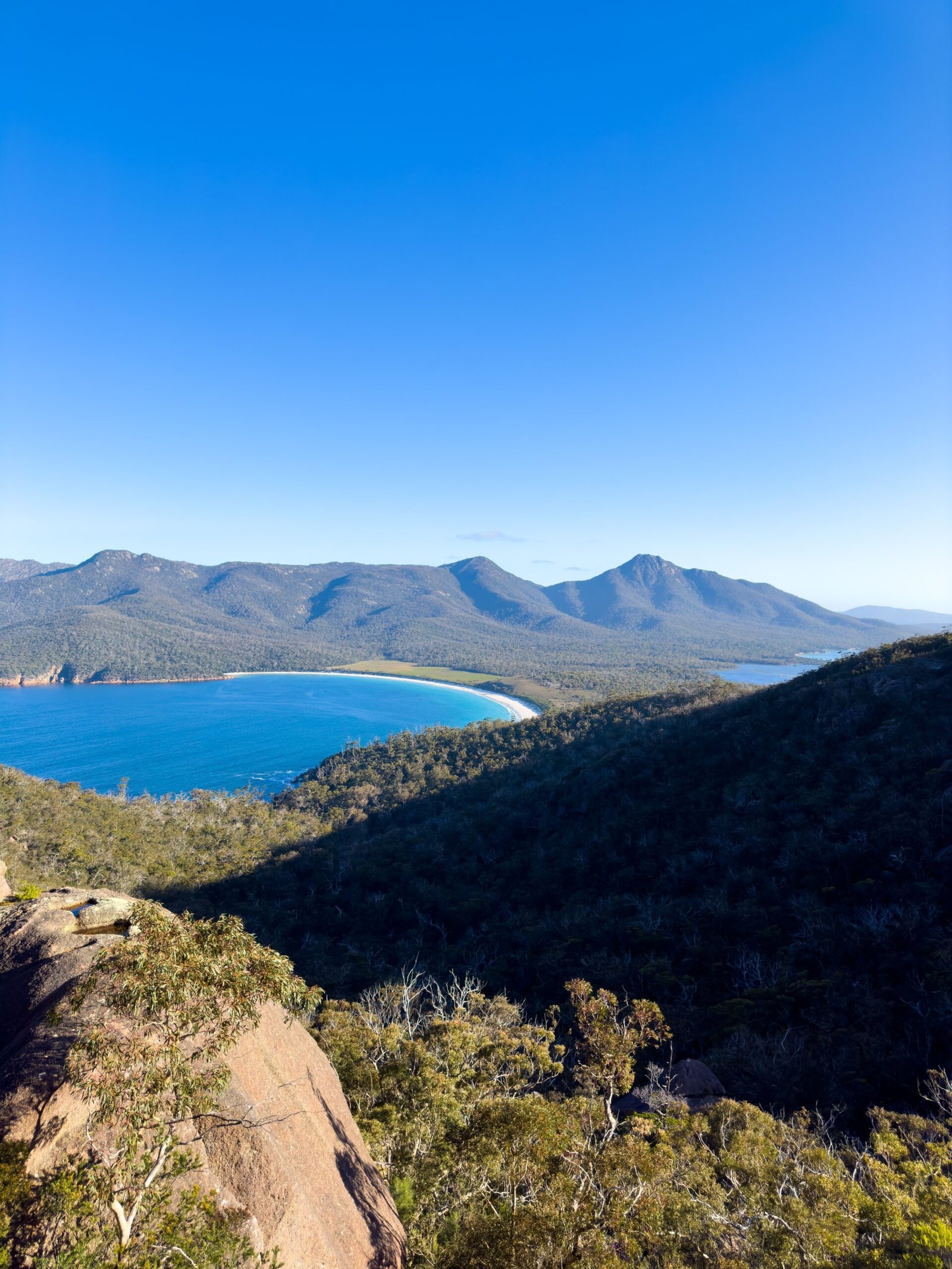
Wineglass Bay, on the Freycinet Peninsula on the east coast, is the image most people carry of Tasmania, and it earns its fame. The bay is a perfect crescent of white sand between pink granite peaks, with water that shifts from pale turquoise to deep blue. The classic view comes from the Wineglass Bay Lookout, reached by a steep but well-built track that climbs for about an hour from the car park. From the lookout, the bay lies below you in full, and on a clear day the colours are almost unreal. The walk down to the beach takes another half hour, and the sand is worth the effort, especially early in the morning before the day visitors arrive. Freycinet National Park protects the whole peninsula, and its other walks are just as rewarding. The Hazards Beach track crosses the peninsula through coastal forest to a long, quiet beach, while the short walk to Sleepy Bay follows the granite shoreline past rock pools. Coles Bay, the small village at the park entrance, is the base for most visits, with cabins, a campground and kayaking tours that paddle along the base of the Hazards. Boating is one of the best ways to see the peninsula, because the granite cliffs and sea caves are most dramatic from the water, and dolphins and seals are regular visitors. Stay at least two nights in the area so you can do the lookout walk in good light and still have time for a second, quieter walk.
Cradle Mountain and the Central Highlands
Inland, the Central Highlands hold Tasmania’s alpine heart. Cradle Mountain-Lake St Clair National Park is the island’s most famous mountain landscape, a region of glacial lakes, buttongrass moorland and jagged dolerite peaks. Cradle Mountain itself, at 1,545 metres, is the park’s emblem, and the Dove Lake circuit is the walk most visitors do first: a two-hour boardwalk and track around a still lake, with the mountain reflected in the water on calm mornings. From there, the track to Marion’s Lookout climbs steeply and rewards the effort with a view across the whole Cradle Valley. The park is also the northern end of the Overland Track, the six-day, 65-kilometre walk to Lake St Clair, Australia’s deepest lake, which is one of the great multi-day hikes in the country. You do not need to walk the whole track to enjoy the area: short walks lead to Pencil Pine Falls, the Enchanted Walk through mossy forest, and the wombats that graze around the visitor centre at dusk. The weather here changes fast, and snow can fall in any month, so bring warm and waterproof layers even in summer. The nearby town of Sheffield, with its painted murals, and the lakeside town of Deloraine make good bases, while staying inside the park puts you closest to the dawn light on the mountain.
The Wild Coasts: Bay of Fires, Bruny Island and the Tasman Peninsula
Tasmania’s coastline is as varied as its mountains. The Bay of Fires, on the north-east coast, is named for the orange lichen that coats its granite boulders, and the contrast with white sand and clear water is one of the most beautiful sights in Australia. The bay stretches for about 30 kilometres, and the best way to enjoy it is to drive slowly between Binalong Bay and Eddystone Point, stopping at the small coves and rock pools along the way. Bruny Island, south of Hobart, is a different kind of coast: a long, narrow island joined by a thin neck of sand, with wild southern beaches, quiet bays and some of the best food on the island, from oysters and cheese to chocolate and whisky. The walk up to the Neck lookout gives a view of the isthmus that explains the island’s shape. The Tasman Peninsula, south-east of Hobart, is Tasmania’s most dramatic coast, with sea cliffs more than 300 metres high, rock formations such as the Tessellated Pavement and the Blowhole, and the historic site of Port Arthur. Port Arthur was a convict settlement, and its sandstone ruins sit in a beautiful harbour setting that makes its history all the more striking. A boat cruise from Port Arthur or Eaglehawk Neck takes you under the cliffs and past sea caves, and in season you may see whales and albatross. Together, these three coasts show why Tasmania is best explored slowly, with time to stop at lookouts and small beaches that are not in any guidebook’s top ten.
How to Get to Tasmania and Get Around
Most visitors reach Tasmania by air, flying into Hobart in the south or Launceston in the north from Melbourne, Sydney, Brisbane or Adelaide. The flight from Melbourne takes about an hour, and there are several flights a day. The other classic arrival is the Spirit of Tasmania ferry, which sails overnight between Melbourne and Devonport in the north-west, and lets you bring your own car, which is a real advantage on an island where public transport is limited. Once you arrive, a car is almost essential. Tasmania’s roads are well maintained, but distances take longer than the map suggests because the roads wind through hills and forest, and you will want to stop often. Allow at least a week for a loop of the island, and two weeks if you want to walk in the national parks as well. Hobart to Launceston takes about two and a half hours on the highway, Hobart to Freycinet about two and a half hours, and Launceston to Cradle Mountain about two hours. Fuel stations are scarce in the west and in the highlands, so fill up when you can, and book accommodation in advance in summer and during school holidays, when the island’s small towns fill up. Driving at dawn and dusk needs care, because wallabies, wombats and possums cross the roads, and the island’s wildlife is most active at those times.
The Best Time to Visit Tasmania
Tasmania’s seasons are more distinct than anywhere else in Australia, and each has its own appeal. Summer, from December to February, is the most popular time: days are long, temperatures in Hobart average in the low twenties Celsius, and the highland walks are at their best. It is also the busiest and most expensive season, so book early. Autumn, from March to May, is many locals’ favourite time, with still weather, golden fagus, the island’s only deciduous tree, turning colour in the highlands, and fewer visitors. Winter, from June to August, is cold and wet in the west and highlands, with snow on the mountains, but Hobart is crisp and clear, the food festivals are on, and accommodation is cheaper. Spring, from September to November, brings wildflowers, waterfalls at full flow and lambs in the paddocks, and it is a good time for walking before the summer crowds arrive. Rain can fall at any time of year, especially on the west coast, which is one of the wettest places in Australia, so pack a waterproof jacket whatever the season. The east coast is generally drier and sunnier than the west, which is why many first-time visitors base themselves in Hobart and the east, and save the west for a second trip.
Where to Stay in Tasmania
Tasmania offers places to stay to suit every budget, and where you stay shapes the trip. Hobart has the widest choice, from waterfront hotels and apartments to guesthouses in Battery Point, the historic suburb of sandstone cottages above the harbour. Staying in Hobart for the first and last nights makes sense if you fly in and out of the capital. Launceston has good hotels and is the best base for the north, including the Tamar Valley wineries and the north-east coast. In Freycinet, the lodges and cabins around Coles Bay range from simple to luxurious, and the park’s campground is a good budget option in summer. At Cradle Mountain, staying inside the park or at the nearby village puts you close to the walks and the wombats at dusk. Bruny Island has cottages and a small number of bed and breakfasts, and it is worth staying overnight rather than rushing it as a day trip from Hobart. In the west, Strahan is the base for the Gordon River and the wild west coast, with hotels and cottages on Macquarie Harbour. Book well ahead in summer, especially in Freycinet and at Cradle Mountain, where the number of beds is small. If you are walking the Overland Track, book huts and permits months ahead, as numbers are limited.
Practical Tips for Visiting Tasmania
A few practical points will make a Tasmania trip smoother. First, bring layers: the temperature can drop ten degrees in an hour, and the wind on the coast is cold even on a sunny day. Second, download maps and information before you leave the towns, because mobile coverage is patchy in the national parks and in the west. Third, buy a national parks pass, which covers entry to all Tasmania’s national parks and is much cheaper than paying per park. Fourth, respect the wildlife: do not feed wombats or wallabies, keep your distance from Tasmanian devils, and drive slowly at night. Fifth, support the island’s small producers: farm-gate stalls sell berries, cherries, apples and honey, and many cellar doors offer tastings for a small fee. Sixth, be aware that Tasmania has strict biosecurity rules, and you cannot bring fresh fruit, vegetables or plants into the state, so declare food on arrival. Seventh, if you plan to swim, remember that the water is cold, even in summer, and the beaches on the west and south coasts have strong currents, so swim only on patrolled beaches or in sheltered bays. Finally, leave time in your itinerary for the unexpected: a roadside platypus, a sudden rainbow over a mountain lake, or a long lunch in a small town are often the moments travellers remember best.
If you liked Tasmania, you will also enjoy our guides to Kangaroo Island, another Australian island of wildlife and wild coasts, and to Fiordland in New Zealand, where fiords, lakes and great walks offer a similar sense of scale and wilderness.
Conclusion
Tasmania is a small island with an outsized share of the world’s wild beauty. In a single trip you can stand above Wineglass Bay, walk around Dove Lake under Cradle Mountain, watch the orange rocks of the Bay of Fires glow at sunset, and eat oysters on Bruny Island, all without ever feeling rushed. The island asks for a slower pace than the mainland, and it rewards that pace with empty beaches, quiet forests and wildlife that is easy to see. Plan around the seasons, book ahead in summer, bring layers and a sense of curiosity, and Tasmania will give you one of the most complete nature trips in Australia. It is a place that many visitors plan to see once and then return to again and again, because one trip is never quite enough to see it all.
Frequently Asked Questions
How many days do I need in Tasmania?
A week is a good minimum for a loop of the island that includes Hobart, Freycinet, Launceston and Cradle Mountain. Two weeks lets you add the west coast, Bruny Island and longer walks without rushing. A long weekend is enough for Hobart and one other region, such as Freycinet or Bruny Island.
Do I need a car in Tasmania?
Yes, a car is almost essential. Public transport links the main towns, but it does not reach most national parks, beaches and small towns. Hiring a car in Hobart or Launceston, or bringing your own on the Spirit of Tasmania ferry, gives you the freedom to explore at your own pace.
When is the best time to visit Tasmania?
Summer, from December to February, has the warmest weather and longest days, while autumn, from March to May, has settled weather and fewer visitors. Spring is best for wildflowers and waterfalls, and winter is best for snow on the mountains and lower prices in Hobart.
Can I see Tasmanian devils in the wild?
It is possible, but not easy, because devils are nocturnal and shy. Your best chance is at a wildlife sanctuary or on a guided night tour, and you may also see wombats, pademelons and wallabies at dawn and dusk around Cradle Mountain and in the national parks.
Is Tasmania expensive to visit?
Tasmania is moderately priced by Australian standards. Accommodation and car hire are the main costs, and both rise in summer, so book early. Food is good value if you buy from farm gates and markets, and national park entry is covered by a single parks pass.