Glencoe, Scotland: Complete Guide to the Highlands’ Most Dramatic Valley
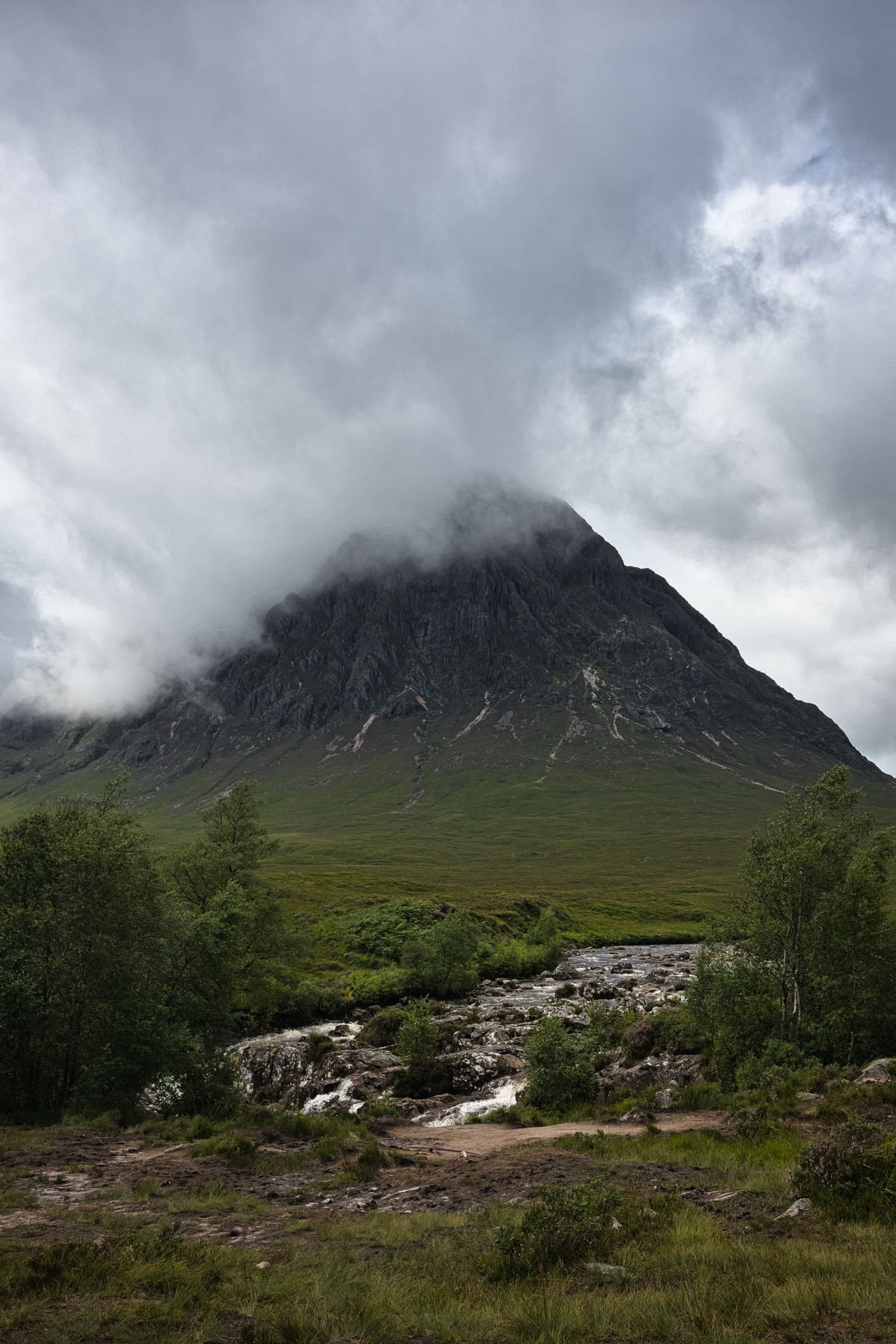
Glencoe, Scotland, is the valley that defines the Scottish Highlands. A deep, glacier-carved glen, flanked by steep ridges and towering peaks, it is the place where the Highlands begin to feel truly wild. The road through Glencoe, the A82, is one of the great drives in Britain, and every bend reveals another view: the pyramid of Buachaille Etive Mor, the three great ridges of the Three Sisters, a waterfall pouring down a cliff, or a herd of red deer on the valley floor. It is beautiful in all weathers, and in mist and rain it is at its most atmospheric.
Glencoe is also a valley with a story. It was the scene of the Massacre of Glencoe in 1692, one of the most infamous events in Scottish history, and the memory of that night still hangs over the glen. It is a place of clan history, of Jacobite rebellion, of poets and filmmakers, and of walkers who have come here for generations to climb its ridges and explore its hidden valleys. The Lost Valley, the Pap of Glencoe and the great ridge of the Aonach Eagach are among the most famous walks in Scotland, and they are all within a few miles of each other.
This guide covers Glencoe in full: the mountains, the history, the best walks, the West Highland Way, the seasons, and the practical details of getting there and where to stay. Whether you are driving through on the way to Fort William or spending a week walking in the Highlands, Glencoe deserves your time.
Where Is Glencoe?
Glencoe lies in the Lochaber area of the Scottish Highlands, about fifteen miles south of Fort William and about two hours’ drive north-west of Glasgow, on the A82. The glen runs for about ten miles from the village of Glencoe, near Loch Leven, eastwards to Rannoch Moor, and the River Coe runs through it from east to west. The village of Glencoe, at the western end, is the main base, with hotels, a visitor centre, shops and a campsite, and the hamlet of Ballachulish sits nearby on the shore of Loch Leven.
The landscape of Glencoe was made by ice and fire. The rocks are around 420 million years old, the remains of an ancient volcano that collapsed into a great caldera, and the valley itself was carved by glaciers during the Ice Age into the classic U-shape that you see today. The result is a valley with steep, smooth sides, a flat floor, and peaks that rise more than 3,000 feet on either side. It is one of the most geologically interesting places in Scotland, and it is protected as a National Nature Reserve and a National Scenic Area.
The Three Sisters and Bidean nam Bian
The most famous mountains in Glencoe are the Three Sisters, three great ridges that run down from the massif of Bidean nam Bian, the highest mountain in the glen at 1,150 metres. The Sisters are, from west to east, Beinn Fhada, Gearr Aonach and Aonach Dubh, and they dominate the southern side of the valley. Their steep, rocky ridges, cut by deep gullies, are the classic image of Glencoe, and they are at their best in the early morning, when the sun catches their eastern faces, or in winter, when they are covered in snow.
Bidean nam Bian itself is a complex mountain, with several summits and a hidden valley, the Lost Valley, tucked into its northern side. The climb to the summit is a serious mountain walk, usually done as a circuit from the valley floor, and it takes a full day. The reward is a view over the whole of Glencoe, from the Mamores to the north to Rannoch Moor to the east, and a sense of the scale of the Highlands that is hard to find anywhere else. The mountain should only be attempted in good weather, with proper boots, a map and compass, and an understanding of Scottish mountain conditions, which can change in minutes.
The Lost Valley, or Coire Gabhail, is the most famous of Glencoe’s hidden places. It is a flat, grassy valley, hidden behind the Three Sisters and invisible from the road, where the MacDonalds of Glencoe once hid their cattle from raiders. The walk into the Lost Valley is one of the best short walks in Scotland: a steep, rocky climb from the valley floor, past waterfalls and through a narrow gorge, and then suddenly the valley opens out in front of you, green and quiet, with the great cliffs of Bidean nam Bian all around. It takes about two to three hours there and back, and it is the walk to do if you only have one morning in Glencoe.
Buachaille Etive Mor: The Iconic Mountain
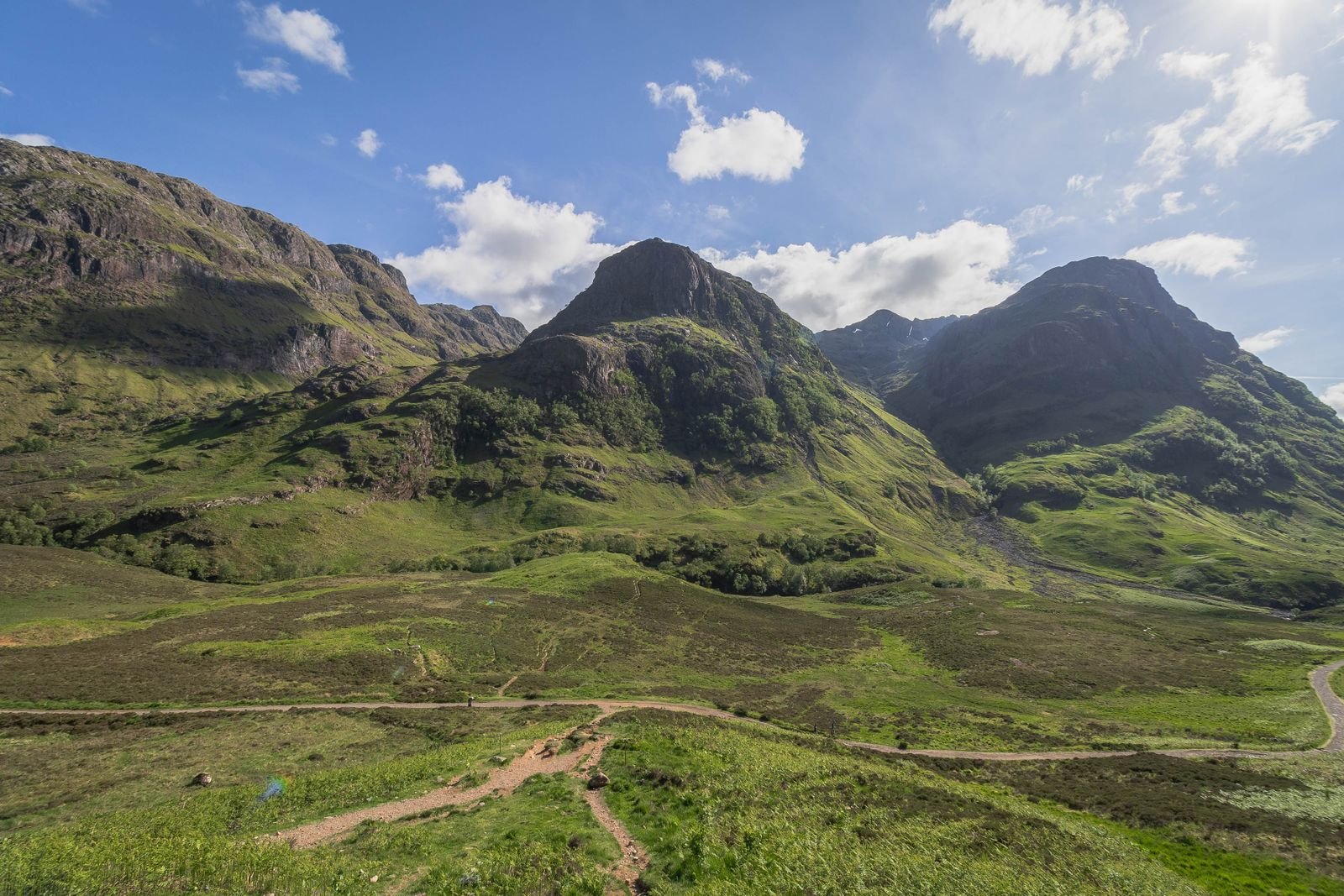
If the Three Sisters are the heart of Glencoe, Buachaille Etive Mor is its gatekeeper. The mountain stands at the eastern end of the glen, where the road from Rannoch Moor drops down into the valley, and its perfect pyramid shape, seen from the road, is one of the most photographed mountains in Scotland. Its name means “the great herdsman of Etive”, and it has been the symbol of Glencoe for generations of travellers, photographers and climbers.
Buachaille Etive Mor is 1,022 metres high, and its main summit, Stob Dearg, is reached by a steep but straightforward walk from the road. The views from the top are superb, over Rannoch Moor, the Black Mount and the whole of Glencoe. For scramblers, the Curved Ridge, on the north-east side of the mountain, is one of the great mountain routes in Britain, a long, airy scramble that leads directly to the summit. It is a grade two scramble, which means it needs a head for heights, good conditions and proper footwear, and it should not be attempted by beginners.
The mountain is also the starting point for the walk into Glen Etive, the wild valley that runs south from Glencoe to Loch Etive. Glen Etive is one of the most beautiful and remote valleys in Scotland, and it was used as a filming location for the James Bond film Skyfall. The single-track road down the glen is an adventure in itself, and the valley is a good place to see red deer, golden eagles and, in the evening, the deer coming down to the river to drink.
The Massacre of Glencoe: The Glen’s Dark History
No visit to Glencoe is complete without understanding the Massacre of Glencoe, the event that has defined the glen’s place in Scottish history. On the night of 13 February 1692, government soldiers, who had been staying as guests in the homes of the MacDonalds of Glencoe for nearly two weeks, turned on their hosts and killed thirty-eight men, women and children. Others died of exposure in the winter mountains as they fled. The massacre was ordered by the government of King William III, and it was carried out under the command of Captain Robert Campbell of Glenlyon, whose men had accepted the MacDonalds’ hospitality.
The massacre was shocking even by the standards of the time, because it broke the Highland code of hospitality, which held that a guest, once accepted, was safe. The MacDonald chief, Alasdair MacIain, had been late in swearing an oath of allegiance to King William, and the government used the delay as an excuse to make an example of his clan. The story became a byword for treachery in Scotland, and it is still remembered today. The Glencoe Visitor Centre, run by the National Trust for Scotland, tells the story in full, with a film, exhibitions and a reconstructed turf house, and it is the best place to start a visit to the glen.
Glencoe’s history does not end with the massacre. The glen was a Jacobite stronghold in the eighteenth century, and the MacDonalds fought at Culloden in 1746. In the nineteenth century, the glen was cleared of many of its people, and in the twentieth century it became a centre for climbing and walking, with the first great climbs on the Buachaille and the Three Sisters. Today, the glen is cared for by the National Trust for Scotland, and the visitor centre, the paths and the conservation work all help to keep its history and its landscape alive.
The Best Walks in Glencoe
Glencoe is one of the great walking areas in Britain, and the choice of walks is enormous. The easiest is the Lost Valley, already described, which takes two to three hours and gives a real sense of the mountains. The Pap of Glencoe, the distinctive pointed hill above the village, is a short, steep walk of about three hours, with a wonderful view over Loch Leven and the glen from the top. The Glencoe Lochan, a small loch in a Canadian forest planted by a returning emigrant, is a gentle, flat walk that is good for families and for an evening stroll.
For serious walkers, the Aonach Eagach is the great challenge. It is the narrowest ridge in Britain, a long, exposed traverse with scrambling and steep drops on both sides, and it is not a walk to be taken lightly. It takes a full day, it needs good weather and a head for heights, and it is one of the most respected routes in Scottish mountaineering. The ridge is often combined with the Pap of Glencoe or with the Bidean nam Bian circuit, and it is best attempted with an experienced guide if you have not done a ridge walk before.
The Devil’s Staircase, on the West Highland Way, is a steep zigzag path that climbs out of Glencoe towards Kinlochleven, and it is one of the most famous sections of the Way. The name comes from the soldiers who built the road in the eighteenth century, and the climb, though steep, is rewarded by a view back over the whole glen. The Signal Rock, above the valley floor, is the place where the signal for the massacre was said to have been given, and the walk to it is a short, atmospheric climb through the woods. If you love British hill walking, the Lake District in England offers a gentler, greener contrast, with lakes, stone villages and a dense network of paths, and it is an easy journey south from Glencoe.
The West Highland Way Through Glencoe
The West Highland Way, Scotland’s most famous long-distance trail, runs for 96 miles from Milngavie, near Glasgow, to Fort William, and Glencoe is one of its finest sections. Walkers reach the glen after crossing Rannoch Moor, one of the wildest places on the Way, and the descent into Glencoe, with Buachaille Etive Mor ahead, is a moment that every walker remembers. The Way then follows the valley floor, past the Kings House Hotel and the Glencoe Mountain Resort, and climbs the Devil’s Staircase to Kinlochleven, before the final day to Fort William and Ben Nevis.
Walking the West Highland Way takes about a week, and Glencoe is usually reached on day five or six, when walkers are tired and the mountains are at their most impressive. The Kings House Hotel, at the eastern end of the glen, is the traditional stopping point, and it has been an inn for travellers since the eighteenth century. The hotel, the Clachaig Inn in the village and the hostels and campsites in the glen all cater for walkers, and the Way is well marked throughout. If you are only walking part of the Way, the section from Tyndrum to Kinlochleven, through Rannoch Moor and Glencoe, is the most spectacular, and it can be done in two or three days.
When Is the Best Time to Visit Glencoe?
Glencoe is beautiful in every season, but each season has its own character. Spring, from April to June, is the best time for walking: the days are long, the weather is often settled, the waterfalls are full, and the midges, the tiny biting insects that are the curse of the Scottish summer, have not yet arrived. May and June are the driest months, and the light is at its best for photography. Autumn, from September to October, brings the colours of the hills, the deer rut and quieter paths, and the light is golden and low.
Summer, from July to August, is the busiest season, and it brings the midges. The midges are worst in still, damp weather, especially in the evening, and they can make walking miserable. Bring insect repellent, a head net and long sleeves, and plan your walks for the middle of the day, when the wind keeps the midges away. Winter, from December to March, is for skiers and climbers: the Glencoe Mountain Resort, at the eastern end of the glen, is Scotland’s oldest ski area, and the mountains are covered in snow. Winter walking needs proper equipment and experience, and the weather can be severe, but the glen under snow is one of the most beautiful sights in Britain.
Planning Your Trip to Glencoe
Getting to Glencoe is straightforward. The A82 runs through the glen from Glasgow to Fort William, and the drive takes about two hours from Glasgow and half an hour from Fort William. Citylink buses run from Glasgow and Fort William to the village of Glencoe, and the nearest train stations are at Fort William and at Corrour, on the West Highland Line. Once you are in the glen, you will need a car or a bike to get around, because the sights are spread out along the road, though the village itself is walkable.
Where to stay depends on your budget and your plans. The village of Glencoe has hotels, guesthouses, a hostel and a campsite, and the Kings House Hotel, at the eastern end of the glen, is the most atmospheric place to stay, with a history going back to the eighteenth century. The Clachaig Inn is the walkers’ pub, with a good restaurant and a famous collection of climbing photographs. Book well in advance in summer, because Glencoe is popular and the accommodation is limited. Bring waterproofs, sturdy boots, a map and compass, and insect repellent, and check the weather forecast every morning, because the conditions in the glen can change quickly.
Glencoe is often combined with a wider tour of Scotland, and it works well as the first stop on a Highlands journey. The Isle of Skye, a few hours’ drive to the north-west, is the natural next step, with its own mountains, fairy pools and the Quiraing, and the two places together give a perfect introduction to the Highlands. Allow at least two days for Glencoe itself: one for the Lost Valley and the village, and one for a bigger walk or a drive through the glen and into Glen Etive.
Conclusion
Glencoe is the Highlands in miniature: great mountains, a deep valley, a dark history and a landscape that changes with every hour of light. It is a place that rewards walkers, photographers and anyone who loves wild country, and it is a place that stays with you long after you leave. Go in spring or autumn if you can, walk the Lost Valley, climb the Pap, stand on the Devil’s Staircase and look back down the glen, and take time to remember the story of the MacDonalds. Glencoe is not just a beautiful valley; it is a valley with a soul.
Frequently Asked Questions
Where is Glencoe in Scotland?
Glencoe is in the Lochaber area of the Scottish Highlands, about fifteen miles south of Fort William on the A82, roughly two hours’ drive north-west of Glasgow.
What is the best walk in Glencoe?
The Lost Valley is the best short walk, taking two to three hours into a hidden glen beneath Bidean nam Bian. For a bigger day, the Pap of Glencoe and the Buachaille Etive Mor are the classic climbs, while the Aonach Eagach ridge is for experienced scramblers only.
What happened at the Massacre of Glencoe?
On 13 February 1692, government soldiers who had been guests of the MacDonalds of Glencoe turned on their hosts and killed thirty-eight people. The massacre broke the Highland code of hospitality and became one of the most infamous events in Scottish history.
When is the best time to visit Glencoe?
May and June are best for walking, with long days and few midges, while September and October bring autumn colours and quieter paths. July and August are busy and midge season, and winter is for skiing and climbing.
Can you drive through Glencoe?
Yes, the A82 runs the full length of the glen and is one of the great drives in Britain. There are car parks and viewpoints along the road, and the village of Glencoe has a visitor centre, hotels and a campsite.