Aoraki Mount Cook, New Zealand: Complete Guide to the Highest Peak, Hooker Valley and Lake Pukaki
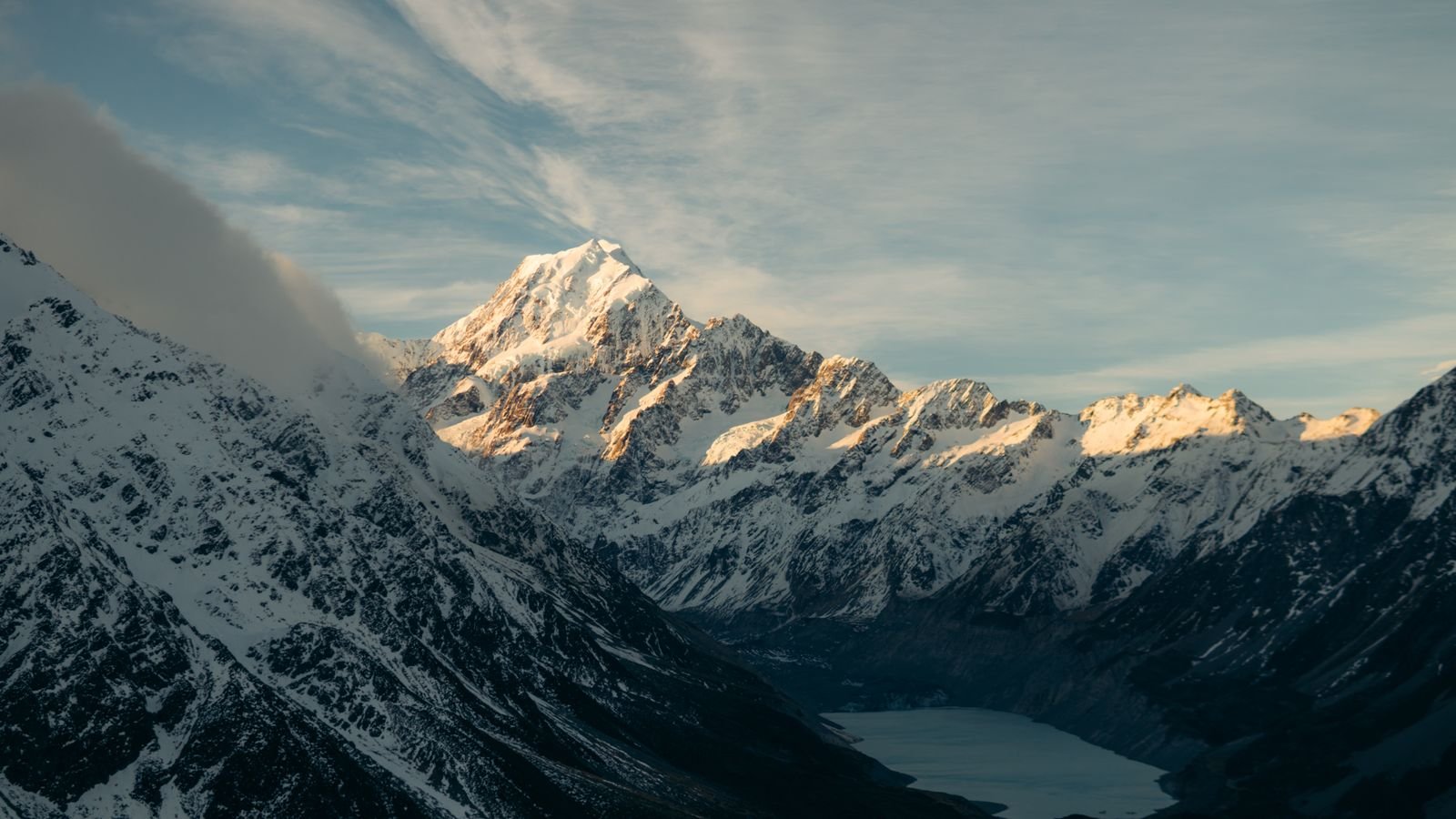
Aoraki Mount Cook is the roof of New Zealand. At 3,724 metres, it towers over the Southern Alps, its snow-covered summit rising above turquoise lakes, hanging glaciers and valleys carved by ice. For Māori, Aoraki is a sacred ancestor, and for travellers, it is one of the most beautiful mountain landscapes on Earth.
This complete guide to Aoraki Mount Cook covers the national park’s best hikes, the best time to visit, how to get there, where to stay and how to experience the mountain, whether you want to walk the famous Hooker Valley Track, watch the stars in a dark sky reserve or simply sit by Lake Pukaki and stare at the peak.
Where Is Aoraki Mount Cook and Why Visit?
Aoraki Mount Cook stands in the centre of New Zealand’s South Island, in Aoraki Mount Cook National Park, about 330 kilometres southwest of Christchurch. The park protects 700 square kilometres of the Southern Alps, including 19 peaks over 3,000 metres and New Zealand’s longest glacier, the Tasman Glacier.
The tiny settlement of Mount Cook Village, at the end of the road into the park, is the base for almost all visitors. From here, walking tracks lead into the Hooker, Tasman and Mueller valleys, and on clear mornings the mountain fills the entire end of the valley like a wall of snow and rock.
People visit Aoraki Mount Cook for the scale of the place. The mountains here are young, steep and still rising, the lakes are an extraordinary milky blue, and the night skies are among the darkest in the world. It is a place that makes you feel small in the best possible way.
What Makes Aoraki Mount Cook Special?
Aoraki is sacred to Ngāi Tahu Māori, who tell that the mountain is the petrified form of Aoraki, a young ancestor who was turned to stone. The dual name, Aoraki Mount Cook, honours both that history and Captain James Cook, who sighted the peak in 1770. The mountain’s Māori name means cloud piercer.
The peak has a legendary place in climbing history. Sir Edmund Hillary trained on its slopes before his 1953 ascent of Mount Everest, and the first ascent of Aoraki itself, in 1894, was made by three New Zealanders, Tom Fyfe, Jack Clarke and George Graham. The mountain remains a serious climb, attempted only by experienced alpinists.
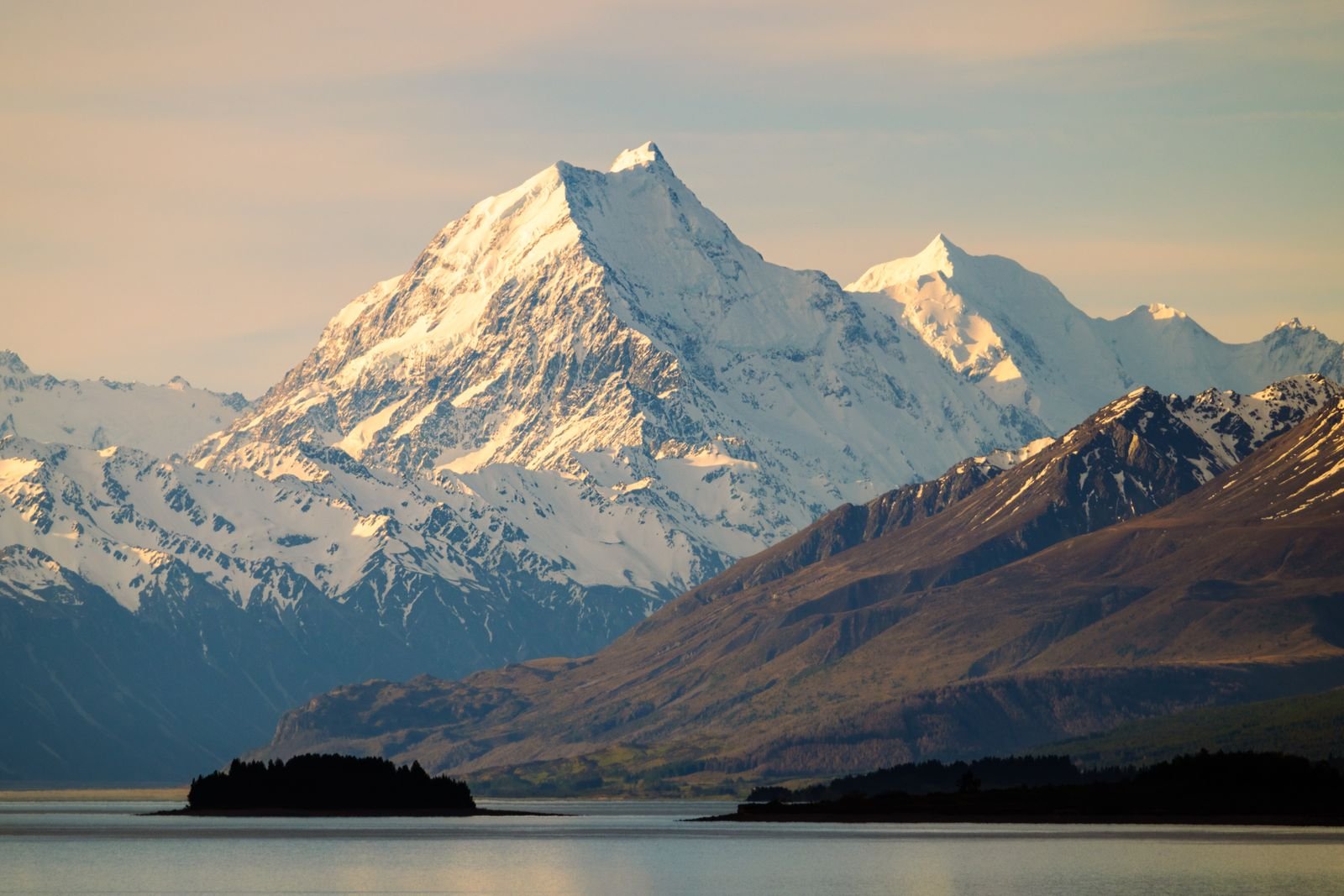
The landscapes around Aoraki Mount Cook are just as remarkable as the summit. Lake Pukaki, with its milky turquoise water coloured by glacial flour, stretches towards the mountain for 15 kilometres, and the Tasman Glacier’s terminal lake is dotted with icebergs that calve from the glacier’s face.
Best Things to Do at Aoraki Mount Cook
Walk the Hooker Valley Track, New Zealand’s most popular day hike. The well-formed trail crosses three swing bridges and passes alpine tarns before ending at Hooker Lake, where icebergs float beneath the sheer faces of Aoraki and Mount Sefton. Allow three hours return, and start early to beat the crowds.
Drive to Lake Pukaki and stop at the viewpoints along its shore. The lake’s colour changes with the light, from pale blue to deep turquoise, and on a calm morning it reflects the entire Southern Alps. The viewpoint near the lake’s southern end is one of the most photographed scenes in New Zealand.
Take a boat trip on the Tasman Glacier’s terminal lake, where you can cruise among icebergs and touch ice that is hundreds of years old. In winter, the same lake freezes, and the glacier valley becomes a place of deep silence and snow.
Stay up late for the stars. Aoraki Mount Cook lies inside the Aoraki Mackenzie International Dark Sky Reserve, one of the best places on Earth for stargazing. On a clear night, the Milky Way arches over the mountains, and the Southern Cross hangs above the valley.
Best Time to Visit Aoraki Mount Cook
The best time to visit Aoraki Mount Cook is from November to April, when the days are long, the walking tracks are snow-free and the alpine flowers are in bloom. December to February is the warmest period, but it is also the busiest, so book accommodation well ahead.
Winter, from June to August, brings snow to the village and a quieter, more dramatic park. Some tracks close, but the mountain looks at its finest, and the stargazing is superb. The shoulder months of October and May can be lovely, though the weather is changeable and snow can fall at any time.
Best Hikes Around Aoraki Mount Cook
The Hooker Valley Track is the essential hike, but the park has much more to offer. The Kea Point Track, an easy one-hour return walk from the village, leads to a viewpoint over the Mueller Glacier lake, and the Sealy Tarns Track climbs steeply through alpine scrub to a small tarn with a superb view of the Hooker Valley.
For a bigger challenge, the Mueller Hut Route climbs 1,000 metres to a high alpine hut with panoramic views of the Southern Alps. It is a demanding full-day hike in summer and a serious alpine trip in winter, when ice axes and crampons are needed.
The Tasman Glacier View Track, at the end of the Tasman Valley road, is a short walk to viewpoints over the glacier, its terminal lake and the Blue Lakes. It is the easiest way to see the Tasman Glacier up close, and it pairs well with a glacier lake boat trip.
How to Get to Aoraki Mount Cook
Most visitors drive from Christchurch, about four hours away, or from Queenstown, about three and a half hours away. The drive itself is part of the experience, passing Lake Tekapo, Lake Pukaki and the Mackenzie Country, and it is worth allowing extra time for stops.
There is no public transport into the park, but shuttle buses run from Twizel and Tekapo in summer, and tour buses operate from Christchurch and Queenstown. The Department of Conservation website has current track conditions and visitor information at doc.govt.nz.
Fuel, food and supplies are limited in the village, so fill up and shop in Twizel, Tekapo or Fairlie before you arrive. The road into the park is sealed and well maintained, but check conditions in winter, when snow and ice can affect driving.
Where to Stay Near Aoraki Mount Cook
Mount Cook Village has a small range of accommodation, from the Hermitage Hotel, which has mountain views from its rooms, to motels, a lodge and a campground. Staying in the village puts you at the trailheads and under the dark skies, but book months ahead for summer.
If the village is full, Twizel, 45 minutes away, is a good alternative, with motels, holiday parks and restaurants, while Lake Tekapo, about an hour away, has its own attractions, including hot pools and the Church of the Good Shepherd. Both make easy day-trip bases for the park.
Wildlife and Nature of Aoraki Mount Cook
The kea, the world’s only alpine parrot, is the park’s most famous bird. These curious, intelligent parrots are often seen around the village and car parks, investigating cars and walkers with equal enthusiasm. Keep food out of reach and enjoy watching them, but do not feed them.
Other wildlife includes the New Zealand pipit, the rock wren, and the rare black stilt, or kakī, which lives in the braided rivers of the Mackenzie Basin. In summer, the alpine meadows bloom with Mount Cook lilies, the world’s largest buttercup, and delicate alpine daisies.
The park’s glaciers are a world of their own. The Tasman Glacier is 23 kilometres long, the longest in New Zealand, and the Hooker Glacier hangs above the Hooker Valley, its icefalls rumbling in the warmer months. The ice, the moraine and the lakes are constantly changing as the glaciers retreat.
Practical Tips for Visiting Aoraki Mount Cook
Check the weather before you set out, and be ready for it to change. The mountains create their own weather, and a fine morning can turn to rain, wind or snow by afternoon. Carry warm layers, a waterproof jacket, sun protection and plenty of water on every walk.
Start the Hooker Valley Track early, especially in summer, when the car park fills up and the swing bridges get busy. The track is well maintained, but it is still an alpine environment: stay on the path, do not cross flooded streams, and turn back if conditions worsen.
Book accommodation, glacier tours and stargazing experiences well in advance, particularly from December to February. The village is small and demand is high, and many visitors are disappointed to find that the Hermitage and the campgrounds are full.
Finally, respect the mountain’s cultural significance. Aoraki is a sacred ancestor to Ngāi Tahu, and visitors are asked to treat the park with care: take your rubbish with you, keep to the tracks, and leave the alpine plants and rocks exactly as you found them.
More Mountains and Valleys to Explore
- Fiordland National Park: A Complete Guide to New Zealand’s Spectacular Wilderness
- Mount Everest: The World’s Highest Mountain — Complete Guide, History, Geography, Climbing and Natural Beauty
Frequently Asked Questions About Aoraki Mount Cook
How high is Aoraki Mount Cook?
Aoraki Mount Cook is 3,724 metres high, making it the highest mountain in New Zealand and Australasia. It stands about 600 metres higher than the next highest peak in the Southern Alps, and its summit is covered in snow and ice all year round.
How long is the Hooker Valley Track?
The Hooker Valley Track is 10 kilometres return and takes most people about three hours, including time at Hooker Lake. It is a well-formed track with three swing bridges, and it is suitable for most walkers, including families with children.
Can you climb Aoraki Mount Cook?
Climbing Aoraki Mount Cook is a serious mountaineering objective that requires technical skill, glacier experience and a guide. It is not a walk, and it is only attempted by experienced climbers, usually with a licensed New Zealand mountain guide.
Is there snow at Mount Cook in summer?
Yes, the summit and the upper glaciers are snow-covered all year, and snow can fall on the higher tracks at any time. In the village, summer is usually snow-free, with daytime temperatures of 15 to 25 degrees Celsius.
How do I get to Aoraki Mount Cook without a car?
Shuttle buses run from Twizel and Lake Tekapo in the summer season, and day tours operate from Christchurch and Queenstown. Once in the village, all the main walks start on foot, so you do not need a car inside the park.
When is the best time to see the stars at Mount Cook?
Winter, from June to August, has the longest and darkest nights, but the skies are superb all year. The best stargazing happens on clear, moonless nights, and the Milky Way is at its most spectacular from April to September.
Is Aoraki Mount Cook good for families?
Yes, the Hooker Valley Track, Kea Point and the Tasman Glacier View Track are all suitable for children, and the village has a visitor centre, a planetarium and short nature walks. The alpine setting makes it an exciting family destination.
Conclusion
Aoraki Mount Cook is the kind of place that stays with you. The scale of the mountains, the colour of the lakes and the clarity of the night sky combine into something that photographs can only hint at, and the Hooker Valley walk is one of the great day hikes of the world.
Visit in the summer months for the best walking, or in winter for snow and stars, and give yourself at least two days in the park. Walk slowly, look up often, and let the mountain set the pace. Aoraki rewards patience like few places on Earth.
If you only remember one thing about Aoraki Mount Cook, let it be this: the mountain is not just a peak to tick off, but a living landscape of ice, rock and sky that has been sacred to Māori for centuries. Treat it with respect, and it will give you one of the most memorable experiences New Zealand has to offer.