Atlas Mountains, Morocco: Complete Guide to Toubkal, Berber Villages and High Passes
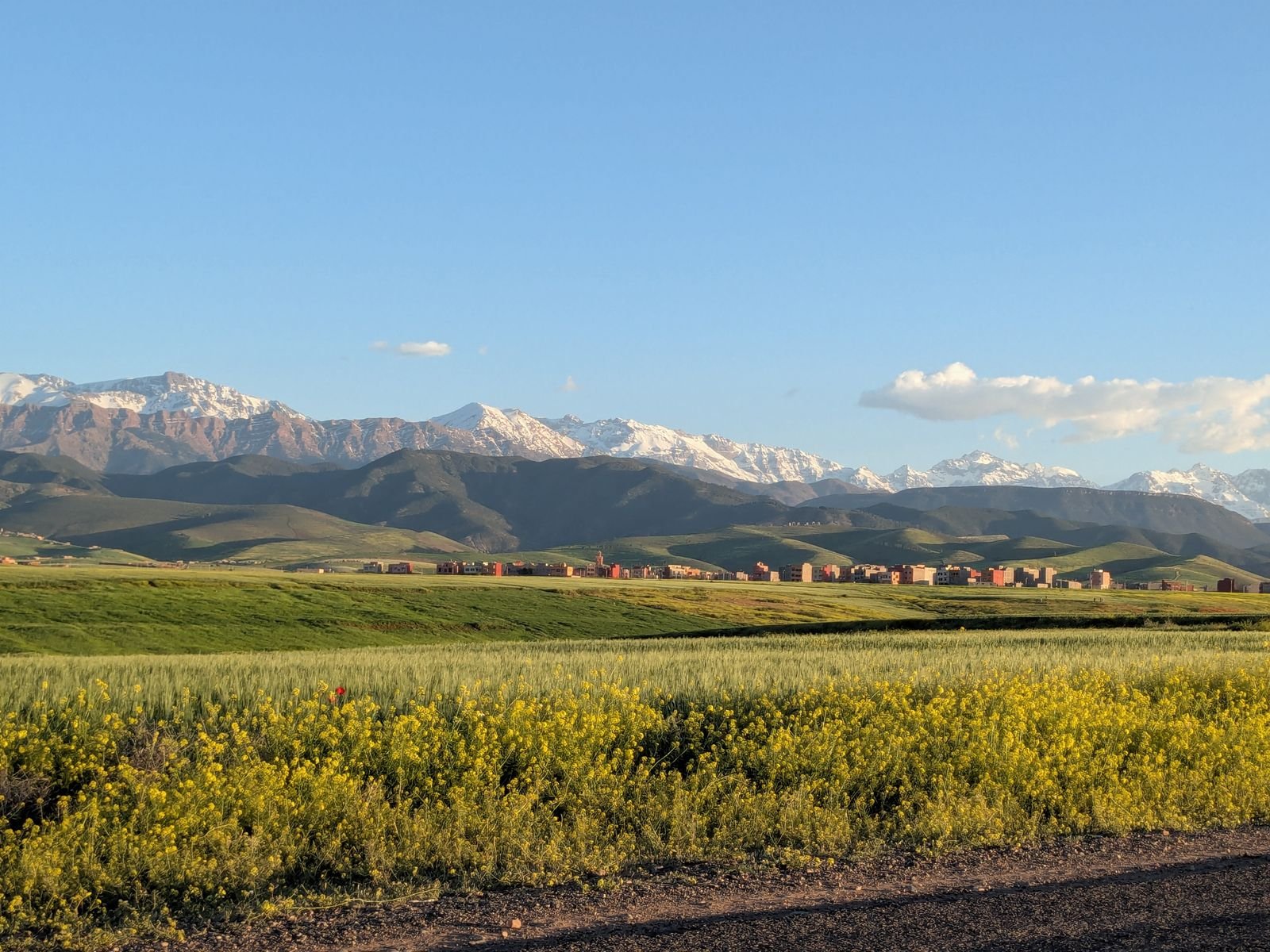
The Atlas Mountains, Morocco, are the great mountain wall of North Africa. This range runs for more than 2,000 kilometres across Morocco, Algeria and Tunisia, and its highest peak, Mount Toubkal, rises to 4,167 metres above the plains of Marrakech. The mountains are a world of Berber villages, terraced valleys, high passes and red rock, and they offer some of the most rewarding hiking in Africa.
What makes the Atlas Mountains, Morocco, so special is the mix of nature and culture. The mountains are home to the Amazigh people, known as Berbers, who have lived in these valleys for thousands of years. Their villages are built from the same red earth and stone as the mountains themselves, and their terraces grow walnuts, apples, barley and saffron on slopes that look too steep to farm. Walking here means crossing high passes, drinking mint tea in village homes and sleeping in mountain refuges under a sky full of stars.
This guide covers everything you need to plan a trip to the Atlas Mountains, Morocco: the best hikes and peaks, the best villages and valleys, the best time to go, how to get there, where to stay and practical tips for trekking in North Africa. Whether you come to climb Toubkal, to walk between Berber villages or simply to see the mountains from Marrakech, the Atlas will stay with you long after you leave.
Why Visit the Atlas Mountains
The Atlas Mountains are the highest range in North Africa, and they divide Morocco into two very different worlds: the green plains and cities of the north, and the dry edge of the Sahara to the south. The High Atlas, the tallest part of the range, holds a dozen peaks over 4,000 metres, deep valleys cut by rivers, and passes that have carried traders, pilgrims and armies for centuries. The light is sharp and clear, the air is fresh, and the views from the high passes stretch for a hundred kilometres.
For walkers, the Atlas is a rare combination: serious mountains that are also welcoming. The trails are well used by local people, mules carry the luggage, and village guesthouses and mountain refuges make multi-day treks comfortable. You do not need technical climbing skills to reach the top of North Africa, and the sense of achievement on the summit of Toubkal is enormous. The mountains are also close to Marrakech, so a trek here fits easily into a wider Moroccan trip.
Best Things to Do in the Atlas Mountains
Climb Mount Toubkal
Mount Toubkal, at 4,167 metres, is the highest peak in North Africa and the highlight of the Atlas Mountains, Morocco. The classic climb takes two days from Imlil, the village at the end of the road from Marrakech. On day one you walk through Berber villages and walnut groves to the Toubkal Refuge at 3,207 metres, passing the shrine village of Sidi Chamarouch. On day two you climb to the summit before dawn, reaching the top as the sun rises over the whole Atlas range. The climb is steep but not technical in summer, and the views from the summit stretch from Marrakech to the Sahara. If you love high-altitude trekking, you will also enjoy our guide to Mount Kilimanjaro, Africa’s highest mountain, a longer and higher climb on the same continent.
Walk Between Berber Villages
The best way to understand the Atlas is to walk between its villages. The valleys around Imlil, Ait Bouguemez and the Ourika Valley are full of trails that connect villages, terraces and passes, and every walk brings you into contact with local life. In the Ait Bouguemez Valley, known as the Happy Valley, the trail passes through a dozen villages with views of the M’Goun massif. In the Ourika Valley, the path follows the river past waterfalls and walnut trees. Village guesthouses serve simple, generous meals, and your hosts will offer mint tea and stories about the mountains.
Drive the Tizi n’Tichka Pass
The Tizi n’Tichka pass, at 2,260 metres, is the highest road pass in Morocco and one of the great mountain drives in the world. The road climbs from Marrakech through the High Atlas to Ouarzazate, twisting through red rock, Berber villages and views that change at every bend. Stop at the viewpoints, visit the village of Telouet and its old kasbah, and take your time: the drive takes four to five hours without stops, but the scenery deserves a whole day. The pass is also the gateway to the south, where the Atlas gives way to the desert.
Visit Ait Ben Haddou
On the southern slopes of the High Atlas stands the Ksar of Ait-Ben-Haddou, a fortified village of earthen buildings that is a UNESCO World Heritage Site. The ksar, a group of houses crowded within high defensive walls, is one of the best-preserved examples of pre-Saharan architecture in Morocco, and it has been used as a film location for many famous movies. Walk through the narrow lanes to the top of the village for a view over the river valley and the desert beyond. Ait Ben Haddou is an easy day trip from Ouarzazate, and it is the perfect end to a crossing of the Atlas Mountains, Morocco.
Relax in the Ourika Valley and Lake Ifni
Not every day in the Atlas has to be a hard climb. The Ourika Valley, an hour from Marrakech, is a green valley of rivers, waterfalls and riverside restaurants, and it is a favourite escape for people from the city. Further south, Lake Ifni is a remote mountain lake at 2,300 metres, reached by a hike from the village of Ifni, and it is one of the most peaceful places in the High Atlas. The lake sits below the peaks of the Toubkal massif, and its still water reflects the mountains at dawn. Both places show the quieter side of the Atlas: water, shade and slow days.
When to Visit the Atlas Mountains, Morocco
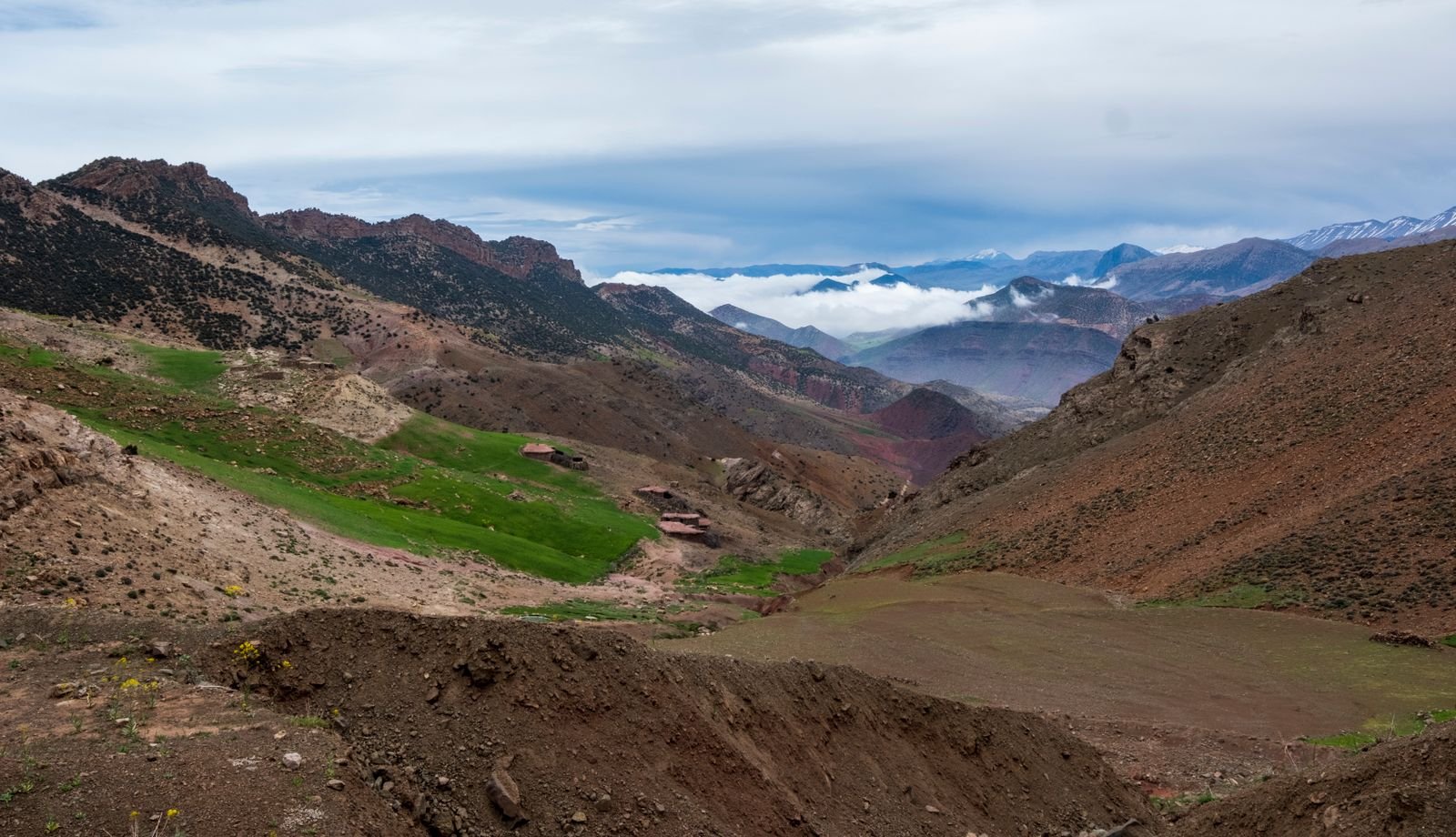
The best time to visit the Atlas Mountains, Morocco, is from April to May and from September to October. In spring the valleys are green, the snow is melting on the high peaks and the weather is warm without being hot. In autumn the air is clear, the light is golden and the trails are quiet. These are the best months for trekking, and the mountain refuges and guesthouses are open and welcoming.
Summer, from June to August, is hot in the valleys but pleasant at altitude, and it is a good time for high treks if you start early in the morning. Winter, from December to February, brings snow to the high peaks, and Toubkal becomes a winter climb that needs crampons and an ice axe. The mountains are beautiful in snow, but the weather is cold and changeable, and some passes and trails close. If you visit in winter, go with a guide and check conditions before you set out.
How to Get to the Atlas Mountains
Most visitors reach the Atlas Mountains, Morocco, through Marrakech, which has an international airport and is about an hour from the mountains. From Marrakech, shared taxis and buses run to Imlil, the main trekking village, in about 90 minutes. The road climbs through the foothills and passes the ski resort of Oukaimeden on the way. From Imlil you can walk into the mountains, hire mules and a guide, and reach the Toubkal Refuge in a day.
For the southern Atlas and the Tizi n’Tichka pass, buses and shared taxis run from Marrakech to Ouarzazate, which takes about four hours. Renting a car gives you the most freedom, especially for the Tizi n’Tichka drive and the valleys around Ait Bouguemez, but the mountain roads are narrow and winding, and driving in Morocco needs care. Many travellers hire a local driver or join a guided trek, which takes care of transport, food and accommodation.
Where to Stay in the Atlas Mountains
The best place to stay in the Atlas is a village guesthouse, known as a gite, run by a local family. Imlil has the widest choice, from simple guesthouses to comfortable lodges with terraces over the valley, and it is the best base for Toubkal. Ait Bouguemez has guesthouses in its villages, and the Ourika Valley has hotels and riverside lodges. On the Toubkal climb, you stay at the Toubkal Refuge, a large mountain hut with dormitories, meals and hot drinks. For another African desert landscape, read our guide to the Namib Desert, the ancient desert of Namibia, a very different kind of African wilderness.
Book guesthouses in advance in spring and autumn, when the mountains are busiest. Staying in a village guesthouse is part of the experience: the food is home-cooked, the hospitality is warm, and your hosts can arrange guides, mules and transport. In Marrakech, stay in a riad in the medina or a hotel in the new town, and use it as your base before and after the trek.
Practical Tips for Visiting the Atlas Mountains
The Atlas Mountains are welcoming, but they are also high and remote, so a little preparation goes a long way. These tips will help you trek safely and enjoy the mountains at their best.
- Take your time to acclimatise: Toubkal is over 4,000 metres, and altitude sickness is common if you climb too fast.
- Hire a local guide and mules for multi-day treks: they know the trails, the weather and the villages.
- Wear sturdy boots and carry layers, sun protection and plenty of water: the sun is strong and the weather changes fast.
- Carry cash in Moroccan dirhams: villages have no ATMs, and guesthouses and small shops prefer cash.
- Learn a few words of Arabic or Tamazight: a greeting and a thank you go a long way in the villages.
- Respect local customs: dress modestly in villages, ask before taking photos of people, and accept mint tea when it is offered.
- Check the weather and trail conditions before you set out, especially in winter and after rain.
Conclusion
The Atlas Mountains, Morocco, offer one of the great mountain experiences in the world: the highest peak in North Africa, Berber villages that have changed little in centuries, and valleys that glow red in the evening light. Climb Toubkal, walk between villages, drive the Tizi n’Tichka pass and stand in the ksar of Ait Ben Haddou, and you will see a Morocco that most visitors never reach. Plan for the season, go with a local guide, and take your time. The Atlas rewards travellers who walk slowly and look around.
Frequently Asked Questions
How long does it take to climb Mount Toubkal?
The classic Toubkal climb takes two days from Imlil: one day to walk to the Toubkal Refuge, and one day to climb to the summit and return. Some trekkers add a third day to acclimatise or to climb the nearby peak of Ouanoukrim. In winter, allow an extra day for snow and weather.
Do I need a guide to climb Toubkal?
A guide is not legally required in summer, but it is strongly recommended, especially in winter. A local guide knows the route, the weather and the refuge system, and hiring one supports the local economy. Most trekkers go with a guide and mules.
When is the best time to visit the Atlas Mountains?
April to May and September to October are the best months for trekking in the Atlas Mountains, Morocco. The weather is warm and clear, the trails are in good condition, and the valleys are at their most beautiful. Summer is good for high treks, and winter is for experienced snow climbers.
Is the Atlas Mountains trek difficult?
The Toubkal climb is strenuous but not technical in summer: it needs good fitness, sturdy boots and a day of steep walking. Village walks in the valleys are easier and suit most walkers. Altitude is the main challenge, so walk slowly and drink plenty of water.
How do I get from Marrakech to Imlil?
Shared taxis and buses run from Marrakech to Imlil in about 90 minutes. Many guesthouses and trekking companies arrange transfers, and hiring a private taxi is affordable if you share it. The road is good and the drive is scenic.