
Lofoten Islands, Norway: Complete Guide to Reine, Fjords and the Arctic Coast
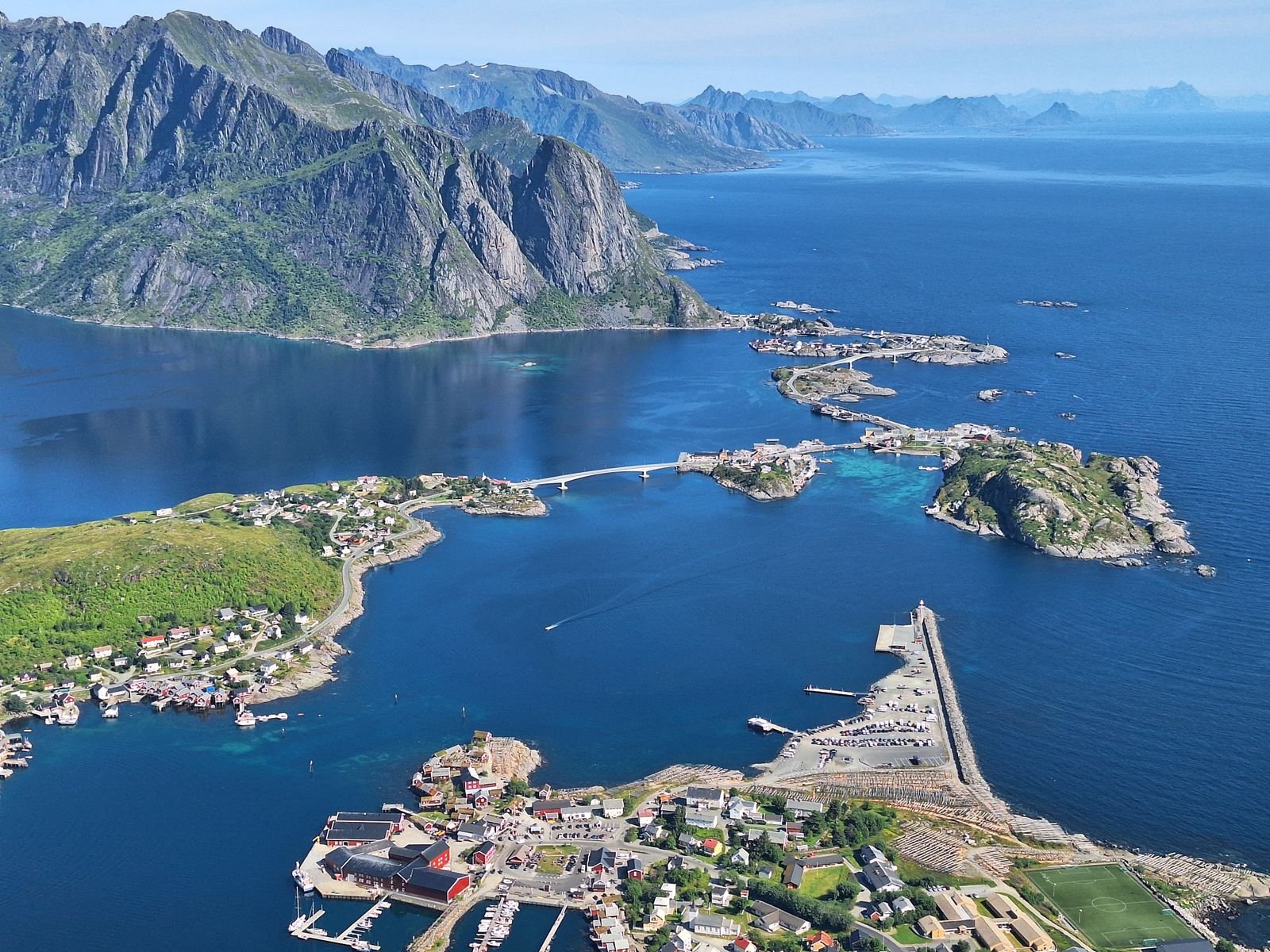
The Lofoten Islands, Norway, are one of the most dramatic island landscapes in the world. This archipelago stretches into the Norwegian Sea above the Arctic Circle, where sharp granite peaks rise straight from the water and small fishing villages sit on stilts above the shore. The contrast is unforgettable: white sand beaches, turquoise water, green valleys and snow-capped mountains, all in a single view.
What makes the Lofoten Islands, Norway, so special is the way nature and daily life sit side by side. Fishermen still hang cod to dry on wooden racks, just as they have for a thousand years, while surfers ride waves at Unstad and hikers climb peaks with views over the whole archipelago. The islands feel wild and remote, yet they are easy to reach, with airports, ferries and one of the most scenic roads in Europe.
This guide covers everything you need to plan a trip to the Lofoten Islands, Norway: the best villages to visit, the best hikes and beaches, the best time to go, how to get there, where to stay and practical tips for travelling above the Arctic Circle. Whether you come for the midnight sun, the northern lights or the mountain views, Lofoten rewards travellers who take their time.
Why Visit the Lofoten Islands
Lofoten has some of the most striking scenery in Europe. The islands are the tips of ancient mountains, and the peaks rise more than a thousand metres from the sea in places, creating fjords, narrow inlets and viewpoints that look like they belong in a painting. Because the islands sit above the Arctic Circle, the light here is extraordinary: in summer the sun never sets, and in winter the low sun paints the sky pink and gold for hours. The official Visit Norway guide to the Lofoten Islands calls the archipelago wild and wonderful, and it is hard to disagree.
The islands also have a deep and living culture. Fishing has shaped Lofoten for more than a thousand years, and the seasonal cod fishery still brings fishermen from all over Norway each winter. You can stay in a rorbu, a traditional fisherman’s cabin on stilts, eat stockfish and fresh cod, and visit the Lofotr Viking Museum, built around the largest Viking longhouse ever found. The villages of Reine, Henningsvaer and Nusfjord are among the most photographed in Norway, and they are just as beautiful in person as they are in pictures.
Best Things to Do in the Lofoten Islands
Visit Reine and Climb Reinebringen
Reine is the most photographed village in the Lofoten Islands, Norway, and it is easy to see why. Red and white cabins stand on stilts above the water, backed by steep mountains that rise straight from the fjord. Walk around the harbour, visit the small galleries, and then climb Reinebringen, the mountain above the village. The trail has almost 2,000 stone steps, built by Sherpas, and the view from the top is one of the best in Norway: the whole Reinefjord laid out below you, with the village, the water and the peaks in a single panorama.
Explore Svolvaer and Henningsvaer
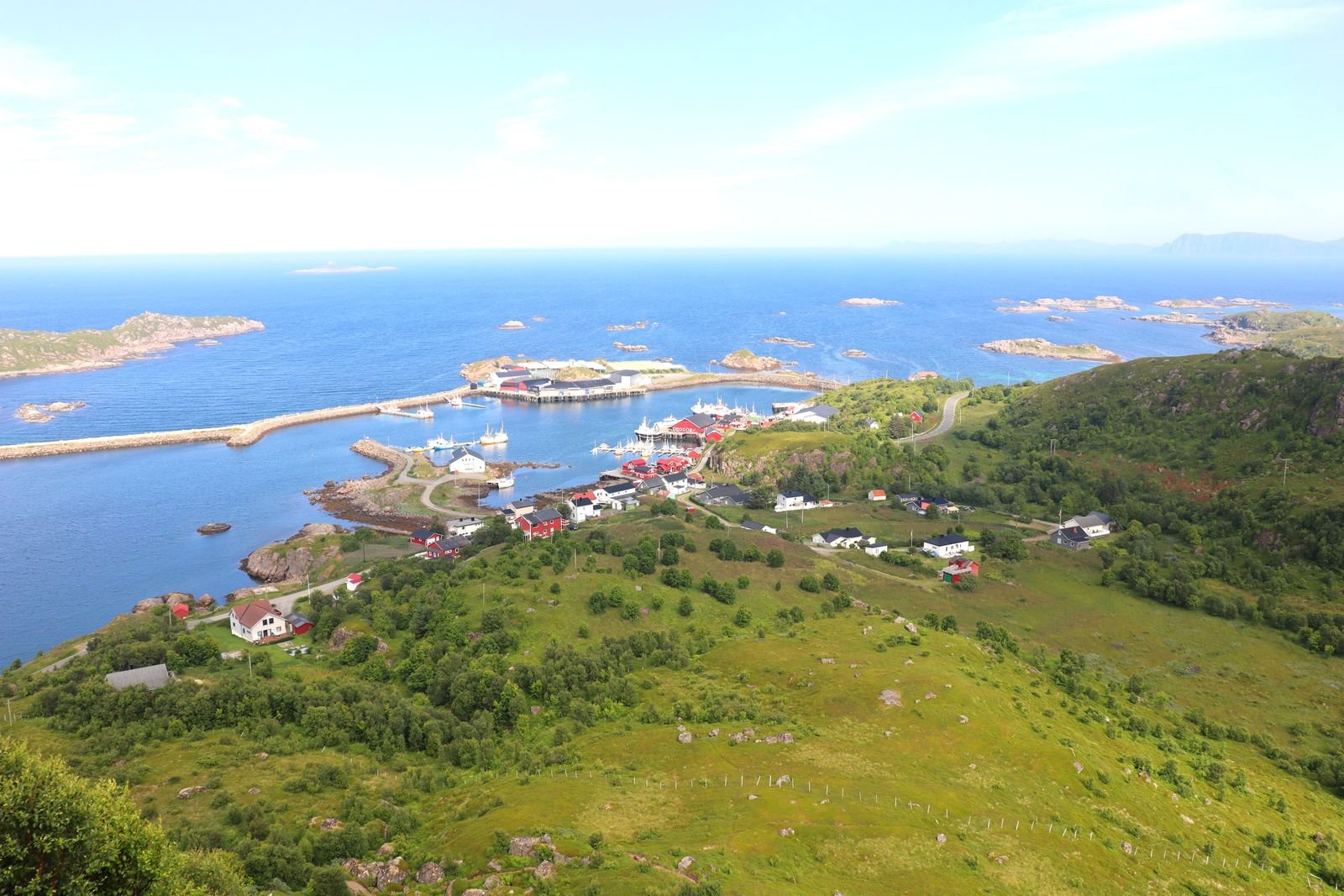
Svolvaer is the largest town in Lofoten and the best base for exploring the islands. It has galleries, restaurants, the War Memorial Museum and the harbour where fishing boats and the Hurtigruten coastal ships come and go. From Svolvaer you can take a boat trip to Trollfjord, a narrow fjord with cliffs more than a thousand metres high, where sea eagles circle overhead. Henningsvaer, a short drive away, is a fishing village spread over small islands, famous for its football field on a rocky islet, its galleries and its climbing. The drive between the two towns, along the coast and over bridges, is one of the most scenic in Norway.
Walk the Arctic Beaches
Lofoten has some of the most beautiful beaches in Europe, and they look like they belong much further south. Haukland Beach has white sand and turquoise water backed by mountains, and nearby Uttakleiv is a favourite for photographers at sunset. Kvalvika Beach, reached by a hike over a pass from Fredvang, is wilder and more remote, with the peak of Ryten rising above it. The water is cold even in summer, but the beaches are perfect for walking, picnics and watching the light. Surfers come to Unstad, where Arctic waves break on a white sand beach beneath the mountains.
Hike Ryten and the Mountain Trails
Hiking is the best way to experience the Lofoten Islands, Norway, and the trails are short but steep. The hike to Ryten, above Kvalvika Beach, takes about two hours and rewards you with a view of the beach, the sea and the surrounding peaks. Reinebringen is the most famous climb, and the trail to Mannen, above Svolvaer, is a shorter option with a superb view over the town and the fjord. Trails here are often rocky and exposed, and the weather changes quickly, so wear sturdy boots, carry layers and water, and check the forecast before you set out.
Chase the Northern Lights and the Midnight Sun
Lofoten sits in the middle of the aurora zone, and from September to March the northern lights often dance over the islands. The best nights are dark, clear and away from town lights: head to a beach or a quiet headland, dress warmly, and give your eyes time to adjust. In summer the experience is the opposite: from late May to mid-July the sun never sets, and you can hike, kayak or walk on the beach at midnight in full daylight. If you love wild northern landscapes, you will also enjoy our guide to Skogafoss Waterfall and Iceland’s south coast, another Arctic island shaped by ice, sea and volcanoes.
When to Visit the Lofoten Islands, Norway
The best time to visit the Lofoten Islands, Norway, depends on what you want to see. For hiking, kayaking and the midnight sun, come from June to August, when the weather is mildest, the days are endless and the sea is at its warmest. June is the best month for hiking, because the trails are clear of snow and the crowds are still small. July and August are busier, but the long days and the warm light make up for it.
For the northern lights, come from late September to March, when the nights are dark enough for the aurora. February and March are excellent, because the days are getting longer, the snow is deep and the cod fishery is in full swing. September and October are quieter and cheaper, with autumn colours and the first northern lights of the season. Winter days are short, with only a few hours of twilight, but the low light over the snow and the sea is magical.
How to Get to the Lofoten Islands
Most visitors reach the Lofoten Islands, Norway, through Bodo, the gateway city on the mainland. From Oslo, fly to Bodo in about 90 minutes, then take a short flight to Svolvaer or Leknes, or a ferry from Bodo to Moskenes, which takes about three to four hours and is one of the most scenic ferry rides in Norway. You can also fly to Harstad-Narvik Airport (Evenes) and drive or take a bus south into Lofoten, which takes about three hours.
A car gives you the most freedom in Lofoten, because the buses are infrequent and many of the best viewpoints, beaches and trailheads are away from the main towns. The E10 road runs the length of the archipelago, over bridges and through tunnels, and it is one of the most beautiful drives in Europe. Book rental cars and ferries well in advance in summer. The Hurtigruten and Havila coastal ships also stop at Stamsund and Svolvaer daily, which is a memorable way to arrive or leave.
Where to Stay in the Lofoten Islands
The classic place to stay in Lofoten is a rorbu, a traditional fisherman’s cabin on stilts above the water. Many have been converted into comfortable holiday cabins with kitchens, bedrooms and sea views, and they are the most atmospheric way to experience the islands. Reine and Hamnoy have the most famous rorbuer, and they book out months ahead for summer. Svolvaer has the widest choice of hotels, apartments and cabins, and it is the best base if you want restaurants, shops and tours close by. For another northern mountain and lake escape, read our guide to Banff National Park, Lake Louise and the Icefields Parkway, a mountain landscape with a very different climate.
Leknes, in the middle of the islands, is a practical base with hotels, a shopping centre and easy access to Haukland Beach. Smaller villages such as Henningsvaer, Ballstad and Nusfjord have guesthouses and cabins with a quieter feel. In summer, camping is popular, but wild camping is restricted in many places, so use campsites and respect local rules. Book early for June, July and the northern lights season, when the best places fill up fast.
Practical Tips for Visiting the Lofoten Islands
Lofoten is easy to enjoy if you prepare for Arctic conditions. The weather changes fast, the distances are longer than they look on the map, and the islands are popular, so these tips will help you make the most of your trip.
- Dress in layers and bring waterproofs, even in summer: the wind and rain can arrive quickly, and the weather changes by the hour.
- Book cars, ferries and cabins early, especially for June to August and the northern lights season.
- Stay on marked trails and respect private land: the Arctic landscape is fragile, and new paths damage it for years.
- Carry cash and cards: most places take cards, but small cafes and some buses prefer cash.
- Drive carefully on narrow roads and in tunnels, and watch for sheep, cyclists and sudden fog.
- For the northern lights, check the aurora forecast, get away from town lights, and dress very warmly.
- Try the local food: stockfish, fresh cod, lamb and cloudberries are all part of the Lofoten table.
Conclusion
The Lofoten Islands, Norway, are a place where the Arctic shows its best side: sharp peaks, white beaches, fishing villages on stilts and light that changes by the hour. Hike Reinebringen, walk the beaches of Haukland and Kvalvika, sleep in a rorbu and watch the northern lights or the midnight sun, and you will understand why so many travellers fall in love with these islands. Plan for the season you want, book early, and leave time to slow down. Lofoten is at its best when you are not in a hurry.
Frequently Asked Questions
How many days do I need in the Lofoten Islands?
Four to five days is a good minimum for the Lofoten Islands, Norway. That gives you time for Reine, Svolvaer, a hike, a beach day and a boat trip. A week is better if you want to add kayaking, fishing or a slower pace, and winter visitors should allow extra days in case of bad weather.
When can I see the northern lights in Lofoten?
The northern lights season runs from late September to March, when the nights are dark. The best months are October to March, with February and March offering longer days and good snow. Clear, dark skies away from town lights give you the best chance.
When is the midnight sun in Lofoten?
The midnight sun lasts from late May to mid-July in Lofoten. During this time the sun never sets, and you can hike, kayak or walk on the beach at midnight in daylight. The light is best in June, when the sun is highest.
Do I need a car in Lofoten?
A car is very helpful, because buses are infrequent and many beaches, viewpoints and trailheads are away from the towns. You can manage without a car by basing yourself in Svolvaer and using buses, ferries and tours, but you will see much less of the islands.
Is Lofoten expensive?
Norway is expensive, and Lofoten is no exception, especially for food, fuel and accommodation in summer. You can save money by staying in a cabin with a kitchen, cooking your own meals, visiting in May or September, and booking cars and cabins well in advance.




One Comment