
Wadi Rum: Complete Guide to Jordan’s Red Desert, Sandstone Mountains, and Bedouin Culture
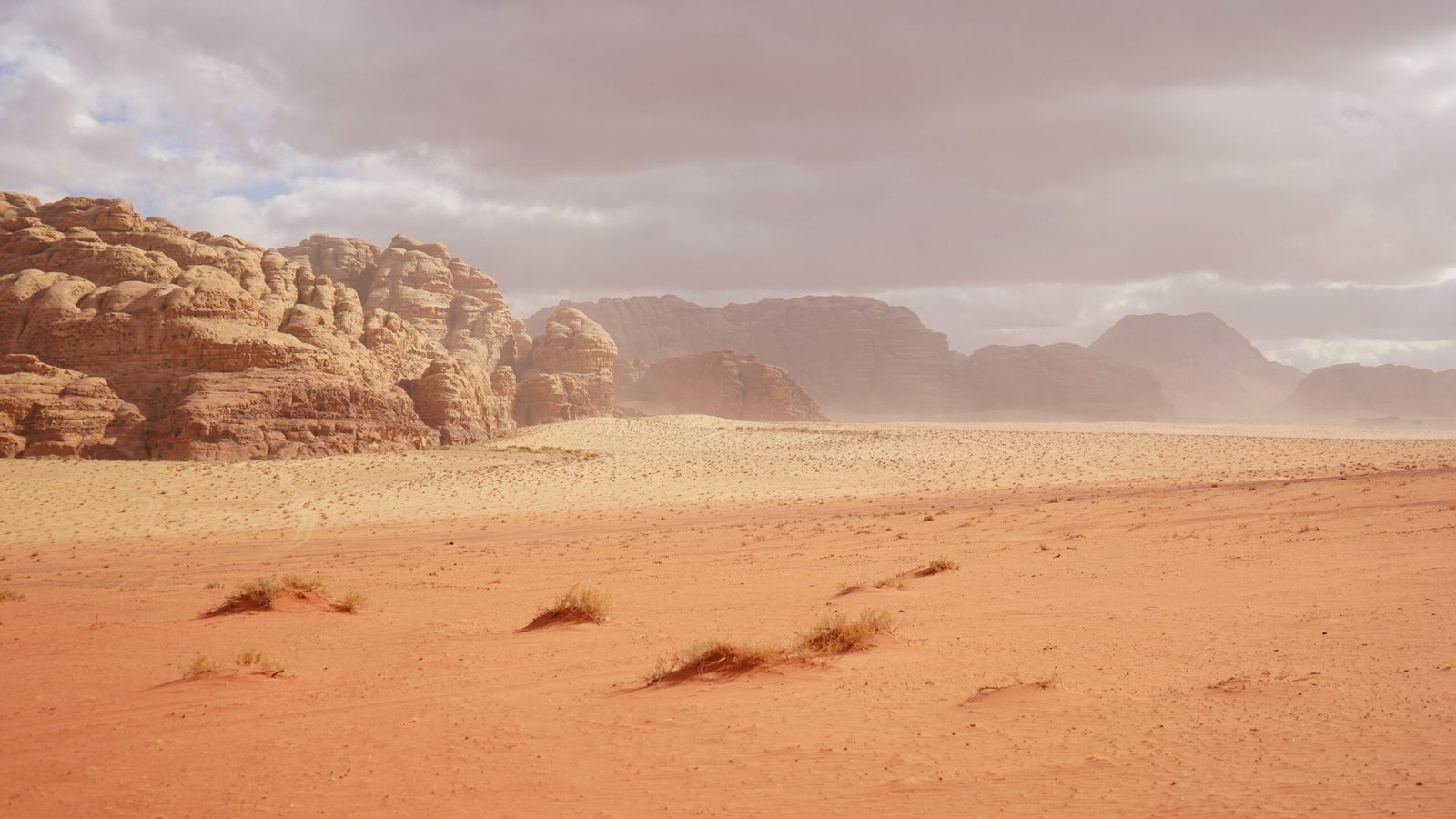
Wadi Rum, Jordan, is one of the most famous deserts on Earth. In the far south of the country, near the border with Saudi Arabia, huge sandstone mountains rise out of a plain of red sand, and the light changes their colour from pale gold to deep crimson through the day. It is the desert of Lawrence of Arabia, of Bedouin camps and camel caravans, and of films such as The Martian and Dune, which used it as a stand-in for another planet. It is also a protected wilderness and a UNESCO World Heritage Site, and it is one of the most unforgettable places to spend a night under the stars.
This complete guide to Wadi Rum explains how the desert formed, what to see and do there, when to visit, how to get there, and how to choose a Bedouin camp. Whether you have a single day or a full week, you will find everything you need to plan a trip into Jordan’s great red desert.
Where Is Wadi Rum and How Was It Formed?
Wadi Rum sits in southern Jordan, about 60 kilometres east of the Red Sea port of Aqaba and about 110 kilometres south of Petra. The Wadi Rum Protected Area covers 720 square kilometres of desert valleys, sand dunes, rock bridges and towering cliffs. In 2011, UNESCO added it to the World Heritage List for its natural beauty and for its long history of human settlement, which stretches back thousands of years.
The landscape was built in two stages. First, around 400 million years ago, layers of sandstone and granite were laid down and lifted up to form a great plateau. Then, over millions of years, water and wind cut deep valleys into the plateau, leaving the high cliffs and isolated mountains that now dominate the desert. The red colour comes from iron oxide in the sand and rock, the same mineral that gives rust its colour. Beneath the sandstone lie older granite rocks, and in places such as the valley of Jebel Rum you can see both rock types side by side.
The name Wadi Rum means Valley of the Moon in Arabic, and on a clear night it is easy to see why. The desert has almost no light pollution, and the stars shine with a brightness that surprises most first-time visitors. The area is also home to a remarkable range of desert life, including ibex, red foxes, desert hares and more than 120 species of birds, as well as the hardy plants that grow in the valleys after rain.
Lawrence of Arabia and the History of Wadi Rum
Wadi Rum is inseparable from the story of T.E. Lawrence, known as Lawrence of Arabia. During the Arab Revolt of 1917 to 1918, Lawrence and the Arab forces used the desert as a base, and Lawrence described the valley in his book Seven Pillars of Wisdom, which took its name from a rock formation in the desert. The 1962 film Lawrence of Arabia was filmed here, and the desert has since become a favourite location for filmmakers. The Martian, Rogue One: A Star Wars Story and Dune all used Wadi Rum’s red landscapes as alien worlds.
Human history here goes far deeper than Lawrence. The walls of Khazali Canyon carry rock inscriptions from the Thamudic and Nabataean peoples who lived and travelled here more than 2,000 years ago, and the desert was a crossroads for the frankincense trade between southern Arabia and the Mediterranean. Today the local people are Bedouin of the Zalabia tribe, and they run the camps, the jeep tours and the camel treks that make visiting the desert possible.
The Best Things to See and Do in Wadi Rum
Almost every visitor explores Wadi Rum with a Bedouin guide and a four-wheel-drive vehicle, because the desert tracks need local knowledge and a high-clearance jeep. Tours are sold from the visitor centre at Rum village and from the camps, and they range from a two-hour drive to a full day or several days.
Jeep Tour of the Desert
A jeep tour is the classic Wadi Rum experience. A half-day tour usually visits Lawrence’s Spring, a natural water source in the canyon of Jebel Rum, the Khazali Canyon with its ancient inscriptions, the red sand dune of Umm Fruth, and one of the natural rock bridges, such as Burdah Rock Bridge, one of the highest in the world. Longer tours add the Burdah scramble, the Mushroom Rock and the sunset viewpoint at Umm Sabatah. The driving itself is part of the fun, with long stretches of open sand between the stops.
Camel Trek
Camels were the transport of the desert for centuries, and a camel trek is the slowest and most atmospheric way to see Wadi Rum. A typical trek lasts one to two hours and follows the old caravan routes between the mountains at walking pace. Full-day and multi-day camel treks, with overnight stays in Bedouin camps, are also available. Riding a camel takes some getting used to, but the gentle pace lets you notice details that pass too quickly from a jeep.
Hiking and Scrambling
Wadi Rum is a world-class destination for hikers and climbers. Jebel Rum, at 1,754 metres, is a serious climb that takes most of a day with a guide, while the scramble to the Burdah Rock Bridge is a half-day adventure that ends with a spectacular view over the whole desert. There are also easier walks, such as the canyon walk at Jebel Burdah and the trail from Rum village to Lawrence’s Spring. Climbers come from all over the world for the long granite and sandstone routes, and the Rum area has routes for every level.
Hot Air Balloon at Sunrise
Hot air balloon flights run at sunrise over the desert, weather permitting, and they offer the best possible view of the sandstone mountains and the sweeping red dunes. The flight lasts about an hour and ends with a traditional Bedouin breakfast. Balloons fly most reliably in the calm months of spring and autumn, and they are a good alternative to the crowds of the jeep tours.
Stargazing in the Desert
Wadi Rum is one of the best places in the Middle East for stargazing. With no towns and very little light pollution, the Milky Way is clearly visible on a moonless night, and many camps set up telescopes and offer guided astronomy sessions after dinner. The best stargazing comes on nights around the new moon, when the sky is at its darkest, so check the lunar calendar when you choose your dates.
Overnight in a Bedouin Camp
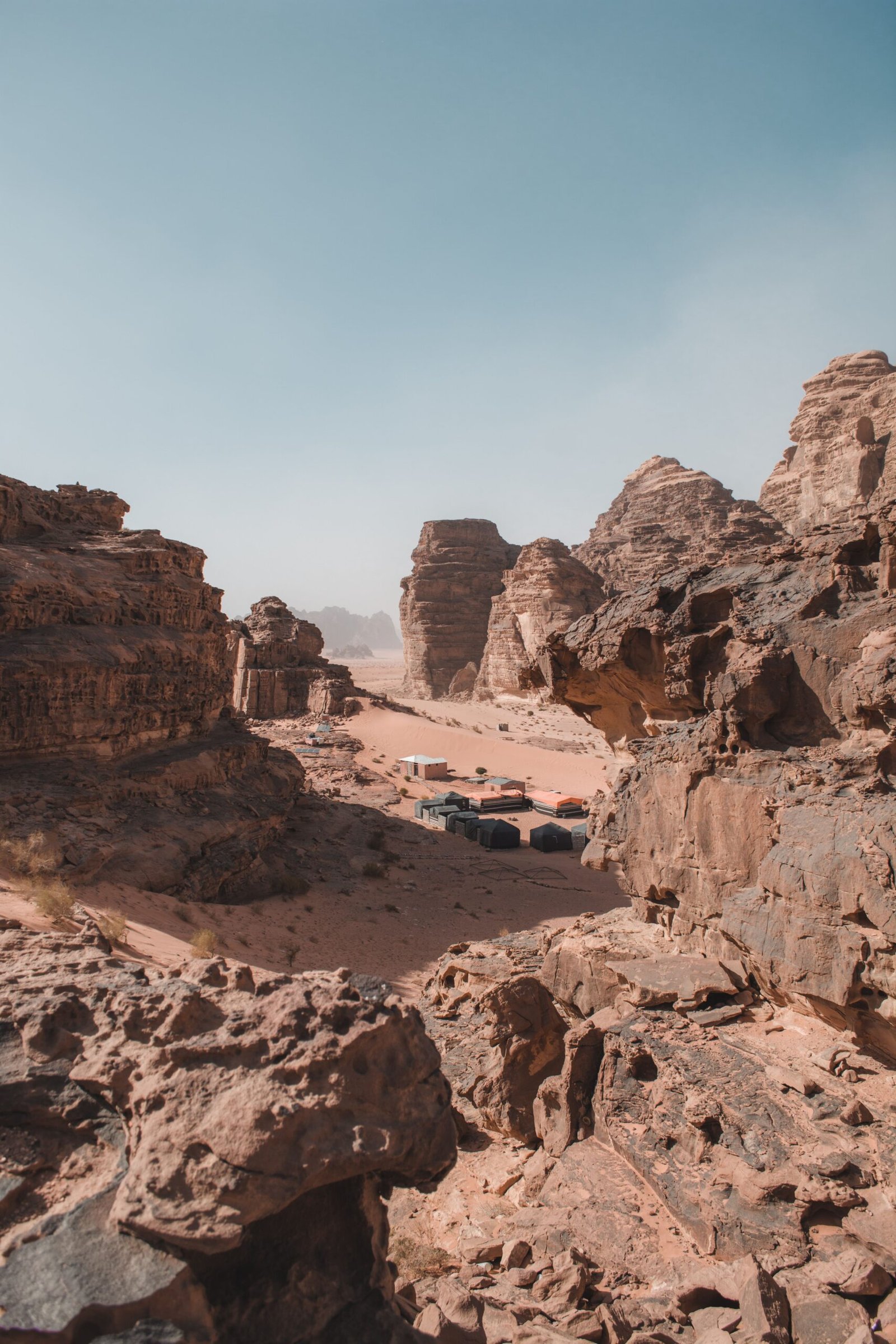
Spending a night in a Bedouin camp is the heart of a Wadi Rum visit. Most camps are in the desert outside Rum village and are reached by jeep from the visitor centre. The evening usually includes a traditional dinner cooked in a zarb, an underground oven, followed by tea, music and stories around the fire. Accommodation ranges from simple goat-hair tents to luxury bubble tents with glass roofs and private bathrooms, so there is a camp for every budget.
Best Time to Visit Wadi Rum
The best time to visit Wadi Rum is from March to May and from September to November. In these months the daytime temperatures are comfortable, usually between 20 and 30 degrees Celsius, and the nights are cool but not freezing. Spring brings wildflowers to the valleys after the winter rains, and autumn brings clear skies and the best light for photography. Summer, from June to August, is very hot, with daytime temperatures often above 40 degrees, which makes hiking and long jeep tours exhausting. Winter, from December to February, is mild during the day but cold at night, sometimes close to freezing, so bring warm layers for the evenings at camp.
The desert is quietest in winter and in the middle of summer, and it is busiest at Easter, at the end of Ramadan and during the European school holidays. If you want the classic red sand and blue sky with few other visitors, a weekday in October or April is ideal.
How to Get to Wadi Rum
Most visitors reach Wadi Rum from Aqaba, the resort city on the Red Sea, which is about an hour’s drive away. Aqaba’s King Hussein International Airport has flights from Amman and from several European cities, and buses and taxis run from Aqaba to Rum village. Petra is about two hours away by car, and Amman is about four hours away, so Wadi Rum fits neatly into a trip that also covers Jordan’s other highlights.
All visits start at the Wadi Rum Visitor Centre in Rum village, where you pay the entry fee and meet your guide. Visitors may not drive their own cars into the protected area, so you will park at the visitor centre and continue by jeep, by camel or on foot. If you are staying at a camp, your hosts will pick you up at the visitor centre, and their vehicles are allowed into the desert. Entry costs a few Jordanian dinars per person, and it is free for holders of the Jordan Pass, which also covers Petra and many other sites.
Practical Tips for Visiting Wadi Rum
- Book your guide and camp in advance. You cannot explore the protected area alone, and the best camps and guides sell out in spring and autumn.
- Carry plenty of water. You should aim for at least three litres per person per day in the desert heat, and more if you are hiking.
- Protect yourself from the sun. A wide-brimmed hat, sunglasses, sunscreen and a scarf for your face are all useful, and light, long-sleeved clothing is cooler than shorts and a T-shirt in the desert sun.
- Dress modestly out of respect for local customs, especially when you visit Rum village.
- Carry cash in Jordanian dinars. Cards are accepted at some camps and at the visitor centre, but not everywhere, and there are no ATMs inside the protected area.
- Charge your phone and camera before you leave the village. Many camps run on solar power and have limited charging points.
- Respect the desert. Do not climb on the ancient inscriptions, do not take rocks or sand, and take all rubbish with you.
- Check the weather before you go. Rain is rare, but a sudden storm can close the desert roads, and flash floods are a real risk in the canyons.
Where to Stay in Wadi Rum
Most visitors stay in a Bedouin camp inside the protected area, and the choice ranges from simple tents with shared bathrooms to luxury camps with glass-roofed bubble tents, private bathrooms and three-course dinners. The luxury camps cost much more but are worth it for a special occasion, while the traditional camps give a more authentic taste of Bedouin life at a lower price. If you prefer a hotel, Aqaba offers the widest range, from budget hotels to five-star resorts on the Red Sea, and Rum village has a small number of guesthouses. The village of Disi, off the Desert Highway, also has hotels and camps and is a good base if you are arriving late.
Frequently Asked Questions About Wadi Rum
Is Wadi Rum safe to visit?
Yes. Wadi Rum is one of the safest and most welcoming places in Jordan. The Bedouin guides are experienced and the area is well managed, with a visitor centre and a clear system of licensed guides and camps. The main risks are the sun, the heat and dehydration, so take water and sun protection seriously.
How many days do you need in Wadi Rum?
One full day and one night is the minimum to see the highlights and enjoy a night under the stars. Two days lets you add a hike, a camel trek or a hot air balloon flight, and three days gives you time for the more remote valleys and the Burdah Rock Bridge. Most travellers combine Wadi Rum with two days at Petra and a night in Aqaba.
Can you drive yourself in Wadi Rum?
No. Visitors are not allowed to drive their own vehicles into the protected area. You must travel with a local guide in a four-wheel-drive vehicle, by camel or on foot. This is both a safety rule and a way of protecting the desert and supporting the local Bedouin community.
Do you need a guide in Wadi Rum?
Yes, a local Bedouin guide is required for the protected area. Your guide will drive the jeep, arrange the camp and the food, and show you the places that are not on the standard tour routes. It is the guide, more than anything else, that makes a visit to Wadi Rum special.
What is the best month to visit Wadi Rum?
March, April, October and November are generally the best months, with warm days, cool nights and reliable weather. If you want wildflowers, come in March or April after the winter rains; if you want the clearest skies for stargazing and photography, come in October or November.
Conclusion
Wadi Rum is a desert that changes everyone who spends a night there. The silence, the stars and the scale of the red mountains are things that no photograph can quite capture, and it is the kind of place that stays with you long after you have left Jordan. Go for the jeep tours and the rock bridges, but give yourself time to walk in the sand, to drink tea with your guide and to watch the mountains change colour at sunset. For a very different kind of desert landscape, read our guide to the Salar de Uyuni, the world’s largest salt flat, and for a landscape built from sand rather than rock, see our guide to the Lençóis Maranhenses, Brazil’s white sand dunes and blue lagoons.


One Comment