Zhangjiajie National Forest Park: Complete Guide to China’s Avatar Mountains, Quartzite Pillars, and Natural Beauty
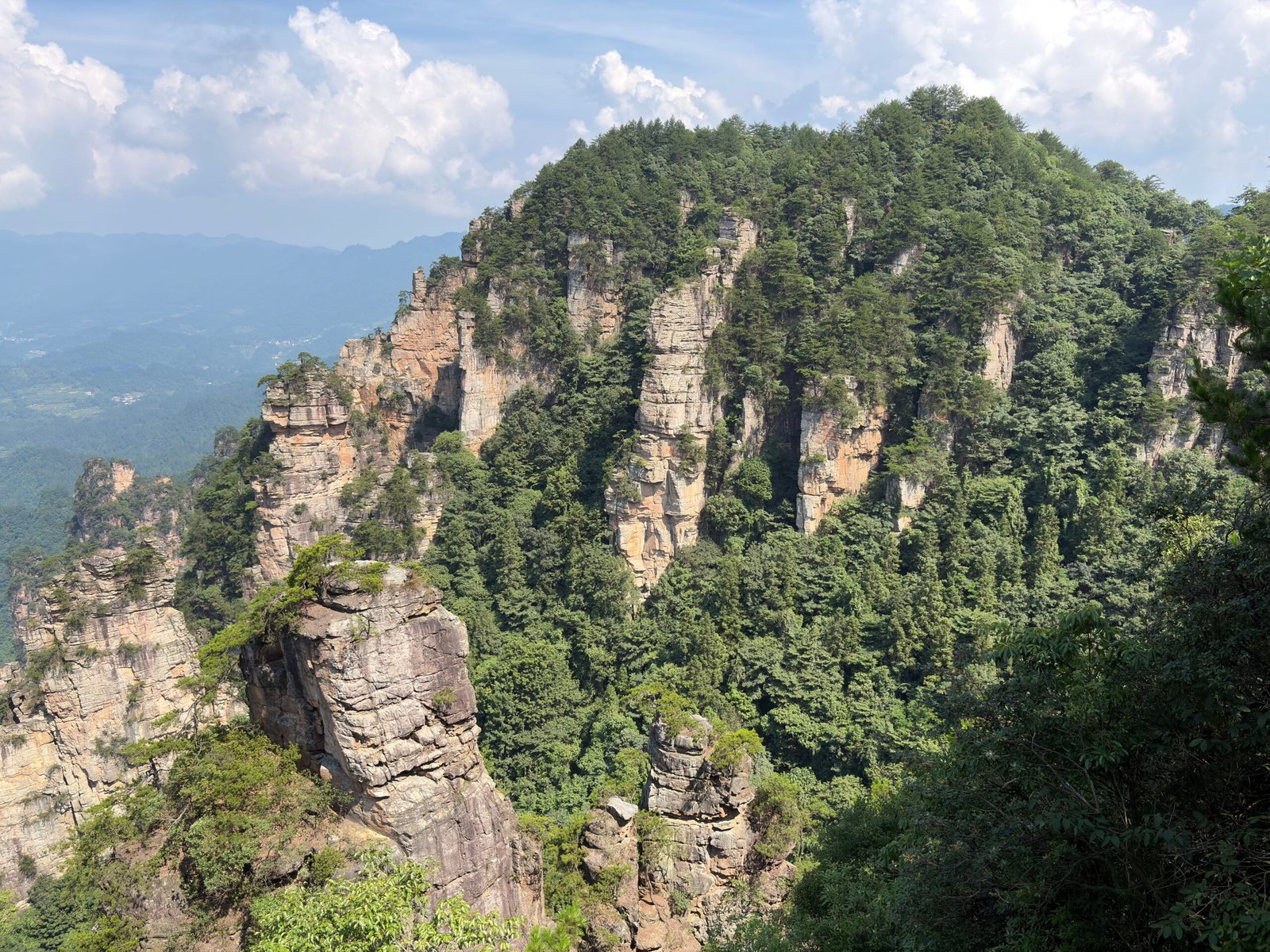
Zhangjiajie National Forest Park in Hunan Province, China, is one of the most surreal landscapes on Earth. More than 3,000 quartzite sandstone pillars rise out of a sea of subtropical forest, some of them standing more than 200 metres tall, and on misty mornings the valley floors disappear completely, leaving the stone towers floating above the clouds. It is the landscape that inspired the floating Hallelujah Mountains in James Cameron’s film Avatar, and it is every bit as strange and beautiful in real life as it looks on screen.
This complete guide to Zhangjiajie National Forest Park explains how the pillars formed, where to find the most famous viewpoints, how to get there, when to visit, and how to plan your time. Whether you have two days or a full week, you will find everything you need here to make the most of one of China’s greatest natural wonders.
Where Is Zhangjiajie and How Did Its Pillars Form?
Zhangjiajie National Forest Park sits in the Wulingyuan Scenic Area in northwestern Hunan Province, around 300 kilometres from the provincial capital of Changsha and close to the small city of Zhangjiajie. The park was established in 1982 as China’s first national forest park. In 1992, the wider Wulingyuan area was added to the UNESCO World Heritage List, and in 2004 it became a UNESCO Global Geopark. The protected area covers about 4,810 hectares of forest, valleys, streams and stone forest, and it is home to a remarkable range of plants and animals, including rhesus macaques, giant salamanders and rare trees such as the dawn redwood and the Chinese dove tree.
The famous pillars are made of quartzite sandstone. Hundreds of millions of years ago this whole region lay under a shallow sea, and layers of sand were laid down and compressed into rock. The land was later lifted up, and then rain, rivers, wind and frost spent millions of years cutting into the stone. Because the quartzite is hard in some places and softer in others, erosion carved out narrow columns instead of smooth slopes. The pillars now stand between 2,000 and 3,500 feet above sea level, with Tianzi Mountain, the highest viewpoint in the park, rising to 1,262.5 metres.
Zhangjiajie has a humid subtropical climate, which means the park is green for most of the year and mist is part of the scenery rather than a nuisance. On a cloudy morning the valleys fill with fog, and from a viewpoint such as the Enchanted Terrace (Mihun Terrace) you can watch the pillars appear and disappear one by one. Many photographers say the park is at its best in these conditions, because the mist turns the stone forest into something that looks like a Chinese ink painting.
The Avatar Mountains: A Real-Life Pandora
Most visitors first hear about Zhangjiajie because of Avatar. When James Cameron’s film came out in 2009, its floating Hallelujah Mountains looked too strange to be real, and yet the production team had drawn heavily on the stone pillars of Hunan. The connection was made official in 2010, when one of the park’s most famous pillars, the Southern Sky Column, was renamed the Avatar Hallelujah Mountain. The pillar stands 1,080 metres tall and is one of the most photographed rocks in China.
It is worth knowing that Avatar was not filmed in Zhangjiajie. The mountains in the film are a blend of reference photographs taken in several Chinese landscapes, with Zhangjiajie the most important of them. That has not stopped the flood of visitors, and the park leans into the connection with Avatar-themed viewing platforms and signage. Even without the film, though, the place is astonishing, and most travellers find that the real pillars are more impressive than the animation that borrowed them.
The Best Things to See and Do in Zhangjiajie National Forest Park
The park is large, and its main areas are linked by a free shuttle bus system, cable cars and footpaths. The following highlights are the places most first-time visitors will want to include in their plans.
Avatar Hallelujah Mountain and the Enchanted Terrace
The Avatar Hallelujah Mountain is the park’s signature pillar, and the Enchanted Terrace (Mihun Tai) nearby is one of the best places to look out over the stone forest. From here the pillars crowd the horizon in every direction, and after rain the mist rises between them in slow ribbons. Come early in the morning or late in the afternoon for the best light and the smallest crowds, and give yourself at least an hour to enjoy the viewpoint rather than rushing on.
Tianzi Mountain: The Son of Heaven
Tianzi Mountain, which means Mountain of the Son of Heaven, is the highest area of the park and the traditional place to watch the sunrise over the pillars. A cable car runs from the Yangjiajie valley to the summit area, where the Helong Park viewpoint and the stone forest of Tianzi Mountain offer some of the most dramatic panoramas in all of China. Local legend says the mountain is named after Xiang Dakun, a leader of the Tujia people who called himself Son of Heaven during a revolt in the 14th century. Whether or not you believe the story, standing here at dawn is one of the great experiences in Chinese travel.
Golden Whip Stream
The Golden Whip Stream (Jinbian Xi) is a 5.7-kilometre walk along a clear river at the foot of the pillars, and it is the best place in the park to enjoy the landscape at ground level. The path is mostly flat and follows the water past pools, small waterfalls and quiet forest. Rhesus macaques live along the stream, and you will often see them near the path, so keep food and loose items put away. Allow two to three hours if you walk the whole way, and note that the stream is especially beautiful after rain, when the water runs high and clear.
The Bailong Elevator
The Bailong Elevator is the world’s tallest outdoor elevator. Built into the side of a cliff in 2002, it carries visitors 326 metres up in less than two minutes, and the glass cars give a spectacular view of the pillars as you rise. The elevator caused controversy when it was built because of its impact on the landscape, but it is now one of the most popular attractions in the park, and it is a great option if you want to reach the upper viewpoints without a long climb. Expect queues at peak times, and try to ride it early in the day.
The Ten-Mile Gallery and Suoxi Valley
The Ten-Mile Gallery (Shili Hualang) is a scenic valley in the Suoxi area where the rock formations have been given colourful names such as the Herb-Picking Old Man and the Three Sisters. A small sightseeing train runs along the valley floor, and from the train you can see the pillar shapes that have inspired so many Chinese paintings and poems. It is an easy, relaxing addition to any visit, and it is a good choice for travellers with children or with limited mobility.
Zhangjiajie Grand Canyon Glass Bridge
The Zhangjiajie Grand Canyon, a separate scenic area about half an hour from the national forest park, is home to the famous glass bridge that opened in 2016. The bridge is 430 metres long and hangs 300 metres above the canyon floor, and walking across its transparent panels is a test of nerve for anyone who dislikes heights. The canyon area also offers cliff walks, a zip line and a bungee platform. The glass bridge limits daily visitors, so booking ahead is strongly recommended, especially in summer.
Tianmen Mountain and Heaven’s Gate
Tianmen Mountain sits just outside the city of Zhangjiajie and is usually visited as a separate half-day or full-day trip. Its most famous sight is Tianmen Cave, a natural arch known as Heaven’s Gate, which is reached by climbing 999 steps. The mountain cableway is 7,455 metres long, the longest passenger cableway in the world, and the road to the summit, the 99 Bend Road, is famous in its own right. A glass skywalk clings to the cliff at 1,430 metres above sea level. If heights make you nervous, you can still enjoy the views from the summit area without walking the skywalk.
Best Time to Visit Zhangjiajie National Forest Park
The best time to visit Zhangjiajie is spring, from April to June, and autumn, from September to November. In these months the weather is mild, the skies are often clear, and the parks are green or dressed in autumn colour. Spring brings wildflowers and fresh leaves, while autumn brings crisp air, golden light and the best long-distance views. Summer, from July to August, is hot, humid and crowded, with afternoon thunderstorms, but it is also when the forest is at its lushest. Winter, from December to February, is cold and quiet, and snowfall can turn the pillars into a beautiful white landscape, though some viewpoints may close in icy conditions.
If you can, avoid the Chinese public holidays: the May Day holiday, the National Day Golden Week in the first week of October, and the Spring Festival period. During these weeks the parks are extremely crowded, ticket prices can be higher, and queues for cable cars and the Bailong Elevator can run to several hours. A weekday visit in April, May, September or October will give you the most pleasant experience.
How to Get to Zhangjiajie
Most travellers reach Zhangjiajie by air or by high-speed train. Zhangjiajie Hehua International Airport has frequent domestic flights from Beijing, Shanghai, Guangzhou, Chengdu and other major Chinese cities, and it also offers international services to places such as Seoul, Bangkok and Singapore. From the airport, a taxi or shuttle bus will take you into the city in about 15 minutes.
High-speed trains stop at Zhangjiajie West Station on the line between Changsha and Huaihua, and there are also conventional trains to Zhangjiajie Station in the city centre. From Zhangjiajie city, public buses run to Wulingyuan, the town at the main entrance to the national forest park, in about 45 minutes. Most visitors base themselves in Wulingyuan town, which is only a short walk or taxi ride from the park entrance, and use the park’s own shuttle buses once inside. Taxis and ride-hailing apps are widely available between the airport, the stations and Wulingyuan.
Practical Tips for Visiting Zhangjiajie
- Buy a multi-day ticket. The standard park ticket is valid for four consecutive days, which is the cheapest way to explore properly. Cable cars, the Bailong Elevator and the sightseeing train cost extra.
- Arrive early. Most visitors enter through the Wulingyuan east entrance, so getting there before 8 a.m. will save you time in queues at the cable cars.
- Carry your passport. Foreign visitors need a passport to buy tickets and to enter the park, and student and senior discounts are checked against it.
- Wear sturdy shoes. Many paths are stone steps, and some are steep. Comfortable walking shoes or hiking shoes are essential, especially if you hike the mountain routes.
- Pack layers and rain gear. The weather in the mountains changes quickly. A light waterproof jacket is useful even on a sunny morning.
- Watch out for macaques. The monkeys along Golden Whip Stream are bold and can grab food and plastic bags. Keep snacks in a zipped bag inside your daypack.
- Download offline maps and a translation app before you arrive. English signage exists at the main viewpoints, but it is limited once you leave them.
- Plan for at least two full days in the national forest park, and add one more day each for Tianmen Mountain and the Zhangjiajie Grand Canyon Glass Bridge.
Where to Stay in Zhangjiajie
The best place to stay is Wulingyuan town, right beside the main entrance to the national forest park. The town has a full range of options, from family-run guesthouses to four-star hotels, and most of them are within a short walk of the entrance. If you want to photograph the sunrise over Tianzi Mountain, a guesthouse inside the park itself, in the Tianzi Mountain area, will save you an early start, though rooms sell out fast. Zhangjiajie city offers more choices and better transport links, including the Tianmen Mountain cable car station, and it is a good base if you plan to visit both the forest park and Tianmen Mountain. Whatever you choose, book early for spring and autumn weekends, and look for places that offer a local Tujia meal in the evening. Tujia food is spicy and hearty, and dishes such as sour pork, pickled vegetables and the local hot pot are a fine way to end a day of walking.
Frequently Asked Questions About Zhangjiajie National Forest Park
Is Zhangjiajie National Forest Park worth visiting?
Yes. Zhangjiajie National Forest Park is one of the most unusual landscapes in the world, and it rewards visitors with viewpoints, forest walks and mountain scenery that look like nothing else on Earth. It is especially worthwhile if you love photography, hiking and mountains, and if you have ever dreamed of seeing the Avatar Mountains in real life.
How many days do you need in Zhangjiajie?
Two full days is the minimum for the national forest park itself. With three days you can add Tianmen Mountain, and with four days you can also visit the Zhangjiajie Grand Canyon Glass Bridge. A two-day trip is best suited to travellers who stick to the main viewpoints and use the cable cars; hikers will want longer.
Is Zhangjiajie the Avatar Mountains?
The floating Hallelujah Mountains in the film Avatar were inspired by Zhangjiajie and other Chinese mountains, and the Southern Sky Column in the park was officially renamed the Avatar Hallelujah Mountain in 2010. The film itself was not shot in the park, but the resemblance is obvious as soon as you stand at the first viewpoint.
What is the best month to visit Zhangjiajie?
April, May, September and October are generally the best months, with mild weather, clear air and fewer crowds than the summer holidays. October is especially good for autumn colour, while May has fresh green leaves and pleasant temperatures.
Can you visit Zhangjiajie with children or older travellers?
Yes. Much of the park can be enjoyed without strenuous hiking, because the cable cars, the Bailong Elevator, the shuttle buses and the sightseeing train do most of the climbing for you. The Golden Whip Stream walk and the Ten-Mile Gallery are flat and gentle, and the glass bridge and skywalks are optional. Carrying small children up the steep mountain steps is not recommended, but the main viewpoints are all accessible.
Conclusion
Zhangjiajie National Forest Park earns its place among the world’s greatest natural wonders. Nowhere else on Earth do so many stone towers rise so tall out of a living forest, and nowhere else does the weather turn a landscape into a painting twice a day. Come for the Avatar mountains, stay for the mist, the forest walks and the sunrise from Tianzi Mountain, and leave with a memory that will stay with you long after you have left Hunan. If you enjoy dramatic mountain scenery, you will also love our guide to Mount Everest, the world’s highest mountain, and for a very different kind of alpine scenery, read our guide to the Swiss Alps.