AlUla, Saudi Arabia: Complete Guide to Hegra, Elephant Rock and the Best Things to Do
Hidden in the desert of north-western Saudi Arabia, about 1,100 kilometres from Riyadh, lies one of the most extraordinary places on Earth. AlUla is a landscape of towering sandstone cliffs, hidden canyons, ancient tombs and lush green oases, a place where the Nabataeans carved cities into the rock two thousand years ago and where the desert still holds secrets that archaeologists are only now beginning to uncover. For decades, AlUla was almost unknown to the outside world. Today, it is emerging as one of the great travel destinations of the Middle East, and visiting now, before the crowds arrive, is one of the smartest trips a traveller can make.
This complete guide to AlUla covers everything you need to plan the perfect trip: the rock-cut tombs of Hegra, Saudi Arabia’s first UNESCO World Heritage Site, the famous Elephant Rock, the mud-brick lanes of the Old Town, the mirrored concert hall of Maraya, the best things to do in the desert, where to stay, how to get there, and the best time to visit. Whether you have two days or a full week, this guide will help you experience AlUla properly, with an understanding of the history and culture that make it so much more than a beautiful desert.
AlUla is not a single sight but a whole region, a valley of farms and date palms running between sandstone mountains in the Hejaz, about 300 kilometres north of Medina. The area has been inhabited for thousands of years: it was a stop on the ancient incense trade route, the home of the Lihyanite kingdom of Dadan, and the southern capital of the Nabataean kingdom that built Petra. The result is a landscape layered with history, where every canyon holds inscriptions, every outcrop hides a tomb, and every sunset turns the rocks a deep and glowing red.
Why AlUla Is Saudi Arabia’s Most Extraordinary Destination
AlUla is the most surprising destination in Saudi Arabia, and for many visitors it is the highlight of the whole country. The scale of the landscape is astonishing: sandstone mountains rise hundreds of metres above a green valley of date palms and farms, their flanks carved by wind and water into shapes that look like sculptures. At sunrise and sunset, the rocks glow orange, red and gold, and the whole valley seems to catch fire. It is a landscape that feels both ancient and untouched, and it is unlike anywhere else in the Middle East.
What sets AlUla apart is the depth of its history. This valley has been a crossroads for thousands of years. It was a watering stop on the incense trade route that carried frankincense and myrrh from southern Arabia to the Mediterranean, and the wealth of that trade built the cities whose ruins still stand here. The Lihyanites made Dadan their capital here more than two thousand years ago, and the Nabataeans, the same people who built Petra in Jordan, made Hegra their second city. Walking through AlUla is walking through layers of civilisation, each one leaving its mark on the rock.
AlUla is also remarkably easy to enjoy. The main sights are well organised, with guided tours, clear signage and a visitor centre that explains the history, and the region has invested in high-quality hotels, restaurants and experiences without losing its quiet, unhurried character. You can explore ancient tombs in the morning, ride a camel through the desert in the afternoon, and watch the sunset from a rooftop in the Old Town in the evening. Few destinations in the world combine world-class archaeology, dramatic desert scenery and genuine comfort as well as AlUla does.
Hegra: The Nabataean City of Tombs
Hegra, also known by its Arabic name Mada’in Saleh, is the reason most visitors come to AlUla, and it does not disappoint. This was the southern city of the Nabataean kingdom, a trading centre on the incense route, and its people carved more than 130 monumental tombs into the sandstone outcrops that rise from the desert floor. In 2008, Hegra became Saudi Arabia’s first UNESCO World Heritage Site, and it remains one of the most impressive archaeological sites in the Middle East.
The tombs of Hegra are extraordinary. Their facades are carved with the same stepped, classical style as the famous Treasury at Petra, but here they stand in open desert, scattered across a plain of sand and rock, and you can walk right up to them. The most famous is Qasr al-Farid, the Lonely Castle, a single massive tomb carved into a standalone rock that rises from the sand like a monument. It was never finished, and the rough, uncarved lower half of the rock shows exactly how the Nabataean stonemasons worked, chipping away from the top down. Other highlights include the tombs of Jabal al-Ahmar, with their well-preserved facades and inscriptions, and the Diwan, a rock-cut chamber that may have been a meeting hall or a temple.
Hegra can only be visited on a guided tour, which is included in the ticket, and the tours are excellent. Buses run between the tomb clusters, and the guides explain the Nabataean inscriptions, the water systems and the history of the site. Allow at least half a day, and visit in the morning or late afternoon, when the light is at its best and the tombs glow in the low sun. Hegra is closed at midday in summer, and the site is at its most magical at sunset, when the sandstone turns a deep and fiery red.
Elephant Rock and the Desert Landscapes
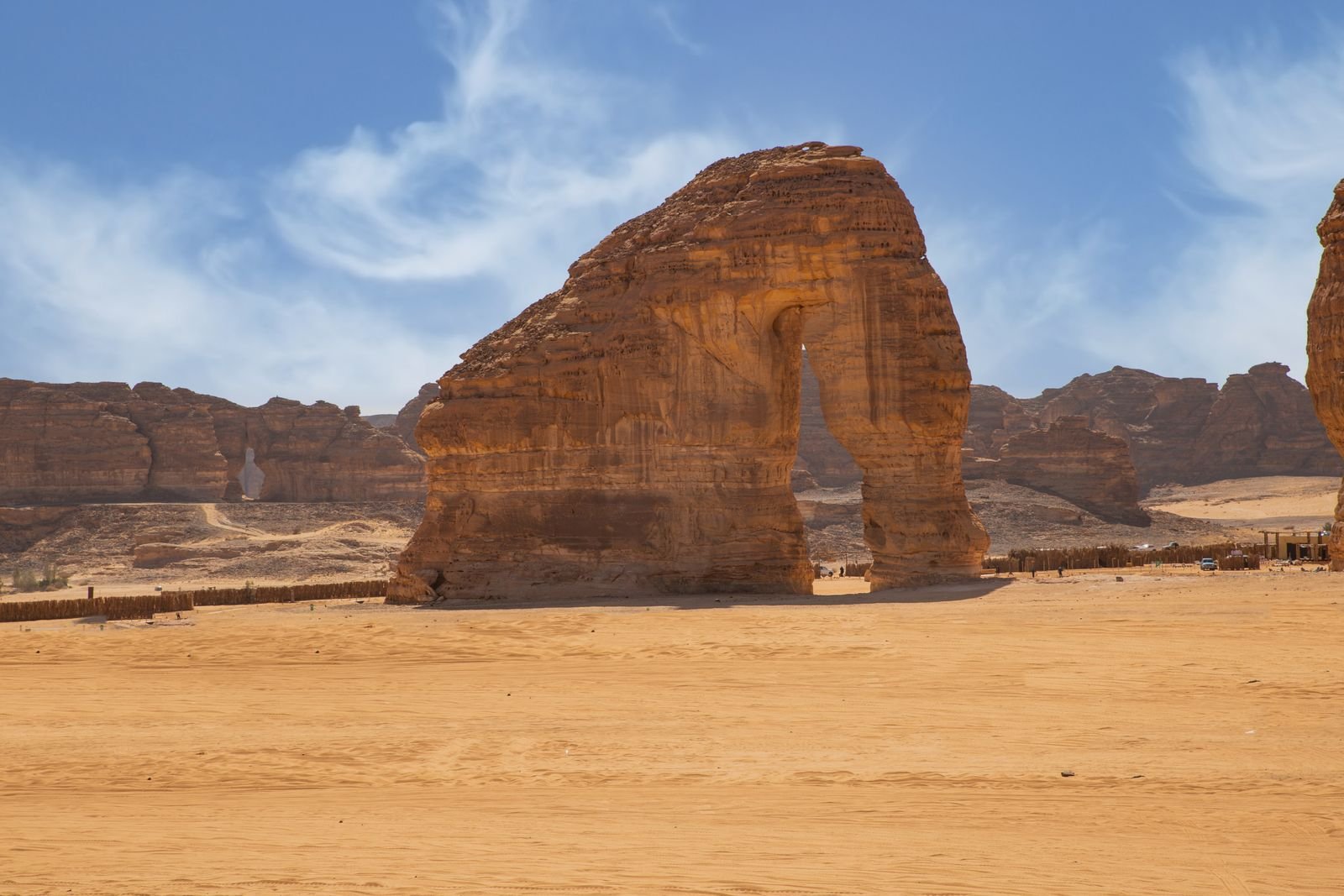
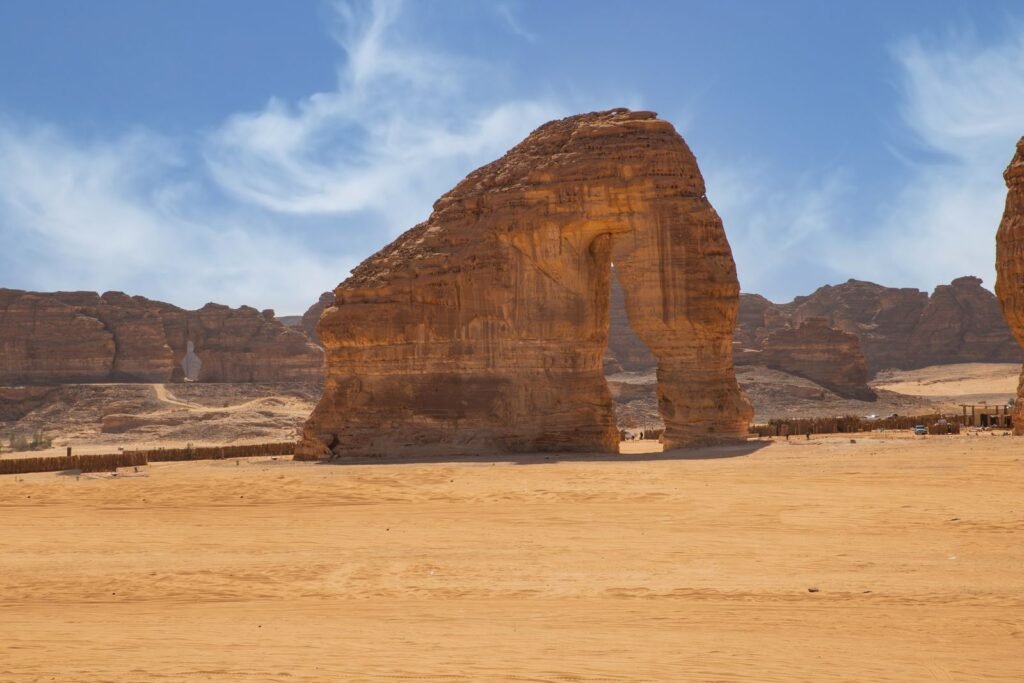
Elephant Rock, known locally as Jabal AlFil, is the most photographed sight in AlUla, and it is easy to see why. This 52-metre-high sandstone formation has been sculpted by wind and rain into the unmistakable shape of an elephant, its trunk curving down to touch the sand. It stands alone in a wide desert valley, and at sunset the whole rock glows a deep, warm red while the sky turns pink and gold behind it. It is one of those natural wonders that looks almost too perfect to be real.
The best time to visit Elephant Rock is at sunset, when the light is at its most dramatic and the rock is at its most beautiful. There is a comfortable viewing area at the base of the rock, with seating, a cafe and food trucks, and it is a popular place to watch the sun go down with a coffee or a juice in hand. In the cooler months, you can also walk the short trails around the rock and explore the surrounding desert, where the sand is soft and fine and the silence is complete. Early mornings are quiet and lovely too, with the rock lit by the first golden light of the day.
Elephant Rock is just one of AlUla’s many extraordinary rock formations. The whole region is a gallery of natural sculpture: the Arch Rock, a natural sandstone arch that frames the desert sky; the Mushroom Rock, balanced improbably on a narrow stem; and the canyons of the Sharaan Nature Reserve, where towering cliffs shelter rare wildlife including the Arabian leopard, which is the focus of an ambitious conservation programme. A desert safari or a guided 4×4 tour is the best way to see these landscapes, taking you off the road and into the heart of the canyons and valleys that most visitors never reach.
AlUla Old Town
AlUla Old Town is one of the most atmospheric places in Saudi Arabia. This maze of mud-brick houses and narrow lanes dates back to the 12th century, when it was a thriving town on the pilgrimage route to Mecca, and at its peak it was home to more than 900 houses, along with mosques, markets and a fortress. The town was abandoned in the 1980s, when residents moved to the modern town nearby, but it has been carefully restored, and today its lanes are lined with cafes, restaurants, art galleries and shops selling local crafts.
Walking through the Old Town is like stepping back in time. The mud-brick walls glow a warm honey colour in the afternoon sun, and the narrow lanes are cool and shaded even on hot days. The old mosque, with its mud-brick minaret, is one of the oldest buildings in the town, and the Tantora sundial, a stone pillar that once told the town’s farmers when to plant and harvest, still stands in the main square. Climb the steps to the old fortress on the hill above the town for the best view in AlUla: the whole valley spread out below, with the date palm oasis on one side and the sandstone mountains on the other.
The Old Town comes alive in the evenings, when the cafes and restaurants fill up and the lanes are lit with warm, golden light. The restaurants here serve some of the best food in AlUla, from traditional Saudi dishes like kabsa and mandi to modern international cuisine, and many have rooftop terraces with views over the town. The Old Town is also the heart of AlUla’s cultural scene, hosting art exhibitions, markets and performances during the Winter at Tantora festival, and it is the best place to buy souvenirs, from handmade pottery and woven baskets to the region’s famous dates and citrus fruits.
The Best Things to Do in AlUla
Beyond Hegra, Elephant Rock and the Old Town, AlUla offers a remarkable range of experiences. The ancient sites of Dadan and Jabal Ikmah are essential for history lovers. Dadan was the capital of the Lihyanite kingdom, and its most famous sight is a pair of enormous lion statues carved into a cliff face, guarding the tombs of kings. Jabal Ikmah, known as the open-air library, is a canyon whose rock faces are covered in hundreds of inscriptions in ancient scripts, a record of the people who passed through this valley over thousands of years. Guided tours of both sites are available, and the inscriptions are explained with the help of expert guides.
For adventure, AlUla’s desert is a playground. Hot air balloon flights at sunrise offer the most spectacular view of the valley, drifting silently over the sandstone mountains as the first light turns them gold. Desert safaris by 4×4 take you into the canyons and wadis of the Sharaan Nature Reserve, while camel rides and horseback treks follow the old caravan routes through the dunes. Rock climbing, abseiling and zip-lining are available in the canyons, and the AlUla Trail Race, held each year in the cooler months, draws runners from around the world to race through the desert at dawn.
Stargazing is another highlight of AlUla. The desert skies here are among the darkest in the Middle East, and on a clear night the Milky Way stretches across the sky in a way that city dwellers rarely see. Several hotels and tour operators run stargazing experiences, with telescopes and expert guides, and the best nights are around the new moon, when the sky is at its darkest. The Gharameel, a group of tall, thin rock pillars in the desert west of AlUla, is one of the best stargazing spots in the region, and guided night tours there are unforgettable.
For a slower pace, the AlUla Oasis is a delight. The oasis is a green belt of date palms, citrus orchards and vegetable gardens that runs through the valley, and it is one of the oldest continuously farmed landscapes in Arabia. Walking or cycling the oasis trails is a peaceful way to spend a morning, and the oasis is home to some of AlUla’s best restaurants, set among the palms with views of the cliffs. The oasis also produces some of the finest dates in Saudi Arabia, and the date harvest in autumn is celebrated with markets and festivals.
Maraya and the Winter at Tantora Festival
Maraya is one of the most striking buildings in the world, and it is the symbol of the new AlUla. This concert hall and events venue, set in the desert canyon of Ashar Valley, is covered in 9,740 mirrored panels that reflect the surrounding cliffs and sky, making the huge building almost disappear into the landscape. Inside, the concert hall hosts performances by international artists, and the rooftop restaurant offers fine dining with panoramic desert views. Even if you do not attend a performance, the building itself is worth seeing, and guided tours explain the architecture and the engineering behind it.
The Winter at Tantora festival is the highlight of AlUla’s cultural calendar. Held each year from December to February, the festival takes its name from the Tantora sundial in the Old Town, which once marked the start of the winter planting season. The festival brings world-class music, art, food and outdoor activities to AlUla, with concerts at Maraya, hot air balloon festivals, desert horse shows and traditional performances in the Old Town. If you can time your visit to coincide with the festival, it adds a whole extra dimension to the trip, but book well in advance, as the festival is AlUla’s busiest season.

Where to Stay in AlUla
AlUla has a small but growing range of places to stay, and the quality is high. The most luxurious options are the desert resorts: Our Habitas AlUla, a low-impact resort of canvas villas set in a canyon in the Ashar Valley, with a pool, a restaurant and views of the cliffs; and Banyan Tree AlUla, a tented resort in the same valley, with private plunge pools and a spa. Both are expensive but offer a genuinely special experience, waking up among the sandstone mountains with the desert all around you.
Mid-range options include the Shaden Resort, a comfortable hotel with a pool and gardens near the Old Town; the Cloud7 Residences, a stylish apartment-style hotel; and the Sahary AlUla Resort, with spacious rooms and a good restaurant. For budget travellers, there are guesthouses and small hotels in the modern town, and a handful of campsites and glamping options in the desert. Whatever your budget, book well in advance for the winter months, when AlUla is at its busiest and the best rooms sell out quickly.
Wherever you stay, try to choose somewhere that gives you easy access to the sights. The main attractions are spread out across the valley, so you will need a car or a tour to get around, and staying near the Old Town puts you close to the restaurants and cafes in the evenings. Most hotels can arrange tours, airport transfers and car hire, and the resort hotels offer their own excursions to Hegra, Elephant Rock and the desert. Allow at least two nights in AlUla, and three or four if you want to see everything at a relaxed pace.
How to Get to AlUla
The easiest way to reach AlUla is to fly into Prince Abdul Majeed bin Abdulaziz Airport, which has direct flights from Riyadh, Jeddah and Dammam with Saudia and Flynas, as well as seasonal international flights from Dubai, Doha and Paris. The flight from Riyadh takes about two hours, and the airport is a 30-minute drive from the Old Town. Taxis and hotel transfers are available at the airport, and car hire is the best option if you want to explore independently.
Driving is the alternative, and it is a rewarding one. AlUla is about 1,100 kilometres north-west of Riyadh, a drive of around 11 hours, and about 300 kilometres north of Medina, a drive of around three hours. The roads are excellent, and the desert scenery along the way is spectacular, with sandstone mountains, volcanic lava fields and vast empty plains. Many visitors combine AlUla with a trip to Medina or with a longer road trip through the Hejaz, and a car gives you the freedom to stop at viewpoints and small towns along the way.
Once you are in AlUla, getting around requires a car, a taxi or a tour. The sights are spread out: Hegra is about 20 kilometres north of the Old Town, Elephant Rock is about 10 kilometres to the north-east, and Maraya is in the Ashar Valley to the west. Rental cars are available at the airport and in town, and ride-hailing apps work in AlUla. Guided tours are a good option if you do not want to drive: many include Hegra, Dadan, Jabal Ikmah and Elephant Rock, and they come with knowledgeable guides who explain the history of the region. Whatever you choose, plan your transport in advance, as public transport in AlUla is limited.
The Best Time to Visit AlUla
The best time to visit AlUla is from October to March, when the desert is at its most pleasant. Daytime temperatures in winter are a comfortable 20 to 25 degrees Celsius, the nights are cool, and the light is clear and golden. This is the peak season, and it is when the Winter at Tantora festival runs, when the hot air balloons fly and when the desert wildflowers bloom after the winter rains. Book your flights, hotels and tours well in advance, as this is when AlUla fills up.
Summer, from June to September, is very hot, with daytime temperatures regularly above 40 degrees and sometimes over 45. The heat limits outdoor activities, and many tours run only in the early morning or late afternoon, but summer has its advantages: the region is much quieter, hotel prices drop, and the desert sunsets are spectacular. If you visit in summer, plan all sightseeing for dawn and dusk, rest in the shade or by the pool in the middle of the day, and be very careful with water and sun protection.
The shoulder months, April and May, offer a good compromise: warm days, fewer visitors than the winter peak and good prices on hotels. Whatever time of year you visit, check the weather before you travel, book the Hegra tour in advance, as places are limited, and remember that AlUla is in a remote desert. Distances are long, the sun is strong, and the nearest large city is Medina, three hours away, so travel prepared and let someone know your plans.
What to Pack and Practical Tips
Packing for AlUla is about preparing for a desert climate. Bring a wide-brimmed hat, high-factor sunscreen, sunglasses and a reusable water bottle, plus a daypack to carry them in. In winter, bring warm layers for the cool mornings and evenings: a fleece or light jacket is essential for sunrise balloon flights and evening stargazing, when temperatures can drop sharply. In summer, bring light, loose clothing and a scarf or shemagh to protect your face from the sun and wind.
Other essentials include sturdy walking shoes with good grip for the rocky trails around Hegra and the canyons, a head torch for early-morning starts, a camera with a spare battery, and insect repellent. There are supermarkets and pharmacies in the modern town, so you can buy food, water and supplies when you arrive, but the desert sites themselves have limited facilities, so carry water and snacks with you. Download offline maps before you go, as mobile reception can be patchy in the canyons, and tell your hotel where you are going each day.
Practical tips: buy your Hegra tour tickets online in advance, as they sell out in the winter months, and arrive at the visitor centre early on the day of your tour. Respect the local culture: Saudi Arabia is a conservative country, so dress modestly, especially in the Old Town and at religious sites, and ask before photographing people. Alcohol is not available in Saudi Arabia, and public displays of affection are best avoided. Most importantly, take your time. AlUla rewards the traveller who slows down, watches the light change on the rocks, and lets the history of this extraordinary valley sink in.
Frequently Asked Questions
Is AlUla worth visiting?
Yes, without question. AlUla is one of the most extraordinary destinations in the Middle East: a UNESCO-listed Nabataean city, a landscape of towering sandstone formations, a beautifully restored Old Town and a growing programme of cultural events. Visitors consistently describe it as the highlight of their time in Saudi Arabia, and the combination of archaeology, desert scenery and modern comfort is unlike anywhere else in the region.
How many days do you need in AlUla?
Two full days is the minimum for AlUla: one day for Hegra, Dadan and Jabal Ikmah, and one day for Elephant Rock, the Old Town and the desert experiences. Three or four days is ideal, as it allows a slower pace, a sunrise hot air balloon flight, a stargazing evening and time to explore the oasis. If you are visiting during the Winter at Tantora festival, allow an extra day for the concerts and events.
Can you visit Hegra without a guide?
No. Hegra can only be visited on a guided tour booked through the official visitor centre, and the tour is included in the ticket price. The tours are excellent, with knowledgeable guides and buses that run between the tomb clusters, and they are the best way to understand the site. Book your tickets online in advance, as places are limited and tours sell out in the winter months.
What is the best time of year to visit AlUla?
October to March is the best time to visit AlUla, when daytime temperatures are a pleasant 20 to 25 degrees Celsius and the Winter at Tantora festival runs. Winter nights are cool, so bring warm layers for the evenings. Summer is very hot, with temperatures above 40 degrees, but it is much quieter and hotel prices are lower.
How do you get to AlUla?
Fly directly to Prince Abdul Majeed bin Abdulaziz Airport from Riyadh, Jeddah or Dammam, a flight of about two hours from Riyadh, then take a taxi or hotel transfer to the Old Town. Alternatively, drive from Medina, about 300 kilometres to the south, a three-hour drive through the desert. Once you are in AlUla, you will need a rental car, a taxi or a guided tour to reach the sights, which are spread out across the valley.
Conclusion
AlUla is one of those rare destinations that exceeds every expectation. The tombs of Hegra, carved into the desert rock two thousand years ago, are among the great wonders of the ancient world. Elephant Rock, glowing red at sunset, is one of the most beautiful natural sights in the Middle East. The Old Town, with its mud-brick lanes and rooftop restaurants, is one of the most atmospheric places in Saudi Arabia. And the desert around it all, with its canyons, oases and star-filled skies, is a landscape that stays with you long after you leave.
Plan your trip for the winter months if you can, book your Hegra tour and your hotel early, and give yourself at least two full days in the valley. Learn about the Nabataeans before you go, listen to the guides at Hegra and Dadan, and take the time to watch the light change on the rocks at sunset. If AlUla inspires you to explore more of the world’s great desert landscapes, read our guides to Wadi Rum in Jordan and Petra, two more extraordinary places where ancient history and desert beauty come together.
Read more about AlUla on Wikipedia.