Etosha National Park, Namibia: Complete Guide to Safaris, Waterholes and Wildlife
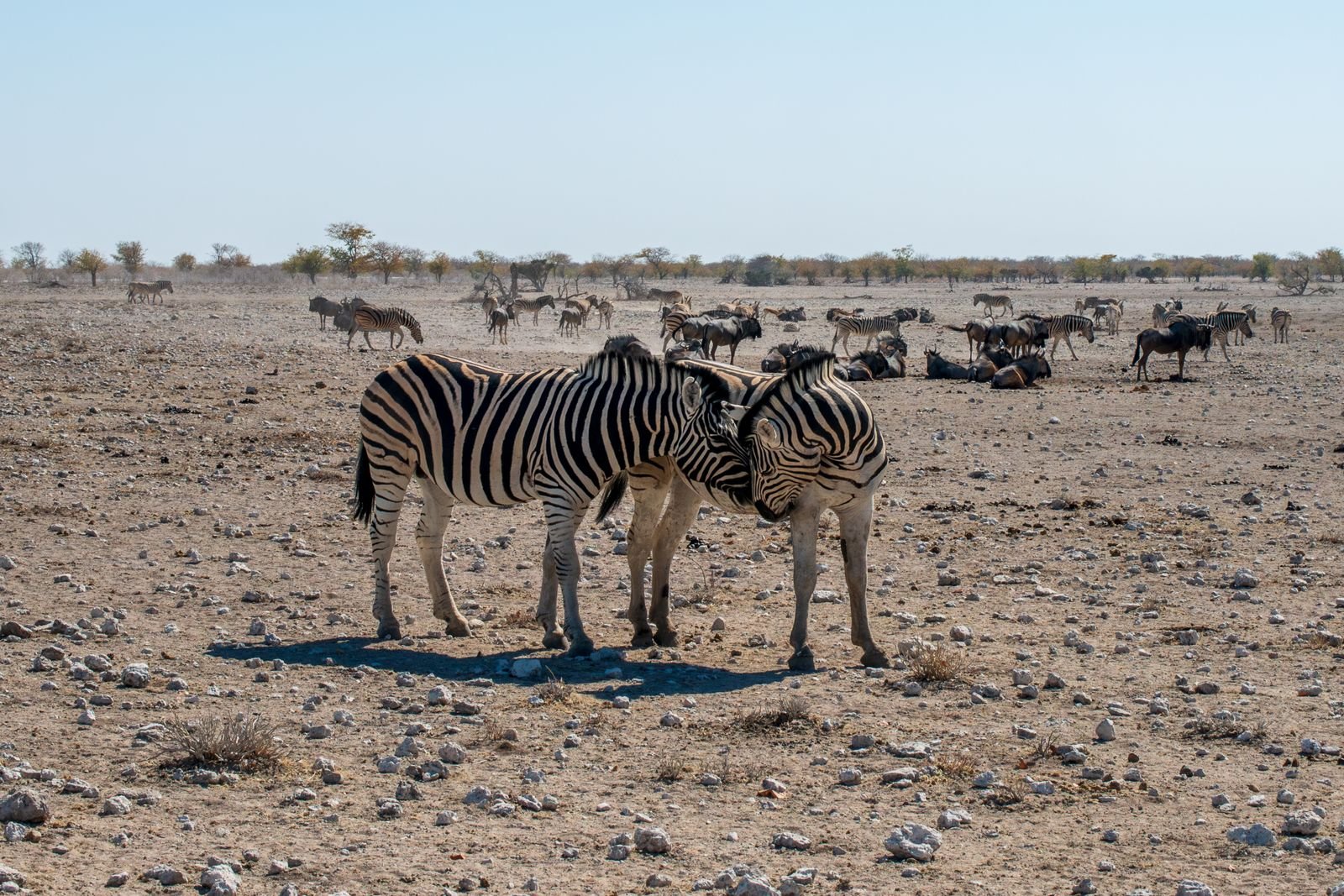
Etosha National Park is one of Africa’s great safari destinations — and one of the most distinctive. This vast park in northern Namibia covers 22,270 square kilometres of savanna, woodland, and salt pan, and at its heart lies the Etosha Pan, a blinding white salt flat so large that it can be seen from space. In the dry season, the animals of the park gather at the waterholes in extraordinary numbers: elephants, lions, rhinos, giraffes, zebras, and springbok, all drinking within metres of each other as the sun sets over the pan.
What makes Etosha special is the waterhole safari. Unlike many African parks, where the animals are spread across the bush, the wildlife here comes to you — to the waterholes, where you can sit for hours and watch the drama unfold. The park is also one of the best places in Africa for self-drive safaris, with good gravel roads, well-run rest camps, and a feeling of space and freedom that is rare in the modern world. This guide covers everything you need to plan a trip: when to go, the best waterholes and camps, how the safaris work, what you will see, and how to travel safely in the Namibian bush.
Where Etosha Is and What Makes It Different
Etosha lies in northern Namibia, about 400 kilometres north of the capital, Windhoek. The park is dominated by the Etosha Pan, a 4,800-square-kilometre salt pan that was once a great lake, fed by rivers from Angola. Today the pan is dry for most of the year, filling only with a few centimetres of water after good rains, when it becomes a breeding ground for flamingos and pelicans. The name Etosha means the great white place in the local Ovambo language, and the pan is the defining feature of the park.
The park is different from other African safari destinations because of its openness. The vegetation is mostly mopane woodland and grassland, with wide views across the plains, and the animals are easy to see. The waterholes — both natural springs and artificial boreholes — are the key to the park’s wildlife: in the dry season, the animals must drink, and they gather at the waterholes in large numbers. The park is also a stronghold for the black rhino, with the largest population of this endangered species in the world, and for the lion, the elephant, and the cheetah.
The park’s history is also distinctive. Etosha was proclaimed as a game reserve in 1907, when it was one of the largest reserves in the world, covering more than 90,000 square kilometres. The park was reduced in size over the years, but it remains one of Africa’s largest national parks, and it is a place of great cultural as well as natural importance: the Hai//om people, who lived in the area for centuries, were the park’s original inhabitants, and their history is part of the story of Etosha.
The Best Time to Visit Etosha
The best time to visit is the dry season, from May to October, when the waterholes are the centre of the park’s life. The animals gather at the water in large numbers, the vegetation is thin, and the wildlife is easy to see. The days are warm and sunny, the nights are cold — sometimes close to freezing in June and July — and the light is superb for photography. July to September is the peak season, and the camps fill up, so book well in advance.
The wet season, from November to April, is a different experience. The rains transform the park: the grass grows tall, the trees come into leaf, and the animals disperse across the plains. The birdlife is at its best — this is the time for the migratory birds, and for the flamingos that gather on the pan when it floods. The wet season is also the time for baby animals, and for the dramatic thunderstorms that build over the pan in the afternoons. The park is quieter and cheaper in the wet season, and the landscapes are lush and green.
The shoulder months — April and May, and October and November — offer a compromise: the water is still available, the wildlife is still visible, and the camps are quieter. Whatever the season, the Namibian sun is fierce. Pack sunscreen, a hat, and plenty of water, and be prepared for the temperature to drop sharply at night in the dry season.
The Waterholes of Etosha
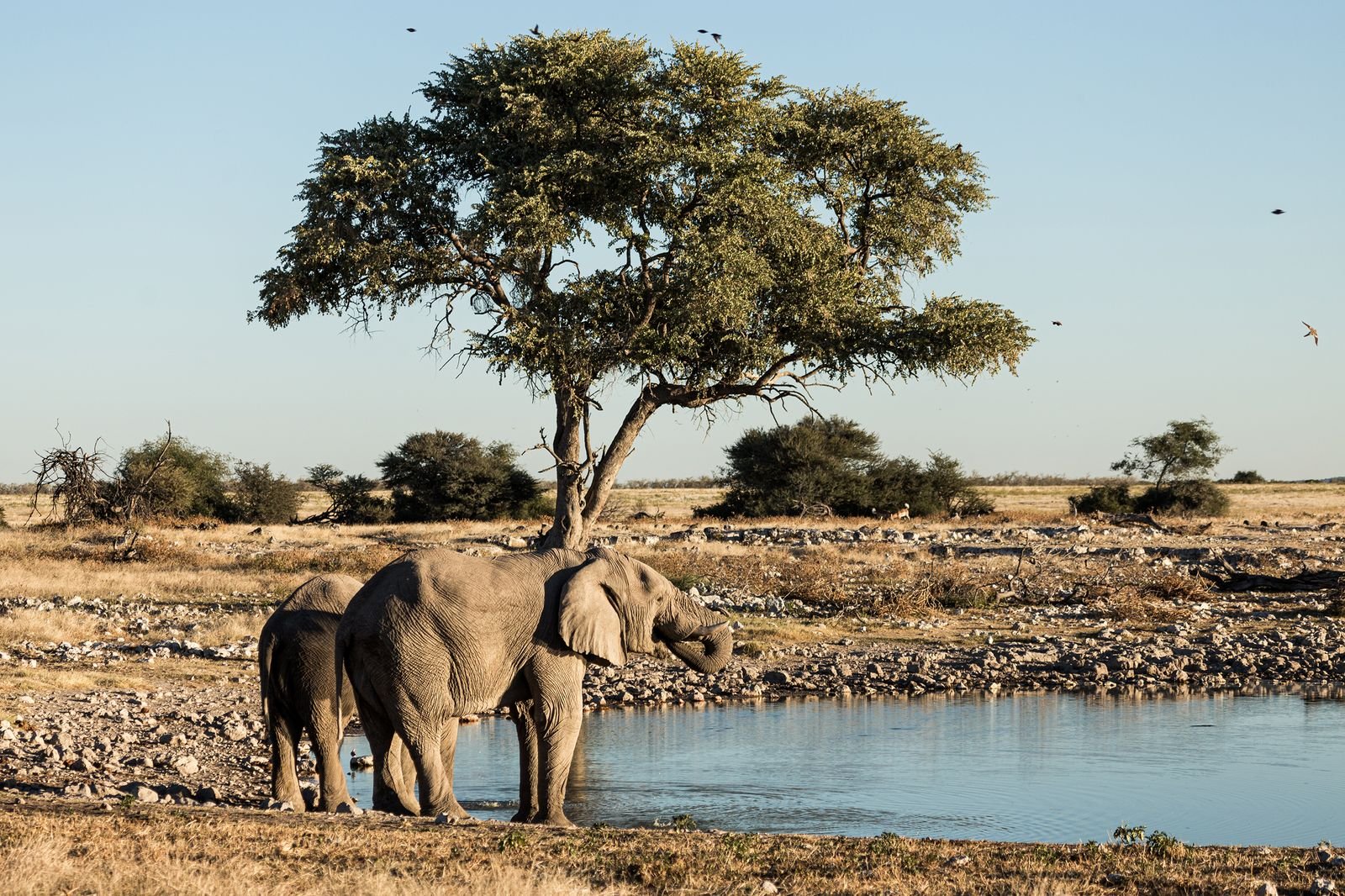
The waterholes are the heart of the Etosha safari, and each one has its own character. Okaukuejo, in the south of the park, is the most famous: its floodlit waterhole is one of the great wildlife spectacles in Africa, and at night you can sit at the waterhole and watch rhinos, elephants, and lions come to drink under the lights. The waterhole is a few minutes’ walk from the camp, and it is open all night.
Halali, in the centre of the park, is quieter and more intimate, with a waterhole set in the mopane woodland and a hide where you can watch the animals at close range. Namutoni, in the east, is built around an old German fort, and its waterholes — including the King Nehale waterhole and the Fischer’s Pan — are excellent for birds and for the antelope that gather on the eastern plains. Smaller waterholes, such as Goas, Salvadora, and Rietfontein, are scattered across the park, and each one rewards patience: sit quietly for an hour, and the animals will come to you.
The best time to visit the waterholes is the early morning and the late afternoon, when the animals are most active. In the heat of the day, the animals rest in the shade, and the waterholes are quiet. At night, the floodlit waterholes at Okaukuejo and Halali are the place to be: the rhinos, in particular, are most active after dark, and the sight of a black rhino drinking under the lights is one of the great experiences of an African safari.
The Wildlife of Etosha
The park is home to 114 mammal species, 340 bird species, and a remarkable diversity of reptiles and insects. The elephants are the most iconic animals: the park’s elephants are among the largest in Africa, and they are famous for their habit of covering themselves in the white clay of the pan, which gives them a ghostly appearance. The lions are the other great attraction: the park has a healthy population of lions, and they are often seen at the waterholes, or resting in the shade of the mopane trees.
The rhinos are the park’s great conservation success. The black rhino population here is the largest in the world, and the park is also home to white rhinos, which were reintroduced in the 1990s. The rhinos are most easily seen at the waterholes at night, especially at Okaukuejo, where they come to drink under the lights. The leopards and cheetahs are more elusive, but they are present in good numbers, and the cheetahs in particular are often seen on the open plains.
The antelope are the park’s most numerous animals: springbok, gemsbok, wildebeest, impala, kudu, and eland all gather at the waterholes in large herds. The giraffes, with their long necks and distinctive patterns, are a common sight, and the zebras — Burchell’s zebras, with their striped coats — are everywhere. The birdlife is superb: the park has 340 species, including the crimson-breasted shrike, the lilac-breasted roller, the kori bustard (the world’s heaviest flying bird), and the flamingos that gather on the pan when it floods.
How a Safari in Etosha Works
Etosha is one of the best parks in Africa for a self-drive safari. The roads are good gravel, the speed limit is 60 kilometres per hour, and the park is well signposted. You can drive your own car — a high-clearance vehicle is recommended, but a 4×4 is not essential — and you can stop at the waterholes and watch the animals at your own pace. The park’s rest camps are the bases for the safari: Okaukuejo in the south, Halali in the centre, and Namutoni in the east, with smaller camps at Dolomite in the west and Onkoshi in the north.
The day starts early: the gates open at sunrise, and the best wildlife viewing is in the first hours of the morning. Drive slowly, stop at the waterholes, and be patient — the animals will come to you. In the middle of the day, return to the camp for lunch and a rest, and then head out again in the late afternoon, when the animals are active once more. At sunset, return to the camp — the gates close at sunset, and you must be inside the camp by then. The evenings are for the floodlit waterholes, for dinner at the camp restaurant, and for the sounds of the African night.
Guided safaris are also available, and they are a good option if you do not want to drive. The camps offer guided game drives in open vehicles, with experienced guides who know the park and its animals intimately. Night drives, which are only available with a guide, are the best way to see the nocturnal animals: the lions, the leopards, the rhinos, and the hyenas that are active after dark. Whether you drive yourself or go with a guide, the key to a good safari is patience — sit at a waterhole, wait, and let the animals come to you.
Where to Stay in Etosha
The rest camps inside the park are the best places to stay. Okaukuejo, the largest camp, is the most popular: it has a range of accommodation, from campsites and chalets to family units, a restaurant, a shop, a swimming pool, and the famous floodlit waterhole. Halali is smaller and quieter, with a waterhole and a hide, and it is a good base for the central part of the park. Namutoni, built around the old fort, is the most atmospheric camp, with a restaurant, a pool, and easy access to the eastern waterholes.
The camps are run by Namibia Wildlife Resorts, and they are popular — book well in advance, especially for the dry season. The campsites are excellent, with ablution blocks, braai (barbecue) facilities, and shade, and they are a good option for self-drive visitors. Outside the park, there are private lodges and guest farms near the gates, which offer a more luxurious experience, with guided drives, good food, and a swimming pool. The lodges near the Andersson Gate (south) and the Von Lindequist Gate (east) are the most convenient.
Whatever you choose, book early and stay for at least three nights. The park is large — it takes a full day to drive from Okaukuejo to Namutoni — and the wildlife is not guaranteed. The more time you spend, the better your chances, and the more you will see. A week in the park, staying at two or three camps, is ideal.
Getting There and Getting Around
Etosha is about 400 kilometres north of Windhoek, a drive of four to five hours on good tarred roads. Most visitors fly into Windhoek’s Hosea Kutako International Airport and hire a car for the trip. The park has four gates: the Andersson Gate in the south (the main gate, near Okaukuejo), the Von Lindequist Gate in the east (near Namutoni), the Galton Gate in the west (near Dolomite), and the King Nehale Gate in the north. The gates open at sunrise and close at sunset, and you must pay the park entrance fee at the gate.
Inside the park, the roads are gravel and well maintained, and the speed limit is 60 kilometres per hour. A high-clearance vehicle is recommended, but a standard car can manage the main roads in the dry season. Fuel is available at the rest camps, but it is expensive — fill up before you enter the park, and carry extra water and food. The distances are long: it is 180 kilometres from Okaukuejo to Namutoni, and the drive takes about three hours with stops at the waterholes.
Etosha is often combined with other Namibian destinations: the red dunes of Sossusvlei, the Skeleton Coast, the Damaraland desert, and the Caprivi Strip. A two-week trip that combines the park with the desert and the coast is one of the great journeys in Africa, and it is worth taking the time to do it properly.
Practical Tips for Visiting Etosha
Book your accommodation well in advance, especially for the dry season, when the camps fill up months ahead. The park entrance fee is payable at the gate, and the camps charge separately for accommodation. The currency is the Namibian dollar, which is pegged to the South African rand, and both are accepted. Cards are accepted at the camps, but carry cash for fuel and for small purchases.
Malaria is a risk in the park, especially in the wet season. Take anti-malarial medication, use insect repellent, and wear long sleeves at dusk. The sun is fierce — wear a hat, sunscreen, and sunglasses, and drink plenty of water. The nights in the dry season are cold, so bring warm clothing for the evenings and the early mornings. And remember that the park is a wild place: never get out of your car except at the designated rest stops and camps, never approach the animals, and never feed them.
Respect the park and its wildlife. Stay on the roads, do not drive off-road, and do not disturb the animals. The park is a place of great natural importance, and it is up to every visitor to help protect it. The black rhinos, the lions, and the elephants of the park are among the most important populations in Africa, and they depend on the park for their survival.
Frequently Asked Questions
When is the best time to visit Etosha?
The dry season, from May to October, is the best time for wildlife viewing, when the animals gather at the waterholes. The wet season, from November to April, is best for birds, for the flamingos on the pan, and for the green landscapes.
Can I self-drive in Etosha?
Yes. The park is one of the best in Africa for self-drive safaris, with good gravel roads and well-run rest camps. A high-clearance vehicle is recommended, but a 4×4 is not essential in the dry season.
Is Etosha good for seeing rhinos?
Yes, it is one of the best places in the world to see black rhinos. The park has the largest black rhino population in the world, and the floodlit waterhole at Okaukuejo is the best place to see them at night.
How many days do I need in Etosha?
Allow at least three nights, and a week if you can. The park is large, and the wildlife is not guaranteed — the more time you spend, the more you will see. Staying at two or three camps lets you explore different parts of the park.
Is Etosha suitable for families?
Yes, very. The rest camps are family-friendly, the self-drive safari is a wonderful experience for children, and the waterholes offer a safe way to watch the animals. The camps have swimming pools, restaurants, and shops, and the park is a great introduction to African wildlife.
Conclusion
Etosha is one of the great safari destinations of Africa — a place where the wildlife comes to you, at the waterholes, in numbers that are hard to believe. The elephants in the white clay, the lions at the waterholes, the rhinos under the lights at Okaukuejo, and the vast white pan that stretches to the horizon combine to make the park a place that every wildlife lover should see once in their life. Go in the dry season, book your camps early, drive slowly, and be patient — the park will reward you with a journey you will never forget. For more safari inspiration, read our guides to the Serengeti and Kruger National Park, and learn more from Etosha National Park on Wikipedia.