Mount Roraima: Complete Guide to the Lost World Tepui of Venezuela, Brazil, and Guyana
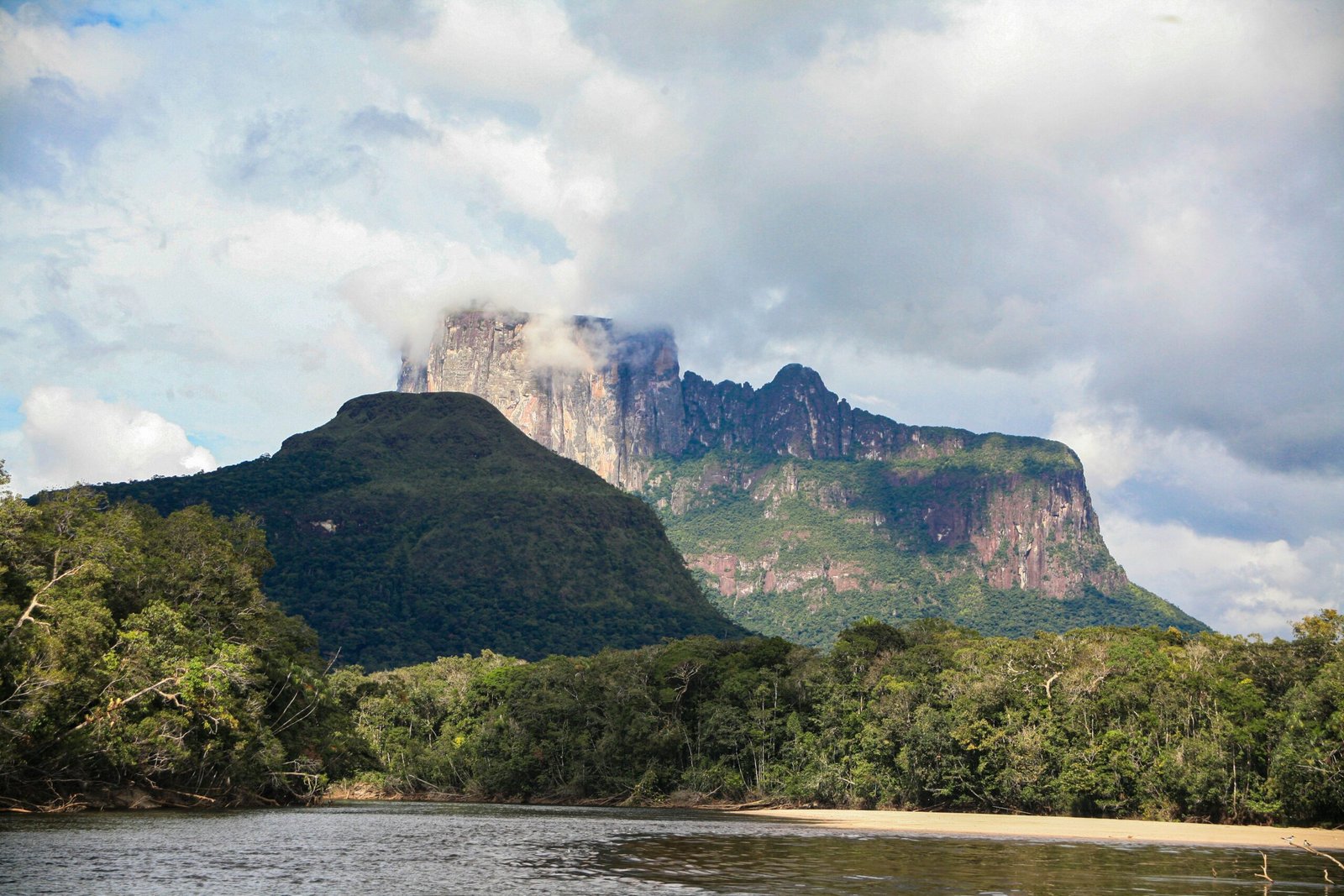
Mount Roraima is a mountain that does not look like a mountain. Rising from the rainforest of the Guiana Highlands, where Venezuela, Brazil and Guyana meet, it is a vast flat-topped tepui, a table mountain with cliffs up to 1,000 metres tall, and it is one of the oldest geological formations on Earth. Its summit plateau, hidden in cloud for much of the year, is a lost world of black rock, crystal valleys and plants and animals that exist nowhere else. It inspired Sir Arthur Conan Doyle’s novel The Lost World, and it has fascinated explorers, scientists and trekkers ever since it was first climbed in 1884.
This complete guide to Mount Roraima explains what a tepui is, how to trek to the summit, what you will see on the way, when to go, and how to plan one of the great multi-day hikes in South America. Whether you dream of standing on the edge of the Lost World or you simply want to know more about one of the strangest mountains on the planet, you will find everything you need here.
Where Is Mount Roraima and What Is a Tepui?
Mount Roraima sits in the Pakaraima mountain chain of the Guiana Highlands, on the border between Venezuela, Brazil and Guyana. It is the tallest tepui in the chain, at 2,810 metres above sea level, and it is the most famous of about a hundred tepuis in the region. The summit plateau covers around 31 square kilometres, and the flat top is surrounded on all sides by sheer cliffs that rise as much as 1,000 metres above the forest below.
A tepui is a flat-topped mountain made of ancient quartz sandstone. The rock of Mount Roraima is about two billion years old, which makes it some of the oldest rock on Earth, formed long before the first animals or plants appeared on land. The tepuis were once part of a great plateau that covered the region, and over billions of years the softer rock around them was worn away, leaving the hard sandstone standing as isolated mountains. Each tepui is an island in the sky, cut off from the world below, and each one has its own unique set of species.
Mount Roraima lies inside Canaima National Park, a UNESCO World Heritage Site that covers about 30,000 square kilometres of Venezuela, making it one of the largest national parks in the world. The park was created in 1962 and added to the World Heritage List in 1994, and it protects a landscape of tepuis, savannas, rivers and forests that is unlike anywhere else on Earth.
The Lost World: Books, Films and First Ascents
Mount Roraima was first climbed in 1884 by the British explorer Everard im Thurn and his companion Harry Perkins, who reached the summit by the natural ramp that is still used by trekkers today. Im Thurn’s account of the expedition, with its description of a misty plateau of black rock and strange plants, inspired Sir Arthur Conan Doyle to write The Lost World in 1912, the novel in which explorers find living dinosaurs on a South American plateau. The mountain has since inspired filmmakers as well, and the floating cliffs of the 2009 film Up were modelled on Mount Roraima and its neighbours.
The indigenous Pemon people, who live in the Gran Sabana region at the foot of the tepuis, have known about Mount Roraima for far longer than any explorer. In the Pemon language the mountain is called Roroi-ma, which means great blue-green, and it is a sacred place in Pemon tradition. Pemon guides lead almost all of the treks to the summit today, and their knowledge of the savanna, the rivers and the weather is essential to a safe trip.
Trekking Mount Roraima
The trek to Mount Roraima is a multi-day adventure, and it is one of the great treks of South America. The classic route starts in Santa Elena de Uairen, a small town in the Gran Sabana on the Venezuelan side, and takes six to eight days. There are also routes from the Brazilian side, but the Venezuelan route is the most established and the most popular.
The Gran Sabana and the Approach
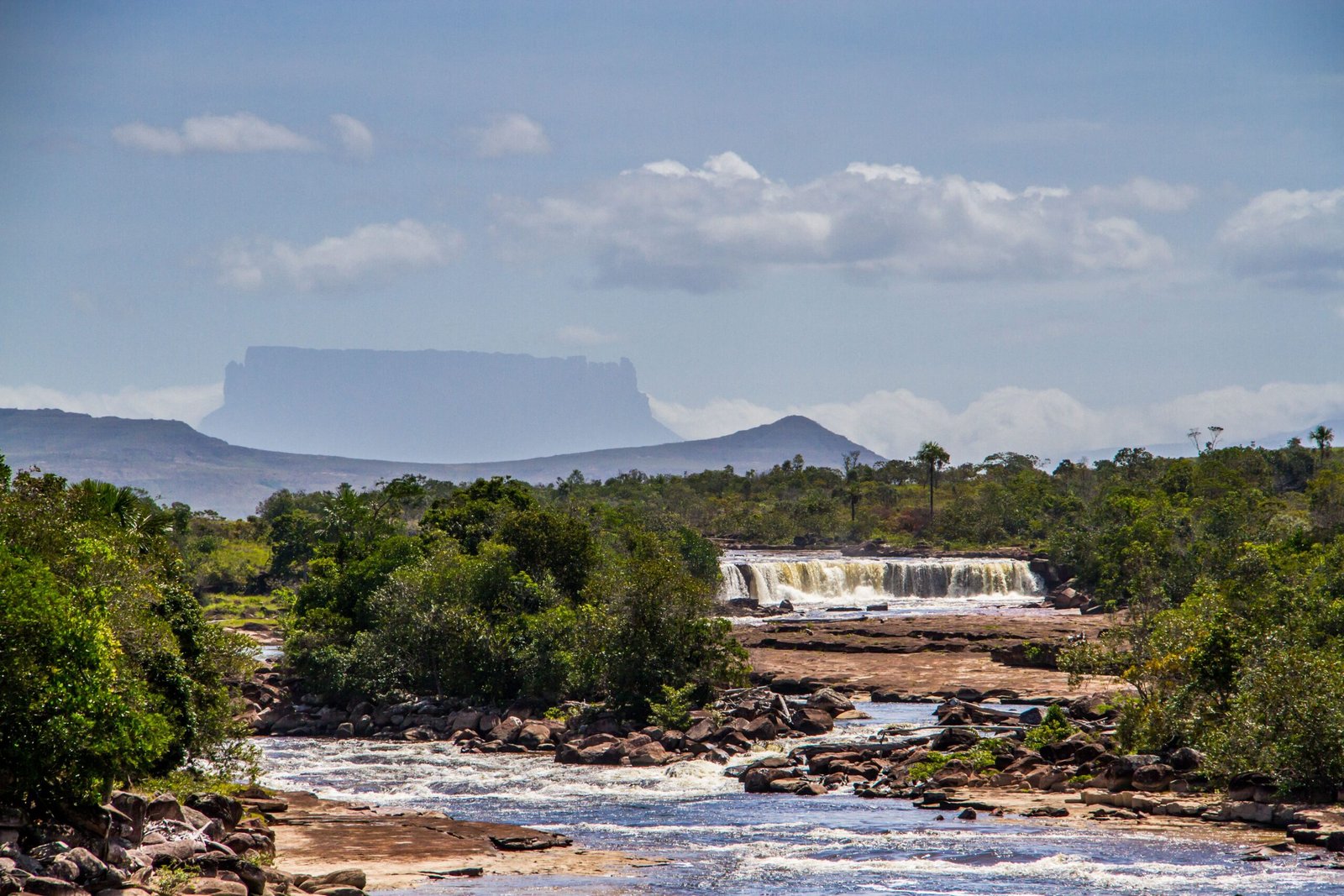
The first three days of the trek cross La Gran Sabana, a vast savanna of grasses, rivers and scattered rocks, with Mount Roraima and its neighbour Kukenan dominating the horizon. The walking is mostly flat and easy, but it is long, and you will cross rivers, wade through swamps and pass through small Pemon villages. The camps are on riverbanks, and the evenings are spent around the fire with your guides.
La Rampa: The Natural Staircase
On the fourth day you reach the foot of Mount Roraima and climb La Rampa, the natural ramp that leads to the summit. It is the only practical route to the top, and it is a steep and strenuous climb through forest and rock, with waterfalls and pools along the way. The ramp is not a technical climb, but it is hard work, and it takes several hours. The moment you step onto the summit plateau and the cloud opens to show the black rock valleys is one of the great moments in mountain walking.
The Summit Plateau
The summit of Mount Roraima is a strange and beautiful place. The plateau is covered in black rock formations that look like sculptures, and the valleys between them are filled with crystals and small pools. There are no trees on the summit, only low plants and rock, and the cloud moves across the plateau in a way that makes the landscape change every few minutes. Trekkers usually spend two nights on the summit, exploring the valleys and walking to the edge of the cliffs for views of the rainforest far below.
The Wildlife of the Lost World
Because the summit is cut off from the world below, many of its species live nowhere else. The most famous is the Roraima bush toad, a small black toad that rolls into a ball and bounces down the slopes when it is threatened, and the plateau is also home to carnivorous plants, including the pitcher plant Heliamphora and the sundew Drosera, which catch insects in the nutrient-poor soil. The black rock valleys are home to orchids and other plants that have adapted to the harsh summit climate.
Best Time to Trek Mount Roraima
The best time to trek Mount Roraima is during the dry season, from December to April, when the rainfall is lowest and the rivers are at their easiest to cross. The summit is often in cloud and rain at any time of year, so some rain is to be expected on every trip, but the dry season gives you the best chance of clear views from the summit and of the rivers being low enough to cross safely. The wet season, from May to November, brings heavy rain, swollen rivers and muddy trails, and it is not the best time for the trek.
The dry season is also the most popular time for the trek, so book your guide and your trip well in advance. The Christmas period and January are the busiest months, and the trails are quietest in February and March. The temperature on the summit is cool, usually between 10 and 15 degrees Celsius during the day, but it is warm and humid on the savanna below, so pack for both.
How to Get to Mount Roraima
Most trekkers fly to Caracas, the capital of Venezuela, and then take a domestic flight to Puerto Ordaz or Ciudad Bolivar, from where a bus or a private transfer runs to Santa Elena de Uairen, a journey of about eight hours by road. Santa Elena is a small town on the border with Brazil, and it is the base for the trek, with hotels, restaurants and tour operators.
You will need a guide, a permit for Canaima National Park, and a reasonable level of fitness for the trek. Most treks are booked as packages from Santa Elena, which include the guide, the porters, the food, the tents and the park permit. The trek is not cheap, and prices vary with the season and the operator, but a good package will give you a safe and well-organised trip. Independent trekking is not allowed, and the guides are all local Pemon people who know the route and the weather better than anyone else.
Practical Tips for Trekking Mount Roraima
- Book a licensed operator in Santa Elena de Uairen. You will need a Pemon guide, a park permit and porters, and a good operator will arrange all of these.
- Be fit. The trek is six to eight days long, the walking can be hard, and the climb up La Rampa is strenuous.
- Pack waterproof layers. Rain is common on the summit and on the savanna, and the trails are often wet and muddy.
- Bring good hiking boots, with ankle support and a strong grip, because the rocks on the summit are sharp and the paths are often wet.
- Carry a water filter or purification tablets. You will drink from rivers and streams on the trek, and the water is generally safe to drink, but it is worth purifying.
- Protect your camera and phone from the rain and the mist, because the weather on the summit can be wet and cold.
- Bring a headlamp and spare batteries, because the camps have no electricity and the nights are dark.
- Respect the Pemon guides and the sacred nature of the mountain. Mount Roraima is a holy place, and the guides will explain its significance to you.
Where to Stay Before and After the Trek
Santa Elena de Uairen has a range of hotels, hostels and guesthouses, and it is the best base for the trek. The town is small and friendly, and most of its hotels are within walking distance of the tour operators and the bus station. Puerto Ordaz and Ciudad Bolivar, the gateway cities for the Gran Sabana, have a wider choice of hotels. On the trek itself you will sleep in tents at camps on the riverbanks and on the summit plateau, and the tour operators provide the tents, the sleeping bags and the food.
Frequently Asked Questions About Mount Roraima
Is Mount Roraima worth trekking?
Yes. Mount Roraima is one of the most extraordinary treks in the world, and it is the closest thing to visiting another planet that you will find on Earth. The landscape is unlike anywhere else, and the combination of the savanna, the cliff walls and the summit plateau is unforgettable.
How hard is the Mount Roraima trek?
The trek is challenging but not technical. It is six to eight days of walking, with long days on the savanna and a steep climb up La Rampa to the summit. You need to be fit and comfortable walking for six to eight hours a day, but you do not need climbing experience.
Is Mount Roraima the Lost World?
Mount Roraima was the inspiration for Sir Arthur Conan Doyle’s novel The Lost World, in which explorers find prehistoric animals on a South American plateau. The real mountain has no dinosaurs, but it does have animals and plants that exist nowhere else on Earth, so the comparison is understandable.
What is the best month to trek Mount Roraima?
December to April is the dry season and the best time to trek. December and January are the busiest months, while February and March are quieter and still dry. The wet season, from May to November, brings heavy rain and is not the best time for the trek.
Can you climb Mount Roraima without a guide?
No. All treks to Mount Roraima must be made with a licensed local guide, and the guides are Pemon people from the Gran Sabana. A guide is required for the park permit, for safety, and because the local community runs the trekking industry.
Conclusion
Mount Roraima is a mountain that rewards the effort it takes to reach it. The trek across the savanna, the climb up La Rampa and the days on the lost summit plateau add up to one of the greatest adventures in the world, and they leave you with a sense of wonder that is hard to describe. If you ever dreamed of visiting the Lost World, this is as close as you will get. For another of the world’s great mountain adventures, read our guide to Mount Everest, the world’s highest mountain, and for a very different kind of alpine scenery, see our guide to the Swiss Alps.