Jeju Island: Complete Guide to South Korea’s Volcanic Island, Waterfalls, and Natural Wonders
Jeju Island, South Korea’s largest island, is a world of volcanoes, waterfalls, beaches and lava tubes, all packed into an island about the size of a small country. The island sits off the southern tip of the Korean Peninsula, and its centrepiece is Hallasan, a dormant volcano and the highest mountain in South Korea. Around it lie lava tube caves, craters, cliffs and waterfalls, and a coastline of black sand beaches and turquoise bays. Jeju Island is a UNESCO World Heritage Site and one of the most popular holiday destinations in Korea, and it deserves a place on any list of the world’s great natural wonders.
This complete guide to Jeju Island explains how the island formed, the best places to visit, how to get there and get around, when to go, and how to plan your trip. Whether you have three days or a full week, you will find everything you need to explore the island that Koreans call the Hawaii of Korea.
Where Is Jeju Island and How Did It Form?
Jeju Island, officially Jeju-do, is a self-governing province of South Korea, lying about 85 kilometres south of the mainland in the Korea Strait. The island covers about 1,845 square kilometres and is home to around 670,000 people. It formed over the past two million years through volcanic eruptions, and the island is essentially the top of a vast underwater volcano. Hallasan, at 1,947 metres, is the highest peak in South Korea and the centre of the island, and almost everything on Jeju is built from its lava.
In 2007, UNESCO added Jeju Volcanic Island and Lava Tubes to the World Heritage List, recognising three areas: Hallasan Natural Reserve, the Geomunoreum Lava Tube System and the Seongsan Ilchulbong tuff cone. In 2010, Jeju became a UNESCO Global Geopark, and the island is also a UNESCO Biosphere Reserve, one of only a handful of places in the world with all three UNESCO designations. The island’s distinctive dark basalt rock, its stone walls and its lava tubes are everywhere, from the beaches to the farm fields.
Jeju has a subtropical climate and is the warmest place in Korea, with mild winters and hot, humid summers. The island is famous for its tangerines, its green tea, its black pigs and its haenyeo, the women free divers who harvest seafood from the sea without oxygen tanks. The haenyeo tradition was added to UNESCO’s Intangible Cultural Heritage list in 2016, and it is still practised by hundreds of women on the island.
Hallasan: The Roof of South Korea
Hallasan is the heart of Jeju Island. It is a dormant shield volcano whose broad slopes rise gently to a summit crater, and it is the highest mountain in South Korea. The mountain’s last eruption was about a thousand years ago, and today its slopes are covered in forests and alpine plants, with more than 1,800 species of plants and animals living in the national park. The climb to the summit is one of the great hikes in Korea, and it takes most walkers six to eight hours return, with a trail that starts in forest and ends on open volcanic rock.
The summit crater lake, Baengnokdam, is a beautiful sight in summer, when it fills with rainwater, and the views from the top stretch across the whole island to the sea. In winter, Hallasan is covered in snow, and the climb is a popular snow hike. The park limits the number of climbers on some trails, so it is worth checking the current rules before you go.
The Best Things to See and Do on Jeju Island
Jeju is best explored by rental car, because the island is large and its sights are spread out. The following are the places that most first-time visitors will want to include.
Seongsan Ilchulbong (Sunrise Peak)
Seongsan Ilchulbong is a volcanic tuff cone on the eastern coast of Jeju, formed about 5,000 years ago by an eruption under the sea. The crater is 600 metres across and 90 metres deep, and the climb to the top takes about 30 minutes on a well-made path, ending with a view across the sea and the island. The sunrise here is famous, and the name of the peak means Sunrise Peak. The sea cliffs around the cone are home to seabirds, and the walk down to the coast is one of the best on the island.
Manjanggul Lava Tube
Manjanggul is one of the longest lava tubes in the world, at about 13.4 kilometres long, with about one kilometre open to visitors. The tube formed when lava flowed underground and the surface cooled into a crust, leaving a tunnel beneath. Inside, you can see the world’s largest lava column, at 7.6 metres tall, and lava flow lines, lava rafts and other formations on the walls and ceiling. The tube is cool and dark, and it is one of the most impressive underground experiences in Asia.
Jeju’s Waterfalls
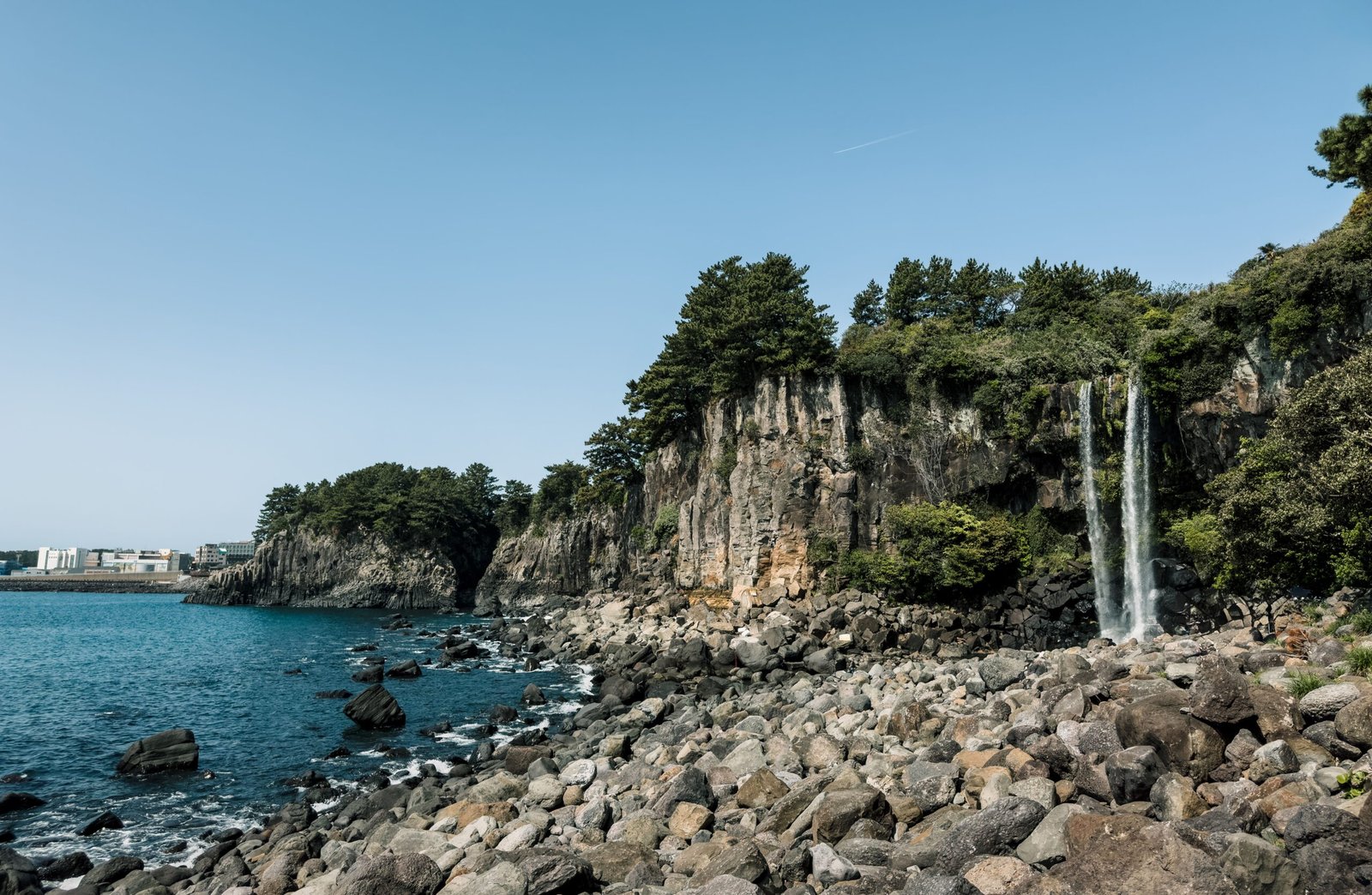
Jeju has three famous waterfalls, all in the south of the island near Seogwipo. Cheonjiyeon Falls is a 22-metre waterfall in a lush subtropical forest, lit up at night, and Cheonjeyeon Falls is a triple waterfall that flows through a deep valley. Jeongbang Falls is the most unusual, because it is the only waterfall in Asia that falls directly into the sea, dropping 23 metres onto black rocks at the water’s edge. The three waterfalls can be visited in a day, and they are especially beautiful after rain.
Beaches and the Olle Trail
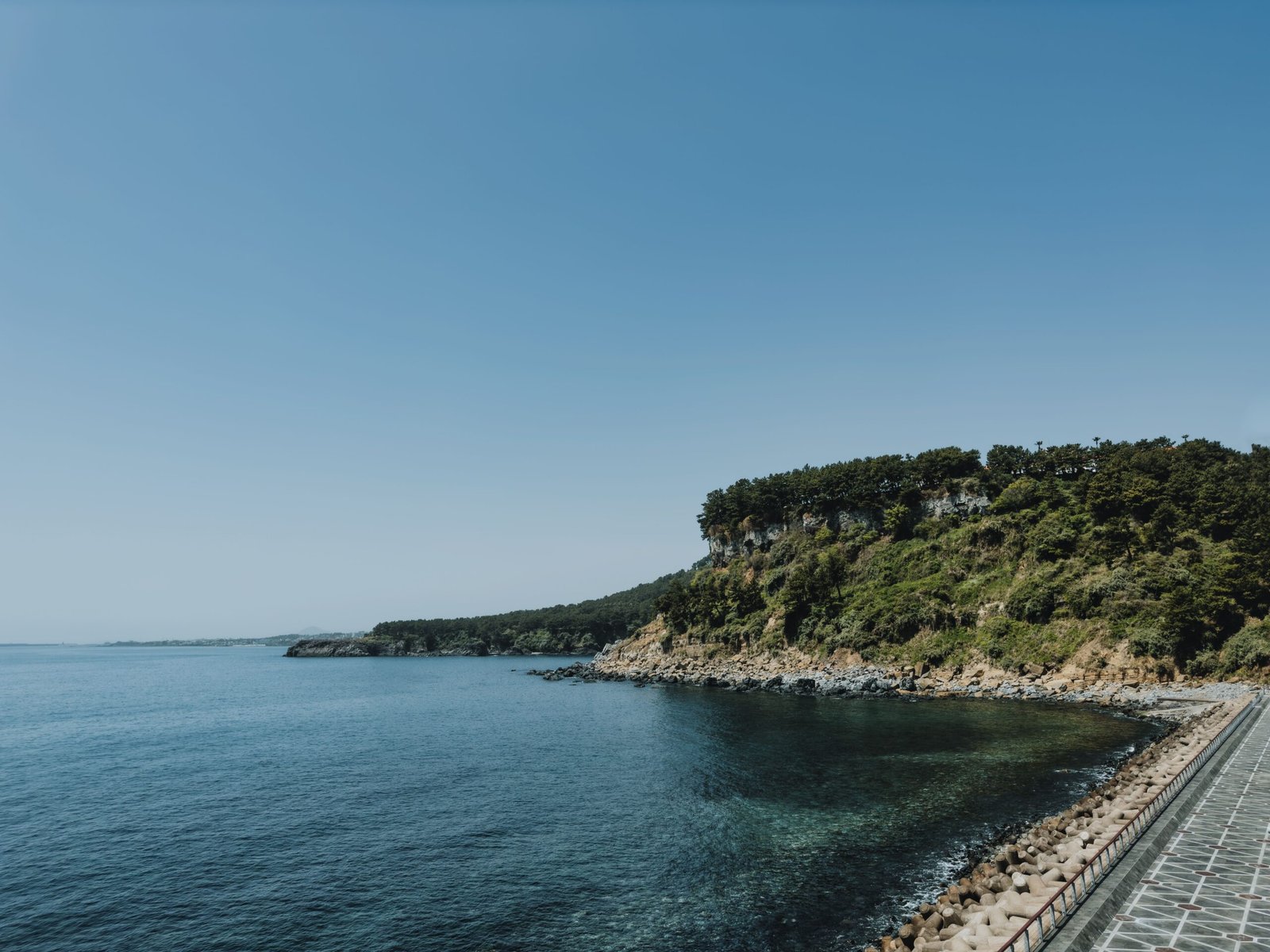
Jeju’s beaches are a surprise to visitors who expect only volcanoes. Hyeopjae Beach, on the northwest coast, has white sand and a view of Biyangdo Island, while Hamdeok Beach, near Jeju City, is a long sweep of sand with emerald water. The Jeju Olle Trail, a network of walking routes that runs for 426 kilometres around the island in 27 sections, is the best way to explore the coast on foot, and it links villages, beaches, cliffs and farms. Even a single section of the trail gives you a true taste of the island.
Udo Island
Udo, a small island off the east coast of Jeju, is a popular day trip by ferry from Seongsan. The island is famous for its peanut ice cream, its black sand beach at Sanho, its white sand at Hagosudong, and its lighthouse and coastal walks. A bus tour of the island takes about an hour, and bicycles and electric scooters are also available for exploring the quiet lanes.
Best Time to Visit Jeju Island
The best time to visit Jeju Island is in spring, from March to May, and in autumn, from September to November. Spring brings cherry blossoms and yellow canola flowers, mild weather and clear air, while autumn brings comfortable temperatures and good hiking weather. Summer, from June to August, is hot and humid, with the rainy season in late June and July, and a risk of typhoons in August and September. Winter, from December to February, is mild compared with the mainland, and Hallasan is covered in snow, which is a beautiful sight, though the days are short and the wind is cold.
Jeju is a year-round destination, and it is the favourite weekend escape for Koreans, so the island is busiest at the weekends and during the Korean public holidays. If you can, visit on a weekday in April, May or October for the best combination of weather and quiet.
How to Get to Jeju Island and Get Around
Most visitors fly to Jeju International Airport, which is served by frequent flights from Seoul’s Gimpo Airport, Busan, Daegu and other Korean cities, as well as from Japan, China and other Asian countries. The Seoul to Jeju route is one of the busiest air routes in the world, with a flight almost every few minutes at peak times. Ferries also run from Busan, Mokpo and Wando on the mainland, and they are a good option if you want to bring a car.
Renting a car is the best way to see Jeju, because the island is large and its sights are spread out. You will need an international driving permit, and driving on Jeju is relaxed and easy, with good roads and clear signs. Public buses do cover most of the island, but they are slow and infrequent, and they will not get you to the more remote sights. Taxis and organised tours are also available, and many hotels can arrange drivers for the day.
Practical Tips for Visiting Jeju Island
- Rent a car if you can. It will save you hours of waiting for buses and let you visit the remote corners of the island.
- Book your car and hotel well ahead for spring and autumn weekends, because Jeju is popular with Korean tourists.
- Bring layers and a windproof jacket. The weather can change quickly, and the wind on the coast and on Hallasan is strong.
- Wear hiking shoes for Hallasan and the Olle Trail. The trails are well made, but the volcanic rock is sharp and uneven in places.
- Carry cash in Korean won. Cards are accepted in most places, but small restaurants, markets and farm stalls may not take them.
- Try the local food. Jeju is famous for its black pork, its fresh seafood, its tangerines, its abalone and its green tea, and the island has some of the best seafood in Korea.
- Respect the haenyeo and the stone walls. The dry stone walls around the fields are a symbol of the island, and the haenyeo are a living tradition that deserves respect.
- Allow at least three days for the island, and five if you want to climb Hallasan and walk the Olle Trail, because there is far more to see than the main sights suggest.
Where to Stay on Jeju Island
Jeju City, in the north, is the main transport hub and the best base if you want a city feel and easy access to the airport, the beaches and the northern sights. Seogwipo, in the south, is quieter and greener, and it is the best base for the waterfalls, the southern coast and Hallasan. The island also has a wide range of resorts, guesthouses and pensions, including traditional farm stays in the interior. Many of the best hotels are on the coast, and the island’s famous five-star resorts are clustered around Jungmun, on the south coast.
Frequently Asked Questions About Jeju Island
Is Jeju Island worth visiting?
Yes. Jeju Island is the most popular holiday destination in South Korea for good reason. It has volcanoes, lava tubes, waterfalls, beaches, a long walking trail and a food culture that is different from the mainland. It is a great choice for a first trip to Korea and for anyone who loves nature.
How many days do you need on Jeju Island?
Three days is the minimum to see the main sights, from Hallasan to Seongsan Ilchulbong and the waterfalls. Four to five days is better, because it gives you time to walk the Olle Trail, visit Udo Island and explore the villages, and a full week lets you see the island at a relaxed pace.
Can you climb Hallasan?
Yes. Hallasan is a popular day hike, and the main trails take six to eight hours to the summit and back. The mountain is open all year, but the trails are limited in number in winter and the summit can be closed in bad weather. The climb is not technically difficult, but it is long, so start early in the morning and bring food, water and warm layers.
What is the best month to visit Jeju Island?
April, May, September and October are generally the best months, with mild weather, clear skies and fewer crowds than the summer holidays. April is best for cherry blossoms and canola flowers, while October has the best hiking weather and the clearest skies.
Do you need a car on Jeju Island?
A car is strongly recommended, because the island is large and the public buses are slow. If you do not want to drive, you can use organised tours, taxis and the public bus network, but you will see much less of the island in the same amount of time.
Conclusion
Jeju Island is a place that rewards curiosity. The volcanoes, the lava tubes and the waterfalls are the headline sights, but the real charm of the island is in the small moments: a walk on the Olle Trail, a cup of green tea in a village cafe, and a plate of fresh seafood beside the sea. Come for Hallasan and the Sunrise Peak, stay for the beaches and the villages, and let the island’s slow pace work on you. For another island wonder built from sand rather than rock, read our guide to the Lençóis Maranhenses, Brazil’s white sand dunes and blue lagoons, and for a geological wonder in stone, see our guide to Pamukkale, Turkey’s white travertine terraces.