
Iguazu Falls: A Complete Guide to One of the World’s Greatest Natural Wonders
Introduction
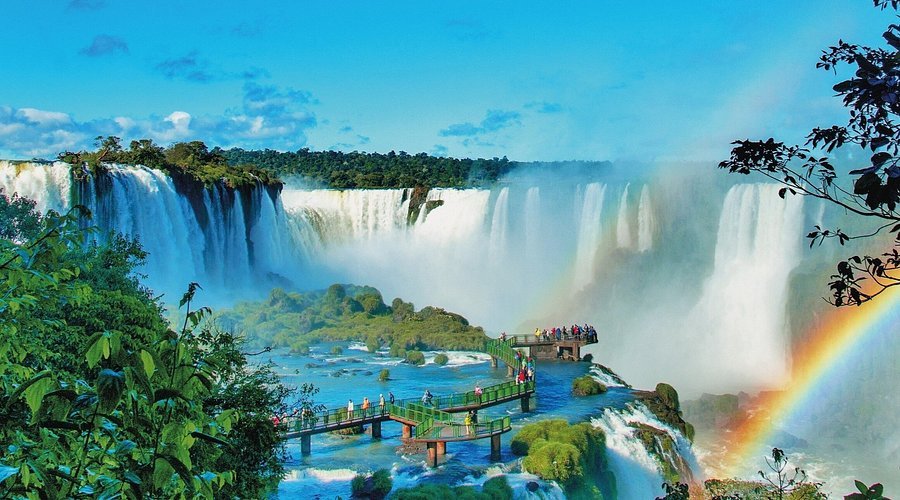
Iguazu Falls is one of the most spectacular natural wonders on Earth. Located on the border between Argentina and Brazil, this enormous waterfall system is famous for its breathtaking beauty, powerful cascades, lush rainforest, and extraordinary wildlife. Rather than being a single waterfall, Iguazu Falls is a vast collection of hundreds of individual waterfalls spread across a wide stretch of the Iguazu River.
The combination of water, forest, cliffs, mist, rainbows, and tropical wildlife makes Iguazu Falls an unforgettable destination for nature lovers, photographers, adventure travelers, and anyone who wants to experience one of the world’s most impressive landscapes.
The falls are divided between two countries. Argentina contains the larger portion of the waterfall system, while Brazil provides some of the most impressive panoramic views. Visitors who have enough time often explore both sides because each offers a completely different experience.
Iguazu Falls is surrounded by protected rainforest and is part of a much larger ecosystem. The surrounding national parks protect plants, animals, birds, rivers, and forest habitats that are closely connected to the waterfall environment.
This guide explores the history, geography, natural beauty, wildlife, viewpoints, activities, best time to visit, travel planning, photography opportunities, and many other important aspects of Iguazu Falls.
What Is Iguazu Falls?
Iguazu Falls is a massive waterfall system formed by the Iguazu River. The river eventually joins the Paraná River, creating an important part of the drainage system of South America.
The name “Iguazu” comes from Indigenous languages and is commonly associated with the meaning “great water.” The name is appropriate because the waterfall is characterized by enormous quantities of water moving through a complex network of channels and cascades.
The falls stretch across a large area rather than falling in one narrow stream. Hundreds of cascades appear at different locations, especially when the river has a high flow.
The most famous section is the Devil’s Throat, known in Spanish as Garganta del Diablo and in Portuguese as Garganta do Diabo. This enormous U-shaped section creates a dramatic concentration of water and mist.
Iguazu Falls is not only a beautiful waterfall but also an entire landscape where water and rainforest interact.
Where Is Iguazu Falls Located?
Iguazu Falls is located in northeastern Argentina and southern Brazil, close to the border between the two countries.
On the Argentine side, the falls are protected within Iguazú National Park in the province of Misiones.
On the Brazilian side, the waterfall is located inside Iguaçu National Park in the state of Paraná.
The nearest major tourist cities are Puerto Iguazú in Argentina and Foz do Iguaçu in Brazil. Both cities have accommodation, restaurants, transportation, tour operators, and other services for visitors.
Because the waterfall lies on an international border, travelers should consider their visa and border-entry requirements before planning to visit both sides.
The Geography of Iguazu Falls
The geography surrounding Iguazu Falls is one of the main reasons the landscape is so impressive.
The Iguazu River flows through a region covered by subtropical and tropical vegetation. As the river approaches the falls, the landscape changes dramatically. The water moves across rocky terrain before dropping through numerous channels and over a series of cliffs.
The waterfall system is spread across a broad area. Individual cascades vary in size and appearance, and the scenery can change depending on river levels.
During periods of high water flow, many smaller waterfalls become larger and more powerful. During lower water conditions, individual rock formations and channels may become more visible.
The surrounding forest provides a spectacular green background to the falls. This combination of dark rock, white water, green vegetation, blue sky, and mist creates some of the most recognizable scenery in South America.
How Big Is Iguazu Falls?
Iguazu Falls is enormous in both width and overall scale.
The waterfall system consists of hundreds of cascades, depending on river conditions. The falls extend across a broad area along the Iguazu River.
The tallest major drop is associated with Devil’s Throat, which reaches roughly 80 meters in height.
One of the most remarkable features of Iguazu Falls is its width. Instead of a single vertical wall of water, the falls form a huge collection of waterfalls distributed across the river.
This makes Iguazu different from many famous waterfalls around the world. Visitors do not simply stand in front of one waterfall. Instead, they explore a large natural landscape containing many different viewpoints and cascades.
Devil’s Throat
Devil’s Throat is the most famous part of Iguazu Falls.
Known as Garganta del Diablo in Spanish, it is a huge U-shaped canyon where an enormous volume of water plunges downward.
The sound can be overwhelming. Water crashes into the gorge below while clouds of mist rise into the air.
From the viewing platforms, visitors can stand relatively close to the waterfall and watch the river disappear into the gorge.
On sunny days, rainbows frequently appear through the mist. The combination of enormous water flow, roaring sound, mist, and rainforest creates a dramatic experience.
Devil’s Throat is one of the major highlights of a visit to Iguazu Falls.
The Argentine Side of Iguazu Falls
The Argentine side generally provides a more immersive experience because visitors can explore several trails and viewpoints that take them closer to the waterfalls.
Iguazú National Park contains a network of walkways and observation areas.
Some paths pass through forest before opening onto views of different cascades. Other sections bring visitors directly over the water.
The Argentine side is particularly valuable for travelers who want to spend several hours exploring different perspectives rather than simply seeing the waterfall from a single viewpoint.
Upper Circuit
The Upper Circuit is one of the main sightseeing routes on the Argentine side.
This route provides elevated views over several sections of the waterfall system. Visitors can observe water rushing over cliffs while surrounded by forest.
The elevated walkways make it possible to appreciate the scale of the falls from above.
The Upper Circuit is also useful for photography because it offers broad views of multiple cascades.
Lower Circuit
The Lower Circuit provides a different experience.
Instead of looking down over the falls, visitors can approach the water from lower viewpoints.
The trail passes through forest and offers changing perspectives of waterfalls, cliffs, rocks, and mist.
The Lower Circuit is particularly enjoyable for travelers who want to feel closer to the water.
Because the environment is humid and misty, visitors should protect cameras and electronic devices.
The Brazilian Side of Iguazu Falls
The Brazilian side is famous for its panoramic views.
While Argentina offers many close-up experiences, Brazil provides a spectacular overview of the waterfall system.
Visitors follow a trail through Iguaçu National Park and reach viewing platforms where the falls spread across the landscape.
From this side, it is easier to understand the overall size and structure of Iguazu Falls.
The Brazilian viewpoint is especially impressive when the water flow is strong.
Why Visit Both Sides?
If your schedule allows, visiting both sides is one of the best ways to experience Iguazu Falls.
The Argentine side provides a more detailed exploration with trails, platforms, and close views.
The Brazilian side provides broad panoramic perspectives.
Neither side completely replaces the other.
Together, they create a much more complete understanding of the waterfall.
A traveler with limited time may choose one side, but visitors with additional time should consider exploring both.
History of Iguazu Falls
The Iguazu region has been home to Indigenous communities for centuries.
Before European exploration, Indigenous peoples lived throughout the forests and river regions surrounding the falls. They developed deep relationships with the local environment and relied on the forest and rivers for food, transportation, and cultural life.
European explorers later entered the region.
The falls became known internationally through exploration and eventually became a destination for scientific study and tourism.
As awareness of the area’s natural importance increased, governments created protected areas around the waterfall.
The establishment of national parks helped protect the landscape from uncontrolled development.
Today, conservation is an important part of the identity of Iguazu Falls.
Indigenous Heritage
The cultural history of Iguazu is closely connected to Indigenous peoples of the region.
The Guarani people have a particularly important historical and cultural connection with the area.
The river, forest, animals, and plants have long been part of Indigenous traditions.
Visitors should remember that Iguazu is not simply a tourist attraction. It is also a landscape with deep cultural significance.
Learning about local Indigenous heritage can make a visit more meaningful because it provides context beyond the physical beauty of the waterfalls.
Iguazú National Park in Argentina
Iguazú National Park protects the Argentine portion of the waterfall and surrounding rainforest.
The park was established to conserve the area’s exceptional natural environment.
Its protected forests contain numerous plant and animal species.
Tourism is carefully organized through designated trails, viewing platforms, transportation systems, and visitor facilities.
The national park also plays an important role in scientific research and conservation.
For visitors, the park provides an opportunity to experience the waterfall while also observing the surrounding ecosystem.
Iguaçu National Park in Brazil
Iguaçu National Park protects the Brazilian side of the falls and the surrounding Atlantic Forest.
The park is internationally recognized for its ecological importance.
The forest provides habitat for many species of birds, mammals, reptiles, amphibians, insects, and plants.
Protecting the forest is essential because the waterfall ecosystem does not exist independently from its surroundings.
Healthy forests help protect rivers, soil, wildlife, and water quality.
Wildlife Around Iguazu Falls
One of the most exciting aspects of visiting Iguazu is the opportunity to see wildlife.
The surrounding rainforest is home to many different species.
Animals that may be encountered in the region include:
- Coatis
- Monkeys
- Toucans
- Butterflies
- Parrots
- Turtles
- Capybaras
- Various reptiles
- Numerous insects
- Many tropical bird species
Wildlife sightings are never guaranteed, but visitors who pay attention may notice animals along trails and near forest edges.
Coatis
Coatis are among the animals most commonly associated with the tourist areas around Iguazu.
They are members of the raccoon family and have long noses, ringed tails, and curious personalities.
Visitors may see them searching for food around trails and visitor areas.
Although they can appear friendly, wild animals should never be fed or approached unnecessarily.
Feeding wildlife can change natural behavior and may create dangerous situations.
Birds of Iguazu
Birdwatchers will find Iguazu especially rewarding.
The surrounding rainforest supports a large variety of birds.
Toucans are among the most visually striking. Their large colorful bills make them easy to recognize.
Parrots, hummingbirds, hawks, and many smaller forest birds can also be found in the region.
Early morning is often a particularly enjoyable time for birdwatching because birds are active and temperatures are generally more comfortable.
Butterflies
The humid tropical environment around Iguazu supports a remarkable variety of butterflies.
Visitors may see butterflies in many different colors and sizes along forest trails.
They often gather around moist areas, flowers, and vegetation.
For photographers, butterflies can provide beautiful close-up subjects.
A macro lens can be useful, although patience is often more important than expensive equipment.
Plants and Rainforest
The rainforest around Iguazu is just as important as the waterfalls themselves.
The vegetation includes trees, vines, shrubs, flowers, ferns, and many other plant species.
The warm and humid climate supports dense vegetation.
Walking through the forest gives visitors a chance to experience the ecosystem from a different perspective.
Instead of focusing only on the waterfalls, travelers should spend some time observing the forest canopy, sounds, insects, birds, and plants.
The Sound of Iguazu Falls
One of the most memorable aspects of Iguazu Falls is its sound.
Before reaching some viewpoints, visitors may hear the waterfalls before seeing them.
The sound grows louder as the trail approaches the river.
At major viewpoints, hundreds of tons of moving water create a continuous roar.
The sound changes depending on distance, water flow, wind, and surrounding cliffs.
For many visitors, this becomes one of the strongest memories of the trip.
Mist and Rainbows
Mist is constantly produced by many sections of Iguazu Falls.
When sunlight passes through the mist, rainbows can appear.
Depending on the time of day and weather conditions, visitors may see partial or even large rainbows.
Rainbows are especially beautiful when photographed against the green rainforest.
However, weather conditions change quickly, so photographers should be prepared to wait for the right moment.
Best Time to Visit Iguazu Falls
Iguazu Falls can be visited throughout much of the year.
However, different seasons offer different advantages.
During periods of higher rainfall, the river can carry a greater volume of water. This can make the falls extremely powerful.
During drier periods, water levels may be lower, making individual rock formations and smaller channels more visible.
There is therefore no single perfect time for everyone.
Travelers should choose based on their priorities, such as water volume, weather, crowd levels, photography, and budget.
Visiting During the Wet Season
The wet season can bring higher water levels and powerful waterfalls.
The falls may look especially dramatic when large amounts of water rush over the cliffs.
The disadvantage is that rain can make trails wet and visibility can sometimes be reduced by clouds and mist.
A waterproof jacket and protection for cameras can be very useful.
Visiting During the Drier Season
The drier season may provide more comfortable walking conditions.
Visitors may have better opportunities to explore trails without constant rainfall.
Water levels can vary, however, so the appearance of the falls may be different from photographs taken during high-flow periods.
For travelers who prefer hiking and photography, a period with stable weather can be attractive.
How Many Days Do You Need?
The amount of time required depends on your travel plan.
A single day can provide a quick experience of one side.
Two days are much better because travelers can explore the Argentine and Brazilian sides separately.
Three or more days allow visitors to enjoy the waterfall at a slower pace and explore additional activities in the surrounding region.
For many travelers, two full days is a practical starting point.
Things to Do at Iguazu Falls
There are many ways to enjoy Iguazu beyond simply looking at the waterfalls.
Popular activities include:
- Walking the waterfall trails
- Visiting Devil’s Throat
- Exploring the Brazilian panoramic viewpoint
- Taking boat trips
- Wildlife watching
- Birdwatching
- Photography
- Exploring rainforest trails
- Visiting nearby attractions
- Learning about local culture and conservation
Boat Tours
Boat tours are among the most exciting activities at Iguazu.
Boats can approach sections of the waterfall, allowing visitors to experience the power of the water from below.
Expect to get wet.
The combination of speed, spray, sound, and enormous waterfalls makes boat trips memorable.
Visitors should protect cameras and other electronics with waterproof bags.
People who do not want to get wet can focus on dry viewpoints instead.
Photography at Iguazu Falls
Iguazu Falls is a dream destination for photographers.
There are countless opportunities to capture waterfalls, rainforest, wildlife, mist, rainbows, and people interacting with the landscape.
A wide-angle lens is useful for large waterfall scenes.
A telephoto lens can help photograph wildlife and distant cascades.
A waterproof cover or protective bag is strongly recommended because spray can reach viewing areas.
Photography Tips
Arrive early when possible.
Morning light can produce beautiful conditions and may provide a quieter atmosphere.
Keep lenses clean because mist can create small droplets on glass.
Use a fast shutter speed to freeze water droplets or a slower shutter speed to create a smooth flowing-water effect.
Experiment with different viewpoints.
Do not spend the entire visit looking through a camera. Take time to experience the falls directly.
Hiking Around Iguazu
The trails around Iguazu are generally designed to provide access to viewpoints rather than extreme wilderness hiking.
Some routes pass through rainforest.
Other walkways extend over water or toward waterfall viewpoints.
Comfortable walking shoes are recommended.
Because of humidity, visitors should carry drinking water and dress appropriately.
Weather can change quickly, so a light rain jacket is useful.
What to Wear
Visitors should dress for warm and humid conditions.
Recommended clothing includes:
- Lightweight clothing
- Comfortable walking shoes
- Rain jacket
- Hat
- Sunglasses
- Comfortable socks
- Quick-drying clothing
Visitors taking boat tours should expect to become wet and should consider bringing spare clothing.
What to Bring
A practical day-trip bag can include:
- Water bottle
- Sunscreen
- Insect repellent
- Camera
- Waterproof phone protection
- Small towel
- Rain jacket
- Extra clothing
- Snacks where permitted
- Comfortable backpack
Avoid carrying unnecessary heavy items because you may walk considerable distances.
Safety at Iguazu Falls
Iguazu Falls is a natural environment and visitors should follow park rules.
Always remain on designated walkways.
Do not climb barriers.
Do not approach wildlife.
Do not throw objects into the water.
Be especially careful around wet surfaces.
Heavy rainfall can make walkways slippery.
Visitors should also pay attention to signs and instructions from park authorities.
Protecting Wildlife
Wildlife protection is an important part of visiting Iguazu.
Never feed animals.
Food can attract wildlife toward humans and cause animals to become dependent on visitors.
Keep a respectful distance.
Do not try to touch wild animals for photographs.
Do not chase animals to obtain better pictures.
Responsible tourism helps protect the ecosystem for future generations.
Environmental Importance of Iguazu Falls
Iguazu Falls is more than a tourist attraction.
The surrounding forest is an important habitat for biodiversity.
Forests help regulate water systems, store carbon, protect soil, and provide habitat for wildlife.
Protecting the waterfall therefore requires protecting the surrounding ecosystem.
National parks provide legal protection and support conservation programs.
Tourism also creates economic incentives for protecting natural areas, provided it is managed responsibly.
Iguazu and Sustainable Tourism
Sustainable tourism means enjoying the waterfall while minimizing environmental damage.
Visitors can contribute by following park rules, avoiding litter, using designated trails, and respecting wildlife.
Choosing responsible tour operators can also support conservation.
Travelers should avoid activities that harm animals or encourage irresponsible wildlife interactions.
Even simple actions can make a difference.
Iguazu Falls Compared With Niagara Falls
Iguazu Falls and Niagara Falls are both famous waterfalls, but they have very different landscapes.
Niagara Falls is located between the United States and Canada and is known for its powerful main falls and developed urban surroundings.
Iguazu is surrounded by rainforest and contains a much larger collection of individual cascades.
Iguazu therefore offers a more extensive natural landscape experience.
Niagara is strongly associated with its major waterfall sections, while Iguazu feels like an entire rainforest waterfall system.
Iguazu Falls Compared With Victoria Falls
Victoria Falls in southern Africa is another legendary waterfall.
Like Iguazu, it is famous for its impressive width and enormous water flow.
Victoria Falls is located on the Zambezi River between Zambia and Zimbabwe.
Iguazu is surrounded by lush subtropical rainforest, while Victoria Falls has a different surrounding environment.
Both waterfalls are extraordinary, but they provide very different visual experiences.
Why Iguazu Is So Special
Several characteristics make Iguazu unique.
First is its scale.
Second is the enormous number of individual cascades.
Third is its rainforest environment.
Fourth is the ability to experience the falls from different countries.
Fifth is the diversity of viewpoints.
Sixth is the surrounding wildlife.
The combination creates a destination that is much more than a single waterfall.
The Experience of Standing Near the Falls
Photographs cannot fully communicate the experience of standing beside Iguazu Falls.
The sound of water fills the air.
Mist touches your face.
The ground may shake slightly from the force of nearby water.
The forest surrounds the viewing platforms.
Birds and insects create additional sounds.
When sunlight appears, rainbows may form through the mist.
This combination of sensory experiences makes Iguazu unforgettable.
Visiting With Family
Iguazu can be an excellent family destination.
Children often enjoy the excitement of waterfalls, wildlife, bridges, and boat rides.
Parents should keep children close around viewing platforms and wet areas.
Comfortable walking schedules are important because exploring the parks can take several hours.
Families may want to plan breaks rather than trying to see everything at once.
Visiting Iguazu as a Couple
Iguazu can also be a memorable destination for couples.
Walking through the rainforest, watching sunsets, photographing waterfalls, and exploring viewpoints can create special memories.
The destination combines adventure with natural beauty.
Couples can choose between active experiences such as boat rides and quieter experiences such as scenic walks and wildlife observation.
Visiting as a Solo Traveler
Solo travelers can enjoy Iguazu as well.
The major trails are popular and generally straightforward to navigate.
Travelers should keep valuables secure and follow park instructions.
Solo visitors may also join organized tours if they want transportation and guidance.
One advantage of traveling alone is the freedom to spend more time at favorite viewpoints.
Food Near Iguazu Falls
The cities of Puerto Iguazú and Foz do Iguaçu offer many food options.
Visitors can find local South American dishes, Brazilian cuisine, Argentine specialties, international food, cafés, and casual restaurants.
Travelers should plan meals around their park visits because exploring the waterfall can take much of the day.
Trying local food can add another dimension to the trip.
Where to Stay
Visitors can stay on either the Argentine or Brazilian side.
Puerto Iguazú offers hotels, guesthouses, restaurants, and tour services.
Foz do Iguaçu is a larger city with a wide variety of accommodation options.
Some travelers prefer staying close to the national parks.
Others prefer staying in the city where there are more restaurants and services.
The best choice depends on budget and itinerary.
Budget Travel Tips
Traveling to Iguazu does not have to be extremely expensive.
Budget travelers can save money by choosing affordable accommodation, using public transportation where practical, eating at local restaurants, and planning park visits efficiently.
Booking flights and accommodation early can sometimes provide better prices.
Travelers should also consider border requirements before planning a two-country itinerary.
Luxury Travel at Iguazu
Luxury travelers can also find high-end accommodation and private experiences in the region.
Some hotels offer views of the forest or easy access to park areas.
Private tours can provide flexible schedules.
Luxury travelers may also arrange private transportation and specialized excursions.
Even with a larger budget, responsible tourism remains important.
Best Places for Views
Some of the most impressive views can be found around Devil’s Throat.
Other viewpoints along the Argentine trails provide different angles of individual cascades.
The Brazilian side is especially valuable for panoramic photography.
Instead of focusing on only one viewpoint, visitors should explore multiple locations.
Every viewpoint reveals a different relationship between the water, cliffs, and forest.
Morning or Afternoon?
Morning visits can provide cooler temperatures and potentially smaller crowds.
Afternoon visits can offer different lighting conditions.
Photography enthusiasts may want to observe the direction of sunlight before choosing their favorite viewpoint.
Because weather is unpredictable, flexibility is useful.
How Weather Affects the Falls
Weather has a major effect on Iguazu.
Rain increases river levels and can make the waterfalls much more powerful.
Heavy mist can reduce visibility at some viewpoints.
Sunlight can create spectacular rainbows.
Cloudy weather can produce softer, more dramatic photographic conditions.
Instead of seeing changing weather as a problem, visitors can treat it as part of the natural experience.
Rainbows at Iguazu
Rainbows are among the most beautiful features of Iguazu Falls.
They form when sunlight passes through tiny water droplets suspended in the air.
Because the waterfall produces large amounts of mist, conditions can be excellent for rainbow formation.
Visitors may see rainbows near major viewpoints.
The exact appearance depends on sunlight, weather, and viewing direction.
Conservation Challenges
Like many important natural areas, Iguazu faces environmental challenges.
These can include habitat loss, climate changes, tourism pressure, invasive species, pollution, and human-wildlife conflict.
Protected areas help reduce these risks.
Visitors also have a role.
Simple behavior such as staying on trails, avoiding litter, and respecting wildlife supports conservation.
Climate and the Future of Iguazu Falls
Climate conditions can influence river flow and surrounding ecosystems.
Changes in rainfall patterns can affect the amount of water passing over the falls.
Long-term environmental changes may also affect forests and wildlife.
Conservation organizations and national parks therefore play an important role in monitoring the ecosystem.
Protecting large connected forest areas is essential for maintaining biodiversity.
Interesting Facts About Iguazu Falls
Here are some interesting facts about Iguazu Falls:
- Iguazu is located between Argentina and Brazil.
- It consists of hundreds of individual cascades.
- Devil’s Throat is its most famous section.
- The surrounding rainforest contains rich biodiversity.
- Visitors can explore the falls from both countries.
- Mist from the waterfalls can create rainbows.
- Coatis are commonly seen around visitor areas.
- Boat trips provide close encounters with the waterfalls.
- Both Argentina and Brazil protect their sides through national parks.
- Iguazu is one of the world’s most famous natural attractions.
A Suggested Two-Day Itinerary
Day One: Argentine Side
Start early and enter Iguazú National Park.
Explore the main walking circuits.
Visit the Upper Circuit.
Continue to the Lower Circuit.
Take time to observe wildlife and rainforest vegetation.
Visit Devil’s Throat if conditions and access allow.
Spend the evening relaxing in Puerto Iguazú.
Day Two: Brazilian Side
Travel to Iguaçu National Park.
Follow the main panoramic trail.
Stop at major viewpoints.
Spend time photographing the waterfall system.
Explore additional attractions if your schedule allows.
Return to Foz do Iguaçu or Puerto Iguazú.
This two-day approach provides a balanced experience of both sides.
A Three-Day Itinerary
Travelers with three days can enjoy a slower pace.
Day one can focus on the Argentine side.
Day two can focus on the Brazilian side.
Day three can be used for wildlife observation, local attractions, cultural experiences, or simply returning to a favorite viewpoint.
A third day is especially useful for photographers because changing weather and light can produce very different images.
Tips for First-Time Visitors
First-time visitors should keep several things in mind.
Arrive early when possible.
Wear comfortable shoes.
Bring protection from rain and spray.
Keep electronics protected.
Drink enough water.
Respect wildlife.
Stay on marked paths.
Allow enough time for walking.
Check park information before traveling.
If you want to see both countries, check border-entry requirements before your trip.
Why Iguazu Falls Should Be on Your Travel List
There are many beautiful places in the world, but Iguazu Falls offers an unusual combination of scale, wildlife, rainforest, and water.
It is not simply a waterfall viewed from a distance.
It is an environment that visitors can explore through trails, viewpoints, boats, forests, and observation areas.
The ability to experience the falls from both Argentina and Brazil makes the destination even more interesting.
For nature lovers, photographers, adventure travelers, and families, Iguazu provides something memorable.
The Emotional Experience of Iguazu Falls
A visit to Iguazu can be surprisingly emotional.
Standing near such a huge natural force can change your sense of scale.
Humans appear very small compared with the river and cliffs.
The continuous movement of water reminds visitors that landscapes are shaped over enormous periods of time.
The rainforest adds another layer of beauty.
For many people, Iguazu is not simply a place to take photographs. It is a place to pause, observe, and appreciate the natural world.
Conclusion
Iguazu Falls is one of the greatest natural attractions in South America and one of the world’s most impressive waterfall systems.
Its enormous collection of cascades, powerful river, dramatic Devil’s Throat, surrounding rainforest, rich wildlife, and spectacular viewpoints make it a destination unlike almost anywhere else.
The Argentine side provides close and detailed exploration, while the Brazilian side offers breathtaking panoramic views. Visiting both sides gives travelers a more complete experience.
Beyond the waterfalls, Iguazu represents the importance of protecting natural ecosystems. The surrounding rainforest supports countless species and plays an important role in maintaining the health of the region.
Whether you are a photographer searching for dramatic landscapes, an adventurer looking for an exciting boat ride, a family seeking a memorable vacation, or simply someone who loves beautiful natural places, Iguazu Falls offers an unforgettable experience.
The power of the water, the sound of the river, the mist in the air, the colors of the rainforest, and the possibility of seeing wildlife all combine to create something extraordinary.
Iguazu Falls is therefore much more than a waterfall. It is a complete natural world—one that demonstrates the incredible beauty and power of nature.
Frequently Asked Questions About Iguazu Falls
1. Where is Iguazu Falls located?
Iguazu Falls is located on the border between Argentina and Brazil. The Argentine side is in Misiones Province, while the Brazilian side is in Paraná State.
2. How many waterfalls are at Iguazu Falls?
The system contains hundreds of individual cascades, with the exact number changing depending on water levels and how the smaller falls are counted.
3. What is the most famous part of Iguazu Falls?
Devil’s Throat, or Garganta del Diablo, is the most famous section. It is a large U-shaped gorge where a huge volume of water falls dramatically into the canyon.
4. Can you visit both sides of Iguazu Falls?
Yes. Visitors can explore the Argentine and Brazilian sides. Travelers should check current border and visa requirements before crossing between countries.
5. Is Iguazu Falls worth visiting?
Yes. Iguazu Falls is one of the world’s most spectacular natural destinations, especially for people interested in waterfalls, rainforest, wildlife, photography, and outdoor experiences.
6. How long should I stay at Iguazu Falls?
Two full days are a good starting point for travelers who want to visit both sides. Additional days allow for a slower itinerary and extra activities.
7. Can you see wildlife at Iguazu Falls?
Yes. The surrounding rainforest supports many animals and birds. Coatis, toucans, butterflies, monkeys, and other species may be seen.
8. Can you take a boat ride at Iguazu Falls?
Boat excursions are available in the area and can provide a close and exciting experience of the waterfalls. Visitors should expect to get wet.
9. What should I wear to Iguazu Falls?
Lightweight clothing, comfortable walking shoes, sunscreen, and rain protection are recommended. Extra clothes are useful if you take a boat tour.
10. Is Iguazu Falls suitable for families?
Yes. Families can enjoy the trails, viewpoints, wildlife, and waterfall scenery. Children should be supervised carefully around wet areas and viewing platforms.
11. Is Iguazu Falls good for photography?
Absolutely. The waterfall, rainforest, wildlife, mist, and rainbows provide excellent photography opportunities.
12. What makes Iguazu different from other famous waterfalls?
Iguazu is distinctive because it is a huge waterfall system containing many cascades surrounded by subtropical rainforest. Visitors can also experience it from two different countries.
13. Is Iguazu Falls open throughout the year?
The national parks operate according to their official schedules, and access to particular areas can sometimes change because of weather, water levels, maintenance, or safety conditions. Travelers should check current park information before visiting.
14. What is the best way to experience Iguazu Falls?
The best experience usually combines walking trails, major viewpoints, Devil’s Throat, rainforest exploration, and, if desired, a boat excursion.
15. Why is Iguazu Falls important?
Iguazu Falls is important for its natural beauty, biodiversity, tourism value, cultural significance, and conservation importance. The surrounding national parks protect a valuable rainforest ecosystem.
Final Thoughts
Iguazu Falls demonstrates how powerful and beautiful nature can be. From the enormous roar of Devil’s Throat to the colorful rainforest and wildlife surrounding the river, every part of the destination offers something different.
A visit to Iguazu is not just a sightseeing trip. It is an opportunity to experience one of the world’s most remarkable natural landscapes and to understand why protecting places like this matters.
For anyone creating a list of the world’s most beautiful natural places, Iguazu Falls deserves a prominent place on that list.




One Comment