Devils Tower, Wyoming: A Complete Guide to America’s First National Monument

This Devils Tower Wyoming travel guide brings together everything you need to plan a visit to one of the most recognisable landmarks in the American West. Devils Tower is a huge, flat-topped rock column that rises 867 feet above the rolling prairie of northeastern Wyoming, and it was the first place in the United States to be protected as a national monument. Whether you come to hike around its base, watch climbers on its fluted columns, photograph it at sunset or learn about its sacred meaning for Native American tribes, this guide will help you make the most of your trip.
Devils Tower is not large as national monuments go, and that is part of its charm. You can see the whole monument in half a day, yet it rewards a slower visit: the light changes on the columns through the day, prairie dogs chatter in the town beside the entrance road, and at night the stars come out in one of the darkest skies in the region. This guide covers where the tower is, how it was formed, its Native American history, the trails, climbing, wildlife, stargazing, the best time to visit and the practical details of getting there.
Where Is Devils Tower?
Devils Tower stands in Crook County in northeastern Wyoming, near the towns of Sundance and Hulett and close to the border with South Dakota. It rises from the valley of the Belle Fourche River, a tributary of the Missouri, and it is surrounded by rolling grassland, ponderosa pine forest and the low hills of the Black Hills region. The nearest city of any size is Gillette, Wyoming, about two hours away by road, and the monument is often visited as part of a wider trip through the Black Hills, Mount Rushmore and Badlands National Park.
The monument is reached by Wyoming Highway 110, which leaves US Highway 14 near the small town of Sundance. The entrance road leads to a visitor centre, a campground and the trailhead for the Tower Trail, which circles the base of the tower. The closest airports are in Rapid City, South Dakota, and Gillette, Wyoming, and most visitors arrive by car, which is also the best way to explore the surrounding Black Hills. Allow time for the drive: the roads are quiet, the scenery is wide open, and the tower appears on the horizon long before you reach it.
How Devils Tower Was Formed
Devils Tower is an igneous intrusion, formed about 50 million years ago when molten rock pushed up through layers of sedimentary rock but never reached the surface. As the molten rock cooled underground, it contracted and cracked into tall, mostly six-sided columns, a pattern called columnar jointing. Over millions of years, the softer sedimentary rock around the intrusion wore away, leaving the hard columns standing alone above the prairie.
The result is a tower about 1,000 feet across at its base and around 300 feet across at its flat top, with columns that can be 20 feet wide and hundreds of feet tall. The rock is a grey-green igneous rock called phonolite porphyry, and the columns are fluted and grooved by weathering. The summit stands at 5,112 feet above sea level, and the tower rises about 1,267 feet above the Belle Fourche River below. Geologists still debate the details of how the tower formed, but the columnar jointing is the key: the same process created the Giant’s Causeway in Northern Ireland and the basalt columns of other famous sites around the world.
Native American History and Sacred Significance
For Native American peoples, Devils Tower is a sacred place, and it has been for centuries. The Lakota call it Mato Tipila, or Bear Lodge, and the Cheyenne, Arapaho, Crow, Kiowa and Shoshone peoples also hold the tower sacred. According to Lakota legend, a group of girls were chased by a great bear, and the Great Spirit raised the ground beneath them to save them, forming the tower, while the bear’s claws scored the deep grooves in the rock as it tried to climb after them. Other tribes tell similar stories of a bear and a rising rock.
Today, tribal members still come to the tower to pray, fast and leave offerings, and you will see colourful prayer cloths tied to trees near the base. The National Park Service asks visitors to respect these offerings and not to touch or photograph them. Each June, during the summer solstice ceremonies, the park asks climbers to observe a voluntary climbing closure so that tribal ceremonies can take place in peace. Most climbers respect the closure, and visitors are asked to keep noise down and to behave respectfully around ceremonies. The name Devils Tower itself is a mistranslation of the Lakota name, and the tribes continue to ask that the original name, Bear Lodge Butte, be recognised.
Hiking the Tower Trail and Joyner Ridge
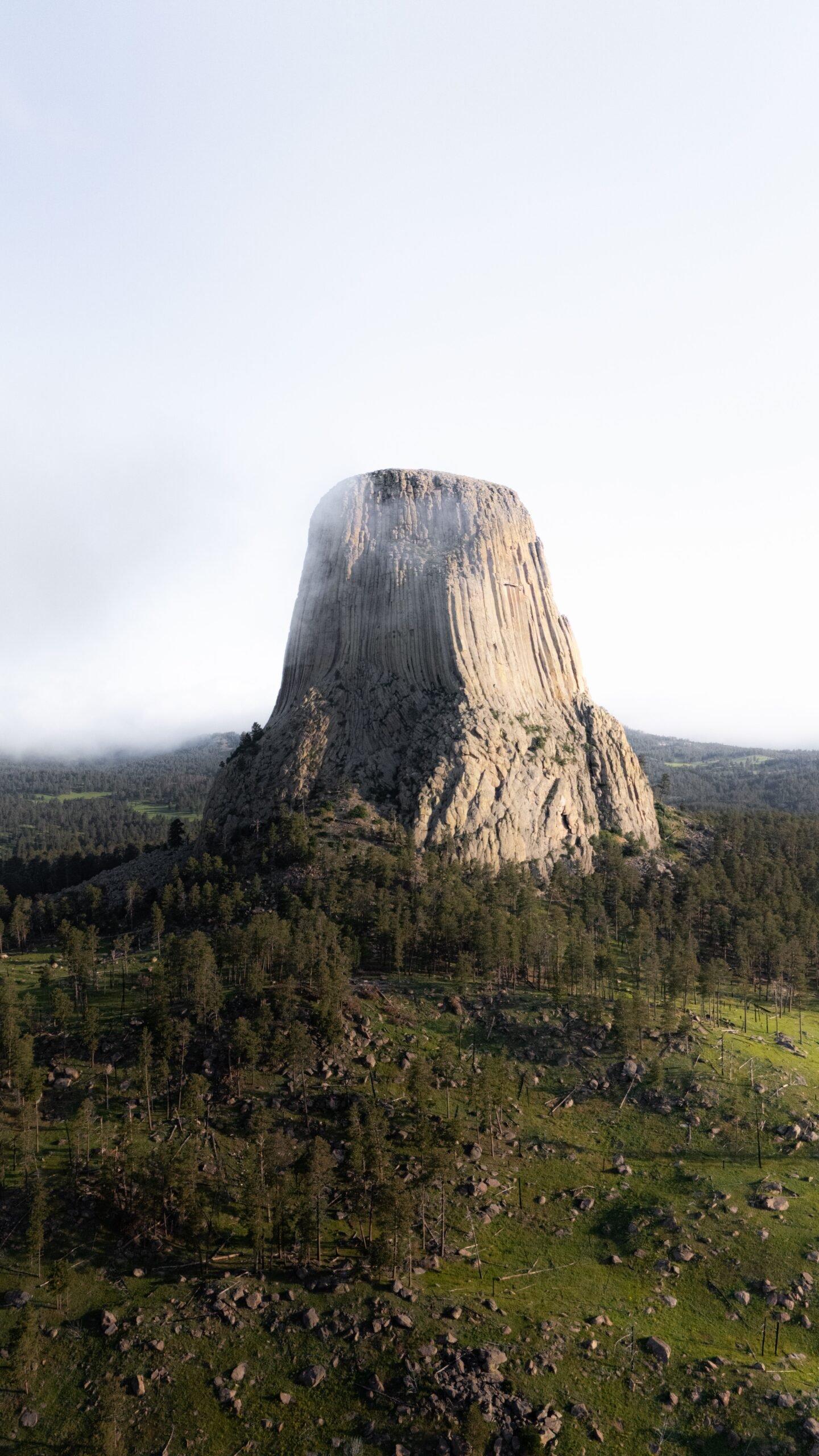
The best way to experience Devils Tower is on foot. The Tower Trail is a paved, 1.3-mile loop that circles the base of the tower, passing through boulder fields of fallen columns and offering changing views of the fluted walls. The trail is mostly flat, with a few gentle rises, and it takes most people about 45 minutes to an hour. Along the way, interpretive signs explain the geology, the wildlife and the Native American history of the tower, and you will often see climbers on the columns above.
For a wider view, the Joyner Ridge Trail is a 1.5-mile loop on the ridge across the valley, reached by a short drive from the main parking area. From Joyner Ridge, the whole tower stands framed against the sky, and it is one of the best places to photograph it at sunset. The longer Red Beds Trail, at about 2.8 miles, loops through the red sandstone hills and pine forest around the monument and is quieter than the Tower Trail. Whichever trail you choose, wear sturdy shoes, carry water, and watch for rattlesnakes in warm weather, especially among the boulders at the base.
Climbing Devils Tower
Devils Tower is one of the most famous crack climbing destinations in the world. The columns create long, parallel cracks that climbers follow all the way to the summit, and the rock is solid and well featured. The first technical ascent was made in 1937, and today thousands of climbers come each year to test themselves on routes with names like the Durrance Route, El Cracko Diablo and Bon Homme. The climbing season runs mainly from spring to autumn, and climbers must register at the visitor centre before climbing.
If you are not a climber, you can still enjoy watching them: from the Tower Trail you can often see climbers high on the columns, moving slowly up the cracks with ropes and gear. The park asks climbers to avoid using chalk that harms the rock, to respect the June voluntary closure, and to climb only in good weather. For experienced climbers, a summit of Devils Tower is a lifetime memory; for everyone else, watching a climber silhouetted against the sky is a reminder of just how tall and sheer this tower really is.
Wildlife: Prairie Dogs and More
Devils Tower is set in a landscape full of wildlife. The most famous residents are the black-tailed prairie dogs, whose town stretches along the entrance road. Prairie dogs are social rodents that live in large colonies, or towns, of burrows, and they spend their days feeding, grooming and calling warnings to each other with high-pitched barks. The prairie dog town is one of the best places in the park to watch them, especially in the morning and late afternoon, and you can often see them standing upright on their burrows, watching the world go by.
The monument is also home to mule deer, white-tailed deer, wild turkeys, cottontail rabbits and many birds, including red-tailed hawks, turkey vultures and the occasional golden eagle. The Belle Fourche River attracts herons and ducks, and the pine forest holds woodpeckers and nuthatches. Prairie dogs are a keystone species: their burrows shelter burrowing owls, snakes and other animals, and their grazing shapes the grassland. Please do not feed the prairie dogs, and keep a respectful distance, as they can carry disease and their bites are painful.
Stargazing and Night Skies
Devils Tower is a wonderful place to see the night sky. The monument sits far from big cities, so the skies are dark, and on a clear, moonless night the Milky Way arches overhead and thousands of stars are visible. The tower makes a dramatic silhouette against the stars, and it is a favourite subject for night photographers. The park runs evening astronomy programmes in summer, with rangers and telescopes, and the visitor centre can advise on the best nights to visit.
If you stay for the night sky, bring warm layers, a red torch to protect your night vision, and patience: your eyes need about twenty minutes to adjust to the dark. Avoid using white light or camera flashes near other viewers, and remember that the park is open all night for stargazing, though the visitor centre closes in the evening. The dark sky is part of what makes Devils Tower special, and it is worth staying after sunset to see it.
Best Time to Visit Devils Tower
The best time to visit Devils Tower is in late spring, from May to June, and in early autumn, from September to October, when the weather is mild, the crowds are smaller and the prairie dogs are active. Summer, from July to August, is the busiest season, with hot days, afternoon thunderstorms and full parking lots, so arrive early in the day if you visit in summer. The wildflowers are at their best in late spring, and the autumn colours in the cottonwoods along the river are beautiful in September and October.
Winter brings snow, cold wind and quiet trails. The monument stays open all year, and a snow-dusted tower against a blue sky is a beautiful sight, but the trails can be icy and the campground closes in winter. Whatever the season, check the forecast before you go, as Wyoming weather can change quickly, and summer thunderstorms can bring lightning, which is dangerous on exposed trails.
Practical Tips for Visiting Devils Tower
A few practical tips will help your visit go smoothly. There is an entrance fee per vehicle, and the monument is open all year, though the visitor centre hours change with the season. The Belle Fourche River Campground, inside the monument, offers first-come, first-served sites in summer, and there are hotels and motels in Sundance, Hulett and Gillette. Book accommodation in advance in summer, as the area is popular with visitors to the Black Hills and Mount Rushmore.
Wear sun protection and carry water, as there is little shade on the trails and the Wyoming sun is strong. Keep to the trails and do not climb on the boulders at the base, as they can be unstable and rattlesnakes shelter among them. If you plan to climb, register at the visitor centre and check the conditions and the June voluntary closure. Finally, be respectful of the tower’s sacred meaning: do not touch prayer cloths or offerings, keep noise down near ceremonies, and remember that for many Native American people, this is not just a scenic landmark but a holy place.
Conclusion
Devils Tower is one of those places that is even more impressive in person than in photographs. It rises out of the prairie like a giant’s tower, its columns striped by time and weather, and it carries a history that stretches from the deep past of the earth to the living traditions of the Native American peoples who still revere it. Whether you walk the Tower Trail, watch climbers on the columns, listen to the prairie dogs or stand beneath it under a sky full of stars, Devils Tower is a place that stays with you. Come with respect, take your time, and let this remarkable monument speak for itself.
Frequently Asked Questions About Devils Tower
How tall is Devils Tower?
Devils Tower rises 867 feet above the surrounding terrain and 1,267 feet above the Belle Fourche River. Its summit is 5,112 feet above sea level.
Can you climb to the top of Devils Tower?
Yes, experienced rock climbers can climb to the summit on routes that follow the cracks between the columns, and they must register at the visitor centre first. There is no hiking trail to the top, and the final section is technical climbing only.
How long does it take to visit Devils Tower?
Most visitors spend half a day at the monument: an hour on the Tower Trail, time at the visitor centre and the prairie dog town, and a stop at Joyner Ridge for photographs. A full day allows for the longer trails and an evening of stargazing.
What is the best time of year to visit Devils Tower?
Late spring and early autumn, from May to June and September to October, usually bring the mildest weather and the smallest crowds. Summer is busy and hot, and winter is cold but quiet.
Why is Devils Tower sacred?
Devils Tower is sacred to the Lakota, Cheyenne, Arapaho, Crow, Kiowa and Shoshone peoples, who have prayed and held ceremonies there for centuries. The Lakota name is Mato Tipila, or Bear Lodge, and prayer cloths tied to trees near the tower are offerings that visitors should not touch.
Keep exploring the American West with our guides to Arches National Park and the Grand Canyon, two more unforgettable landscapes of red rock, desert and deep time.