Ngorongoro Crater, Tanzania: Complete Guide to Safaris, the Big Five and the Best Time to Visit
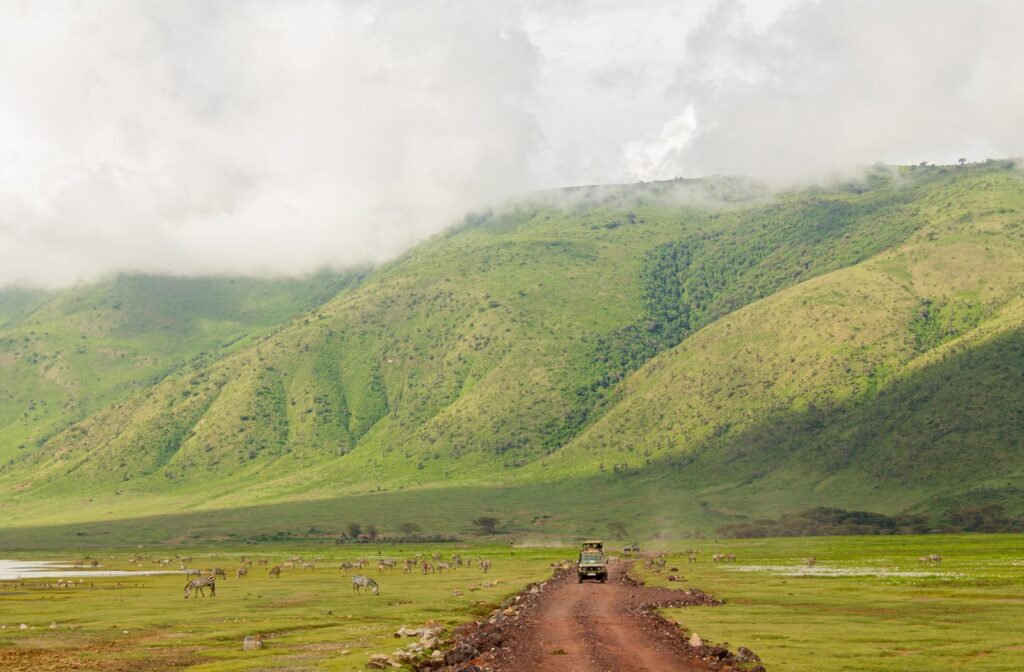
Ngorongoro Crater is the greatest natural amphitheatre on Earth. A vast volcanic caldera, 19 kilometres across and 610 metres deep, it holds a complete world inside its walls: grasslands full of wildebeest and zebra, a soda lake pink with flamingos, a forest of yellow fever trees, and the densest population of large predators in Africa. It is the one place in Tanzania where you can see the Big Five in a single day, and it is one of the great wildlife experiences of the world.
This guide covers everything you need to plan a Ngorongoro Crater safari, from the wildlife of the crater floor to the best time to visit, where to stay on the rim, how to combine it with the Serengeti, and what to expect on a day in the crater. Whether you come for a single morning game drive or a week in northern Tanzania, the crater is a place that stays with you for life.
Ngorongoro is more than a safari destination. It is a UNESCO World Heritage Site, a conservation area where the Maasai graze their cattle alongside the wildlife, and the site of Olduvai Gorge, where some of the earliest human fossils were found. It is a place where the natural and human history of Africa meet, and where a single day can show you more wildlife than a week anywhere else.
Where Ngorongoro Crater Is and What Makes It Special
Ngorongoro Crater lies in the Ngorongoro Conservation Area of northern Tanzania, about 180 kilometres west of Arusha, on the edge of the Serengeti. The crater was formed two to three million years ago, when a great volcano collapsed in on itself, leaving a perfect caldera with steep walls and a flat floor. The crater is the largest intact volcanic caldera in the world, and its floor covers 260 square kilometres.
What makes Ngorongoro special is the concentration of wildlife. About 25,000 large animals live on the crater floor, including wildebeest, zebra, buffalo, gazelle, and eland, and they are hunted by one of the densest populations of lions in Africa. The crater is also one of the best places in Tanzania to see the endangered black rhinoceros, and it is one of the few places where all of the Big Five, lion, leopard, elephant, buffalo, and rhino, can be seen in a single day.
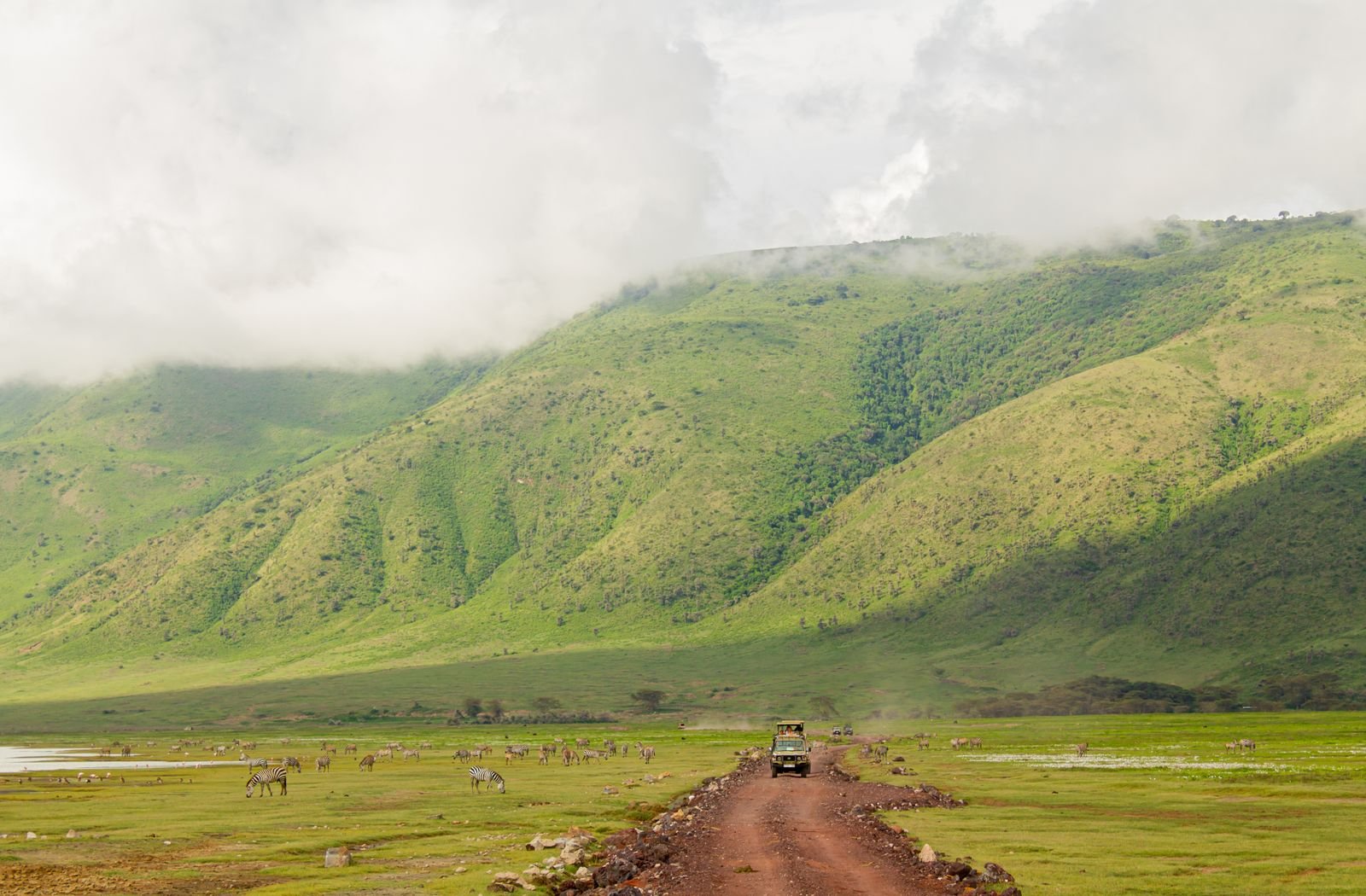
The crater is also special for its landscape. The floor is a mosaic of grassland, swamp, forest, and lake, and the walls rise steeply on all sides, so the whole crater feels like a world apart. The rim, at 2,200 to 2,400 metres, is cool and misty in the morning, and the view down to the crater floor, with the herds spread out below, is one of the great sights of Africa.
The Big Five and the Wildlife of the Crater Floor
The Big Five are the stars of Ngorongoro, and the crater is one of the best places in Africa to see them all. Lions are the most visible, with several prides living on the crater floor, and they are often seen resting in the shade of the acacia trees or hunting the herds on the grassland. Leopards are shyer, and they are usually seen in the Lerai Forest, the yellow fever tree forest on the crater floor, where they rest in the branches.
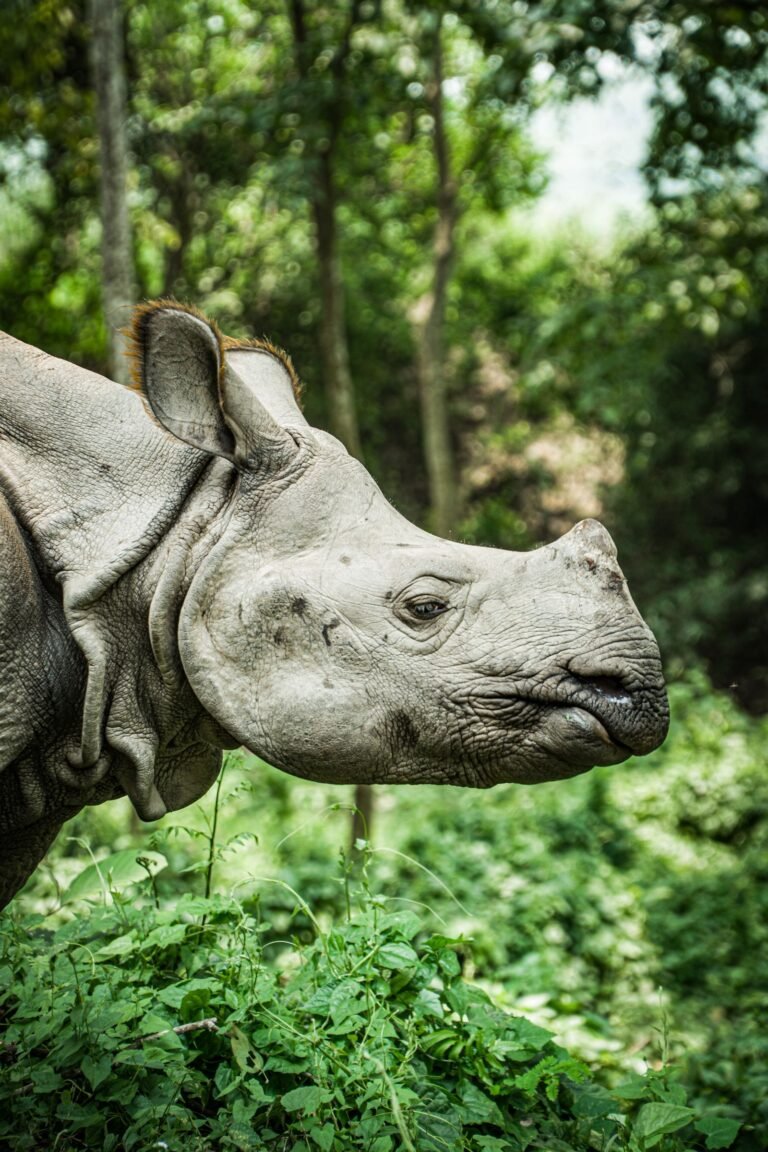
Elephants are common on the crater floor, and the old bulls, with their huge tusks, are a magnificent sight. Buffalo gather in large herds on the grassland, and they are often seen near the swamps and the lake. The black rhinoceros is the rarest of the five, with only a few dozen left in the crater, and seeing one is the highlight of any Ngorongoro safari. Your guide will know where to look, and the rhinos are usually seen in the open grassland near the lake.
Beyond the Big Five, the crater is full of wildlife. The grassland is covered in wildebeest and zebra, which graze in huge herds, and the swamps are home to hippos and elephants. Lake Magadi, the soda lake in the centre of the crater, is pink with flamingos, and the forest is home to baboons, vervet monkeys, and many birds. The crater floor is one of the best places in Africa for birdwatching, with over 500 species recorded.
A Day in the Crater: What to Expect
A day in Ngorongoro Crater starts early. Most safaris descend to the crater floor at about 6 a.m., when the gates open, and the light is golden and the animals are active. The descent road winds down the steep crater wall, and the view opens out as you reach the floor, with the herds spread out below and the lions often visible from the rim.
The morning is spent game driving across the crater floor, with stops at the lake, the swamps, and the forest. A picnic lunch is usually served at a designated site near the lake, where you can eat while watching the hippos and the flamingos. The afternoon is spent looking for the animals you have not yet seen, especially the rhino and the leopard, before ascending to the rim by 4 p.m., when the crater closes to visitors.
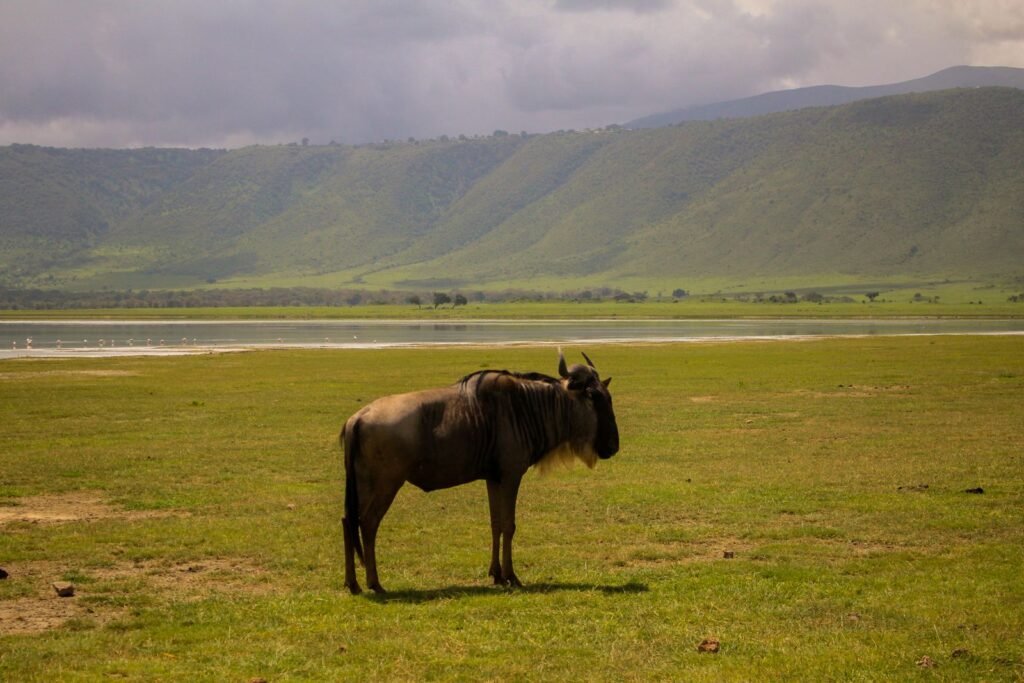
The crater floor visit is limited to six hours, and the number of vehicles is controlled, so the experience is never overcrowded. The roads are rough, and the dust is thick, so bring a scarf or a mask, and wear layers, because the rim is cold in the morning and the crater floor is hot by midday. A good guide makes all the difference, and the best guides know the crater intimately and can find the animals that other vehicles miss.
The Maasai and Olduvai Gorge
Ngorongoro is not just a wildlife reserve; it is a place where people and wildlife live together. The Maasai, the pastoralist people of northern Tanzania and southern Kenya, graze their cattle in the conservation area, and their villages, or bomas, are a familiar sight on the crater rim and the surrounding highlands. A visit to a Maasai boma, arranged through your lodge or tour operator, is a chance to learn about their culture, their cattle, and their relationship with the wildlife.
Olduvai Gorge, on the edge of the conservation area, is one of the most important archaeological sites in the world. It was here that Louis and Mary Leakey found some of the earliest human fossils, including Homo habilis, and the gorge is known as the cradle of mankind. The small museum at the gorge tells the story of human evolution, and the gorge itself, with its layers of rock and ash, is a fascinating place to visit.
The conservation area is a model of multiple land use, where wildlife, people, and livestock share the same landscape. It is not without its tensions, and the balance between conservation and the needs of the Maasai is a constant challenge, but it is a reminder that the best conservation is the kind that includes the people who live with the wildlife.
The Best Time to Visit Ngorongoro Crater
The best time to visit Ngorongoro Crater is the dry season, from June to October, when the grass is short, the animals gather around the water, and the wildlife viewing is at its best. The weather is cool and dry, the skies are clear, and the roads are in good condition. July and August are the busiest months, and the lodges on the rim book out well ahead.
January and February are also excellent, with the calving season in the Serengeti and the crater full of young animals. The short rains in November and December bring green grass and fewer visitors, and the birdwatching is at its best. The long rains, from March to May, bring heavy rain and muddy roads, and some lodges close, but the landscape is green and the crater is quiet.
Whatever the season, the crater is at its best in the early morning, when the light is golden and the animals are active. The rim is cold at dawn, often below 10 degrees, so bring a warm jacket, and the crater floor warms up quickly, so dress in layers. The best wildlife viewing is in the first few hours after the gates open, so an early start is essential.
Where to Stay on the Crater Rim
Where you stay on the crater rim depends on your budget and your style. The most famous lodge is the Ngorongoro Crater Lodge, a luxurious property with stilted suites, private butlers, and views over the crater that are hard to beat. The Ngorongoro Serena Safari Lodge, built of local stone, is a good mid-range option, and the Ngorongoro Sopa Lodge, on the eastern rim, is a comfortable family choice.
For a more intimate stay, consider a tented camp on the rim or in the highlands around the crater. The camps offer a closer connection to the landscape, with canvas tents, hot showers, and excellent food, and they are often better value than the lodges. The highlands around the crater, including the village of Karatu, have a range of lodges and camps that are a good base for the crater and the nearby Lake Manyara.
Book well ahead for the dry season, especially for the lodges on the rim, which sell out months in advance. Most safaris include accommodation, transport, and a guide in the price, and the lodges offer full board, with meals, drinks, and game drives included. The crater rim is at 2,200 metres, and the nights are cold, so bring warm clothing for the evenings.
Getting to Ngorongoro and Combining It with the Serengeti
Getting to Ngorongoro starts in Arusha, the safari capital of northern Tanzania, which has an airport with flights from Kilimanjaro International Airport and from Nairobi. From Arusha, the drive to the crater takes about four hours, passing through the town of Karatu and up to the crater rim. Most visitors arrange a safari through a tour operator in Arusha, who will provide a vehicle, a guide, and accommodation.
Ngorongoro is usually combined with the Serengeti, which lies to the west of the crater. A typical northern Tanzania safari spends two days in the Serengeti, one day in Ngorongoro Crater, and a day at Lake Manyara or Tarangire, and it is the classic route for a first safari. The drive from the crater to the Serengeti takes about two hours, and the road passes through the highlands and the Olduvai Gorge.
Flying is another option. There are daily flights from Arusha to the Serengeti and to the Lake Manyara airstrip, which is about an hour from the crater, and fly-in safaris are a good way to save time. However you travel, allow at least a day for the crater itself, and two days if you want to visit Olduvai Gorge and a Maasai village as well.
Practical Tips for a Ngorongoro Safari
A few practical tips will make your Ngorongoro safari better. Bring binoculars, because the animals are often far away, and a good camera with a zoom lens. Bring layers, because the rim is cold in the morning and the crater floor is hot by midday. Bring sunscreen, a hat, and insect repellent, and drink plenty of water.
Respect the rules of the crater. Stay in your vehicle at all times, except at the designated picnic site, and do not get out to take photographs. Do not feed the animals, and do not leave the roads. The crater is a protected area, and the rules exist to keep you safe and to protect the wildlife. The lions are wild, and they are not to be approached on foot.
Finally, listen to your guide. The guides in Ngorongoro are among the best in Africa, and they know the crater, its animals, and its history intimately. They will find the rhino when other vehicles cannot, they will explain the behaviour of the lions, and they will make your day in the crater unforgettable. A good guide is the difference between a good safari and a great one.
Frequently Asked Questions
How many days do you need for Ngorongoro Crater?
One full day is enough for the crater itself, with a morning descent and an afternoon ascent. Most visitors spend two to three days in the area, including a visit to Olduvai Gorge and a Maasai village, and combine the crater with two or three days in the Serengeti.
What is the best month to visit Ngorongoro Crater?
June to October is the best time to visit Ngorongoro Crater, with dry weather, short grass, and excellent wildlife viewing. January and February are also good, with the calving season and young animals. March to May is the wet season, with heavy rain and fewer visitors.
Can you see the Big Five in Ngorongoro Crater?
Yes, Ngorongoro Crater is one of the best places in Africa to see the Big Five in a single day. Lions, elephants, buffalo, and leopards are regularly seen, and the crater is one of the best places in Tanzania to see the endangered black rhinoceros.
How much does a Ngorongoro safari cost?
A Ngorongoro safari is one of the more expensive safaris in Tanzania, because of the park fees, which are among the highest in Africa, and the cost of the lodges on the rim. A typical three-day safari, including the Serengeti, costs from a few hundred US dollars per person per day, depending on the level of accommodation.
Is Ngorongoro Crater safe?
Yes, Ngorongoro Crater is safe for visitors, provided you follow the rules and stay with your guide. The animals are wild, and you must stay in your vehicle at all times, except at the designated picnic site. The lodges and camps are secure, and the guides are trained and experienced.
Conclusion
Ngorongoro Crater is the greatest wildlife show on Earth. A single day on the crater floor can show you more animals than a week in most other parks, and the setting, a vast caldera with walls rising on all sides, is unlike anywhere else in the world. It is a place that reminds you why Africa’s wildlife matters, and why it is worth protecting.
If Ngorongoro leaves you wanting more of Africa’s wildlife, the Serengeti next door offers the Great Migration and endless plains, while Etosha in Namibia pairs a vast salt pan with waterhole wildlife viewing. Ngorongoro Crater, though, is where Africa gathers its greatest animals into a single perfect bowl, and it is a safari that stays with you for life.
Read more about the Ngorongoro Crater on Wikipedia.