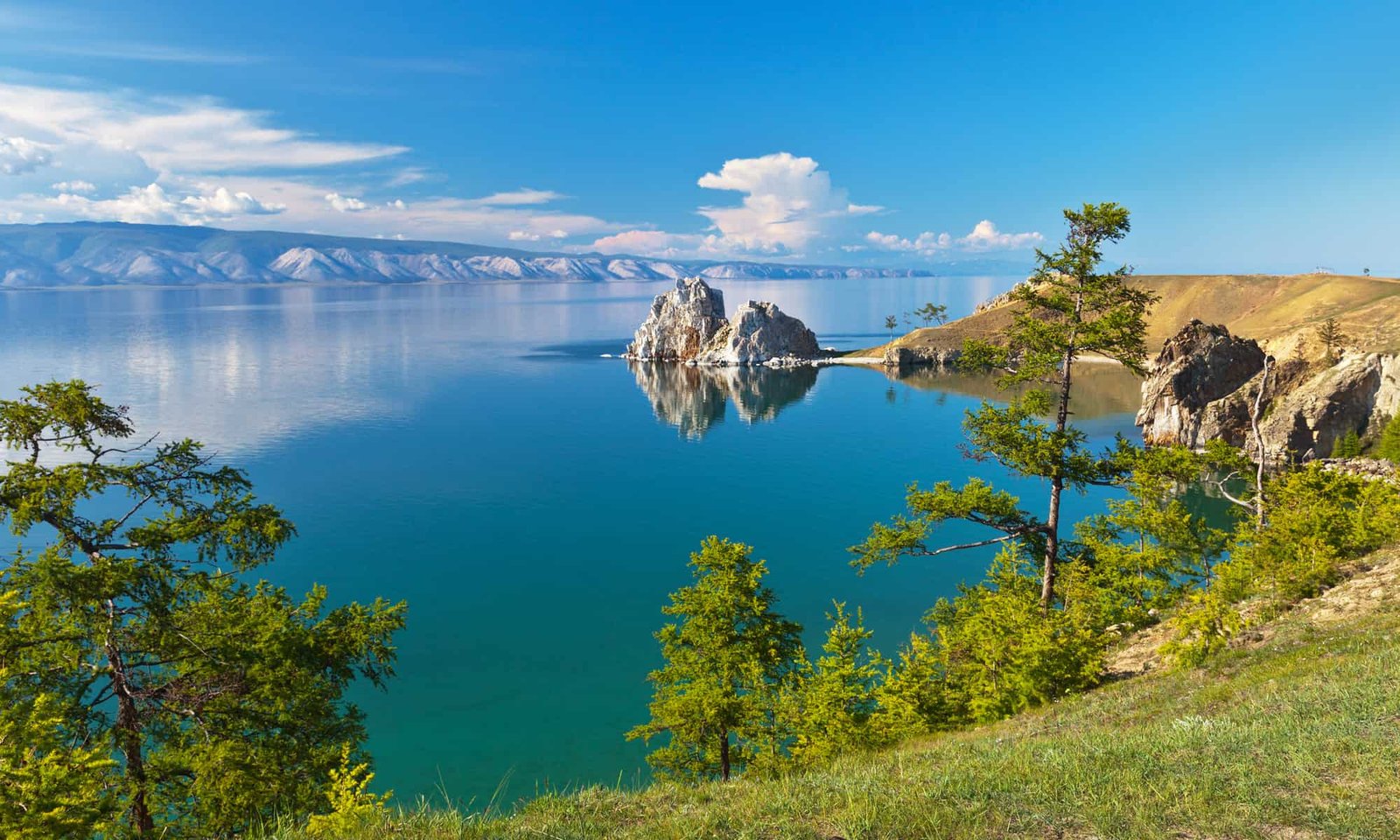
Lake Baikal: The World’s Deepest Lake – Complete History, Natural Beauty, Wildlife, Climate, and Travel Guide


7
Introduction to Lake Baikal
Lake Baikal is one of the most extraordinary natural wonders on Earth. Located in southern Siberia, Russia, this magnificent lake is famous for its incredible depth, crystal-clear water, ancient geological history, unique wildlife, and breathtaking surrounding landscapes. It is widely recognized as the world’s deepest freshwater lake and one of the oldest existing lakes on the planet.
Surrounded by forests, mountains, rocky cliffs, and remote wilderness, Lake Baikal offers a remarkable combination of natural beauty and scientific importance. Its clear blue water, dramatic seasonal changes, and unusual animals make it a fascinating destination for nature lovers, photographers, researchers, and adventurous travelers.
Lake Baikal is not simply a beautiful lake. It is also an enormous natural freshwater reservoir, an important ecosystem, and a place deeply connected with the cultures and traditions of Siberian communities. Scientists study it to understand freshwater biodiversity, the development of ancient ecosystems, and the geological processes that shape the Earth’s surface.
During summer, the lake attracts visitors with its blue water, green forests, rocky islands, and mountain scenery. During winter, much of its surface freezes, creating spectacular landscapes of transparent ice, frozen bubbles, ice caves, and turquoise ridges. These seasonal transformations make Lake Baikal one of the most visually distinctive places in the world.
This article explores Lake Baikal’s location, geography, history, geology, climate, wildlife, surrounding communities, tourism opportunities, environmental challenges, and conservation efforts. It also explains why this remarkable lake deserves international attention and protection.
1. Where Is Lake Baikal Located?

Lake Baikal is located in southern Siberia in the Russian Federation. It lies mainly within the Irkutsk Oblast and the Republic of Buryatia, two regions known for their forests, mountains, rivers, and extensive wilderness areas.
The lake stretches through a remote part of eastern Russia, far from many of the country’s largest urban centers. Its geographical position gives it a distinctive environment influenced by continental weather patterns, surrounding mountain ranges, and the immense landmass of Siberia.
Lake Baikal is approximately 636 kilometers long and up to 79 kilometers wide. Its crescent-shaped outline makes it easily recognizable on maps. Although its average width is much smaller than its length, its great depth and volume make it one of the world’s most remarkable inland water bodies.
The lake is connected to a larger river system. The Selenga River is its most important tributary, bringing water from Mongolia into the lake. Numerous smaller rivers and streams also flow into it from surrounding mountains and forests. The Angara River is the lake’s principal natural outlet, carrying water northward from Lake Baikal.
The surrounding region includes several settlements, nature reserves, mountain valleys, and traditional villages. Irkutsk is one of the principal urban gateways for travelers visiting the lake, while Ulan-Ude provides access to its eastern and southeastern surroundings.
The lake’s remote location has helped preserve many of its natural characteristics. However, modern transportation, tourism, industrial activity, and expanding settlements have also created environmental pressures.
Its location in Siberia means that Lake Baikal experiences dramatic seasonal changes. Summers can be pleasant, with long daylight hours and green landscapes, while winters bring freezing temperatures, snow, and extensive ice formation.
For geographers, ecologists, and travelers, this location provides a rare opportunity to observe how an enormous freshwater ecosystem functions within a cold continental environment.
2. Why Is Lake Baikal So Famous?


6
Lake Baikal is famous for several extraordinary characteristics that distinguish it from almost every other lake in the world. Its enormous depth, ancient origins, exceptional freshwater reserves, and unique biodiversity make it important to both science and global environmental conservation.
The World’s Deepest Freshwater Lake
Lake Baikal reaches a maximum depth of approximately 1,642 meters. This makes it the deepest lake on Earth. Its bottom lies far below the surface, creating a vast underwater environment with conditions that differ significantly from those found in shallow lakes.
The lake’s depth influences its water circulation, temperature distribution, and ecological systems. Deep water provides habitats for organisms adapted to low temperatures and limited sunlight.
Its great depth is also connected to its geological origin. Lake Baikal occupies an active continental rift zone, where the Earth’s crust is slowly pulling apart. Over millions of years, this movement has helped create the deep basin that holds the lake today.
One of the World’s Oldest Lakes
Many lakes form through glacial activity, volcanic processes, or temporary changes in river systems. Some disappear after relatively short geological periods, but Lake Baikal has existed for approximately 25 million years or longer, according to common scientific estimates.
Its extraordinary age has allowed plants, animals, and microorganisms to evolve in relative isolation. Some species developed characteristics that are rarely found elsewhere.
The lake therefore serves as a natural laboratory for scientists investigating evolution, biodiversity, and the long-term development of freshwater ecosystems.
An Enormous Freshwater Reserve
Lake Baikal contains approximately 23,000 cubic kilometers of water, representing around one-fifth of the world’s unfrozen surface freshwater.
This immense reserve makes it important to discussions about freshwater resources and environmental sustainability. Its water supports an extensive natural ecosystem, while rivers, wetlands, and surrounding landscapes depend on the lake’s hydrological processes.
However, the presence of such a large freshwater reserve does not mean that its water can be treated as an unlimited resource. Pollution, ecosystem disruption, and climate change can affect water quality and ecological health.
Remarkably Clear Water
In many areas and during suitable seasons, Lake Baikal’s water can be exceptionally transparent. Under favorable conditions, visibility may extend many meters below the surface.
This clarity is influenced by biological, chemical, and physical processes, including the activity of microscopic organisms and the relatively low concentration of suspended particles in some parts of the lake.
The transparent water creates spectacular blue and turquoise colors, particularly when sunlight reflects off the lake’s surface or penetrates clear ice in winter.
A Unique Collection of Species
Lake Baikal supports an extraordinary range of freshwater life. Many of its species are endemic, meaning they occur naturally nowhere else in the world.
The most famous example is the Baikal seal, also known as the nerpa. Unlike most seals, it lives entirely in a freshwater environment.
The lake also contains distinctive fish, tiny crustaceans, sponges, worms, and microscopic organisms. Together, these species form an intricate ecosystem that has developed over millions of years.
These characteristics explain why Lake Baikal is much more than a beautiful destination. It is a globally significant natural treasure.
3. The Geological History of Lake Baikal

The geological history of Lake Baikal stretches back millions of years. Its formation is associated with one of the most interesting geological features in Asia: the Baikal Rift Zone.
A rift zone develops when sections of the Earth’s crust gradually move away from one another. As the crust stretches, faults develop and blocks of land shift vertically. Some areas sink, creating long depressions that may eventually fill with water.
This process helped form the deep basin that now contains Lake Baikal.
Formation of the Rift Basin
Unlike lakes formed primarily by glaciers or volcanic craters, Lake Baikal owes much of its shape to tectonic activity. The surrounding crust continues to experience earthquakes and gradual movement.
Over geological time, the basin deepened and accumulated thick layers of sediment. These sediments preserve information about past climates, biological communities, and environmental changes.
Scientists study these layers to reconstruct the region’s ancient history. Sediment cores can reveal changes in vegetation, temperature, rainfall, and the movement of species across geological periods.
The lake’s geological development is still continuing. Although the changes are usually too slow to notice during an ordinary visit, the underlying tectonic processes remain active.
Earthquakes and Tectonic Activity
The Baikal region experiences earthquakes because of movement along faults associated with the rift system. Many earthquakes are small, but larger events have affected surrounding communities and landscapes.
Earthquakes can influence the lake basin, underwater sediments, and local landforms. They also provide researchers with evidence about the forces acting within the Earth’s crust.
This geological activity is one reason the region attracts scientists from different countries.
Underwater Landscapes
Lake Baikal’s underwater terrain includes steep slopes, deep depressions, ridges, and sediment-covered areas. Its bottom is not a simple, uniformly shaped bowl.
Different depths create different habitats, each with its own temperature conditions, food availability, and biological communities.
The deepest sections remain inaccessible to ordinary divers, and much of the underwater environment can be studied only through specialized equipment.
Research vessels, sonar mapping, sediment sampling, and remotely operated instruments help scientists explore these hidden landscapes.
Why Its Geological History Matters
Lake Baikal provides a rare record of long-term environmental change. Because it has existed for such an extraordinary period, its sediments preserve evidence from many different stages of Earth’s history.
Its geology also explains why the lake is so deep and why it supports such a distinctive ecosystem.
Understanding these processes helps scientists evaluate future environmental changes and identify the natural forces shaping the region.
4. The Size, Depth, and Water Volume of Lake Baikal
Lake Baikal is impressive not only because of its scenery but also because of its physical dimensions.
Its immense size gives it characteristics that distinguish it from smaller freshwater lakes. The lake stretches across hundreds of kilometers, contains enormous quantities of water, and reaches depths greater than those of many marine coastal environments.
The following table summarizes several widely cited geographical facts.
| Feature | Approximate measurement |
|---|---|
| Location | Southern Siberia, Russia |
| Length | 636 km |
| Maximum width | 79 km |
| Maximum depth | 1,642 m |
| Surface area | 31,700 km² |
| Water volume | 23,000 km³ |
| Estimated age | 25 million years or more |
| Principal tributary | Selenga River |
| Principal outlet | Angara River |
Measurements can vary slightly between sources because of surveying methods and changes in how geographical features are defined.
Understanding the Lake’s Immense Depth
A depth of 1,642 meters is difficult to imagine. If a tall skyscraper were placed vertically into the lake’s deepest section, its upper floors could remain far below the surface.
The pressure of water increases with depth. Organisms living near the bottom must tolerate conditions very different from those experienced by animals near the shore.
Light also decreases rapidly underwater. Sunlight cannot reach the deepest areas, so organisms there depend on food and energy moving through the ecosystem rather than on direct photosynthesis.
Water Storage and Circulation
Lake Baikal’s enormous volume means that water entering the lake does not simply pass through immediately. Water circulation involves complex interactions between temperature, wind, seasonal mixing, inflowing rivers, and the shape of the basin.
During warmer months, surface waters may become warmer than deeper layers. Seasonal cooling can produce mixing that transports oxygen and nutrients through parts of the water column.
These processes are important for the survival of aquatic organisms.
How Long Would It Take to Explore?
A road journey around Lake Baikal is not as simple as driving around a small lake. The shoreline includes remote areas, mountains, forests, settlements, and stretches where direct road connections are limited.
Travelers often explore selected sections rather than attempting to visit every part of the shoreline.
Boat trips, hiking routes, village visits, and island excursions provide different perspectives on its enormous scale.
Its size is part of what makes the lake so attractive to explorers: every region offers a slightly different combination of scenery, wildlife, and cultural history.
5. The Crystal-Clear Water of Lake Baikal


8
The water of Lake Baikal is among its most recognizable features. Its clarity, color, and seasonal appearance have inspired travelers, photographers, scientists, and writers for generations.
During calm weather, sections of the lake can appear like an enormous natural mirror. Mountains and clouds reflect on the surface, while the shoreline may reveal stones beneath shallow water.
What Makes the Water So Clear?
Water clarity depends on several factors. These include the amount of suspended sediment, the presence of microscopic organisms, the chemical composition of the water, and the movement of currents.
Lake Baikal contains tiny organisms that play important roles in processing organic matter. Some zooplankton feed on microscopic algae and particles, helping influence the concentration of material suspended in the water.
One notable organism is Epischura baikalensis, a small endemic crustacean that forms an important part of the lake’s food web.
However, clarity is not identical everywhere. River mouths, stormy conditions, shallow bays, and areas affected by human activity can have different levels of transparency.
Why Does the Water Look Blue?
The color of a lake is influenced by how water absorbs and scatters sunlight, as well as by the sky, depth, suspended particles, and the surrounding landscape.
Clear water often appears blue because water absorbs longer wavelengths of visible light more strongly than shorter blue wavelengths. Reflections from the sky and the angle of sunlight can also affect its appearance.
In some locations, the water becomes brilliant turquoise, particularly near rocky shorelines and under bright sunlight.
Is Lake Baikal’s Water Safe to Drink?
Although parts of Lake Baikal have exceptionally clear water, clear appearance alone does not guarantee that water is safe to drink.
Microorganisms, pollutants, and local contamination may not be visible to the naked eye. Visitors should use properly treated drinking water rather than assume that water collected directly from the lake is safe.
Water quality can also vary depending on location and nearby human activities.
Protecting the lake’s water quality is essential because its ecological value extends far beyond its visual beauty.
6. The Climate of Lake Baikal

Lake Baikal experiences a strongly continental climate because it lies deep within Siberia, far from the moderating influence of oceans.
The surrounding region has long, cold winters and comparatively short summers. However, the lake itself influences local weather, particularly near its shoreline.
Conditions vary considerably according to elevation, exposure to wind, distance from the water, and the location of nearby mountains.
Winter
Winter transforms Lake Baikal into one of the most spectacular frozen landscapes on Earth.
Temperatures in the surrounding region can fall far below freezing, and large portions of the lake usually develop thick ice during the colder months. The timing and thickness of ice vary from year to year.
Frozen bays, snowy cliffs, and white forests create dramatic scenery. In some places, the ice becomes so transparent that dark water and trapped bubbles can be seen beneath its surface.
The winter season also brings challenges. Strong winds, extreme cold, slippery ice, and sudden weather changes can make outdoor activities dangerous.
Travelers should never assume that all sections of the lake are frozen safely or uniformly.
Spring
Spring arrives gradually. Snow and ice begin to melt, although conditions can remain cold for an extended period.
The changing season brings flowing streams, emerging vegetation, and increasing activity among birds and other wildlife.
The timing of ice breakup differs across the lake. Protected bays and exposed areas may warm at different rates, creating a varied seasonal landscape.
Spring can be attractive for travelers seeking quiet scenery, but transportation and outdoor activities may be affected by unstable weather and changing ice conditions.
Summer
Summer is one of the most popular periods for visiting Lake Baikal.
Forests become green, wildflowers appear in suitable areas, and long daylight hours provide plenty of time for hiking, photography, boating, and sightseeing.
Daytime conditions can be pleasant, but temperatures vary significantly between locations. Water temperatures remain relatively cool in many areas, even when the air is warm.
Sudden storms and strong winds can occur, so boat operators and hikers must pay attention to forecasts.
Summer is especially suitable for exploring islands, visiting traditional settlements, and enjoying the lake’s blue water.
Autumn
Autumn brings changing colors to the surrounding forests. Trees and shrubs create golden, yellow, and orange landscapes, while cooler temperatures gradually return.
The season can be quieter than the peak summer period, offering excellent opportunities for landscape photography and peaceful walks.
However, daylight hours shorten, and some tourism services operate less frequently as winter approaches.
The Influence of Climate Change
Climate change is an important concern for Lake Baikal. Changes in regional air temperatures can affect the duration of ice cover, water temperature, seasonal mixing, and the distribution of aquatic species.
Scientists are investigating how these changes interact with pollution, invasive species, and other pressures.
The lake is an enormous natural system, so its response to climate change is complex. Long-term monitoring is essential to distinguish persistent trends from natural year-to-year variation.
7. Wildlife of Lake Baikal


8
Lake Baikal is internationally famous for its extraordinary wildlife. Its long geological history and relative isolation have allowed many species to evolve within its waters and surrounding landscapes.
The lake supports fish, crustaceans, worms, sponges, microorganisms, and mammals, while nearby forests and wetlands provide habitats for birds and land animals.
Scientists have identified thousands of animal and plant species in the Baikal region, and a substantial proportion of its native aquatic species are endemic.
The Baikal Seal
The Baikal seal, scientifically known as Pusa sibirica, is perhaps the lake’s most famous animal.
It is one of the world’s few seal species that lives exclusively in freshwater. Unlike most seals, which inhabit marine environments, the Baikal seal has adapted to the conditions of a large inland lake.
Its streamlined body, thick layer of insulating fat, and powerful flippers help it swim efficiently in cold water.
Baikal seals feed mainly on fish, including small schooling species found in the lake. Their feeding habits connect them to the broader aquatic food web.
During winter, seals use breathing holes in the ice. Females may give birth in snow shelters built above these openings, providing young pups with protection from the cold.
The seals are adapted to a demanding environment, but they remain vulnerable to changes in food availability, habitat conditions, human disturbance, and other environmental pressures.
Observing a Baikal seal in the wild can be a memorable experience. Visitors should maintain a respectful distance and avoid disturbing animals resting on ice or caring for their young.
Omul Fish
The omul is another well-known fish associated with Lake Baikal.
Baikal omul belongs to the whitefish family and has long been important to local food traditions and commercial fishing. It occupies an important place in the lake’s cultural and economic history.
Omul feeds on small aquatic organisms and forms part of the food supply for larger fish and other predators.
Fishing pressure and ecological changes have raised concerns about its population. Management measures and conservation efforts are important for maintaining sustainable fisheries.
Visitors may encounter omul in local markets and restaurants, although they should ask about the source and legality of any fish they purchase.
Golomyanka: A Remarkable Deep-Water Fish
The golomyanka is one of Lake Baikal’s most unusual native fish.
It is adapted to life in cold, deep water and has a relatively delicate, translucent body. Unlike many fish species, it does not have a typical swim bladder.
Golomyankas contain substantial amounts of body oil, which contributes to their buoyancy and is one of their most distinctive characteristics.
They are important prey for Baikal seals and other predators. Their movements and population dynamics therefore influence the wider ecosystem.
The golomyanka demonstrates how species can develop specialized adaptations in an isolated aquatic environment.
Freshwater Sponges
Lake Baikal is home to distinctive freshwater sponges that grow on submerged rocks and other surfaces.
These organisms filter particles from the water and provide habitat for small aquatic animals. Some Baikal sponges contain symbiotic microorganisms that contribute to their unusual colors and biological characteristics.
Their presence is another example of the lake’s remarkable diversity.
Changes in water quality, temperature, and ecological conditions can affect sponge communities, making them useful subjects for scientific research.
Microscopic Life
Much of Lake Baikal’s biodiversity exists at a scale that visitors cannot easily see.
Bacteria, algae, and microscopic animals help regulate nutrient cycling and energy transfer throughout the lake.
Phytoplankton use sunlight to produce organic matter. Zooplankton consume microscopic organisms and particles, transferring energy to fish and other animals.
These processes support the entire aquatic ecosystem.
Even small changes in the abundance of microorganisms can influence water clarity, food availability, and the health of larger species.
Birds and Mammals Around the Lake
The surrounding forests, rocky cliffs, wetlands, and grasslands support numerous birds and mammals.
Depending on the location and season, the wider region may provide habitat for eagles, waterfowl, woodpeckers, squirrels, foxes, deer, and other Siberian wildlife.
Larger mammals occur in the surrounding wilderness, although sightings are never guaranteed.
The best way to observe wildlife is to visit protected areas with knowledgeable local guides and follow rules designed to minimize disturbance.
8. The Importance of Lake Baikal’s Biodiversity
Lake Baikal’s biodiversity is important because it represents millions of years of evolution within a relatively isolated environment.
An endemic species may depend on specific water temperatures, food sources, oxygen conditions, or habitats. If those conditions change substantially, the species may have limited opportunities to relocate.
This makes the protection of individual species closely connected to the protection of the whole lake.
Food Webs and Ecological Balance
The lake’s food web includes microscopic producers, tiny crustaceans, fish, and seals.
Phytoplankton convert sunlight into organic matter. Zooplankton feed on microscopic organisms, while fish consume zooplankton and other small animals. Predators then feed on fish.
Organic matter also moves toward deeper waters, where it supports organisms adapted to darkness and cold.
These relationships are interconnected. A decline in one important species can affect other organisms that depend on it for food.
Endemic Species and Evolution
Endemism is particularly high among many of Lake Baikal’s native aquatic animals.
Over long periods, populations can become isolated and evolve unique adaptations. Different depths, food resources, and environmental conditions can encourage the development of distinct ecological niches.
Lake Baikal is therefore valuable to evolutionary biology.
By studying its species, researchers can investigate how organisms diversify, how ecosystems respond to environmental change, and how isolated populations develop specialized characteristics.
Why Biodiversity Conservation Matters
Protecting biodiversity involves more than preventing the extinction of individual animals. It also requires maintaining water quality, preserving habitats, managing fishing, controlling invasive species, and limiting damaging development.
Because so many organisms depend on the lake’s interconnected systems, conservation must consider the ecosystem as a whole.
9. The Forests and Mountains Around Lake Baikal


6
Lake Baikal is surrounded by landscapes that are as impressive as the lake itself.
Mountain ranges rise above parts of the shoreline, while forests stretch across vast areas of Siberia. Rocky cliffs, valleys, rivers, beaches, and open grasslands create a varied natural environment.
These landscapes influence the lake’s weather, water supply, and biodiversity.
Siberian Taiga
The taiga is the vast northern forest biome found across much of Siberia and other high-latitude regions.
Around Lake Baikal, the forests contain conifers and other vegetation adapted to cold winters and short growing seasons. Species vary with elevation, moisture, and local conditions.
The forest provides habitat for birds, mammals, insects, and countless smaller organisms.
It also protects soils, stores carbon, and influences the movement of water from mountain slopes into streams and rivers.
Forest fires, logging, and changing climate conditions can affect these ecosystems. Responsible land management is therefore important for maintaining the natural character of the region.
Mountain Landscapes
Mountains surrounding the lake create dramatic views, especially where steep slopes descend toward the water.
Some mountain areas remain snow-covered for extended periods, while lower slopes support forests and alpine vegetation.
The elevation changes produce different habitats over relatively short distances. This contributes to the region’s ecological variety and creates opportunities for hiking and nature observation.
Rocky Cliffs and Beaches
The shoreline varies from steep cliffs and rocky headlands to sandy or pebble-covered beaches.
These differences influence where people can safely access the lake and where particular plants and animals occur.
Rocky shores may provide excellent photographic viewpoints, while sheltered bays can offer more suitable conditions for walking and observing the water.
Visitors should avoid damaging vegetation, disturbing nesting sites, or leaving waste behind.
Rivers and Wetlands
Rivers and streams carry water, nutrients, and sediment into Lake Baikal. Their surrounding wetlands and floodplains can provide important habitats for birds, fish, and other wildlife.
The Selenga River system is particularly significant because of the volume of water and sediment it brings into the lake.
Changes in river flow, land use, pollution, and climate can influence these habitats and the lake’s wider ecological balance.
10. Olkhon Island: One of Lake Baikal’s Most Beautiful Destinations


8
Olkhon Island is one of the best-known destinations on Lake Baikal. Located in the western part of the lake, it is famous for its dramatic cliffs, open grasslands, pine forests, beaches, and panoramic views.
The island combines remarkable scenery with important cultural and spiritual traditions.
Natural Beauty of Olkhon Island
Olkhon’s landscape differs from the densely forested shorelines found elsewhere around the lake.
Some areas feature open grassland, while others contain sandy beaches, rocky headlands, and scattered forests. The contrast between the land and the lake creates a distinctive landscape.
Visitors often travel across the island to explore viewpoints, photograph the shoreline, and enjoy its peaceful atmosphere.
Shaman Rock
One of Olkhon’s most famous landmarks is Shaman Rock, located near the settlement of Khuzhir.
The rock is closely associated with the spiritual traditions of local Buryat communities and is widely recognized as a culturally significant place.
Its distinctive shape, position beside the water, and dramatic appearance make it a popular subject for photography.
However, Shaman Rock is not simply a scenic attraction. Visitors should recognize its cultural significance, respect local customs, and follow any restrictions on access or behavior.
Cape Khoboy
Cape Khoboy lies at the northern end of Olkhon Island and offers expansive views over Lake Baikal.
Its cliffs and open surroundings make it one of the island’s memorable natural landmarks. Depending on weather and visibility, visitors may see distant shorelines and broad stretches of water.
The journey to the cape can involve rough roads and remote terrain. Guided excursions are often a practical option for travelers unfamiliar with local conditions.
Culture and Traditions
Olkhon Island is associated with Buryat culture and traditions influenced by local spiritual beliefs, including forms of shamanic practice and Tibetan Buddhist heritage in the wider region.
Traditional stories and spiritual relationships with nature remain important aspects of the island’s cultural identity.
Visitors should treat sacred sites with respect, avoid damaging ritual objects, and ask before photographing ceremonies or individuals.
Best Time to Visit Olkhon Island
Summer is popular for hiking, sightseeing, and exploring the shoreline. Winter attracts visitors interested in frozen landscapes, ice formations, and snow-covered cliffs.
Each season presents different opportunities and challenges. Winter travel requires careful planning, while summer visitors should prepare for changing weather and limited services in remote areas.
Olkhon Island is a strong example of how natural beauty and cultural heritage can exist together in a single destination.
11. Lake Baikal in Winter: A Frozen Natural Wonder


7
Winter gives Lake Baikal a completely different appearance. The familiar blue water becomes a broad frozen landscape, and the shoreline takes on a quiet, almost otherworldly character.
For photographers and travelers, this is one of the most extraordinary aspects of the lake.
Transparent Ice
In some areas, Lake Baikal develops remarkably clear ice. When conditions are favorable, sunlight passes through the ice and reveals water, rocks, or bubbles below.
The ice may appear blue, turquoise, gray, or nearly colorless depending on its thickness, structure, lighting, and impurities.
These visual effects make the lake famous among winter photographers.
Frozen Bubbles
One of the most recognizable winter features is the presence of bubbles trapped beneath the ice.
Many of these bubbles form when gases produced by biological processes move upward through the water and become trapped as the surface freezes.
Methane is one gas associated with some of these formations, although the exact origin and composition of individual bubbles can vary.
The resulting patterns may resemble strings of silver beads or tiny suspended spheres.
Cracks and Ice Ridges
Ice expands, contracts, and shifts as temperatures change. These movements create cracks that may extend across large areas.
When broken sections of ice push against one another, they can form ridges and piles of fractured ice.
The sound of shifting ice can be surprisingly loud. Cracks may produce deep booming or sharp reports as the frozen surface responds to temperature changes and mechanical stress.
These sounds are natural, but they also remind visitors that the lake’s ice is constantly changing.
Ice Caves and Frozen Cliffs
In suitable locations, water and waves can create cavities and sculpted ice formations along rocky shores. Freezing temperatures may produce icicles, translucent walls, and blue-tinted surfaces.
The appearance of these formations changes with weather and sunlight.
Some locations are accessible only under specific conditions, and not all ice caves are safe to enter.
Is Walking on Lake Baikal Safe?
Frozen Lake Baikal can be dangerous even when much of the surface appears solid.
Ice thickness is not uniform. Currents, underwater springs, cracks, pressure ridges, changing temperatures, and wind can create weak sections.
Visitors should follow local safety guidance, avoid unverified routes, and use experienced guides when appropriate. They should never assume that a frozen surface is safe simply because other people are standing on it.
Vehicle travel on the ice requires particular caution and should only occur where officially permitted and conditions have been assessed.
The lake’s winter beauty is extraordinary, but safety must always come first.
12. Lake Baikal in Summer: Blue Water and Green Landscapes


7
Summer reveals a softer, greener side of Lake Baikal.
The frozen surface disappears, forests develop fresh foliage, and the shoreline becomes accessible in many locations. Long daylight hours make it easier to enjoy outdoor activities and explore the surrounding wilderness.
Swimming and Beach Activities
Some sheltered beaches attract visitors who want to relax beside the lake.
However, Lake Baikal is a cold freshwater lake, and water temperatures can remain low even during warm weather. Swimming conditions depend on location, season, wind, and local hazards.
Visitors should avoid swimming alone, pay attention to warnings, and understand the risks of cold-water exposure.
Hiking and Nature Photography
Summer is well suited to hiking in suitable areas around the lake.
Trails and informal routes may pass through forests, along cliffs, across meadows, or toward viewpoints overlooking the water.
Photographers can capture blue lakeshores, wildflowers, clouds, mountain reflections, and wildlife.
Because some areas are remote, hikers should carry adequate supplies, use reliable navigation, and check weather forecasts.
Boat Trips
Boat excursions offer a different perspective on Lake Baikal.
From the water, visitors can see steep cliffs, isolated bays, forested slopes, and islands that may be difficult to reach by road.
Conditions can change rapidly, so travelers should choose responsible operators and follow safety instructions.
Peaceful Landscapes
Summer is not only about adventure. Many people visit Lake Baikal to experience its quiet atmosphere.
Watching sunlight move across the water, listening to waves on a pebble beach, or walking through a forest can provide a welcome escape from crowded urban environments.
Responsible tourism helps preserve this peaceful character for future visitors.
13. The History of Lake Baikal and Its Surrounding Communities
Lake Baikal has been connected with human life for thousands of years. Its waters, forests, rivers, and surrounding grasslands provided resources for communities that developed distinctive ways of living in Siberia.
The history of the region includes Indigenous traditions, trade, exploration, settlement, scientific research, and modern environmental protection.
Indigenous Peoples and Early Life
The wider Baikal region has long been home to Indigenous peoples, including Buryat communities and Evenki groups. Their histories, traditions, and relationships with the natural environment are important parts of the region’s cultural heritage.
For generations, communities relied on combinations of fishing, hunting, gathering, animal husbandry, and trade, depending on their location and circumstances.
The lake and its surrounding landscapes also became part of local oral traditions, spiritual beliefs, and stories passed between generations.
These traditions reflect the importance of the environment in everyday life and cultural identity.
The Buryat People
The Buryat people are particularly associated with the area around Lake Baikal. Their cultural heritage includes distinctive languages, customs, music, clothing, and spiritual traditions.
Buryat communities have historically practiced forms of pastoralism and maintained relationships with both settled and mobile ways of life.
Buddhism and shamanic traditions have influenced the wider cultural landscape, although religious practices and beliefs vary among individuals and communities.
For many Buryat people, Lake Baikal holds significance beyond its geographical characteristics. It is connected with cultural memory, sacred places, traditional stories, and a sense of belonging.
Visitors should recognize that these cultural relationships remain meaningful today.
Russian Exploration and Settlement
Russian expansion into Siberia increased during the seventeenth century. As explorers, traders, and settlers moved eastward, the Baikal region became increasingly connected with wider political and commercial networks.
Settlements developed along important routes, and the lake became a geographical landmark for travel across southern Siberia.
The difficult climate, long distances, and challenging terrain made transportation demanding.
Over time, improved routes and infrastructure increased the movement of people and goods through the region.
Scientific Exploration
As knowledge of Siberia expanded, Lake Baikal attracted increasing scientific attention.
Researchers began investigating its depth, geological structure, water characteristics, fish populations, and unusual animals.
The discovery and classification of distinctive freshwater species helped establish the lake’s importance in biological research.
Later advances in scientific equipment made it possible to investigate deep-water environments and collect sediment samples from the lake floor.
Today, Lake Baikal continues to support research into geology, ecology, evolution, hydrology, and climate.
Lake Baikal in the Modern Era
During the twentieth century, economic development and industrial activity increased in parts of the surrounding region.
These changes brought employment and infrastructure but also created concerns about pollution, land use, and the conservation of the lake’s natural environment.
Growing scientific awareness and environmental advocacy helped establish stronger recognition of Baikal’s international importance.
The lake is now widely viewed as a natural heritage site that requires cooperation between researchers, governments, local communities, and conservation organizations.
14. Lake Baikal and UNESCO World Heritage

Lake Baikal was inscribed on the UNESCO World Heritage List in 1996 in recognition of its exceptional natural importance.
Its international recognition reflects several outstanding qualities: its immense freshwater reserves, unusual geological history, remarkable depth, and extraordinary biological diversity.
Why Is Lake Baikal a World Heritage Site?
UNESCO World Heritage recognition is given to places considered to have outstanding universal value.
Lake Baikal meets this standard through its combination of geological and ecological characteristics. Its ancient basin, unique freshwater species, and enormous water volume make it important not only to Russia but to the wider world.
The lake also demonstrates how long-term geological processes can create environments that support exceptional biodiversity.
What Does World Heritage Status Mean?
World Heritage status draws international attention to a site’s importance and the need to protect it.
It encourages conservation planning, scientific cooperation, public awareness, and responsible management.
However, the designation does not automatically eliminate pollution or guarantee that every environmental problem will be solved.
Effective protection depends on practical measures, monitoring, enforcement, funding, and cooperation among the institutions and communities responsible for the region.
The Importance of International Cooperation
Lake Baikal’s ecological value extends beyond national borders because freshwater conservation, biodiversity, and climate research are global concerns.
Researchers from different countries can contribute knowledge about the lake’s geology, organisms, and changing environmental conditions.
International scientific collaboration also helps compare Lake Baikal with other major freshwater systems.
Protecting the lake is therefore both a regional responsibility and an important contribution to global environmental conservation.
15. Tourism Around Lake Baikal


8
Tourism has become an important part of the economy in several communities around Lake Baikal.
Visitors arrive to experience its scenery, wildlife, cultural traditions, hiking opportunities, winter ice formations, and remote wilderness.
Tourism can support local businesses and create opportunities for guides, accommodation providers, restaurants, transport operators, and craftspeople.
At the same time, poorly managed tourism can create waste, disturb wildlife, damage fragile habitats, and increase pressure on local infrastructure.
Listvyanka
Listvyanka is one of the best-known settlements on the western shore of Lake Baikal.
Its location makes it a popular starting point for visitors traveling from Irkutsk. The village offers lake views, access to the shoreline, and opportunities to learn about the region’s natural history.
Visitors may explore local museums, sample regional food, take boat trips when available, or simply enjoy the scenery.
Because it is relatively accessible, Listvyanka can become busy during popular travel periods.
Irkutsk as a Gateway
Irkutsk is a major urban center in the Baikal region and an important starting point for many lake excursions.
The city provides transport connections, accommodation, restaurants, and other services that travelers may need before visiting more remote destinations.
Travelers can use Irkutsk as a base for exploring selected areas of the western shoreline, although journey times depend on the specific destination and road conditions.
Ust-Barguzin and the Eastern Shore
The eastern side of Lake Baikal provides access to quieter landscapes, forested areas, and destinations associated with the Barguzin region.
Travelers interested in nature and less-developed surroundings may find this side of the lake appealing.
However, services can be limited outside major settlements, and some destinations require careful transportation planning.
Nature-Based Tourism
Nature-based tourism includes hiking, wildlife observation, photography, boating, and guided excursions.
These activities can help visitors understand the ecological importance of the lake.
Responsible guides may also explain local conservation challenges and cultural traditions, helping visitors develop a deeper appreciation for the region.
Community-Based Tourism
Tourism can be especially beneficial when local communities participate directly in planning and delivering visitor experiences.
Locally operated guesthouses, food businesses, cultural experiences, and guiding services can keep more tourism income within the region.
Travelers can support this approach by choosing responsible operators, respecting community rules, and purchasing locally produced goods where appropriate.
16. Best Places to Visit Around Lake Baikal
Lake Baikal is enormous, so visitors generally choose a few destinations rather than attempting to explore the entire shoreline in a single trip.

1. Listvyanka
A convenient destination for first-time visitors, with lakeside scenery, local restaurants, museums, and access from Irkutsk.
Good for first-time visitors

2. Olkhon Island
Known for dramatic cliffs, cultural landmarks, wide-open landscapes, and panoramic lake views.
Scenery and culture

3. Circum-Baikal Railway
A historic railway route associated with impressive engineering, tunnels, stone structures, and scenic sections of shoreline.
History and photography

4. Barguzin Bay
A large bay on the eastern side of the lake, offering broad water views and access to surrounding natural landscapes.
Nature and quiet scenery

5. Chivyrkuisky Bay
Known for sheltered coastal scenery and beautiful natural surroundings in the broader protected-area region.
Wildlife and landscapes
The suitability of each destination depends on the season, transportation availability, weather, and access restrictions. Protected areas may require permits or compliance with additional visitor rules.
17. Outdoor Activities at Lake Baikal
Lake Baikal provides opportunities for many outdoor activities, but the best choices depend on the season and the experience level of each visitor.
Hiking
Hiking routes around the lake range from relatively short walks to challenging multi-day journeys.
The Great Baikal Trail project is associated with the development of hiking routes in selected parts of the region. Individual trail sections vary in length, condition, difficulty, and accessibility.
Hikers should carry appropriate clothing, food, water, navigation equipment, and emergency supplies.
Photography
The lake is a dream destination for landscape photographers.
Summer offers blue water, forests, mountains, and long daylight hours. Autumn provides changing foliage, while winter offers frozen bubbles, ice cracks, and snow-covered cliffs.
Early morning and late afternoon can provide attractive light, although weather conditions are unpredictable.
Kayaking and Boating
Kayaking and boating can allow visitors to explore sheltered areas and observe the shoreline from the water.
Cold water, strong winds, and sudden storms create serious hazards. Appropriate equipment, experience, and local guidance are essential.
Camping
Camping can provide a close connection with the lake’s natural environment.
However, visitors should use permitted campsites where required, manage waste carefully, avoid damaging vegetation, and follow fire restrictions.
Food should be stored responsibly, and wildlife should never be fed.
Winter Exploration
Winter activities can include guided ice excursions, landscape photography, and visits to suitable frozen-shore locations.
Because ice conditions change, travelers should use reliable local advice and avoid unsupported crossings.
The safest activity plan is one that allows flexibility when weather or ice conditions deteriorate.
18. Environmental Problems Facing Lake Baikal

Despite its enormous size and international importance, Lake Baikal faces several environmental challenges.
Its large volume of water does not make it immune to pollution. Ecosystems can be affected by relatively small sources of contamination when those sources persist over time or damage sensitive habitats.
Environmental pressures include wastewater, shoreline development, litter, tourism impacts, climate change, invasive species, and changes in surrounding river systems.
Water Pollution
Wastewater from settlements and other human activities can introduce nutrients, organic matter, chemicals, and microorganisms into aquatic environments.
If wastewater is not properly treated, it may degrade local water quality and affect organisms living near discharge points.
The impact depends on the amount and composition of the pollution, local currents, water conditions, and the sensitivity of affected habitats.
Protecting Lake Baikal requires effective wastewater treatment, regular monitoring, and enforcement of environmental standards.
Tourism Waste
Tourism can create waste when visitors leave plastic packaging, food scraps, bottles, or other materials behind.
Waste is particularly difficult to manage in remote areas where collection and disposal services are limited.
Even materials that appear harmless can damage the environment. Plastic fragments may persist for long periods, while food waste can alter wildlife behavior.
Visitors should carry out their rubbish and follow local disposal rules.
Shoreline Development
Buildings, roads, and tourism facilities can change natural habitats and increase pressure on the shoreline.
Construction may disturb vegetation, increase erosion, and alter drainage patterns. Poorly planned development can also place additional demands on wastewater and waste-management systems.
Careful planning is necessary to balance community needs with the protection of sensitive natural areas.
Industrial Pollution
Industrial activity in the wider Baikal region has historically raised concerns about air, water, and land pollution.
The environmental consequences of any industrial facility depend on its operations, emissions, waste-management practices, and location.
Reliable monitoring and transparent reporting are important for determining actual impacts rather than relying on assumptions.
Invasive Species
Invasive species are organisms introduced beyond their natural range that can establish populations and disrupt local ecosystems.
They may compete with native species, change food webs, introduce diseases, or alter habitats.
Lake Baikal’s endemic biodiversity makes it especially important to monitor changes in species distributions and prevent harmful introductions.
Climate Change
Changes in temperature and seasonal weather can influence ice cover, water circulation, and the timing of biological activity.
These changes may affect plankton communities, fish reproduction, and the feeding conditions of larger animals.
The consequences are not identical across all species or regions of the lake, and researchers continue to investigate the interactions between climate change and other environmental pressures.
Why Protection Is Urgent
Lake Baikal developed over millions of years, but some environmental changes can happen much more quickly.
Once a species becomes extinct or a habitat is seriously damaged, restoration may be difficult or impossible.
Prevention, monitoring, and responsible management are therefore essential.
19. Conservation Efforts to Protect Lake Baikal
Protecting Lake Baikal requires cooperation among government authorities, scientists, local communities, conservation organizations, and visitors.
The lake’s enormous size makes environmental management challenging. Pollution entering through a river, changes along a shoreline, or damage to a sensitive habitat can have consequences beyond a single location.
Protected Areas
Several protected areas around Lake Baikal help conserve forests, wildlife, and important natural habitats.
These include Baikal-Lena Nature Reserve, Barguzin Nature Reserve, and other protected landscapes within the wider Baikal region. The lake is also associated with the UNESCO World Heritage property.
Protected areas can restrict damaging activities, support scientific research, and provide opportunities for carefully managed nature tourism.
The specific rules differ by location, so visitors should check the regulations for the area they plan to visit.
Scientific Research and Monitoring
Scientists monitor water quality, wildlife populations, ice conditions, and changes in the lake’s ecosystem.
Long-term monitoring is particularly important because natural conditions vary between seasons and years. A single observation may not reveal whether a change represents a lasting trend.
Research also helps identify pollution sources and evaluate whether conservation measures are working.
Sustainable Tourism
Responsible tourism can support conservation by encouraging visitors to value the natural environment.
Travelers can help by choosing licensed local guides, avoiding sensitive wildlife areas, following trail restrictions, and minimizing waste.
Tourism operators also have a responsibility to manage their activities carefully and explain local environmental rules to visitors.
Public Awareness
Environmental education helps people understand why Lake Baikal matters.
Schools, museums, research institutions, and community organizations can explain the relationship between clean water, biodiversity, and sustainable development.
Public awareness can also encourage better waste management and greater support for conservation programs.
The Role of Local Communities
People living around Lake Baikal have an important role in its future.
Their livelihoods, cultural traditions, and quality of life are connected to the region’s natural resources. Conservation strategies are more likely to succeed when they consider local needs and include communities in decision-making.
Protecting Lake Baikal should therefore involve both ecological goals and the long-term well-being of the people who live there.
20. The Cultural and Spiritual Importance of Lake Baikal


7
Lake Baikal has cultural significance that extends beyond its geographical and scientific importance.
For many people in the surrounding region, the lake represents a connection with ancestors, traditional stories, spiritual beliefs, and the natural environment.
Lake Baikal in Local Traditions
Buryat communities have longstanding cultural connections with the lake and surrounding landscapes.
Traditional stories may describe the origins of geographical features, explain relationships between people and nature, or communicate ideas about respect for the environment.
These traditions vary, and no single account represents the beliefs of every person in the region.
Understanding this diversity is an important part of responsible cultural tourism.
Sacred Places
Some locations around Lake Baikal are considered sacred or spiritually significant.
Visitors may encounter ritual sites, sacred trees, prayer flags, or other objects associated with local religious practices.
Such places should be treated respectfully. Travelers should avoid removing objects, disturbing ceremonies, or entering restricted areas.
The Lake as a Symbol of Natural Beauty
Lake Baikal also holds a prominent place in regional identity and Russian cultural imagination.
Its immense scale, unusual wildlife, and dramatic seasonal changes have inspired writers, artists, photographers, and travelers.
For many visitors, the lake represents the beauty and vastness of Siberian nature.
21. Interesting Facts About Lake Baikal
1. The world’s deepest lake
Lake Baikal reaches approximately 1,642 meters at its deepest point.
2. Millions of years old
Its geological history extends back approximately 25 million years or longer.
3. Enormous freshwater reserves
It holds approximately 23,000 cubic kilometers of water.
4. Home to the Baikal seal
The nerpa is a freshwater seal naturally found only in Lake Baikal.
5. A spectacular winter landscape
Frozen bubbles, blue ice, cracks, and ice ridges can transform the lake into an extraordinary winter destination.
6. Internationally recognized
Lake Baikal became a UNESCO World Heritage Site in 1996.
22. The Best Time to Visit Lake Baikal
The best time to visit Lake Baikal depends on what you want to experience.
| Season | Main attractions | Important considerations |
|---|---|---|
| Winter | Transparent ice, frozen bubbles, snowy scenery | Extreme cold and changing ice conditions |
| Spring | Seasonal transitions, quieter landscapes | Unpredictable weather and melting ice |
| Summer | Hiking, boating, green forests, island visits | Busy tourist areas and occasional storms |
| Autumn | Golden foliage, peaceful views, photography | Shorter days and cooler temperatures |
For Summer Travelers
June through August is generally a popular period for outdoor sightseeing. Conditions are suitable for many hiking routes and boat excursions, although the weather varies from year to year.
Visitors should bring layers of clothing because temperatures beside the lake can be considerably cooler than expected.
For Winter Travelers
February and early March are often associated with spectacular ice scenery, although the exact timing of freezing and thawing changes annually.
Visitors should arrange transportation and activities with experienced local operators who understand the current conditions.
For Photographers
Summer and autumn offer forests, blue water, and colorful landscapes. Winter provides striking ice patterns and unusual lighting.
The best photographic conditions depend on cloud cover, sunlight, wind, and access to particular locations.
23. A Practical Travel Guide to Lake Baikal
Planning a trip to Lake Baikal requires consideration of transportation, accommodation, weather, local regulations, and personal safety.
How to Reach Lake Baikal
Many travelers use Irkutsk as their main gateway to the western part of the lake. Irkutsk has an airport and railway connections, although available international routes depend on the traveler’s departure point and current transport arrangements.
Ulan-Ude provides another gateway to the eastern and southeastern parts of the region.
From these cities, travelers may continue by road, local transport, organized excursions, or other available services.
Journey times vary significantly depending on the destination, road conditions, season, and transport method.
Accommodation
Accommodation options range from hotels and guesthouses to rural lodgings and organized camping facilities.
Listvyanka and other accessible settlements offer options for visitors seeking established tourist services. More remote destinations may have fewer facilities and require advance planning.
Travelers should confirm heating, transport arrangements, payment methods, and seasonal availability before booking.
What to Pack
Useful items include:
- Weather-appropriate layers of clothing.
- Waterproof outerwear and sturdy footwear.
- Sun protection and sunglasses.
- Reusable water bottles and personal supplies.
- Navigation equipment for outdoor trips.
- Necessary medicines and a basic first-aid kit.
- Warm hats and gloves for cold conditions.
- Reliable communication arrangements for remote areas.
Winter visitors need specialized cold-weather equipment and should follow guidance from experienced local operators.
Travel Documents and Local Rules
Travel requirements depend on nationality, purpose of travel, and current regulations. Check official visa and entry information before making arrangements.
Some protected areas may require permits or have restrictions on camping, fires, vehicles, or access.
Visitors should also check current transport availability, payment arrangements, insurance coverage, and any relevant travel advisories.
Responsible Travel
Lake Baikal is a sensitive natural environment. Travelers should avoid leaving rubbish, feeding wild animals, disturbing wildlife, or collecting natural objects from protected sites.
Respecting local customs is equally important, particularly at sacred locations and within Indigenous communities.
A responsible trip helps preserve the lake for future generations.
24. Why Lake Baikal Matters to the World
Lake Baikal’s significance extends far beyond Russia.
Its immense freshwater reserves make it an important part of the global freshwater environment. Its ancient history provides insights into geological processes, while its unusual wildlife offers valuable evidence of evolution and ecological adaptation.
The lake also demonstrates how a natural system can remain productive and biologically diverse over millions of years while continuing to face new environmental pressures.
Freshwater Conservation
Freshwater ecosystems are essential for biodiversity, food production, human settlements, and ecological stability.
Lakes, rivers, and wetlands face increasing pressure from pollution, habitat loss, invasive species, and climate change.
Lake Baikal illustrates why freshwater conservation must protect not only water itself but also the surrounding forests, rivers, wetlands, and communities.
Scientific Discovery
The lake’s unusual organisms and geological features continue to provide opportunities for research.
Scientists can investigate how species evolve, how deep freshwater systems function, and how climate conditions affect aquatic environments.
Such research contributes to a broader understanding of ecosystems around the world.
Environmental Responsibility
The future of Lake Baikal depends on decisions made by governments, businesses, communities, researchers, and visitors.
Effective protection requires long-term monitoring, adequate wastewater treatment, responsible development, habitat conservation, and meaningful public participation.
Because the lake is so distinctive, damage to its ecosystems could represent an irreplaceable global loss.
25. The Future of Lake Baikal
The future of Lake Baikal will depend on how effectively its natural resources and surrounding landscapes are managed.
Its size and age provide a sense of permanence, but the lake is not immune to environmental change. Aquatic ecosystems can be damaged by pollution, habitat disruption, and shifts in climate conditions.
The challenge is to support the people who live around the lake while maintaining the ecological processes that make it so extraordinary.
Improving Water Quality
Effective wastewater treatment and pollution control are essential for maintaining the lake’s ecological health.
Monitoring programs can help identify contamination and evaluate the effectiveness of protective measures.
Reducing pollution at its source is generally more effective than attempting to restore a damaged environment later.
Protecting Native Species
Wildlife conservation requires research, habitat protection, sustainable fishing, and monitoring of potentially invasive organisms.
The Baikal seal, native fish, endemic crustaceans, and other aquatic species all depend on a functioning ecosystem.
Protecting only one animal while ignoring its habitat and food supply would not be sufficient.
Managing Tourism Carefully
Tourism can support local economies, but growth should be balanced with environmental protection.
Appropriate waste facilities, carefully planned accommodation, responsible tour operators, and visitor education can help reduce negative impacts.
Visitors can contribute by following local guidance and choosing services that respect the natural environment.
Responding to Climate Change
Long-term scientific observations will be important for understanding changes in temperature, ice cover, water circulation, and biodiversity.
Climate change interacts with other pressures, so conservation plans must consider several factors together.
Although the future is uncertain, careful management can reduce avoidable damage and improve the lake’s resilience.
Frequently Asked Questions About Lake Baikal
1. Where is Lake Baikal located?
Lake Baikal is located in southern Siberia, Russia. It lies mainly within Irkutsk Oblast and the Republic of Buryatia.
2. Why is Lake Baikal famous?
It is famous for being the world’s deepest lake, its immense freshwater reserves, its ancient geological history, its crystal-clear water, and its unique wildlife.
3. How deep is Lake Baikal?
Lake Baikal reaches a maximum depth of approximately 1,642 meters, making it the deepest lake on Earth.
4. How old is Lake Baikal?
Lake Baikal is generally estimated to be approximately 25 million years old or older. Its age is associated with the long geological history of the Baikal Rift Zone.
5. Is Lake Baikal the largest lake in the world?
Lake Baikal is not the world’s largest lake by surface area. The Caspian Sea is the largest lake by surface area, while Lake Baikal is the deepest lake and one of the world’s largest freshwater lakes by volume.
6. How much water does Lake Baikal contain?
Lake Baikal contains approximately 23,000 cubic kilometers of water, representing around one-fifth of the world’s unfrozen surface freshwater.
7. Does Lake Baikal freeze in winter?
Yes. Much of the lake’s surface typically freezes during winter, although the timing, thickness, and extent of ice cover vary with weather and location.
8. Can people walk on Lake Baikal’s ice?
People sometimes walk on frozen sections of the lake, but this can be dangerous. Ice thickness varies, and cracks, currents, and changing weather can create hazardous conditions. Visitors should follow local safety advice and avoid unverified routes.
9. What animals live in Lake Baikal?
The lake supports Baikal seals, omul fish, golomyanka fish, freshwater sponges, crustaceans, and many other aquatic organisms. Its surrounding forests also provide habitats for numerous birds and mammals.
10. Is the Baikal seal unique to Lake Baikal?
Yes. The Baikal seal, or nerpa, is naturally found only in Lake Baikal and is one of the few seal species that lives exclusively in freshwater.
11. Can tourists visit Lake Baikal?
Yes. Tourists visit many areas around Lake Baikal, including Listvyanka, Olkhon Island, and selected destinations along the shoreline. Access depends on season, transportation, weather, and local regulations.
12. What is the best time to visit Lake Baikal?
Summer is popular for hiking, boating, and sightseeing. Winter is famous for frozen landscapes and transparent ice. The best season depends on the activities and conditions a traveler prefers.
13. Is Lake Baikal water safe to drink?
Not necessarily. Even clear water can contain microorganisms or pollutants. Visitors should drink properly treated water rather than assume that untreated lake water is safe.
14. Is Lake Baikal a UNESCO World Heritage Site?
Yes. Lake Baikal was added to the UNESCO World Heritage List in 1996 because of its outstanding natural value, geological characteristics, and biodiversity.
15. What environmental problems affect Lake Baikal?
Important concerns include wastewater pollution, tourism waste, shoreline development, invasive species, climate change, and other pressures on the lake’s ecosystems.
16. Why is Lake Baikal important for science?
Its ancient geological history, deep-water environments, and large number of endemic species make it valuable for research into evolution, ecology, geology, and climate.
17. Which river flows out of Lake Baikal?
The Angara River is the lake’s principal natural outlet. It carries water away from Lake Baikal toward the Yenisei River system.
18. Which river brings the most water into Lake Baikal?
The Selenga River is the lake’s most important tributary and supplies a substantial share of its inflowing water.
19. What is Olkhon Island famous for?
Olkhon Island is famous for its scenic cliffs, beaches, grasslands, panoramic views, and culturally significant sites such as Shaman Rock.
20. Why should Lake Baikal be protected?
Lake Baikal contains globally important freshwater reserves, supports unique wildlife, preserves an extraordinary geological record, and provides cultural and economic value to surrounding communities. Protecting it helps preserve an irreplaceable natural heritage.
Conclusion
Lake Baikal is one of the world’s most remarkable natural wonders. Located in the vast wilderness of Siberia, it combines exceptional depth, ancient geological history, enormous freshwater reserves, unique wildlife, and spectacular seasonal landscapes.
Its crystal-clear water, dramatic mountains, forested shores, and famous winter ice formations make it an unforgettable destination for nature lovers and travelers. At the same time, its endemic species and ancient ecosystems make it an invaluable resource for scientists studying biodiversity and the history of the Earth.
The lake’s significance extends beyond its physical beauty. It supports cultural traditions, contributes to regional livelihoods, and represents an important part of the world’s natural heritage. Its UNESCO World Heritage status reflects the international importance of preserving this extraordinary environment.
However, Lake Baikal faces challenges that require sustained attention. Pollution, irresponsible tourism, habitat disruption, and climate change can all affect the lake and its wildlife. Its protection depends on effective conservation policies, scientific research, responsible development, and the participation of local communities.
Ultimately, Lake Baikal reminds us that even the largest and oldest natural environments need protection. Its deep blue waters, unique animals, ancient geological formations, and breathtaking landscapes are treasures that deserve to survive for generations to come.
By understanding its history, appreciating its biodiversity, and supporting responsible tourism and conservation, people around the world can help ensure that Lake Baikal remains one of Earth’s most extraordinary freshwater ecosystems.
SEO Details for Your Website
SEO Title: Lake Baikal: History, Wildlife, Geography, and Natural Beauty
Meta Description: Discover Lake Baikal in Siberia, the world’s deepest lake, and explore its ancient history, crystal-clear water, unique wildlife, winter ice, tourism, and conservation.
Suggested URL Slug: lake-baikal
Focus Keyword: Lake Baikal
Related Keywords:
- World’s deepest lake
- Lake Baikal Russia
- Lake Baikal wildlife
- Lake Baikal winter ice
- Lake Baikal tourism
- Lake Baikal history
- Lake Baikal freshwater
- Olkhon Island
- Lake Baikal natural beauty
- UNESCO World Heritage Site
Suggested Featured Image Alt Text: Lake Baikal in Siberia, Russia, with crystal-clear blue water and mountains surrounding the world’s deepest lake.