Galápagos Islands: A Complete Guide to One of the World’s Most Extraordinary Natural Wonders
Introduction
The Galápagos Islands are one of the most extraordinary natural destinations on Earth. Located in the Pacific Ocean, the archipelago is famous for its unique wildlife, volcanic landscapes, clear waters, beautiful beaches, and remarkable ecosystems. Although the islands are geographically isolated from mainland South America, they have developed a natural environment unlike almost anywhere else in the world.
The Galápagos Islands belong to Ecuador and are located roughly 1,000 kilometers west of the South American mainland. The archipelago consists of numerous islands, islets, and small rocky formations spread across the Pacific Ocean. Some islands are large and mountainous, while others are tiny, dry, and covered with unusual vegetation.
What makes the Galápagos especially famous is its wildlife. Giant tortoises, marine iguanas, sea lions, penguins, blue-footed boobies, frigatebirds, waved albatrosses, Darwin’s finches, and many other animals can be found here. Many species evolved in isolation and can be found nowhere else on Earth.
The islands also played an important role in the development of modern evolutionary science. Naturalist Charles Darwin visited the Galápagos in 1835 during the voyage of HMS Beagle. His observations of animals and plants on different islands later contributed to his thinking about evolution by natural selection.
Today, the Galápagos Islands are internationally recognized for their exceptional natural importance. The islands and surrounding marine environments support a remarkable collection of species and habitats. Conservation, responsible tourism, scientific research, and environmental protection are therefore extremely important.
For travelers, the Galápagos offers an opportunity to experience nature at a very close distance while learning about some of the world’s most fascinating ecosystems.
Where Are the Galápagos Islands?
The Galápagos Islands are located in the eastern Pacific Ocean, approximately 1,000 kilometers west of Ecuador’s mainland. They are part of the Republic of Ecuador.
The archipelago sits near the equator, which gives it a distinctive tropical location. However, the climate is more complicated than visitors might expect because ocean currents strongly influence temperatures, rainfall, vegetation, and marine life.
The islands were formed by volcanic activity over millions of years. Some volcanoes remain active today, and the landscape contains lava fields, volcanic craters, cones, tunnels, cliffs, and mountains.
The isolation of the Galápagos from mainland South America allowed plants and animals to evolve in unusual ways. Species that reached the islands long ago adapted to their new surroundings and developed characteristics suited to individual islands and habitats.
This isolation is one of the main reasons the Galápagos became so important to scientists and naturalists.
The History of the Galápagos Islands
The geological history of the Galápagos is much older than human settlement. The islands were created by volcanic processes associated with the movement of the Nazca Plate over a volcanic hotspot.
As the tectonic plate moved, new volcanic islands formed while older islands gradually moved away from the area of active volcanic activity.
This process explains why some islands are geologically young while others are much older and more heavily eroded.
Humans eventually discovered the islands. European records of the Galápagos date back to the sixteenth century. Over the centuries, the islands were visited by explorers, sailors, pirates, whalers, fishermen, scientists, and settlers.
The islands became particularly famous after Charles Darwin visited them in 1835.
Darwin spent several weeks studying the islands and observing their plants and animals. He noticed differences between related species on different islands. These observations became important in the development of his ideas about evolution.
Over time, scientific interest in the Galápagos increased. Researchers began studying the islands’ geology, animals, plants, marine ecosystems, and evolutionary history.
Ecuador established stronger conservation measures during the twentieth century, helping protect the unique natural environment.
Today, the Galápagos is one of the world’s most important destinations for nature conservation and ecological research.
Charles Darwin and the Galápagos Islands
The connection between Charles Darwin and the Galápagos Islands is one of the most famous relationships between a scientist and a natural environment.
Darwin arrived in the Galápagos in 1835 during the voyage of HMS Beagle. He visited several islands and collected specimens while observing the local wildlife.
One of the most famous examples involved finches.
Darwin observed that finches on different islands had different beak shapes and characteristics. Their differences appeared to be related to their environments and available food sources.
He also studied tortoises, mockingbirds, marine iguanas, plants, and other species.
At the time, Darwin did not immediately develop his complete theory of evolution while standing on the islands. Instead, his observations contributed to a larger process of scientific thinking that developed over many years.
Eventually, Darwin proposed the theory of evolution by natural selection.
The Galápagos became strongly associated with evolutionary science because they provide a remarkable example of how geographic isolation and environmental pressures can contribute to biological diversification.
Today, visitors can learn about this history through museums, research stations, guided tours, and educational programs throughout the islands.
The Major Islands of the Galápagos
The Galápagos archipelago contains many islands, but several are particularly important for tourism, wildlife, conservation, and scientific research.
1. Isabela Island
Isabela is the largest island in the Galápagos.
Its shape is often compared to a seahorse, and it contains several major volcanoes. The island offers an impressive combination of volcanic scenery, beaches, wetlands, marine environments, and wildlife.
Visitors may encounter giant tortoises, marine iguanas, penguins, flamingos, sea lions, and many species of birds.
One of Isabela’s most interesting natural features is its collection of volcanic landscapes. Lava flows and volcanic formations provide a clear visual reminder that the Galápagos is still geologically active.
2. Santa Cruz Island
Santa Cruz is one of the most visited islands in the Galápagos.
It is home to Puerto Ayora, an important tourism and transportation center. The island provides access to hotels, restaurants, shops, research institutions, tour operators, and transportation services.
Santa Cruz is also known for its giant tortoise populations.
Visitors can explore highland areas, volcanic formations, forests, farms, beaches, and coastal environments.
The island is a popular starting point for many travelers because of its infrastructure and connections to other parts of the archipelago.
3. San Cristóbal Island
San Cristóbal is another major inhabited island.
Its main town is Puerto Baquerizo Moreno, which serves as the capital of Ecuador’s Galápagos Province.
San Cristóbal is famous for its beaches, sea lions, coastal landscapes, and birdlife.
The island also has important historical and scientific connections. Visitors can explore natural areas while learning about the history and conservation of the Galápagos.
4. Fernandina Island
Fernandina is one of the youngest and most volcanically active islands.
It is particularly famous for its marine iguanas. Large colonies can often be seen along rocky coastal areas.
The island has relatively little human development, making it especially valuable for wildlife conservation.
Its landscapes are dominated by volcanic rock and lava formations.
5. Española Island
Española is one of the older islands in the archipelago.
It is especially famous for wildlife.
One of its most notable animals is the waved albatross. The island is also home to marine iguanas, blue-footed boobies, Nazca boobies, mockingbirds, and sea lions.
Because Española is isolated, some species found there have developed unique characteristics.
6. Floreana Island
Floreana has a fascinating combination of natural and human history.
The island has volcanic landscapes, beaches, lagoons, and wildlife habitats. It also has a colorful history involving settlers and visitors.
Floreana is associated with several stories about early human settlement and unusual events that took place during the twentieth century.
Its natural environment remains an important attraction for visitors.
7. Santiago Island
Santiago contains diverse ecosystems, including volcanic landscapes, beaches, coastal areas, and forests.
The island has undergone important conservation efforts after historical human activities affected parts of its environment.
Today, wildlife has returned to many areas, demonstrating the potential for successful ecosystem restoration.
Galápagos Giant Tortoises
The giant tortoise is perhaps the most iconic animal of the Galápagos.
These enormous reptiles can live for many decades and, under suitable conditions, can reach remarkable sizes.
Different populations developed on different islands, and some have distinctive shell shapes and body characteristics.
The tortoises are herbivores. They eat grasses, leaves, cactus, fruits, and other vegetation depending on their habitat.
Their slow movements and long lifespans make them symbols of endurance and natural history.
Historically, giant tortoise populations suffered greatly because sailors and settlers captured them for food. Introduced animals also affected their habitats.
Conservation programs have helped protect and restore several populations.
Visitors to the Galápagos may see giant tortoises in natural environments or conservation centers.
Observing a giant tortoise moving slowly through its habitat can be one of the most memorable experiences on a Galápagos trip.
Marine Iguanas
The marine iguana is one of the most unusual animals in the world.
It is unique among modern iguanas because it spends significant amounts of time in the ocean.
Marine iguanas feed primarily on algae. They swim into the sea to find food and then return to rocky shores to warm themselves under the sun.
Because their bodies can become cold after swimming, basking is essential for maintaining their body temperature.
Marine iguanas come in different colors and sizes depending on the island and population.
Visitors can often see them resting together on volcanic rocks.
Their appearance can seem prehistoric, making them one of the most fascinating animals in the Galápagos.
Galápagos Sea Lions
Galápagos sea lions are common throughout the islands.
They can often be seen resting on beaches, rocks, docks, and coastal areas.
Sea lions are highly social animals. Young animals are energetic and playful, while adults spend significant periods resting or swimming.
Snorkeling near sea lions can be an unforgettable experience because they may move gracefully through the water around swimmers.
However, visitors should always maintain appropriate distances and follow local wildlife guidelines.
The animals are wild and should never be touched, chased, fed, or disturbed.
Blue-Footed Boobies
The blue-footed booby is one of the most recognizable birds in the Galápagos.
Its bright blue feet make it easy to identify.
The species is also famous for its spectacular courtship behavior. During courtship, the birds display their feet and perform movements to attract partners.
Blue-footed boobies feed mainly on fish.
They are excellent divers and can plunge into the ocean from the air to catch prey.
Seeing a blue-footed booby hunting or displaying its courtship behavior is a highlight for many wildlife enthusiasts.
Galápagos Penguins
The Galápagos penguin is one of the world’s rarest penguin species.
Unlike most penguins, it lives near the equator.
Cold ocean currents help make its environment suitable for survival.
Galápagos penguins are relatively small and spend considerable time in coastal waters hunting fish.
They are mainly associated with western parts of the archipelago, particularly areas around Isabela and Fernandina.
Their existence near the equator demonstrates the extraordinary influence of ocean currents and geographic isolation on wildlife.
Frigatebirds
Frigatebirds are another spectacular part of the Galápagos birdlife.
Male frigatebirds are famous for their large inflatable throat pouches, which they use during courtship.
They have long wings and excellent flying ability.
Frigatebirds can spend long periods in the air and often search for food over the ocean.
Their graceful flight makes them a favorite subject for photographers.
Darwin’s Finches
Darwin’s finches are perhaps the most scientifically famous birds of the Galápagos.
The term refers to a group of closely related species that evolved from a common ancestral population.
Different species developed different beak shapes and feeding behaviors.
Some eat seeds, while others feed on insects, fruits, or other available resources.
Their diversity provides an excellent example of adaptive radiation, where related organisms diversify into different ecological niches.
For this reason, Darwin’s finches have become one of the classic examples used to explain evolution.
Galápagos Mockingbirds
Galápagos mockingbirds are another important example of island evolution.
Different island populations developed distinctive characteristics.
They are active birds that feed on insects, fruits, and other food sources.
Their geographic variation helped scientists understand how isolation can influence evolution.
Galápagos Flamingos
Galápagos flamingos can be found in certain wetlands and lagoons.
Their pink coloration and long legs make them easy to recognize.
They feed in shallow water and often occur in small groups.
Seeing flamingos surrounded by volcanic landscapes creates a remarkable visual contrast.
The Volcanic Landscapes of the Galápagos
The Galápagos is fundamentally a volcanic archipelago.
Volcanoes shaped the islands over millions of years.
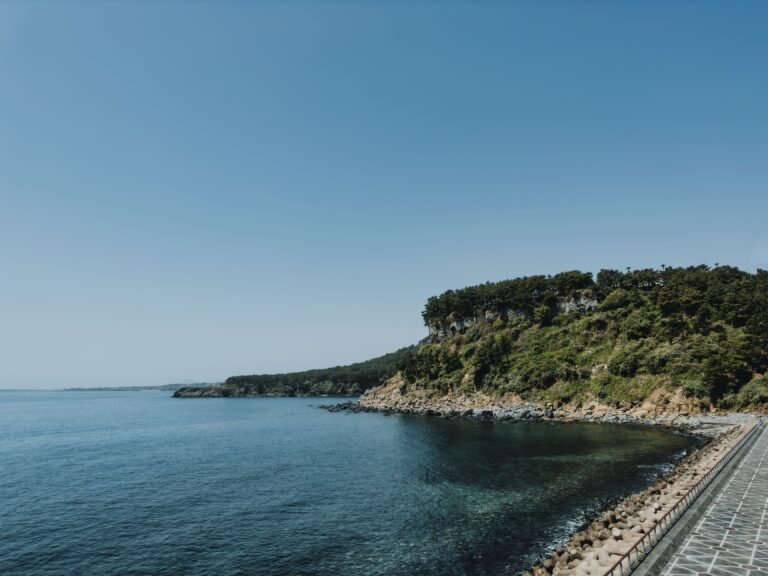
Some landscapes are covered with dark lava rocks, while others contain green vegetation, volcanic craters, beaches, and steep cliffs.
Volcanic features include:
- Lava fields
- Craters
- Lava tunnels
- Volcanic cones
- Basalt formations
- Lava channels
- Calderas
- Black-rock coastlines
The contrast between volcanic rock and colorful wildlife is one of the most visually distinctive characteristics of the islands.
Visitors interested in geology can learn how volcanic processes created the archipelago and continue influencing its landscape.
Beaches of the Galápagos Islands
Although the Galápagos is primarily famous for wildlife, its beaches are also beautiful.
Some beaches have white or golden sand, while others contain dark volcanic material.
Popular beach activities include swimming, snorkeling, kayaking, photography, and wildlife observation.
Some beaches are shared with sea lions and marine birds.
Visitors should remember that Galápagos beaches are natural wildlife habitats, not ordinary resort beaches. Animals may rest, nest, feed, or raise young there.
Respecting wildlife is therefore essential.
Marine Life Around the Galápagos
The waters surrounding the islands are among the most important parts of the ecosystem.
Ocean currents bring nutrients that support large populations of fish and other marine organisms.
The marine environment supports:
- Sea lions
- Penguins
- Marine iguanas
- Sea turtles
- Rays
- Sharks
- Dolphins
- Fish
- Seabirds
- Corals and other marine organisms
Snorkeling and diving allow visitors to experience this underwater world.
The waters can sometimes be cool because of cold currents, but the biological diversity makes marine activities especially rewarding.
Snorkeling in the Galápagos
Snorkeling is one of the best ways to experience Galápagos wildlife.
Many areas offer opportunities to see fish, sea lions, marine iguanas, turtles, rays, and occasionally penguins.
Because animals are protected, visitors must follow local rules.
Do not chase marine animals.
Do not touch them.
Do not feed them.
Do not remove rocks, shells, coral, or other natural objects.
The goal should be to observe nature without changing animal behavior.
Diving in the Galápagos
For experienced divers, the Galápagos can be an exceptional destination.
Some dive sites are famous for encounters with sharks, rays, sea turtles, sea lions, and large schools of fish.
Water conditions can vary considerably depending on location and season.
Some areas may have strong currents, making appropriate training and experience important.
Divers should always follow professional guides and local safety instructions.
The Galápagos is not simply a place to see individual animals. It is an opportunity to observe a complete marine ecosystem.
Kayaking in the Galápagos
Kayaking provides another excellent way to explore the islands.
From a kayak, visitors can travel quietly along coastlines, volcanic formations, mangroves, and sheltered bays.
Wildlife may be visible from the water.
Sea turtles may swim nearby, while sea lions can sometimes be seen resting on rocks or moving through the water.
Kayaking also provides an opportunity to appreciate the landscape from a different perspective.
Hiking in the Galápagos
Hiking trails throughout the islands provide access to volcanic landscapes and wildlife habitats.
Different trails offer different experiences.
Some pass through highland vegetation and tortoise habitats, while others cross dry coastal landscapes dominated by cacti and lava.
Visitors should remain on designated trails whenever required.
This protects plants, nesting areas, and fragile ecosystems.
Hiking in the Galápagos is usually more about observation than speed.
Taking time to look carefully can reveal animals that might otherwise be missed.
The Climate of the Galápagos Islands
The climate of the Galápagos is influenced by its location near the equator and by ocean currents.
Instead of having a simple tropical climate, the islands experience different seasonal patterns.
The warmer season generally brings higher temperatures and more rainfall in some areas.
The cooler season is influenced strongly by colder ocean currents.
Weather can also vary from island to island and between coastal and highland environments.
This variation contributes to the diversity of ecosystems.
Visitors should prepare for changing conditions and bring appropriate clothing, sun protection, water, and rain protection when necessary.
Best Time to Visit the Galápagos Islands
There is no single perfect month for everyone.
The best time depends on what a traveler wants to see and do.
Some visitors prefer warmer weather and calmer seas, while others prefer cooler temperatures and different wildlife activity.
Wildlife can be observed throughout the year, but particular species and behaviors may be more noticeable during certain periods.
Because conditions vary, travelers should research seasonal patterns before planning a trip.
Conservation in the Galápagos
Conservation is one of the most important subjects associated with the Galápagos Islands.
The islands contain fragile ecosystems that evolved in isolation.
Human activities can create serious challenges, including:
- Invasive species
- Habitat changes
- Pollution
- Overfishing
- Climate-related changes
- Tourism pressure
- Illegal wildlife activities
- Waste management problems
Conservation organizations, government agencies, researchers, local communities, and visitors all have roles to play.
One of the most important principles is that tourism should support conservation rather than damage it.
Invasive Species
Invasive species can be particularly dangerous on isolated islands.
Plants and animals introduced by humans may compete with native species, eat native wildlife, spread diseases, or change habitats.
Because many Galápagos species evolved without certain predators or competitors, they can be especially vulnerable.
Controlling invasive species is therefore a major conservation priority.
Successful conservation projects have demonstrated that careful management can help restore ecosystems.
Protecting Giant Tortoises
Giant tortoise conservation is one of the most visible examples of wildlife protection in the Galápagos.
Conservation programs have included breeding, raising young tortoises, protecting nesting areas, controlling introduced predators, and restoring habitat.
The goal is not only to protect individual animals but also to maintain healthy populations in their natural environments.
The story of the Galápagos giant tortoise demonstrates how conservation requires long-term commitment.
Tourism in the Galápagos
Tourism is an important part of the local economy.
Visitors come from around the world to experience wildlife, landscapes, beaches, marine ecosystems, and scientific history.
Tourism can provide income for local communities and support conservation.
However, too much tourism or poorly managed tourism can create environmental pressure.
For this reason, tourism in the Galápagos is subject to special rules and regulations.
Visitors may encounter restrictions regarding where they can walk, where they can swim, what they can bring to the islands, and how closely they can approach animals.
These rules are designed to protect the ecosystem for future generations.
Land Tours and Cruise Tours
There are two common ways to explore the Galápagos: land-based travel and cruise-based travel.
Land-Based Travel
Travelers stay on inhabited islands and take day trips to nearby locations.
Advantages include:
- More flexibility
- Greater interaction with local communities
- Access to restaurants and hotels
- Potentially lower costs for some travelers
- Ability to spend more time on selected islands
Cruise Travel
Cruises allow visitors to travel between islands and reach remote locations.
Advantages include:
- Access to distant islands
- More wildlife-focused itineraries
- Less need to repeatedly arrange transportation
- Opportunities to visit several locations
The best choice depends on budget, interests, travel style, and available time.
Sustainable Travel Tips
Travelers can help protect the Galápagos by making responsible choices.
Follow the rules
Always follow local park regulations and guide instructions.
Keep your distance
Wild animals should never be approached too closely.
Do not feed wildlife
Feeding animals can change their natural behavior.
Avoid touching animals
Even friendly-looking sea lions should be treated as wild animals.
Carry reusable items
Reducing disposable plastic can help reduce waste.
Do not remove natural objects
Rocks, shells, plants, feathers, and other natural materials should remain where they belong.
Choose responsible operators
Select tourism providers that demonstrate strong environmental practices.
Respect local communities
The Galápagos is not only a natural destination but also a home for local residents.
Photography in the Galápagos
The islands are a dream destination for nature photographers.
Wildlife is often the main subject.
Popular photography subjects include:
- Giant tortoises
- Marine iguanas
- Sea lions
- Blue-footed boobies
- Penguins
- Flamingos
- Frigatebirds
- Landscapes
- Volcanoes
- Beaches
- Underwater scenes
A telephoto lens can help photographers capture animals without getting too close.
Photography should never interfere with wildlife behavior.
The best photograph is one that captures a natural moment while respecting the animal.
Why the Galápagos Islands Are So Special
Many destinations have beautiful beaches, mountains, forests, or wildlife.
The Galápagos is special because all these elements come together in an isolated ecosystem with an extraordinary evolutionary history.
The islands allow visitors to observe species that developed in unusual ways.
A person can walk across volcanic terrain, watch giant tortoises, observe marine iguanas swimming, snorkel beside sea lions, and see birds with behaviors found nowhere else.
The experience is not simply a vacation.
It is an opportunity to observe the relationship between geology, climate, evolution, wildlife, and human conservation.
The Importance of Island Evolution
Islands are extremely valuable to scientists because geographic isolation can create unique evolutionary conditions.
When populations become separated, they may gradually develop differences.
The Galápagos provides numerous examples.
Different islands have different environments, food sources, climates, and landscapes.
Animals living in these different conditions can experience different pressures.
Over long periods, these pressures can contribute to the development of new characteristics and species.
This makes the Galápagos an important natural laboratory for evolutionary science.
The Galápagos and Climate Change
Climate change presents challenges for island ecosystems around the world, including the Galápagos.
Changes in ocean temperatures, rainfall patterns, food availability, and extreme weather events can affect wildlife.
Marine species are especially influenced by changes in ocean conditions because food availability depends heavily on currents and nutrient cycles.
El Niño events can also cause major changes in marine ecosystems.
Some species may struggle when food becomes scarce, while others may benefit from temporary changes.
Researchers continue to monitor these patterns to understand how Galápagos ecosystems are changing.
Local Communities
The Galápagos is home to human communities as well as wildlife.
Major inhabited areas provide schools, hospitals, shops, restaurants, hotels, transportation services, and other facilities.
Local residents play an important role in conservation and tourism.
Sustainable development requires balancing human needs with environmental protection.
Travelers can support local communities by using locally owned businesses, purchasing appropriate local products, eating at local restaurants, and respecting community regulations.
Food in the Galápagos
Visitors can find a variety of foods in Galápagos towns.
Because the islands are part of Ecuador, Ecuadorian cuisine is commonly available.
Seafood is especially popular because of the islands’ location.
Visitors may find dishes featuring fish, shrimp, plantains, rice, vegetables, and other ingredients.
International cuisine is also available in major tourist areas.
Food availability can vary between islands, so travelers should plan accordingly, especially when visiting remote locations.
What to Pack for a Galápagos Trip
A trip to the Galápagos requires practical preparation.
Useful items include:
- Lightweight clothing
- Comfortable walking shoes
- Sun hat
- Sunglasses
- Sunscreen
- Reusable water bottle
- Swimwear
- Light rain jacket
- Insect protection
- Small backpack
- Waterproof bag
- Camera
- Binoculars
- Snorkeling equipment if not provided
- Personal medicines
- Comfortable sandals
Because the sun can be intense near the equator, sun protection is especially important.
Family Travel in the Galápagos
The Galápagos can be an excellent destination for families.
Children can learn about animals, geology, oceans, conservation, and evolution through direct experience.
Seeing a giant tortoise or sea lion in the wild can be more memorable than reading about one in a textbook.
Families should choose activities appropriate for children’s ages and swimming abilities.
Parents should also teach children to respect wildlife.
The Galápagos is an ideal destination for encouraging curiosity about nature.
Galápagos for Nature Lovers
Nature lovers may find the islands especially rewarding.
Unlike destinations where wildlife is difficult to find, Galápagos animals can often be observed relatively closely under controlled conditions.
This creates excellent opportunities for birdwatching, wildlife photography, snorkeling, hiking, and ecological learning.
However, the experience is best when travelers slow down and pay attention.
The islands reward observation.
Galápagos for Adventure Travelers
Adventure travelers can enjoy:
- Hiking
- Snorkeling
- Diving
- Kayaking
- Wildlife photography
- Boat trips
- Volcano exploration
- Beach exploration
- Birdwatching
The destination offers adventure without requiring extreme activities.
Many experiences combine physical activity with education and wildlife observation.
Galápagos for Scientists and Students
The islands have enormous educational value.
Students can study:
- Evolution
- Ecology
- Geology
- Marine biology
- Zoology
- Botany
- Climate science
- Conservation
- Environmental management
The Galápagos demonstrates scientific concepts in real environments.
A classroom lesson about adaptation becomes much more meaningful when students can see different species and habitats directly.
Interesting Facts About the Galápagos Islands
Here are some fascinating facts about the archipelago:
- The Galápagos belongs to Ecuador.
- The islands are located near the equator.
- The archipelago is volcanic in origin.
- Charles Darwin visited the islands in 1835.
- Giant tortoises are among the most famous animals of the region.
- Marine iguanas feed in the ocean.
- Galápagos penguins live near the equator.
- Blue-footed boobies are famous for their bright blue feet.
- The islands contain many endemic species.
- Different islands have different ecosystems.
- The surrounding ocean is extremely rich in marine life.
- Conservation is essential to protecting the islands.
- Tourism is carefully regulated.
- Volcanoes continue to shape parts of the archipelago.
- The Galápagos played an important role in the history of evolutionary science.
Best Experiences in the Galápagos
A visitor’s itinerary may include several unforgettable experiences.
Watch Giant Tortoises
Seeing giant tortoises moving through their natural habitat is one of the classic Galápagos experiences.
Snorkel With Sea Lions
Swimming alongside playful sea lions can be thrilling.
Observe Marine Iguanas
Watching marine iguanas enter and leave the ocean provides a rare wildlife experience.
Explore Lava Landscapes
Walking across volcanic formations reveals the geological history of the islands.
Watch Blue-Footed Boobies
Their unusual appearance and courtship behavior make them fascinating subjects.
Search for Penguins
Finding a Galápagos penguin near the equator is an experience that many visitors remember for years.
Enjoy the Beaches
Quiet beaches provide opportunities for swimming, relaxing, and wildlife observation.
Visit Research and Conservation Centers
Educational facilities can help visitors understand the challenges facing Galápagos ecosystems.
Responsible Wildlife Watching
Wildlife watching should always follow one basic principle: observe without disturbing.
Visitors should:
- Stay on marked trails.
- Keep appropriate distances.
- Avoid loud noises.
- Never chase animals.
- Never feed animals.
- Never touch wildlife.
- Avoid blocking animal paths.
- Follow guide instructions.
- Keep photography equipment under control.
- Avoid using flash when prohibited.
These simple behaviors help protect the natural character of the islands.
Why You Should Visit the Galápagos Islands
There are many reasons to visit the Galápagos.
The first is wildlife.
Few places provide such opportunities to observe unusual animals in their natural habitats.
The second is scenery.
Volcanic mountains, lava fields, beaches, cliffs, forests, lagoons, and ocean landscapes create extraordinary visual diversity.
The third is science.
The Galápagos provides a direct connection to the history of evolutionary thought.
The fourth is conservation.
Traveling through the islands teaches visitors about the importance of protecting fragile ecosystems.
Finally, the Galápagos offers experiences that are difficult to reproduce anywhere else.
Challenges Facing the Galápagos
Despite its beauty, the Galápagos faces serious environmental challenges.
Population growth can increase pressure on natural resources.
Tourism can create waste and transportation demands.
Introduced species can threaten native wildlife.
Fishing activities can affect marine ecosystems.
Climate change can alter habitats and food supplies.
These challenges mean that conservation cannot be treated as a one-time project.
Protecting the Galápagos requires continuous research, monitoring, regulation, education, and cooperation.
The Future of the Galápagos Islands
The future of the Galápagos depends on maintaining a balance between conservation and human development.
Tourism is likely to remain important, but it must be managed carefully.
Scientific research will continue to provide information about wildlife populations, invasive species, climate change, and ecosystem health.
Technology can also help conservationists monitor animals and habitats.
Local communities will remain essential partners.
If governments, scientists, conservation organizations, tourism businesses, residents, and visitors work together, the islands can continue to support extraordinary biodiversity.
Conclusion
The Galápagos Islands are much more than a beautiful travel destination. They are one of the world’s most remarkable natural environments and an important center of evolutionary science.
From giant tortoises and marine iguanas to blue-footed boobies, penguins, sea lions, flamingos, and Darwin’s finches, the islands contain wildlife that captures the imagination.
Their volcanic landscapes reveal a powerful geological history, while their isolated ecosystems demonstrate how life can adapt to different environments over long periods.
Charles Darwin’s visit to the Galápagos helped bring worldwide attention to the remarkable biological diversity of the islands. Today, the Galápagos continues to inspire scientists, photographers, travelers, students, and nature lovers from around the world.
A visit to the islands can provide unforgettable experiences: walking across volcanic landscapes, watching giant tortoises, snorkeling in clear Pacific waters, observing sea lions, photographing unusual birds, and learning about evolution.
However, the greatest lesson of the Galápagos may be the importance of protecting nature.
These islands are fragile. Their uniqueness developed over millions of years, but human activities can change ecosystems much more quickly.
Responsible tourism, conservation, scientific research, environmental education, and respect for wildlife are essential to preserving the Galápagos for future generations.
The Galápagos Islands remain one of Earth’s greatest natural treasures—a place where geology, wildlife, evolution, oceanography, and human curiosity come together in an extraordinary living landscape.
Frequently Asked Questions About the Galápagos Islands
1. Where are the Galápagos Islands located?
The Galápagos Islands are located in the Pacific Ocean approximately 1,000 kilometers west of mainland Ecuador. They are part of Ecuador.
2. Why are the Galápagos Islands famous?
They are famous for their unique wildlife, volcanic landscapes, marine ecosystems, and connection to Charles Darwin and evolutionary science.
3. What animals can be seen in the Galápagos?
Visitors may see giant tortoises, marine iguanas, sea lions, penguins, blue-footed boobies, frigatebirds, flamingos, Darwin’s finches, sea turtles, and many other species.
4. Can you swim in the Galápagos?
Yes. Swimming and snorkeling are popular activities in designated areas, although water conditions can vary.
5. Are the Galápagos Islands volcanic?
Yes. The islands were formed by volcanic activity, and several volcanoes remain active.
6. Did Charles Darwin visit the Galápagos?
Yes. Charles Darwin visited the Galápagos in 1835 during the voyage of HMS Beagle.
7. Are Galápagos giant tortoises endangered?
Some populations have historically faced severe threats, and conservation efforts continue to protect and recover giant tortoise populations.
8. What makes marine iguanas special?
Marine iguanas are unusual because they enter the ocean to feed on marine algae, making them uniquely adapted to the island environment.
9. Can tourists visit every Galápagos island?
No. Access varies between islands and locations, and many areas are protected or have specific visitor rules.
10. Is the Galápagos suitable for families?
Yes. The islands can be an excellent educational and nature-focused destination for families, provided visitors follow safety and wildlife guidelines.
11. What is the best way to explore the Galápagos?
Travelers can explore through land-based stays, guided day trips, boat excursions, or multi-island cruises. The best option depends on budget, interests, and available time.
12. Why is conservation important in the Galápagos?
The islands contain fragile ecosystems and many species found nowhere else. Protecting them is essential for maintaining biodiversity and natural habitats.
Final Thoughts
The Galápagos Islands offer a rare opportunity to experience nature in a remarkably direct way. Their wildlife, volcanoes, oceans, beaches, and evolutionary history make them one of the world’s most fascinating natural destinations.
For anyone interested in nature, wildlife, science, photography, adventure, or environmental conservation, the Galápagos represents an unforgettable journey into one of Earth’s most extraordinary ecosystems.