Raja Ampat: The Ultimate Guide to One of the World’s Most Beautiful Natural Destinations
Introduction
Raja Ampat is one of the most spectacular natural destinations on Earth. Located in the province of Southwest Papua in Indonesia, this extraordinary archipelago is famous for its turquoise waters, limestone islands, lush tropical forests, hidden lagoons, coral reefs, white-sand beaches, and incredible marine biodiversity. The name Raja Ampat means “Four Kings,” referring to the four major islands of the archipelago: Waigeo, Batanta, Salawati, and Misool.
For travelers who love nature, Raja Ampat offers an experience that is difficult to compare with ordinary beach destinations. It is not simply a place to relax beside the sea. It is a destination where mountains rise directly from the ocean, coral gardens spread beneath crystal-clear water, colorful fish move through reefs, birds fly above dense forests, and small islands create dramatic landscapes at almost every turn.
Raja Ampat is particularly famous among divers and underwater photographers. Its waters are considered among the world’s richest marine environments, with enormous coral diversity and thousands of marine species. However, visitors do not have to be professional divers to appreciate the destination. Snorkeling, kayaking, island hopping, hiking, birdwatching, photography, swimming, and simply enjoying the scenery are all popular ways to experience Raja Ampat.
The remote character of the islands is also part of their attraction. Unlike heavily developed tourist destinations, many areas of Raja Ampat remain relatively quiet and naturally preserved. Traditional villages, local boats, forested islands, and small homestays contribute to an atmosphere that feels far removed from crowded modern cities.
This article explores the geography, history, natural beauty, wildlife, marine life, islands, activities, culture, accommodation, food, transportation, environmental importance, and practical travel considerations of Raja Ampat.
1. Where Is Raja Ampat?
Raja Ampat is an archipelago in Indonesia, in the western part of New Guinea. It belongs administratively to the Papua region of Indonesia and lies off the northwestern tip of the island of New Guinea.
The archipelago contains hundreds of islands, cays, and smaller rocky formations. Four major islands dominate the region:
- Waigeo
- Batanta
- Salawati
- Misool
These four islands are traditionally associated with the “Four Kings” from which Raja Ampat receives its name.
The surrounding sea is just as important as the islands themselves. The region forms part of the Coral Triangle, a globally significant marine area known for extraordinary coral and fish diversity.
Raja Ampat’s geographic position contributes to its remarkable biodiversity. Warm tropical waters, complex coastlines, mangrove forests, coral reefs, seagrass habitats, and deep channels create numerous environments for marine and terrestrial species.
The result is a landscape where visitors can see very different natural environments within a relatively short distance.
2. Why Is Raja Ampat So Famous?
Raja Ampat has become internationally famous for several reasons.
The first is its marine biodiversity. The reefs surrounding the islands contain a huge variety of corals, reef fish, sharks, rays, turtles, and other marine organisms.
The second is its dramatic scenery. Limestone karst islands rise from brilliant blue water, creating landscapes that look almost unreal.
The third is its remoteness. Raja Ampat is far less urbanized than many famous tropical destinations, allowing travelers to experience nature in a relatively untouched setting.
Another reason is its importance for diving. Divers from around the world travel to Raja Ampat to explore reefs, underwater walls, channels, coral gardens, and areas where large marine animals can be encountered.
The destination is also increasingly popular among photographers. Sunrise and sunset over the islands can create extraordinary images, while underwater photography offers opportunities to photograph colorful corals, fish, rays, turtles, and other marine life.
3. The Meaning Behind the Name Raja Ampat
The name “Raja Ampat” translates approximately to “Four Kings.”
According to local traditions and legends, the four principal islands are associated with four kings. Like many places in Indonesia, Raja Ampat has cultural stories that connect geography with local history and traditional beliefs.
The name has become one of the most recognizable symbols of the region.
Although the archipelago contains hundreds of islands, the four major islands—Waigeo, Batanta, Salawati, and Misool—remain central to its identity.
Each island has its own landscapes and attractions, meaning that travelers who explore different parts of the archipelago can experience very different environments.
4. The Natural Landscape of Raja Ampat
The landscape of Raja Ampat is remarkably diverse.
Visitors may encounter:
- Limestone cliffs
- Small rocky islands
- Tropical forests
- White-sand beaches
- Mangrove forests
- Coral reefs
- Seagrass beds
- Hidden lagoons
- Coastal caves
- Natural viewpoints
- Shallow turquoise bays
- Deep ocean channels
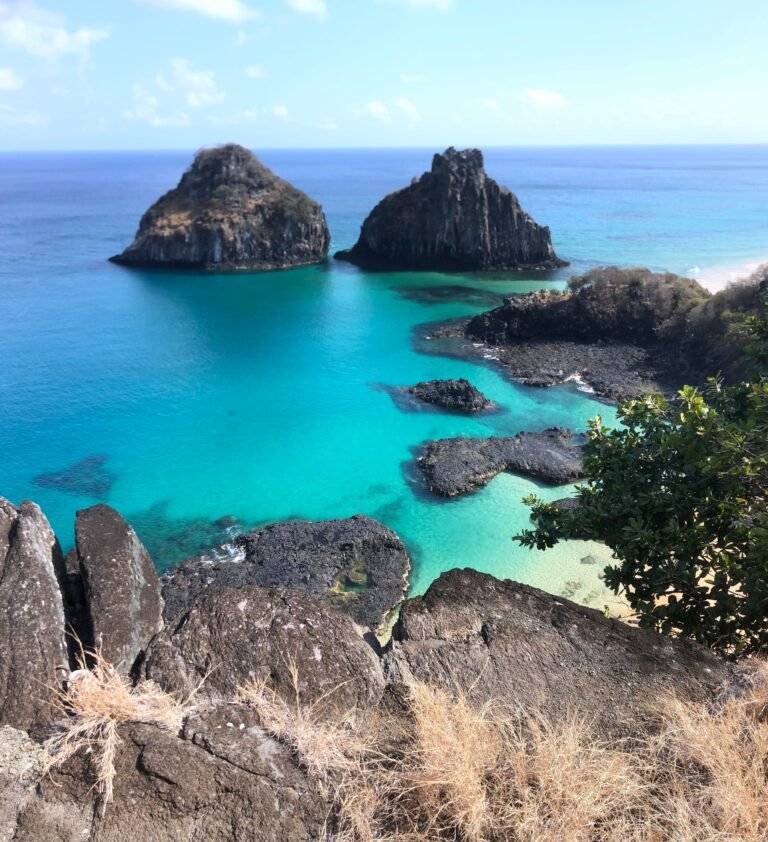
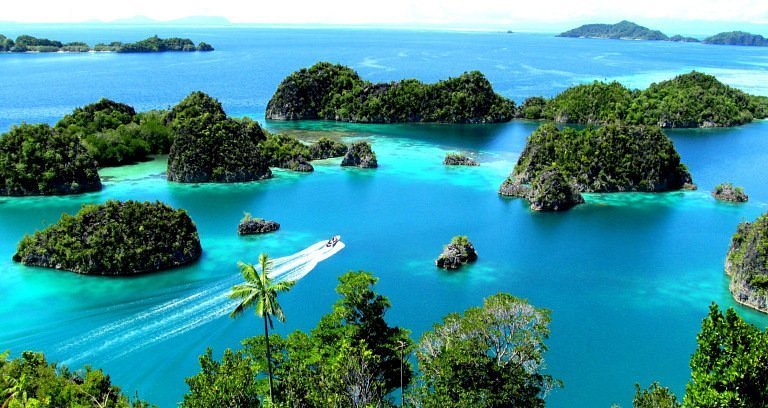
Perhaps the most famous visual characteristic is the collection of small limestone islands surrounded by clear blue-green water.
From elevated viewpoints, these islands can appear like scattered green jewels floating across the sea.
The combination of vegetation, rock formations, clouds, sunlight, and ocean colors makes Raja Ampat particularly attractive for landscape photography.
5. Waigeo Island
Waigeo is the largest of the Four Kings and one of the most important islands in Raja Ampat.
The island is known for dense forests, mountains, beaches, mangroves, caves, and marine environments.
Waigeo is also associated with birdwatching and is home to unique species found in the region.
One of the most famous birds associated with Raja Ampat is the red bird-of-paradise. Seeing these birds in their natural environment can be a memorable experience for wildlife enthusiasts.
The island also provides access to numerous coastal and marine attractions.
For travelers interested in combining forests, beaches, marine activities, and cultural experiences, Waigeo can serve as an excellent base.
6. Batanta Island
Batanta is another important island in Raja Ampat.
Compared with some of the better-known areas, Batanta can feel particularly peaceful and remote.
The island contains tropical forest and coastal landscapes, and waterfalls are among its natural attractions.
Visitors can explore the surrounding waters by boat or kayak and may encounter coral reefs and marine wildlife.
Batanta demonstrates why Raja Ampat should not be considered only a diving destination. Its forests, rivers, beaches, and waterfalls provide opportunities for travelers who prefer activities on land.
7. Salawati Island
Salawati is one of the Four Kings and has extensive natural environments.
Large areas of forest remain important habitats for wildlife. The surrounding waters contain coral reefs and other marine ecosystems.
The island is also significant from a cultural and historical perspective because the broader Raja Ampat region has long been home to local communities with strong connections to the sea.
Exploring Salawati can provide travelers with a deeper appreciation of the relationship between people and the natural environment.
8. Misool Island
Misool is perhaps one of the most visually dramatic parts of Raja Ampat.
The island is famous for spectacular limestone formations, turquoise lagoons, beaches, coral reefs, and hidden bays.
Many photographs of Raja Ampat’s iconic scenery come from the Misool region.
The coastline contains countless small islands and rocky formations. From the water, the landscape can appear like a giant natural maze.
Misool is also an important marine conservation area.
Its reefs and surrounding waters support a wide range of species, making it a favorite region for divers, snorkelers, photographers, and nature lovers.
9. Piaynemo: One of Raja Ampat’s Most Famous Views
Piaynemo is one of the most recognizable places in Raja Ampat.
The area contains numerous small limestone islands surrounded by turquoise water. A viewpoint allows visitors to look across the remarkable landscape from above.
The scene is especially beautiful under clear weather when sunlight reveals different shades of blue and green in the water.
Reaching the viewpoint generally involves climbing stairs, but the view at the top makes the effort worthwhile.
Piaynemo demonstrates the extraordinary geological character of Raja Ampat.
The combination of karst formations and tropical marine waters creates a landscape unlike ordinary beaches.
10. Wayag Islands
The Wayag Islands are another iconic part of Raja Ampat.
They are famous for dramatic karst formations, small forest-covered islands, bright blue water, and secluded beaches.
The islands form an intricate natural landscape that looks particularly spectacular from elevated viewpoints.
Wayag is often included in longer Raja Ampat itineraries because it represents one of the most impressive examples of the region’s natural beauty.
Traveling through the islands by boat is itself part of the experience.
As the boat moves between limestone formations, travelers can see beaches, forests, cliffs, and coral-filled waters.
11. The Coral Triangle
Raja Ampat is located within the Coral Triangle, one of the most biologically important marine regions on Earth.
The Coral Triangle covers parts of several countries in Southeast Asia and the western Pacific.
Its importance comes from the extraordinary diversity of coral reefs and marine species.
Raja Ampat is one of the most celebrated areas within this broader region.
The reefs provide habitat for many species of fish, coral, mollusks, crustaceans, turtles, sharks, rays, and other marine organisms.
For scientists and conservationists, Raja Ampat is therefore much more than a beautiful tourist destination. It is an important natural laboratory and a critical marine ecosystem.
12. Raja Ampat’s Coral Reefs
Coral reefs are among the greatest natural treasures of Raja Ampat.
Healthy reefs create complex underwater habitats. Coral structures provide shelter and feeding grounds for countless organisms.
When snorkeling or diving in clear water, visitors may see corals in many shapes and colors.
Some reefs appear like underwater gardens.
Small fish move between coral branches, while larger animals pass through deeper water.
The visual experience can be extraordinary because sunlight penetrates the clear tropical sea and illuminates the reef.
13. Marine Life in Raja Ampat
Raja Ampat supports an extraordinary variety of marine life.
Depending on location and season, divers and snorkelers may encounter:
- Reef fish
- Manta rays
- Sharks
- Sea turtles
- Seahorses
- Barracuda
- Tuna
- Moray eels
- Octopuses
- Nudibranchs
- Clownfish
- Reef rays
- Giant clams
One of the most exciting experiences is encountering a large animal while surrounded by a healthy reef.
However, the smaller creatures are equally fascinating.
Macro photographers often search for tiny seahorses, nudibranchs, shrimp, crabs, and unusual reef fish.
This combination of large and tiny marine life makes Raja Ampat appealing to many different types of underwater explorers.
14. Manta Rays
Manta rays are among the most famous marine animals associated with Raja Ampat.
These enormous yet graceful creatures move through the water using their broad fins.
Certain locations in the region are known for manta encounters.
Watching a manta ray glide above a coral reef can be an unforgettable experience.
Unlike many large marine animals, manta rays often appear calm and graceful rather than aggressive.
Responsible tourism is important when encountering mantas. Visitors should maintain appropriate distances, avoid touching animals, and follow local guidance.
15. Sharks of Raja Ampat
Raja Ampat’s waters support several shark species.
Sharks are important predators in marine ecosystems and contribute to the health and balance of reef environments.
Their presence is one indication of the ecological importance of the region.
Many visitors are surprised to learn that observing sharks in a healthy reef environment can be a peaceful and fascinating experience.
Conservation programs have helped promote the protection of marine habitats and important species.
16. Sea Turtles
Sea turtles are another important part of Raja Ampat’s marine ecosystem.
These ancient reptiles depend on healthy oceans, seagrass beds, coral reefs, and suitable nesting beaches.
Several turtle species may be encountered in the wider region.
Seeing a turtle slowly moving through clear water is a memorable wildlife experience.
Travelers should never chase, touch, or disturb turtles.
Responsible observation allows people to enjoy wildlife without creating unnecessary stress for the animals.
17. Birds of Raja Ampat
Raja Ampat is not only famous for marine life.
Its forests also support a fascinating variety of birds.
Bird-of-paradise species are especially famous.
These birds are known for their remarkable feathers and courtship displays.
Early-morning birdwatching excursions can provide opportunities to observe these species in forest environments.
Because birds can be difficult to spot, patience is important.
Travelers should follow guides and avoid loud noises or sudden movements.
18. Tropical Forests
The forests of Raja Ampat are an important part of the region’s ecological system.
They provide habitats for birds, reptiles, insects, mammals, and countless plant species.
The forests also protect watersheds and contribute to the health of coastal environments.
For visitors, forest landscapes provide a beautiful contrast to the surrounding sea.
Hiking through tropical vegetation can reveal a different side of Raja Ampat that is often missed by travelers who focus exclusively on diving.
19. Mangrove Ecosystems
Mangroves are another important ecosystem in Raja Ampat.
Mangrove trees grow in coastal environments where saltwater and freshwater interact.
Their complex root systems provide shelter for juvenile fish and other marine organisms.
Mangroves also help protect coastlines from erosion.
Kayaking through mangrove channels can be a peaceful way to explore these environments.
The calm water and dense vegetation create a completely different atmosphere from open ocean reefs.
20. Beaches of Raja Ampat
Raja Ampat has many beautiful beaches.
Some are long stretches of white sand, while others are tiny beaches hidden between limestone islands.
The remote character of the region means that visitors can sometimes find beaches that feel remarkably secluded.
The combination of white sand, green vegetation, and clear water creates classic tropical scenery.
However, travelers should remember that Raja Ampat is an ecosystem rather than simply a collection of beaches.
Keeping beaches clean and avoiding damage to vegetation are essential for protecting the environment.
21. Snorkeling in Raja Ampat
Snorkeling is one of the easiest ways to experience Raja Ampat’s underwater world.
A mask, snorkel, and fins allow visitors to observe shallow coral reefs without needing diving certification.
In clear conditions, coral gardens can be visible from the surface.
Snorkelers may see colorful fish, corals, sea turtles, rays, and other organisms.
Beginners should stay close to experienced guides and avoid standing on coral.
Even apparently hard coral structures are living ecosystems and can be damaged by physical contact.
22. Diving in Raja Ampat
Scuba diving is one of Raja Ampat’s most famous activities.
Divers travel from around the world to explore its reefs, channels, walls, coral gardens, and underwater landscapes.
Different dive sites offer different experiences.
Some locations are known for currents and large marine animals, while others are famous for colorful coral gardens and small creatures.
Because currents can be strong in certain areas, divers should follow local guides and dive operators carefully.
Raja Ampat is suitable for both experienced divers and some less experienced divers, but site selection should always match individual skills and conditions.
23. Kayaking
Kayaking offers another excellent way to explore Raja Ampat.
A kayak allows travelers to move quietly through lagoons, bays, mangroves, and around small islands.
Because kayaks produce little noise compared with motorboats, they can provide a peaceful connection with the natural environment.
Paddling around limestone islands can also reveal small beaches and coastal formations that may be difficult to reach by larger boats.
24. Island Hopping
Island hopping is one of the best ways to experience the diversity of Raja Ampat.
Rather than staying in one place, travelers can visit multiple islands, beaches, viewpoints, villages, lagoons, and snorkeling areas.
Boat travel is an essential part of the experience.
Every journey between islands can become a sightseeing opportunity because the surrounding landscapes are so dramatic.
The ideal itinerary depends on the length of the trip and the traveler’s interests.
25. Photography in Raja Ampat
Raja Ampat is a dream destination for photographers.
Landscape photographers can capture:
- Limestone islands
- Sunrise
- Sunset
- Turquoise lagoons
- Beaches
- Forests
- Boats
- Villages
- Clouds
- Coastal cliffs
Underwater photographers have even more possibilities.
Coral reefs, fish, rays, turtles, sharks, and tiny marine creatures create countless photographic opportunities.
A waterproof camera or underwater housing can be extremely useful for travelers who want to document their marine experiences.
26. Sunrise and Sunset
Sunrise and sunset can transform Raja Ampat’s landscapes.
At sunrise, soft light spreads across the islands and water.
The early morning is also a good time for wildlife activities because temperatures are generally more comfortable and some animals are more active.
Sunset can create warm colors across limestone cliffs and tropical forests.
Photographers often prefer elevated viewpoints where the surrounding islands can be seen against the changing sky.
27. Local Villages and Culture
Raja Ampat is not an empty wilderness.
Local communities have lived in the region for generations.
Traditional livelihoods have historically depended heavily on fishing, coastal resources, forests, and agriculture.
Visitors who stay in local homestays can sometimes experience village life more directly.
Respect for local customs is essential.
Travelers should ask permission before photographing people, homes, ceremonies, or sensitive cultural activities.
A respectful attitude helps create positive relationships between visitors and local communities.
28. Raja Ampat Homestays
Homestays are an important part of the Raja Ampat tourism experience.
Instead of staying in a large international resort, visitors can choose small locally operated accommodations.
Homestays may offer simple rooms, meals, and direct access to beaches or villages.
The facilities can be basic compared with luxury hotels, but the experience can be more personal.
Staying locally can also help tourism income reach communities.
Travelers should understand that remote destinations may have limited electricity, internet access, and other conveniences.
29. Resorts and Luxury Experiences
Raja Ampat also has higher-end resorts and private island accommodations.
These properties may offer comfortable rooms, restaurants, diving facilities, guides, boats, and organized excursions.
Luxury accommodation can be attractive for travelers who want more convenience while exploring a remote environment.
However, even luxury travelers should expect the destination to feel more isolated than major international beach resorts.
The natural environment remains the main attraction.
30. Food in Raja Ampat
Food experiences in Raja Ampat are influenced by Indonesian and local traditions.
Seafood is naturally important in many coastal communities.
Depending on the accommodation, visitors may encounter fish, rice, vegetables, tropical fruits, noodles, soups, and Indonesian-style dishes.
Meals at homestays may be relatively simple but can provide an authentic experience.
Travelers with dietary restrictions should communicate their requirements before arriving because remote islands may have limited food choices.
31. How to Reach Raja Ampat
Reaching Raja Ampat requires more planning than visiting many popular tourist destinations.
Most international travelers first travel to Indonesia and then continue toward the Papua region.
Sorong is an important gateway for Raja Ampat.
From Sorong, travelers generally continue by sea or other local transportation toward the islands.
Travel times vary depending on the destination, weather, boat type, and route.
Because transportation schedules in remote regions can change, travelers should allow flexibility in their itinerary.
32. Best Time to Visit Raja Ampat
Raja Ampat can be visited during different periods of the year, but weather and sea conditions should always be considered.
The best period depends partly on the specific activities and area a traveler wants to visit.
Diving conditions can vary according to wind, rain, currents, and visibility.
Travelers should research current local conditions before booking.
It is also wise to avoid creating an itinerary with extremely tight connections because weather can affect boat travel.
33. How Many Days Do You Need?
A short trip can provide a taste of Raja Ampat, but a longer stay allows travelers to explore more islands and activities.
A trip of around one week may allow visitors to experience major highlights.
A longer trip of ten days, two weeks, or more can provide greater opportunities for:
- Diving
- Snorkeling
- Island hopping
- Hiking
- Birdwatching
- Village visits
- Photography
- Relaxation
Because transportation can take time, staying longer often makes the journey more worthwhile.
34. Is Raja Ampat Expensive?
Raja Ampat can be more expensive than some other Indonesian destinations because of its remote location.
Transportation, boats, accommodation, diving, permits, and food can contribute to the total cost.
However, travelers can choose different styles of travel.
Budget-conscious visitors may choose homestays and shared boats.
Travelers seeking greater comfort may choose resorts and private excursions.
Planning transportation carefully can help reduce unnecessary costs.
35. Responsible Tourism in Raja Ampat
Responsible tourism is extremely important in Raja Ampat.
The region’s natural beauty is also fragile.
Visitors should:
- Avoid touching coral
- Never stand on reefs
- Avoid collecting shells or marine life
- Do not feed wildlife unless specifically permitted
- Reduce plastic waste
- Carry reusable bottles
- Respect local communities
- Follow protected-area rules
- Use reef-safe practices
- Listen to local guides
Small actions by individual travelers can have a major cumulative effect.
36. Marine Conservation
Raja Ampat has become an important example of marine conservation.
Protecting reefs and marine species benefits both nature and local communities.
Healthy reefs support fish populations and contribute to livelihoods.
Marine protected areas can help reduce destructive activities and preserve important habitats.
Tourism can also support conservation when visitors pay appropriate fees and choose responsible operators.
The future of Raja Ampat depends on maintaining a balance between tourism, local livelihoods, and environmental protection.
37. Threats Facing Raja Ampat
Despite its remarkable condition, Raja Ampat is not free from environmental threats.
Climate change can affect coral reefs through rising sea temperatures and coral bleaching.
Plastic pollution can damage marine environments.
Unsustainable fishing can reduce marine populations.
Poorly managed tourism can also create pressure on water, waste, reefs, and local infrastructure.
These challenges make conservation essential.
Visitors can contribute by choosing environmentally responsible accommodation and tour operators.
38. Raja Ampat and Climate Change
Climate change is one of the major long-term challenges facing coral reefs worldwide.
Warmer ocean temperatures can cause coral bleaching.
During severe bleaching events, corals lose their symbiotic algae and become pale. If stressful conditions continue, corals can die.
Raja Ampat’s reefs have shown resilience in many circumstances, but resilience does not mean immunity.
Global efforts to reduce greenhouse gas emissions remain important for the long-term future of tropical marine ecosystems.
39. Why Raja Ampat Is Important for the World
Raja Ampat is important not only because it is beautiful.
Its ecosystems provide scientific, ecological, cultural, and economic value.
The reefs support marine biodiversity.
Forests provide habitat for terrestrial wildlife.
Mangroves protect coastal environments.
Local communities depend on natural resources.
Tourism creates economic opportunities.
For these reasons, protecting Raja Ampat benefits both people and nature.
40. What Makes Raja Ampat Different?
Many tropical destinations offer beaches and clear water.
Raja Ampat offers much more.
Its combination of:
- Exceptional marine biodiversity
- Dramatic limestone landscapes
- Remote islands
- Traditional communities
- Tropical forests
- Coral reefs
- Manta rays
- Bird-of-paradise species
- Hidden lagoons
- World-class diving
- Natural viewpoints
makes it unique.
The destination feels like a combination of an island paradise, wildlife sanctuary, diving center, and adventure destination.
41. Raja Ampat for Adventure Travelers
Adventure travelers will find many opportunities in Raja Ampat.
Activities include:
- Hiking
- Kayaking
- Diving
- Snorkeling
- Boat trips
- Wildlife observation
- Cave exploration
- Island hopping
- Photography
The remote environment adds an additional sense of adventure.
Travelers should nevertheless remember that remote travel requires preparation.
Medical services and other facilities may be limited outside major population centers.
42. Raja Ampat for Families
Families can also enjoy Raja Ampat, although the destination requires more planning than a conventional beach holiday.
Children who enjoy nature may love snorkeling, beaches, boats, wildlife, and island exploration.
Parents should pay particular attention to water safety, sun protection, boat safety, and swimming conditions.
Young children should always be supervised around the ocean.
Families may prefer accommodations with easier access and reliable facilities.
43. Raja Ampat for Photographers
For photographers, Raja Ampat offers an extraordinary variety of subjects.
A single trip can produce photographs of:
- Landscapes
- Wildlife
- Coral reefs
- Beaches
- Villages
- Boats
- People
- Birds
- Underwater life
- Sunsets
Early morning and late afternoon often provide attractive natural light.
Photographers should also respect local privacy and environmental rules.
A beautiful photograph is never worth damaging coral or disturbing wildlife.
44. What to Pack for Raja Ampat
A practical packing list can include:
- Lightweight clothing
- Swimwear
- Reef-friendly sun protection
- Hat
- Sunglasses
- Comfortable footwear
- Waterproof bag
- Reusable water bottle
- Insect protection
- Personal medications
- Snorkeling equipment
- Camera
- Extra memory cards
- Power bank
- Dry bags
- Lightweight rain protection
Travelers should avoid excessive luggage because transportation between islands can be easier with compact bags.
45. Safety Tips
Raja Ampat is an adventurous destination, so basic safety planning is important.
Always follow local boat instructions.
Wear life jackets when required.
Listen to dive guides regarding currents.
Do not swim alone in unfamiliar waters.
Avoid touching marine animals.
Protect yourself from strong tropical sunlight.
Carry sufficient water.
Keep valuable electronics protected from water.
Because medical facilities may be limited in remote areas, travelers should consider appropriate travel insurance and medical preparation.
46. Respecting Marine Wildlife
Wildlife encounters are among the most exciting parts of Raja Ampat.
However, visitors should remember that animals are not performers.
Do not chase manta rays.
Do not touch turtles.
Do not grab marine animals for photographs.
Do not damage coral while trying to obtain a better picture.
Responsible wildlife tourism allows animals to behave naturally.
47. The Beauty of Traveling Slowly
One of the best ways to experience Raja Ampat is to avoid rushing.
The islands are not a destination where visitors need to fill every hour with activities.
Sitting beside the sea, watching boats move across the horizon, listening to birds, snorkeling a nearby reef, or enjoying sunset can be just as memorable as visiting famous viewpoints.
Slow travel also gives visitors more opportunities to connect with local communities and understand the environment.
48. Raja Ampat as a Bucket-List Destination
For many travelers, Raja Ampat belongs on a list of dream destinations.
Its landscapes look almost unreal.
The combination of green islands, blue water, coral reefs, beaches, and wildlife creates an environment that is difficult to forget.
Unlike destinations built mainly around entertainment and infrastructure, Raja Ampat’s appeal comes primarily from nature.
This makes it particularly attractive to people who want a genuine escape from busy cities.
49. Tips for First-Time Visitors
First-time visitors should research the destination carefully before traveling.
Important considerations include:
- Choose the islands you most want to explore.
- Research transportation connections.
- Book accommodation in advance when possible.
- Understand local weather conditions.
- Carry sufficient cash where necessary.
- Prepare for limited internet access.
- Follow environmental rules.
- Choose reputable guides and operators.
- Allow extra time for transportation.
- Keep plans flexible.
Good preparation can make a remote trip much more enjoyable.
50. The Future of Raja Ampat
The future of Raja Ampat depends on responsible development.
Tourism can provide valuable income for local communities, but uncontrolled growth could place pressure on natural resources.
The goal should be sustainable tourism.
This means protecting coral reefs, forests, mangroves, beaches, and wildlife while allowing local communities to benefit from visitors.
Travelers are an important part of this process.
By choosing responsible accommodation, reducing waste, respecting wildlife, and supporting local businesses, tourists can contribute positively to the future of the islands.
Conclusion
Raja Ampat is one of the world’s most extraordinary natural destinations.
From the limestone islands of Piaynemo and Wayag to the forests of Waigeo and the marine environments surrounding Misool, the region offers an incredible combination of scenery and biodiversity.
Its coral reefs provide habitat for countless marine species. Manta rays move through tropical waters, turtles travel across reefs, colorful fish inhabit coral gardens, and birds of paradise bring the forests to life.
But Raja Ampat’s greatest value goes beyond tourism.
It is an important ecological region, a home for local communities, and a globally significant marine environment.
Travelers who visit Raja Ampat have the opportunity to experience some of the planet’s most beautiful landscapes while also learning why conservation matters.
Whether you are interested in diving, snorkeling, photography, wildlife, hiking, kayaking, beaches, culture, or simply escaping into nature, Raja Ampat can offer an unforgettable experience.
Its beauty is powerful precisely because it remains closely connected to the natural world.
The best way to experience Raja Ampat is therefore not simply to visit its famous viewpoints, but to appreciate the entire ecosystem—the forests, reefs, islands, beaches, wildlife, and communities that make this extraordinary archipelago unique.
Raja Ampat is more than a tropical paradise. It is a reminder of how beautiful the natural world can be and why protecting such places is important for future generations.