Milford Sound: A Complete Guide to One of the World’s Most Beautiful Natural Wonders
Milford Sound is one of the most spectacular natural destinations in New Zealand and one of the most famous landscapes in the world. Located in the southwestern part of New Zealand’s South Island, Milford Sound is known for its dramatic mountains, deep dark waters, enormous waterfalls, lush rainforests, wildlife, and peaceful atmosphere. Despite its name, Milford Sound is actually a fiord, a valley carved by glaciers over millions of years.
Surrounded by the breathtaking landscapes of Fiordland National Park, Milford Sound attracts visitors who want to experience untouched nature, scenic cruises, mountain views, hiking opportunities, and unforgettable wildlife encounters. The destination is part of Te Wāhipounamu – South West New Zealand World Heritage Area, a region recognized for its exceptional natural and geological importance.
Milford Sound has become a symbol of New Zealand’s wild beauty. The landscape can look completely different depending on the weather. On a sunny day, mountains rise dramatically above calm water and waterfalls sparkle against dark cliffs. During rainy weather, hundreds of temporary waterfalls may appear along the mountainsides, creating an even more mysterious and dramatic scene.
This guide explores the history, geography, natural beauty, wildlife, attractions, activities, weather, transportation, photography opportunities, and travel tips that make Milford Sound such an extraordinary place to visit.
What Is Milford Sound?
Milford Sound is a spectacular fiord located on the southwest coast of New Zealand’s South Island. It extends inland from the Tasman Sea and is surrounded by steep mountains and cliffs.
The word “sound” was used by European explorers who initially believed the area had been formed by a river. Geologists later established that Milford Sound was created by glacial activity. For this reason, the more accurate geographical term is Milford Sound/Piopiotahi, with “Piopiotahi” being the Māori name.
The fiord is approximately 15 kilometers long from the open sea to its innermost point. Towering peaks surround the water, while waterfalls descend from the mountains into the fiord.
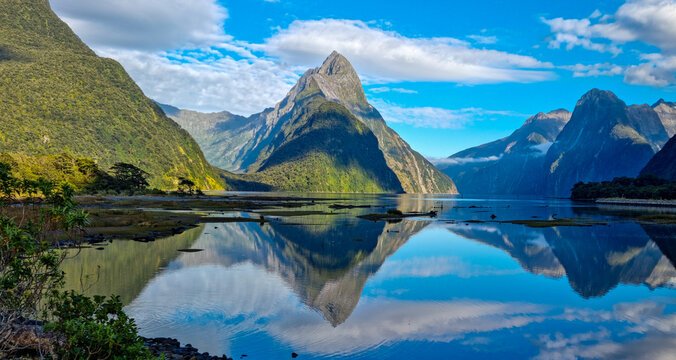
One of the most famous mountains is Mitre Peak, which rises dramatically from the water and has become an iconic symbol of Milford Sound.
The combination of mountains, forests, water, waterfalls, and wildlife gives Milford Sound a unique appearance that is difficult to compare with ordinary coastal destinations.
Where Is Milford Sound Located?
Milford Sound is located in Fiordland National Park, within the southwestern region of New Zealand’s South Island.
The destination is relatively remote. The nearest major tourist center is Queenstown, while Te Anau is the closest significant town and an important base for travelers visiting Fiordland.
The famous Milford Road connects Te Anau with Milford Sound. The journey itself is considered one of New Zealand’s great scenic road trips because it passes through mountains, forests, valleys, rivers, and other remarkable landscapes.
Although Milford Sound is remote, its popularity means that it has become one of the country’s most visited natural attractions.
The Meaning of Piopiotahi
The Māori name for Milford Sound is Piopiotahi.
Māori traditions are an important part of the cultural identity of Fiordland. The name Piopiotahi is associated with the native piopio bird, which is now extinct.
The cultural history of the region adds another layer to the experience of visiting Milford Sound. The landscape is not simply a scenic attraction; it is also part of the cultural and natural heritage of Aotearoa New Zealand.
Visitors are encouraged to appreciate the area respectfully and understand that the mountains, rivers, forests, and coastline have deep significance beyond tourism.
How Milford Sound Was Formed
The landscape of Milford Sound was created largely through glacial processes.
During periods of intense glaciation, enormous glaciers moved slowly through the mountains. As they advanced, they carved deep valleys into the rock. Over thousands and eventually millions of years, these glaciers shaped the steep-sided valleys that characterize Fiordland.
When the climate became warmer and glaciers retreated, seawater entered some of these valleys. This created the deep fiords that are now one of the defining features of the region.
Milford Sound is therefore a remarkable example of how ice, water, rock, and time can transform a landscape.
The steep mountains around the fiord provide visible evidence of this geological history.
Mitre Peak
Mitre Peak is perhaps the most recognizable natural feature of Milford Sound.
The mountain rises dramatically from the edge of the water, creating a powerful visual impression. Its distinctive shape has made it one of the most photographed mountains in New Zealand.
The peak is named after its resemblance to a bishop’s mitre, a traditional ceremonial headpiece.
Mitre Peak is especially impressive when viewed from the water. Cruise boats often travel close enough to provide visitors with excellent views of the mountain and surrounding cliffs.
When clouds move across the summit, the scene can become even more dramatic.
The Mountains of Milford Sound
Milford Sound is surrounded by numerous mountains, many of which rise vertically from the water.
The combination of steep cliffs and deep water creates a landscape that feels enormous. Visitors standing or cruising below these peaks can appreciate the immense scale of the environment.
The mountains are covered with native vegetation at lower elevations, while higher areas can appear rocky and rugged.
Clouds frequently gather around the peaks, particularly during wet weather. This creates constantly changing views.
Instead of seeing the same landscape throughout the day, travelers may experience sunshine, fog, clouds, rain, and changing light within a short period.
Waterfalls of Milford Sound
Waterfalls are among Milford Sound’s greatest attractions.
The region receives extremely high levels of rainfall, and water flows down the steep mountainsides after rain. Some waterfalls are permanent, while many smaller waterfalls appear temporarily during periods of heavy rainfall.
Two of the best-known waterfalls are Stirling Falls and Bowen Falls.
Stirling Falls
Stirling Falls is one of the most spectacular waterfalls in Milford Sound.
The water drops dramatically from the mountains into the fiord. Cruise boats often approach the waterfall, allowing passengers to experience its scale from the water.
On wet days, the waterfall system around Milford Sound becomes even more impressive.
Bowen Falls
Bowen Falls is another major waterfall near the head of Milford Sound.
It is one of the most prominent permanent waterfalls in the area and is particularly impressive after heavy rainfall.
The waterfall provides an excellent example of how Milford Sound’s steep landscape and abundant rainfall work together to create dramatic scenery.
Milford Sound Rainforest
The mountains around Milford Sound are covered with dense native vegetation.
The rainforest environment is supported by the region’s high rainfall and mild maritime climate. Mosses, ferns, trees, and other plants grow across the landscape.
The rainforest contributes to the rich green appearance of the mountains.
For visitors, the combination of dark cliffs and bright green vegetation creates an extraordinary contrast.
The forest is also an important habitat for many native birds and other wildlife.
The Climate of Milford Sound
Milford Sound is one of the wettest inhabited or visited areas of New Zealand.
Rain can occur throughout the year, and weather conditions can change rapidly.
However, rain should not necessarily be considered a problem when visiting Milford Sound. In fact, rainy weather can make the landscape more dramatic because temporary waterfalls appear across the cliffs.
On sunny days, the mountains and water can appear bright and peaceful.
On rainy days, mist and waterfalls create a mysterious atmosphere.
This means there is no single type of “perfect” Milford Sound weather. Different conditions produce different experiences.
Best Time to Visit Milford Sound
Milford Sound can be visited throughout the year.
Each season offers a different experience.
Summer
Summer generally provides longer daylight hours and relatively mild conditions.
It is a popular season for sightseeing, cruises, hiking, and photography.
However, summer can also be one of the busiest periods.
Autumn
Autumn brings changing colors and cooler temperatures.
The surrounding landscape can become particularly beautiful as vegetation changes color.
Visitor numbers may also be lower than during the peak summer period.
Winter
Winter offers a quieter experience.
Snow can cover higher mountain areas, creating spectacular scenery.
Road conditions can sometimes become challenging, so travelers should check conditions carefully before driving.
Spring
Spring brings new growth and changing weather.
Waterfalls can be particularly impressive because rainfall remains common and snowmelt can contribute additional water.
For many travelers, spring provides a beautiful balance between fresh vegetation and dramatic mountain scenery.
Milford Sound Cruises
A cruise is one of the most popular ways to experience Milford Sound.
Cruises generally travel along the fiord toward the Tasman Sea and return toward the inner waters.
During the journey, visitors can see mountains, waterfalls, forests, cliffs, and wildlife.
Some boats provide outdoor viewing areas, while others offer indoor seating and large viewing windows.
A cruise allows visitors to understand the scale of the landscape because the mountains rise directly from the water.
Many travelers consider a Milford Sound cruise an essential part of their visit.
What to Expect on a Milford Sound Cruise
A typical cruise can last several hours depending on the operator and itinerary.
During the journey, the boat may pass:
- Mitre Peak
- Stirling Falls
- Bowen Falls
- Rugged cliffs
- Rainforest-covered mountains
- Wildlife habitats
- The entrance toward the Tasman Sea
Passengers should bring waterproof clothing because boats may approach waterfalls closely.
The sound of falling water, wind, and birds creates an atmosphere that is very different from a typical tourist attraction.
Wildlife at Milford Sound
Milford Sound is home to a variety of marine and terrestrial wildlife.
Common wildlife sightings can include:
- New Zealand fur seals
- Bottlenose dolphins
- Penguins
- Native birds
- Forest birds
- Marine animals
Wildlife sightings are never guaranteed because animals move freely through their natural environment.
However, the possibility of seeing wildlife is one of the reasons Milford Sound is so popular.
New Zealand Fur Seals
New Zealand fur seals can sometimes be seen resting on rocks around Milford Sound.
They may appear surprisingly relaxed while boats pass nearby.
Visitors should always maintain a respectful distance and avoid disturbing them.
Watching seals in their natural environment is very different from seeing marine mammals in captivity.
Dolphins
Bottlenose dolphins are among the most exciting animals that visitors may encounter.
They can sometimes be seen swimming alongside boats or moving through the waters of the fiord.
When dolphins appear, passengers often gather at the viewing areas to watch them.
Because dolphins are wild animals, sightings depend entirely on natural conditions.
Penguins
Penguins may also be seen in the Milford Sound region.
The Fiordland penguin, also known as the tawaki, is particularly associated with the southwest coast of New Zealand.
These penguins are adapted to rugged coastal environments and spend part of their lives in the sea.
Seeing one in the wild can be a memorable experience.
Native Birds
The forests surrounding Milford Sound support many native birds.
Visitors may hear birds before seeing them because dense vegetation can make visual sightings difficult.
The natural soundscape is one of the special qualities of Fiordland.
Bird calls, waterfalls, wind, and flowing water combine to create an atmosphere that feels far removed from urban life.
Milford Track
The Milford Track is one of New Zealand’s most famous hiking routes.
It passes through spectacular Fiordland scenery, including rainforests, mountains, valleys, rivers, and waterfalls.
The track is famous internationally and is often described as one of the world’s great walks.
The Milford Track is not simply a short sightseeing trail. It is a multi-day hiking experience requiring preparation and planning.
Hikers need to understand booking requirements, hut availability, weather conditions, equipment, and safety considerations.
Hiking Around Milford Sound
Visitors who do not have time for a multi-day trek can explore shorter walks and viewpoints in the wider Milford region.
Short walks provide opportunities to experience rainforest, rivers, native vegetation, and mountain scenery.
Walking can be a particularly rewarding way to experience the destination because it allows travelers to slow down and observe details that may be missed from a vehicle or boat.
Milford Road
The road from Te Anau to Milford Sound is one of the most beautiful road journeys in New Zealand.
The route passes through Fiordland landscapes and includes mountains, forests, rivers, valleys, and scenic viewpoints.
The road itself is part of the travel experience.
Many visitors stop at viewpoints along the route to take photographs and enjoy short walks.
Travelers should allow plenty of time rather than treating the journey as simply a transfer between two locations.
The Chasm
The Chasm is a famous natural attraction along the Milford Road.
It features powerful water flowing through a rocky gorge.
Over time, the movement of water has shaped the rock, creating interesting formations.
A short walking route provides access to viewing areas where visitors can observe the force of the water.
The Chasm demonstrates the power of natural erosion and is an excellent example of the geological processes that continue to shape Fiordland.
Mirror Lakes
Mirror Lakes are another popular stop along the Milford Road.
The lakes can produce beautiful reflections of the surrounding mountains and vegetation when conditions are calm.
A short boardwalk makes the area accessible to visitors.
Early morning conditions can sometimes provide particularly attractive reflections, although weather and water conditions vary.
The Homer Tunnel
The Homer Tunnel is an important part of the journey to Milford Sound.
The tunnel passes through the mountains and provides road access to the Milford area.
Its construction was a major engineering achievement because of the difficult mountainous environment.
The tunnel also provides travelers with a dramatic transition from one landscape to another.
Milford Sound Photography
Milford Sound is a dream destination for photographers.
There are countless opportunities for landscape photography.
Some popular subjects include:
- Mitre Peak
- Waterfalls
- Reflections
- Clouds
- Rainforest
- Boats
- Wildlife
- Mountain silhouettes
- Sunrise and sunset light
- Rainy landscapes
One of the most important photography lessons at Milford Sound is to be prepared for changing weather.
A scene that appears ordinary under one type of light can become extraordinary minutes later.
Photography Tips
A wide-angle lens can be useful for capturing large landscapes.
A telephoto lens can help photograph distant wildlife and mountain details.
A waterproof camera cover or protective equipment is also useful because rain is common.
Travelers should avoid focusing only on famous landmarks. Smaller details, such as moss-covered rocks, tree textures, falling water, and reflections, can produce equally beautiful photographs.
Milford Sound for Nature Lovers
Nature lovers will find Milford Sound particularly rewarding.
The region provides an opportunity to experience a landscape where natural processes dominate.
There are no large urban developments surrounding the fiord.
Instead, visitors encounter mountains, water, forests, wildlife, and changing weather.
The feeling of remoteness is one of the destination’s strongest qualities.
Milford Sound for Adventure Travelers
Adventure travelers can combine Milford Sound with hiking, kayaking, diving, and other outdoor experiences depending on conditions and available operators.
Kayaking can provide a quieter perspective on the landscape.
Instead of viewing the mountains from a larger cruise boat, paddlers can experience the water at a slower pace.
Adventure activities should always be undertaken with appropriate equipment and qualified operators because weather conditions can change quickly.
Kayaking in Milford Sound
Kayaking is an excellent way to explore the waters of the fiord.
Paddlers can move quietly across the water and experience the surrounding cliffs from a lower viewpoint.
The peaceful nature of kayaking can make wildlife encounters particularly special.
However, Milford Sound is a serious natural environment, and paddling conditions can change quickly.
Visitors should use reputable guided services when appropriate and follow all safety instructions.
Diving in Milford Sound
The waters of Milford Sound are also known for unusual marine environments.
The large amount of rainfall creates a layer of freshwater on top of the seawater. This can influence underwater conditions and allow certain species normally associated with deeper waters to occur at relatively shallow depths.
This makes Milford Sound interesting for divers and marine researchers.
Diving should only be undertaken by appropriately trained and equipped individuals under suitable conditions.
The Tasman Sea
Milford Sound opens toward the Tasman Sea.
The transition between the sheltered waters of the fiord and the open sea demonstrates how dramatically the landscape changes.
The outer area can experience different weather and sea conditions compared with the inner fiord.
Cruises that travel toward the entrance provide visitors with a sense of how the enclosed landscape connects with the wider ocean.
Milford Sound as a UNESCO World Heritage Area
Milford Sound is part of Te Wāhipounamu – South West New Zealand World Heritage Area.
The region is internationally recognized because of its exceptional natural landscapes, geological features, ecosystems, and evolutionary history.
This recognition emphasizes the importance of protecting the area.
For visitors, it also highlights that Milford Sound is more than a scenic destination. It is part of a globally significant natural environment.
Conservation at Milford Sound
Protecting Milford Sound is essential because the region contains fragile ecosystems and unique wildlife.
Visitors can contribute to conservation by following local rules, staying on designated tracks, avoiding disturbance of wildlife, carrying out rubbish, and respecting natural areas.
Small actions from individual travelers can help reduce the impact of tourism.
Responsible tourism is particularly important in remote natural environments where ecosystems may be sensitive to human activity.
Why Milford Sound Is So Green
The intense rainfall in Fiordland supports lush vegetation.
Mosses and ferns grow across rocks and tree trunks, while forests cover many lower mountain slopes.
The constant availability of moisture creates the rich green appearance for which Milford Sound is famous.
The color of the landscape can change depending on lighting conditions.
After rain, vegetation often appears particularly vibrant.
Milford Sound After Rain
Rain is one of the most important natural features of Milford Sound.
After heavy rainfall, waterfalls appear on cliffs throughout the fiord.
Some may be small streams, while others become spectacular temporary waterfalls.
Mist can also rise from the mountains, creating a dramatic atmosphere.
This is why visitors should not automatically cancel a Milford Sound trip because of rain.
In many cases, wet weather is part of what makes the landscape special.
A Peaceful Natural Experience
Despite its popularity, Milford Sound can provide moments of remarkable peace.
When a boat stops or slows down, passengers may hear little more than falling water, wind, and birds.
The towering mountains can make people feel small in comparison with the natural landscape.
For many travelers, this sense of scale and silence becomes one of the most memorable parts of the trip.
Milford Sound for Families
Milford Sound can be an excellent destination for families.
Boat cruises provide a convenient way to experience the landscape without requiring long hikes.
Children can enjoy seeing waterfalls, mountains, seals, dolphins, and other wildlife.
Families should prepare for changing weather by bringing warm and waterproof clothing.
It is also important to plan the journey carefully because the destination is remote and travel times can be long.
Milford Sound for Couples
Milford Sound can be a memorable destination for couples.
The dramatic scenery provides opportunities for photography and quiet moments together.
A scenic cruise, a peaceful walk, or simply watching waterfalls descend from the mountains can create unforgettable memories.
The destination is particularly appealing to couples who prefer nature and adventure over crowded urban attractions.
Milford Sound for Solo Travelers
Solo travelers can also enjoy Milford Sound.
Cruises and guided experiences make it relatively easy to explore the area without a travel companion.
Solo visitors should pay particular attention to weather forecasts, transportation arrangements, hiking safety, and communication because the region is remote.
The destination can also be an excellent place for travelers who enjoy photography, nature observation, and peaceful environments.
How to Reach Milford Sound
Most visitors reach Milford Sound from Te Anau or Queenstown.
Travel options can include:
- Self-driving
- Guided bus tours
- Coach and cruise packages
- Scenic flights
- Combination tours
Driving offers flexibility, while guided tours allow visitors to relax and learn about the landscape from knowledgeable guides.
Scenic flights can provide spectacular aerial views of Fiordland, although availability depends on weather.
From Queenstown to Milford Sound
Queenstown is a popular starting point for Milford Sound trips.
The journey is long but scenic.
Many organized tours leave early in the morning and return to Queenstown later in the day.
Travelers should consider whether they prefer a long day trip or a slower itinerary that includes time around Te Anau.
From Te Anau to Milford Sound
Te Anau is much closer to Milford Sound and is often used as a base for exploring the region.
Staying in Te Anau allows travelers to start their Milford Sound journey earlier and spend more time enjoying the route.
The town is also an important gateway to Fiordland National Park.
Scenic Flights
Scenic flights can offer an entirely different perspective of Milford Sound.
From the air, travelers can see the scale of Fiordland’s mountains, glaciers, lakes, valleys, and forests.
However, flights are highly dependent on weather.
Cloud, wind, and visibility can affect whether flights operate.
What to Pack for Milford Sound
Because weather conditions can change quickly, visitors should pack carefully.
Useful items include:
- Waterproof jacket
- Warm layers
- Comfortable walking shoes
- Water bottle
- Camera
- Extra batteries or power bank
- Sun protection
- Small backpack
- Insect repellent
- Personal medication
- Snacks
Even during warmer months, conditions can feel cool, especially on the water.
Mosquitoes and Sandflies
Visitors to Fiordland should be aware of sandflies.
These small insects can be irritating, particularly around wet and forested areas.
Insect repellent and clothing that covers the skin can help reduce discomfort.
Keeping doors and windows closed where appropriate can also help prevent insects from entering accommodation.
How Long Should You Spend at Milford Sound?
The ideal amount of time depends on your travel style.
A day trip can provide enough time for a scenic journey and cruise.
However, travelers who want to explore more deeply may prefer to spend additional time in the Fiordland region.
Staying in or around Te Anau can allow visitors to explore the Milford Road more slowly and combine Milford Sound with hiking or other activities.
One-Day Milford Sound Trip
A one-day trip typically involves traveling from Queenstown or Te Anau to Milford Sound, enjoying a cruise, and returning.
This option is convenient for travelers with limited time.
The disadvantage is that the day can be long, especially when traveling from Queenstown.
However, for many visitors, the experience is still worth the effort.
Multi-Day Fiordland Experience
A longer trip allows visitors to explore more than Milford Sound itself.
Travelers can spend time in Te Anau, walk short trails, visit scenic viewpoints, and potentially undertake longer hiking experiences.
A multi-day itinerary can also reduce the feeling of rushing.
Instead of treating Milford Sound as a single attraction, visitors can experience it as part of the wider Fiordland landscape.
Milford Sound and Responsible Tourism
Responsible tourism is extremely important in a natural environment such as Milford Sound.
Visitors should:
- Avoid littering.
- Respect wildlife.
- Stay on marked tracks.
- Follow local instructions.
- Avoid damaging vegetation.
- Carry reusable water bottles.
- Use established facilities.
- Respect other visitors.
- Minimize noise where possible.
- Support conservation efforts.
These simple actions help protect the destination for future generations.
Why Milford Sound Is Famous Around the World
Milford Sound is famous because it combines several dramatic natural features in one location.
It has:
- Huge mountains
- Deep water
- Rainforest
- Waterfalls
- Wildlife
- Glacial geology
- Remote wilderness
- Cultural significance
Many natural destinations are famous for one particular feature. Milford Sound is unusual because so many remarkable features occur together.
Milford Sound Compared With Other Fiords
New Zealand contains many spectacular fiords, but Milford Sound is particularly accessible and famous.
Other areas of Fiordland can offer even greater feelings of wilderness and isolation.
Milford Sound’s popularity comes partly from the combination of extraordinary scenery and relatively straightforward access through Milford Road and organized tours.
For first-time visitors to Fiordland, it is often the most convenient introduction to the region.
The Best View of Milford Sound
There is no single “best” viewpoint because Milford Sound changes throughout the day.
From the water, visitors can appreciate the height of the cliffs.
From the road, travelers can experience the surrounding mountains and valleys.
From the air, the enormous scale of Fiordland becomes visible.
During rain, waterfalls and mist dominate the scene.
During clear weather, reflections and mountain details become more visible.
The best view is therefore often the one created by the weather conditions on the day of your visit.
Sunrise and Sunset at Milford Sound
Early and late light can create beautiful conditions for photography.
Soft light can highlight mountain edges and waterfalls.
However, sunrise and sunset timing changes throughout the year, and weather conditions can strongly influence visibility.
Travelers interested in photography should check local conditions and plan accordingly.
Milford Sound in Winter
Winter can be particularly beautiful because snow may cover higher mountain areas.
The landscape can appear quieter and more dramatic.
However, travelers driving through the region need to be prepared for winter conditions.
Road closures or delays can occur during severe weather.
Checking current road conditions before traveling is essential.
Milford Sound in Summer
Summer is a popular season because of longer daylight hours and generally comfortable daytime temperatures.
The destination can be busy, particularly during peak travel periods.
Visitors who prefer a quieter experience may choose early departures or less crowded travel periods.
Is Milford Sound Worth Visiting?
For most nature lovers, Milford Sound is absolutely worth visiting.
The destination offers a combination of natural scenery that is difficult to find elsewhere.
Even travelers who have visited many famous landscapes may be surprised by the scale of the mountains and waterfalls.
The journey can be long, but the landscape along the way is part of the experience.
Common Mistakes Visitors Should Avoid
There are several mistakes that travelers can avoid.
Ignoring the Weather
Milford Sound’s weather changes quickly.
Visitors should prepare for rain even when the forecast looks favorable.
Bringing Only Light Clothing
Temperatures can feel cooler than expected, especially on boats.
Warm layers are useful.
Not Allowing Enough Travel Time
The journey from Queenstown is long.
Travelers should not underestimate the amount of time required.
Expecting Wildlife
Animals are wild and sightings are not guaranteed.
The landscape itself is the main attraction.
Rushing Through the Area
Stopping at scenic viewpoints along the Milford Road can greatly improve the experience.
Milford Sound Travel Photography Checklist
A simple photography checklist can include:
- Wide-angle lens
- Telephoto lens
- Waterproof protection
- Extra memory cards
- Spare battery
- Lens cloth
- Small tripod if practical
- Weatherproof backpack
Photographers should also remember to enjoy the landscape without viewing everything exclusively through a camera.
The Emotional Experience of Milford Sound
Milford Sound is not only visually impressive.
Many visitors describe feeling a strong sense of peace, wonder, and connection with nature.
The scale of the landscape can create a feeling of humility.
Standing beneath enormous mountains while waterfalls fall hundreds of meters into the water provides a powerful reminder of the forces that shaped the Earth over geological time.
Milford Sound and Climate Change
Like many natural environments around the world, Fiordland is affected by broader environmental changes.
Changes in temperature, rainfall patterns, glaciers, ecosystems, and species distribution can influence the region.
Protecting natural environments and reducing environmental impacts are important for maintaining these landscapes.
Visitors can contribute by practicing responsible tourism and supporting conservation initiatives.
The Importance of Protecting Native Wildlife
New Zealand has many unique native species.
Some evolved in isolation and are found nowhere else.
Protecting native forests and controlling threats such as introduced predators are important parts of conservation.
Visitors should never feed wildlife or attempt to touch wild animals.
Observing animals from a respectful distance is the best way to enjoy them.
Milford Sound as a Natural Classroom
Milford Sound can be considered a living classroom.
A visit can teach travelers about:
- Geology
- Glaciers
- Rainforests
- Marine ecosystems
- Wildlife
- Weather
- Conservation
- Māori culture
- Environmental change
For students and families, the destination can provide an educational experience alongside recreation.
Interesting Facts About Milford Sound
Here are several interesting facts about Milford Sound:
- Milford Sound is actually a fiord rather than a traditional sound.
- The Māori name is Piopiotahi.
- It is located within Fiordland National Park.
- Mitre Peak is one of its most recognizable landmarks.
- The region receives extremely high rainfall.
- Rain can create temporary waterfalls across the mountains.
- Fur seals can be found in the area.
- Dolphins may sometimes be seen in the water.
- Penguins inhabit parts of the wider region.
- Milford Sound is part of a UNESCO World Heritage area.
- The Milford Track is one of New Zealand’s famous long-distance walks.
- The surrounding landscape was strongly shaped by glaciers.
- The Milford Road is famous for its spectacular scenery.
- The area contains important native forests.
- Weather can change very quickly.
Why Rain Makes Milford Sound Special
Many travelers initially think that sunny weather must be the best condition for visiting Milford Sound.
However, rain can make the landscape even more dramatic.
When rainfall increases, water flows down almost every available channel on the mountains.
Hundreds of temporary waterfalls can appear.
Mist can cover the peaks.
The forests become intensely green.
The water can become darker and more reflective.
For this reason, a rainy day at Milford Sound can become one of the most memorable experiences of a New Zealand trip.
A Sustainable Future for Milford Sound
The future of Milford Sound depends on balancing tourism with environmental protection.
The destination is extremely popular, and large numbers of visitors can create pressure on roads, facilities, wildlife, and ecosystems.
Sustainable tourism practices can help manage these pressures.
This may include better transportation systems, visitor management, conservation programs, environmental education, and careful development.
The goal should not simply be to allow more people to visit.
The goal should be to allow people to experience the landscape while protecting the qualities that make it special.
Final Thoughts
Milford Sound is one of the world’s great natural destinations.
Its dramatic mountains, deep waters, waterfalls, forests, wildlife, and changing weather create an environment unlike almost anywhere else.
The destination is particularly impressive because it does not depend on artificial attractions. Its beauty comes directly from nature.
From the iconic shape of Mitre Peak to the powerful flow of Stirling Falls, every part of the landscape tells a story about geology, climate, water, and time.
A journey to Milford Sound can be more than a sightseeing trip. It can be an opportunity to slow down, observe nature, appreciate New Zealand’s unique environment, and experience one of the most extraordinary landscapes on Earth.
Whether you visit on a sunny summer day, during a rainy afternoon surrounded by waterfalls, or in the quiet atmosphere of winter, Milford Sound has the ability to leave a lasting impression.
For travelers searching for beautiful natural places, dramatic mountains, peaceful waters, unforgettable wildlife, and genuine wilderness, Milford Sound deserves a place near the top of the list.
Frequently Asked Questions About Milford Sound
1. What is Milford Sound famous for?
Milford Sound is famous for its dramatic mountains, waterfalls, deep fiord, rainforests, wildlife, and spectacular natural scenery.
2. Is Milford Sound actually a sound?
Geographically, Milford Sound is a fiord created by glaciers. The traditional name “Milford Sound” has remained widely used.
3. What is the Māori name for Milford Sound?
The Māori name is Piopiotahi.
4. Can you see dolphins at Milford Sound?
Yes, bottlenose dolphins can sometimes be seen in Milford Sound, although wildlife sightings are not guaranteed.
5. Can you see seals?
New Zealand fur seals are found around Milford Sound and can sometimes be observed resting on rocks.
6. Does it rain a lot at Milford Sound?
Yes. Milford Sound is famous for its very high rainfall, and rain can occur throughout the year.
7. Is rain bad for visiting Milford Sound?
Not necessarily. Rain can create numerous temporary waterfalls and dramatic misty scenery.
8. What is the most famous mountain in Milford Sound?
Mitre Peak is the most recognizable mountain in the area.
9. How can you explore Milford Sound?
Popular options include boat cruises, scenic flights, kayaking, hiking, and road trips.
10. Is Milford Sound worth visiting?
Yes. Milford Sound is widely considered one of New Zealand’s most spectacular natural attractions.
11. Can families visit Milford Sound?
Yes. Families can enjoy cruises, viewpoints, short walks, wildlife watching, and scenic drives.
12. What should I bring to Milford Sound?
Warm layers, waterproof clothing, comfortable shoes, sun protection, water, snacks, and a camera are useful.
13. Is Milford Sound part of a national park?
Yes. Milford Sound is located within Fiordland National Park.
14. Is Milford Sound a UNESCO World Heritage Site?
Milford Sound is part of the Te Wāhipounamu – South West New Zealand World Heritage Area.
15. What is the best time to visit Milford Sound?
Milford Sound can be visited throughout the year. Each season offers different scenery, and rainy weather can create spectacular waterfalls.
Conclusion
Milford Sound represents the raw beauty of New Zealand’s South Island. Its immense mountains, deep waters, waterfalls, rainforests, wildlife, and constantly changing weather make it one of the world’s most remarkable natural landscapes.
A visit to Milford Sound is an opportunity to experience nature at an enormous scale. Whether you explore by boat, road, foot, kayak, or air, the landscape provides countless unforgettable moments.
For anyone interested in natural beauty, adventure, photography, wildlife, geology, or peaceful wilderness, Milford Sound is a destination that should not be missed.