Mount Olympus, Greece: A Complete Guide to the Home of the Gods, Hiking and Mythology
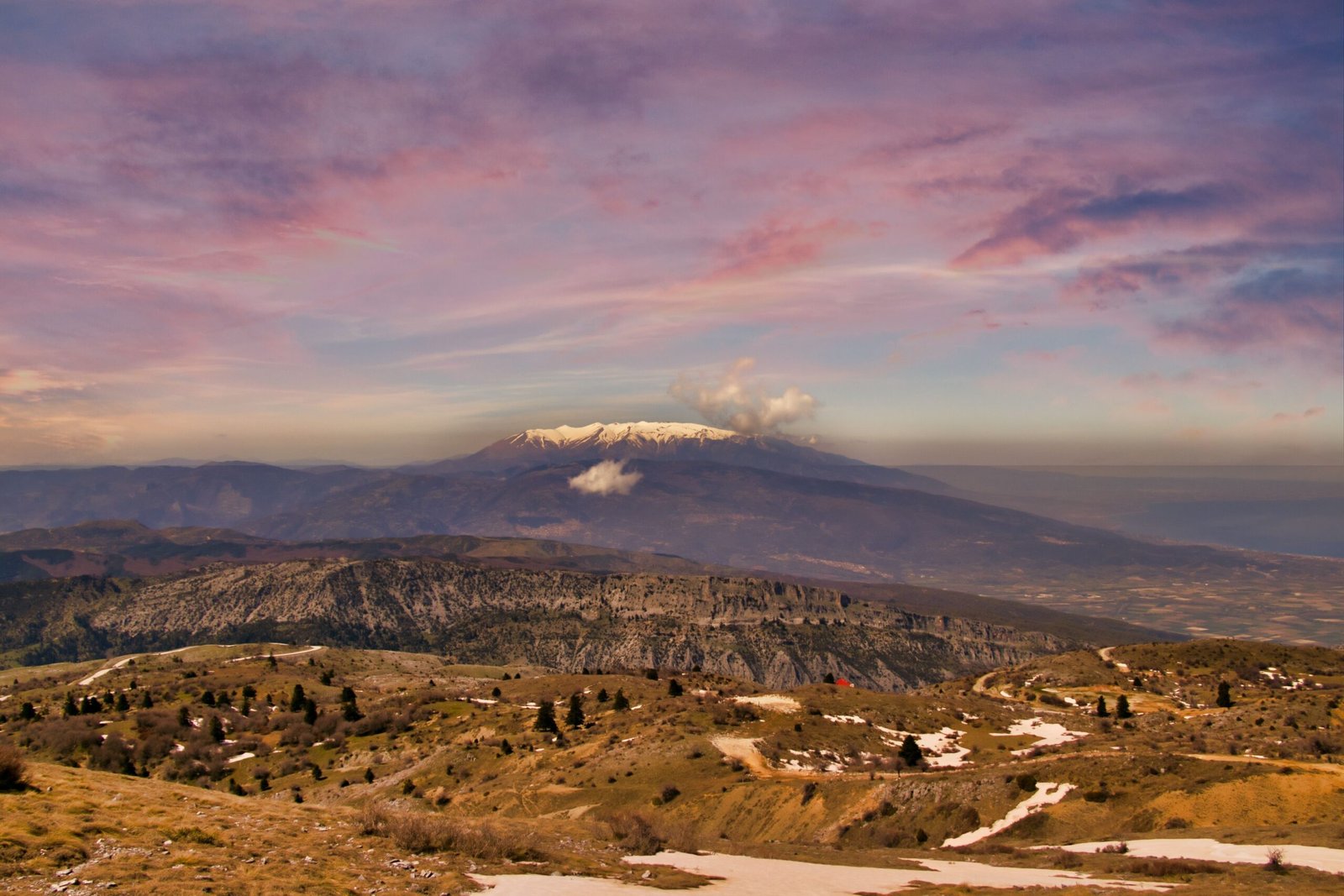
This Mount Olympus Greece travel guide brings together everything you need to plan a trip to the most famous mountain in the ancient world. Mount Olympus is the highest mountain in Greece, the home of the gods in Greek mythology, and one of the most rewarding hikes in Europe. Its highest peak, Mytikas, rises to 2,918 metres, and on a clear day the view from the summit stretches across the Aegean Sea, the plains of Thessaly and the mountains of Macedonia. Whether you want to climb to the top, walk the gorges at its foot or simply learn the stories that made this mountain legendary, this guide will help you plan.
Olympus is a mountain of two halves: a place of myth and a place of real, physical adventure. The lower slopes are covered in forests of pine, beech and oak, cut through by deep gorges and waterfalls, while the upper mountain is a bare world of rock, scree and wind. The mountain was protected as Greece’s first national park in 1938, and it is now a UNESCO Biosphere Reserve. This guide covers where Olympus is, the mythology, the peaks, the hiking trails, the best season, the wildlife and the practical details of a climb.
Where Is Mount Olympus?
Mount Olympus stands on the border between the regions of Thessaly and Macedonia in northern Greece, about 80 kilometres southwest of Thessaloniki and 100 kilometres north of Larissa. It is a compact mountain massif rather than a single cone, roughly 20 kilometres across, and it rises directly from the Aegean coast: on a clear day you can see the sea from the summit, and from the beaches of the Pieria coast the mountain fills the whole western sky.
The main gateway town is Litochoro, a friendly town at the eastern foot of the mountain, with hotels, restaurants, gear shops and the Olympus National Park Information Centre. The trailhead at Prionia, at about 1,100 metres, is reached by a winding mountain road from Litochoro. Most hikers drive or take a taxi to Prionia and start walking from there. The nearest city is Thessaloniki, with an international airport and train and bus connections to Litochoro and the nearby town of Katerini.
The Mythology of Mount Olympus
In Greek mythology, Mount Olympus was the home of the twelve Olympian gods, led by Zeus, the god of the sky and thunder. The gods were believed to live in palaces on the summit, above the clouds, where they feasted on ambrosia and nectar and watched over the world of mortals below. Zeus ruled from the highest peak, Hera was his wife and queen, and their fellow gods included Poseidon, god of the sea, Athena, goddess of wisdom, Apollo, god of music and light, Artemis, goddess of the hunt, Ares, god of war, Aphrodite, goddess of love, Hephaestus, god of fire and craft, Hermes, the messenger, Dionysus, god of wine, and Demeter, goddess of the harvest.
The stories of Olympus were told by Homer in the Iliad and the Odyssey and by Hesiod in the Theogony, and they shaped Greek religion, art and literature for centuries. The ancient Greeks built a sanctuary to Zeus at Dion, at the foot of the mountain, where kings and armies made offerings before campaigns. Even today, the names of the peaks keep the mythology alive: Stefani is called the Throne of Zeus, and the high plateau is known as the Muses Plateau, after the nine goddesses of the arts. Walking on Olympus, with the clouds moving below you, it is easy to understand why the ancient Greeks believed the gods lived here.
The Peaks of Mount Olympus
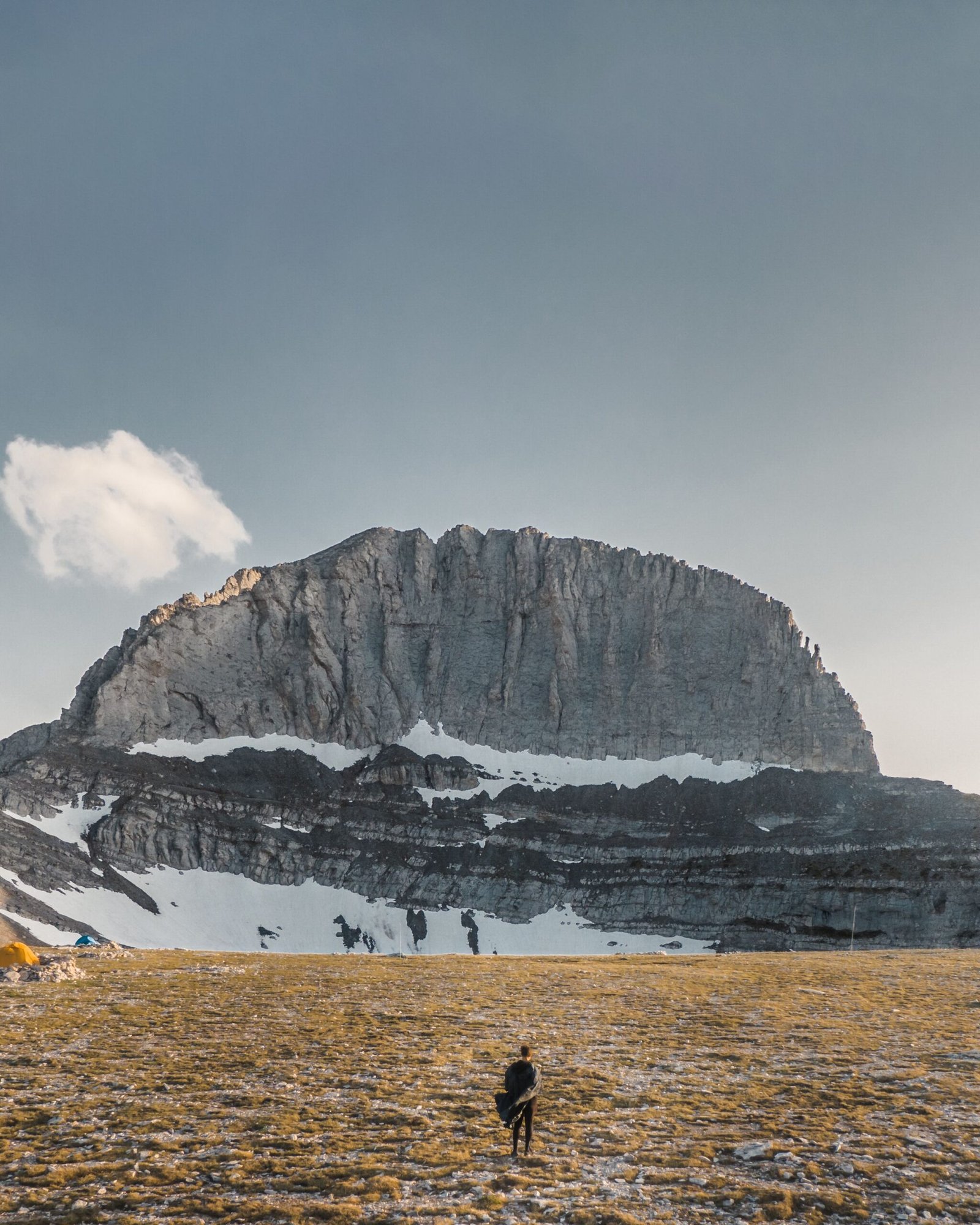
Mount Olympus has more than fifty peaks above 2,000 metres, and the highest group rises in a tight cluster around the summit. Mytikas, at 2,918 metres, is the highest peak in Greece and the goal of most climbers. Just below it stand Skolio, at 2,911 metres, and Stefani, at 2,909 metres, whose steep face is known as the Throne of Zeus. Skala, at 2,866 metres, is the usual approach to Mytikas, and Profitis Ilias, at 2,803 metres, carries a small chapel and a shelter.
The upper mountain is a world of limestone rock, loose scree and sharp ridges, with no trees and no water. The final climb from Skala to Mytikas is a short but steep scramble over rock, known as the Kakoskala, which needs a head for heights and steady footing, though it does not need ropes in dry conditions. Many hikers are happy to reach Skolio or Skala and enjoy the same sweeping views without the scramble. From the summit ridge, the views reach across the whole of northern Greece, and on the clearest days you can see the Aegean glittering far below.
Hiking Mount Olympus: The Main Trails
The classic way to climb Mount Olympus takes two days. On the first day, hikers follow the E4 trail from Prionia up through the Enipeas Gorge and the forest to Refuge A, Spilios Agapitos, at about 2,100 metres. The walk takes around three to four hours, climbing steadily through pine and beech forest, past waterfalls and the small chapel of Agios Dionysios. The refuge offers dormitory beds, meals and water, and it is the usual overnight stop, though it must be booked in advance in summer.
On the second day, the trail continues from the refuge across the Muses Plateau to Skala, and from there to Mytikas for those who want the true summit. The walk from the refuge to the summit takes about three hours, and the descent back to Prionia takes another five or six, so the second day is long. Fit hikers sometimes climb in a single very long day, but the two-day plan is more enjoyable and much safer. Other routes include the long ridge walk from the village of Petra, the approach from the west through the village of Vrontou, and the demanding traverse from the Giosos Apostolidis refuge. Whatever route you choose, start early, carry plenty of water, and check the weather: storms can arrive quickly on the summit ridge.
Below the high peaks, Olympus offers gentler walking too. The Enipeas Gorge trail from Litochoro to Prionia follows the river through forest and past waterfalls and old watermills, and it is one of the most beautiful day walks in Greece. Shorter paths lead to viewpoints, chapels and springs, and the national park has trails for every level. Guided walks are available from Litochoro for those who prefer to hike with a local expert.
When to Climb Mount Olympus
The best time to climb Mount Olympus is from late May or June to October, when the trails are free of snow and the mountain refuges are open. July and August bring the warmest weather and the most hikers, while June and September are quieter and often just as good. In high summer, start before dawn to avoid the heat on the lower slopes and the afternoon thunderstorms that can build over the summit.
In winter, from November to May, Olympus is covered in snow and is a serious mountaineering objective, needing crampons, an ice axe and winter experience. The refuges are closed in winter except for emergency shelters, and the weather can be severe. Spring brings wildflowers to the lower slopes, and autumn colours the beech forests gold and red. Whatever the season, check the forecast, the refuge opening dates and the snow conditions before you set out.
Wildlife and Nature of Olympus National Park
Olympus National Park protects a remarkable range of nature in a small area. The mountain rises from sea level to nearly 3,000 metres, so its slopes pass through Mediterranean scrub, pine forest, beech forest and alpine meadow in a short distance. Botanists have recorded around 1,700 plant species on Olympus, including many that grow nowhere else, such as the rare Jankaea heldreichii, a small plant that clings to damp cliffs near the summit.
The forests are home to wild boar, roe deer, foxes and the Balkan chamois, a sure-footed mountain goat-antelope that lives on the high cliffs. Golden eagles, griffon vultures and peregrine falcons hunt over the ridges, and the mountain is an important stop for migrating birds. The national park was created in 1938 to protect this wildlife and the mountain itself, and it remains one of the most important protected areas in Greece. Hikers should stay on the paths, take all litter away, and never pick the wildflowers, some of which are protected by law.
Visiting Litochoro, Dion and the Villages
Mount Olympus is not only a mountain; it is also a region of towns, villages and ancient sites that are worth a day or two of their own. Litochoro is the main base, with a pleasant old town, tavernas and views of the mountain from almost every street. The Olympus National Park Information Centre in Litochoro has maps, advice and exhibits about the mountain’s nature and history.
At Dion, a short drive from Litochoro, the archaeological park preserves the sanctuary where the ancient Macedonians worshipped Zeus, with temples, a theatre, baths and mosaics, and a museum holding finds from the site. The nearby village of Old Panteleimon, perched on the eastern slopes, is a beautifully restored stone village with tavernas and views over the Thermaic Gulf. The coastal towns of Platamonas and Leptokarya offer beaches and a castle, so a trip to Olympus can easily combine mountain walking with the sea.
Practical Tips for Climbing Mount Olympus
Climbing Olympus is a serious mountain hike, and good preparation matters. Wear sturdy hiking boots with ankle support, carry a waterproof jacket, warm layers, a hat, sunscreen and a headlamp, and bring at least two to three litres of water per person, as there is no reliable water above the refuges. Trekking poles help on the steep, loose paths. Book refuge beds well in advance in summer, and carry cash, as the refuges do not always accept cards.
Tell someone your plans, start early, and turn back if the weather changes: the summit ridge is exposed to lightning, and the rock becomes slippery when wet. The final scramble to Mytikas is not suitable for anyone with vertigo, and children should only attempt it with experienced adults. Mobile phone coverage is patchy on the mountain. If you are unsure of your fitness or experience, consider hiring a local guide in Litochoro, who can also share the mythology and natural history of the mountain as you climb.
Conclusion
Mount Olympus is a mountain that rewards every kind of traveller. For climbers, the summit of Mytikas is one of the great walks of Europe, a journey from warm forest to a bare, windswept ridge above the clouds. For walkers, the gorges and forests of the lower slopes offer some of the most beautiful day hikes in Greece. And for anyone who loves stories, there is no mountain in the world with a richer mythology: to stand on the Throne of Zeus and look out over the Aegean is to stand where the ancient Greeks believed the gods themselves lived. Plan carefully, respect the mountain, and Olympus will give you a trip you will never forget.
Frequently Asked Questions About Mount Olympus
How high is Mount Olympus?
Mount Olympus is 2,918 metres high at its highest peak, Mytikas, making it the highest mountain in Greece. The next peaks, Skolio and Stefani, are 2,911 and 2,909 metres high.
How long does it take to climb Mount Olympus?
The classic climb takes two days: three to four hours from Prionia to Refuge A on the first day, and a long second day from the refuge to the summit and back down to Prionia. Very fit hikers can do it in one long day, but two days is safer and more enjoyable.
Do I need a guide to climb Mount Olympus?
No, the main trails are well marked and many people climb without a guide in summer. A guide is a good idea if you are inexperienced, if you want to climb in uncertain weather, or if you would like to learn about the mythology and nature of the mountain.
When is the best time to climb Mount Olympus?
The best season is from late May or June to October, when the trails are snow-free and the refuges are open. July and August are the busiest months, while June and September are quieter.
Can beginners climb Mount Olympus?
Fit beginners with good boots and preparation can reach the refuge and Skala, but the final scramble to Mytikas is steep and exposed and needs a head for heights. If you are unsure, aim for Skala or Skolio, which still offer superb views.
Keep exploring great mountains with our guides to the Swiss Alps and Mount Everest, two more legendary peaks with world-class hiking and unforgettable scenery.