Painted Desert, Arizona: Complete Guide to Petrified Forest’s Painted Hills
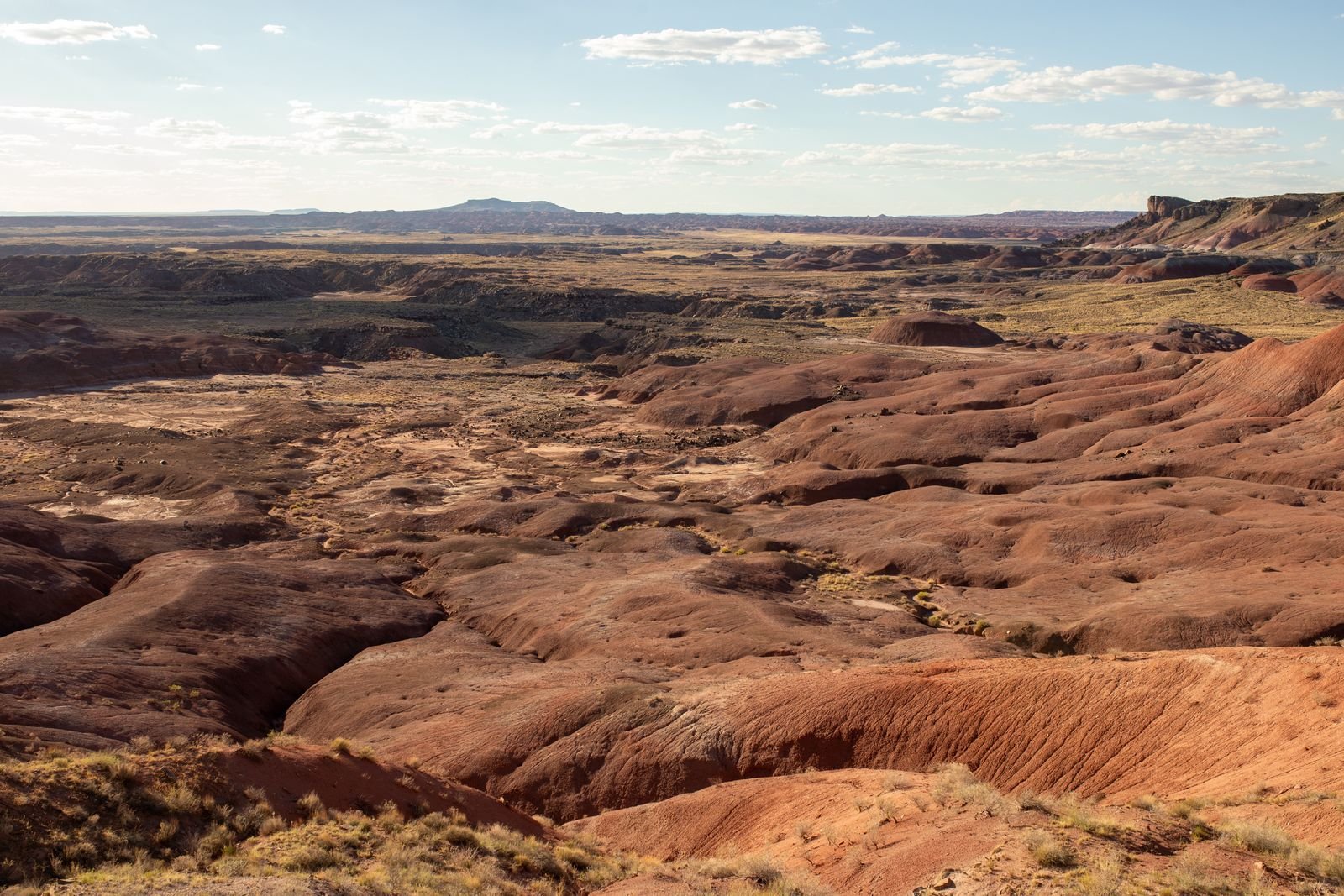
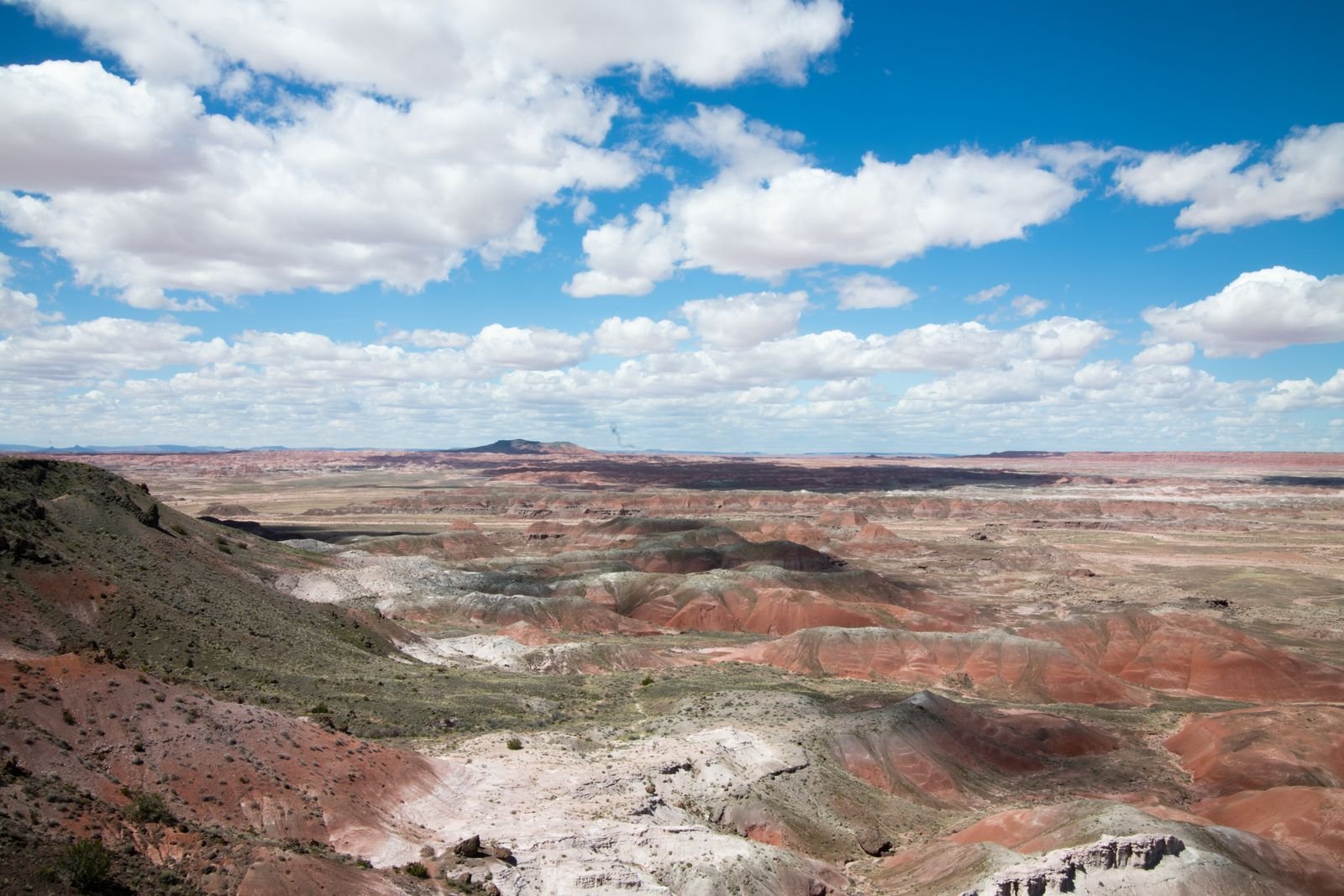
The Painted Desert is one of the most colourful landscapes in the American West. In the northern part of Petrified Forest National Park in Arizona, the badlands are striped in bands of red, orange, pink, purple, grey and blue, as if the earth itself had been painted. The Spanish explorers who first saw the desert called it El Desierto Pintado, the painted desert, and the name has stuck for four hundred years. The colours come from the Chinle Formation, a layer of rock laid down by rivers and volcanoes more than 200 million years ago, when this desert was a lush, tropical floodplain full of giant trees.
The Painted Desert is not a single viewpoint but a whole landscape, and it is best seen slowly, from the road that runs through Petrified Forest National Park. The park’s northern half is the desert, with its viewpoints, its rim trail and its historic inn, while the southern half is the petrified forest itself, where the ancient trees lie as stone. Together they make one of the most unusual national parks in the United States, a place where geology, archaeology and desert light come together.
This guide covers the Painted Desert in full: the viewpoints, the trails, the petrified wood, the history of the park, the best time to visit, and how to plan a day in one of Arizona’s most beautiful and least crowded national parks.
Where Is the Painted Desert?
The Painted Desert is in north-eastern Arizona, in the northern part of Petrified Forest National Park, about 25 miles east of the town of Holbrook and about 100 miles east of Flagstaff, on Interstate 40. The park covers 93,500 acres, and the Painted Desert occupies the northern third of it, a broad expanse of badlands that stretches to the horizon. The park’s main road runs for 28 miles from the Painted Desert Visitor Center, at the northern entrance off I-40, to the Rainbow Forest Museum at the southern end, and it is one of the great scenic drives in Arizona.
The desert sits at an altitude of 5,400 to 6,200 feet, on the Colorado Plateau, and it is a high desert, with hot summers, cold winters and strong winds. The landscape is made of the Chinle Formation, a Triassic layer of mudstone, sandstone and volcanic ash that was deposited by rivers about 225 million years ago. The different colours come from different minerals: red and orange from iron oxide, purple and blue from manganese, grey from carbon, and white from gypsum. Erosion has carved the soft rock into badlands, mesas, buttes and gullies, and the colours change with the light, so the desert looks different in the morning, at midday and at sunset.
The Best Viewpoints in the Painted Desert
The best viewpoints in the Painted Desert are along the park road, and they are all worth a stop. The first, at the northern entrance, is Tawa Point, which looks out over the desert to the north, and the Painted Desert Rim Trail, a one-mile walk between Tawa Point and Kachina Point, follows the edge of the badlands and gives a close view of the colours and the formations. Kachina Point is the site of the Painted Desert Inn, a historic inn built in the 1920s and now a museum, and it is one of the most beautiful viewpoints in the park.
Further south, the viewpoints of Chinde Point, Pintado Point, Nizhoni Point, Whipple Point and Lacey Point each offer a different angle on the desert, and they are at their best in the early morning and the late afternoon, when the low sun brings out the colours. The most famous view is from Kachina Point at sunset, when the desert turns pink and gold, and the whole landscape seems to glow. The viewpoints have picnic tables and interpretive signs, and they are a good place to stop, to eat lunch and to watch the light change.
The Painted Desert Inn is worth a visit in itself. Built in the 1920s as a trading post and inn, it was remodelled in the 1930s by the architect Mary Colter, and it is now a National Historic Landmark and a museum. The inn’s murals, painted by the Hopi artist Fred Kabotie, tell the story of the Hopi people, and the building’s stone and woodwork are a wonderful example of the Pueblo Revival style. The inn is open during the day, and it is a good place to learn about the history of the park and the people who have lived in this desert for thousands of years.
Hiking in the Painted Desert
The Painted Desert is a wonderful place for short walks, and the trails are easy and well marked. The Painted Desert Rim Trail, between Tawa Point and Kachina Point, is a one-mile walk along the edge of the badlands, with views over the desert and the chance to see the colours up close. The trail is flat and easy, and it is a good walk for families. For a longer walk, the Blue Mesa Trail, in the middle of the park, is a one-mile loop through blue and grey badlands, with petrified wood scattered on the ground, and it is one of the most beautiful short walks in the park.
The southern part of the park, the petrified forest itself, has its own trails. The Crystal Forest Trail is a short, easy walk past some of the most colourful petrified logs in the park, and the Giant Logs Trail leads to “Old Faithful”, one of the largest petrified logs in the park. The Long Logs and Agate House Trail is a longer walk, of about 2.6 miles, that leads to a 700-year-old pueblo built of petrified wood, and it is a wonderful combination of geology and archaeology. The Puerco Pueblo Trail is a short walk to a 600-year-old pueblo and to petroglyphs carved into the rocks, and Newspaper Rock, a large boulder covered in petroglyphs, is a short drive away.
The hiking in the Painted Desert is best in spring and autumn, when the temperatures are mild and the light is good. In summer, the heat can be extreme, with temperatures over 100 degrees Fahrenheit, and the trails have no shade, so carry plenty of water, wear a hat and sunscreen, and hike in the early morning or the late afternoon. In winter, the desert can be cold and windy, with snow on the ground, and the trails can be icy, so wear proper shoes and bring layers. Never collect petrified wood: it is illegal to take anything from the park, and the petrified logs are protected.
Petrified Wood: The Forest Turned to Stone
The petrified wood is the other half of the park, and it is as extraordinary as the Painted Desert. About 225 million years ago, this area was a tropical floodplain, with rivers, ferns and giant conifer trees, some of them 200 feet tall. When the trees fell into the rivers, they were buried in sediment and volcanic ash, and over millions of years the wood was replaced by quartz, in a process called petrification. The result is logs of stone, in colours of red, orange, yellow, purple and white, that look like wood but are as hard as glass.
The best places to see the petrified wood are in the southern part of the park, at the Crystal Forest, the Giant Logs and the Long Logs trails. The logs are scattered on the ground, some of them broken into pieces that look like slices of a tree trunk, and others whole, lying where they fell. The colours are at their brightest in the morning and the late afternoon, when the sun is low, and the logs seem to glow. The park’s museum, at the Rainbow Forest, tells the story of the Triassic world, with fossils of the animals that lived here, including giant crocodiles and early dinosaurs.
The petrified wood is protected, and it is illegal to collect it, but the park has a problem with theft: visitors have taken so much wood over the years that the park loses tonnes of it every year. The park’s rangers ask visitors to leave the wood where it is, and to report anyone they see taking it. The wood belongs to the park, and to the future, and it is one of the most remarkable fossil forests in the world.
When Is the Best Time to Visit the Painted Desert?
The best time to visit the Painted Desert is in spring, from March to May, and in autumn, from September to November, when the temperatures are mild, the skies are clear and the light is at its best. Spring brings wildflowers to the desert, and the colours of the badlands are at their brightest after the winter rain. Autumn brings cooler temperatures and the golden light of the desert, and the park is quieter than in summer.
Summer, from June to August, is hot, with temperatures that can exceed 100 degrees Fahrenheit, and the park is busy with visitors. The summer monsoon brings afternoon thunderstorms, with lightning, rain and dramatic skies, and the desert is at its most dramatic, but the heat and the storms make hiking difficult. Winter, from December to February, is cold and windy, with temperatures that can drop below freezing, and the park can be covered in snow, which is beautiful but makes the roads and trails slippery. Whenever you go, bring water, sun protection and layers, because the desert weather can change quickly.
Planning Your Trip to the Painted Desert
Getting to the Painted Desert is easy. The park is on Interstate 40, between Holbrook and Flagstaff, and the northern entrance is at exit 311. The nearest town is Holbrook, 25 miles to the west, which has hotels, restaurants and a supermarket, and the nearest city is Flagstaff, about 100 miles to the west. The park is also close to other Arizona sights: the Meteor Crater, Homolovi State Park, and the town of Winslow, made famous by the Eagles song “Take It Easy”.
Allow a full day for the park: half a day for the Painted Desert in the north, with its viewpoints and the Rim Trail, and half a day for the petrified forest in the south, with its trails and the museum. The park road is 28 miles long, and it takes about an hour to drive without stopping, but you will want to stop often. The park entrance fee is modest, and the America the Beautiful pass is accepted. There is no food or fuel inside the park, except for a small shop at the Painted Desert Visitor Center, so bring food and water, and fill up your car before you enter.
The Painted Desert is one of the great desert landscapes of the American West, and it is the perfect complement to the other desert parks of Arizona and Utah. Monument Valley, a few hours to the north, is the most famous desert landscape in the world, with its great red buttes, and The Wave, in the Vermilion Cliffs, is a swirling sandstone formation that is one of the most photographed places in the desert. Together, the Painted Desert, Monument Valley and the Wave give you the full range of Arizona’s desert beauty.
Conclusion
The Painted Desert is a landscape that has to be seen to be believed. The colours, the badlands, the petrified wood and the silence of the desert come together in a place that feels like another planet, and yet it is only a few hours from Flagstaff. Go in spring or autumn, drive the park road slowly, walk the Rim Trail, visit the Painted Desert Inn, and stand at Kachina Point at sunset. The desert will change colour in front of you, and you will understand why the Spanish called it the painted desert.
Frequently Asked Questions
Where is the Painted Desert?
The Painted Desert is in north-eastern Arizona, in the northern part of Petrified Forest National Park, about 25 miles east of Holbrook on Interstate 40.
What is the Painted Desert made of?
The Painted Desert is made of the Chinle Formation, a Triassic layer of mudstone, sandstone and volcanic ash laid down about 225 million years ago. The different colours come from iron, manganese, carbon and gypsum in the rock.
Can you collect petrified wood in the Painted Desert?
No, it is illegal to collect petrified wood or anything else from Petrified Forest National Park. The petrified logs are protected, and visitors should leave them where they are.
When is the best time to visit the Painted Desert?
Spring, from March to May, and autumn, from September to November, are best, with mild temperatures and the best light. Summer is very hot, and winter can be cold and snowy.
How long do I need in Petrified Forest National Park?
A full day is ideal: half a day for the Painted Desert viewpoints and the Rim Trail in the north, and half a day for the petrified wood trails and the museum in the south.